Chiropractic School Personal Statement Examples and Tutoring
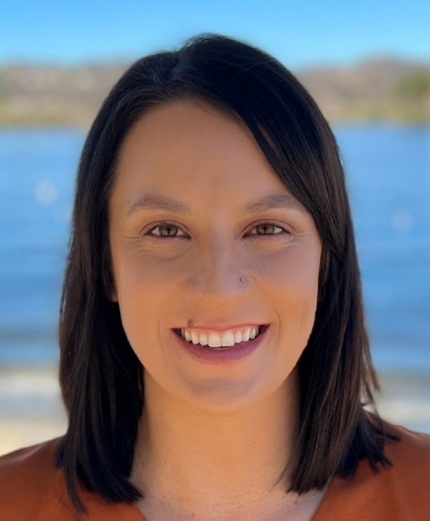
Lauren Hammond, chiropractic school personal statement tutor
Table of Contents
- Chiropractic personal statement tips
- What to include - and avoid
- Chiropractic personal statement examples
- Learn more about Lauren, our chiropractic personal statement expert.
Chiropractic School Personal Statements
On this page you'll find six examples of effective chiropractic school personal statements, written from the perspective of pre-health students, athletic trainers, massage therapists, a senior fitness instructor, and career changers. Each example is followed by notes on what it does well.
The part of a chiropractic personal statement applicants most often get wrong is explaining why they chose chiropractic specifically, rather than physical therapy, medicine, osteopathic medicine or another manual therapy. Most of the advice below is about that question.
Lauren Hammond is our chiropractic school application essay expert and has been helping people write their graduate and professional school personal statements for several years. Whether you just want some feedback on a draft, or you're staring at a blank Word doc and don't know where to begin, she is happy to help!
Contact Lauren directly at 951-395-4646 (phone or text), or send us an email. Working with Lauren is $225 per hour, or $995 for 5 hours.
Consultations are free.
3 Tips for Strong Chiropractic School Personal Statements
1. Answer "Why Chiropractic?" with Specifics
- This is the defining challenge of chiropractic applications: Chiropractic overlaps with physical therapy, osteopathic medicine, massage therapy and sports medicine, and many applicants never say why they picked it over those fields. Admissions committees want to know what about chiropractic draws you: its diagnostic model, the adjustment as a primary treatment, its focus on the neuromusculoskeletal system, or its scope of practice.
- Engage with the chiropractic model honestly: The strongest statements show that the applicant understands how chiropractors assess and treat patients, beyond the fact that they treat back pain. If you are drawn to the evidence-based musculoskeletal approach, integrative care or sports chiropractic, say which one and why.
- A specific clinical observation is essential: Time in a chiropractic office, watching adjustments, patient assessments and SOAP note documentation and seeing the range of conditions chiropractors treat, gives you the language and experience to answer this question well. If you haven't shadowed, do it before you write.
Example:
"I shadowed in a physical therapy clinic and a chiropractic office, and both saw the same kind of patient: adults with recurring low back pain. The PT clinic built most visits around exercise progressions. The chiropractor started with motion palpation and joint testing, adjusted the restricted segments, and then gave exercises. I found I cared most about that first step, working out which joint wasn't moving and why, and that is the work I want to train for."
2. Demonstrate Hands-On and Clinical Preparation
- Chiropractic is a hands-on profession: Adjustment technique, soft tissue work and hands-on assessment all take manual skill and a trained sense of touch. If you have hands-on experience (massage therapy, athletic training, physical therapy aide work, personal training), make it visible in the statement.
- Describe what you observed during shadowing specifically: Name what you saw: the history, the postural and orthopedic exam, how the chiropractor narrowed the diagnosis, the adjustment itself. Showing that you watched these closely and understood them tells the committee you prepared.
- Any experience with patient communication is valuable: Chiropractors often see patients over months and spend much of a visit on education about activity, posture and injury prevention. Showing that you understand this part of the job sets you apart from applicants who write only about technique.
Example:
"Three years as a massage therapist gave me a foundation in anatomy and manual assessment, and I expect it to translate directly into chiropractic training. I can palpate muscle tension and identify areas of restricted fascial mobility. I can also tell a patient what I'm finding in language they can understand. What I can't do is assess the joints underneath, which are sometimes part of what I'm treating in soft tissue. Chiropractic training is where I intend to close that gap."
3. Be Honest and Specific About Your Philosophy of Care
- Chiropractic has a range of practice philosophies: Chiropractors range from the traditional vitalistic model to the evidence-based musculoskeletal approach to integrative and functional medicine practices. Your statement should say what kind of chiropractor you intend to become and how you want to practice.
- Engage with the evidence base honestly: The chiropractic profession has a complicated relationship with the research literature. Applicants who show they know what the evidence supports, and where questions remain, are more convincing than those who claim chiropractic cures everything.
- Name a patient population or specialty area: Sports chiropractic, pediatrics, occupational health, integrative care, older adults: a stated direction gives the admissions committee a concrete picture of your intended practice.
Example:
"The chiropractor I shadowed most practices in a sports medicine clinic with a physical therapist and an orthopedic surgeon. Patients move between the three as the case requires: a runner whose knee needs a surgical opinion goes to the surgeon, and a lifter with mechanical low back pain may see the chiropractor and the physical therapist in the same week. I want to practice in a clinic like that, where each of us treats what the research supports for that condition."
What to Include in Your Chiropractic Personal Statement - and What to Avoid
What to Include
- A specific answer to "why chiropractic" - not just why healthcare, and ideally with a direct comparison to or distinction from adjacent fields you also considered
- Meaningful shadowing with a licensed DC - describe what you observed, not just your hours; name a technique, an assessment, a patient interaction
- Any hands-on clinical or manual therapy background - massage therapy, athletic training, PT aide, personal training, chiropractic assistant
- Your intended area of practice or patient population - sports, pediatric, occupational health, integrative care; even a preliminary direction matters
- Your philosophy of care - what kind of chiropractor do you want to be, and what does evidence-informed chiropractic practice look like in your view
- Program-specific detail - a specialty track, a clinical rotation site, a faculty research area, a technique emphasis
What to Avoid
- Unsupported claims about chiropractic curing disease - overclaiming the evidence base undermines your credibility; focus on what chiropractic does well and what the research supports
- Leaving "why not PT or medicine?" unanswered - admissions readers will wonder; address it directly, briefly, and without being defensive
- Personal treatment experience as the only motivation - if you received chiropractic care for an injury or condition, it can be part of the story; it should not substitute for professional clinical preparation and understanding
- Generic "whole-body" or "natural healing" language - most applicants use it; use specific clinical language and say what you actually believe about care instead
- Submitting the same statement to every program - programs with sports chiropractic emphases, research focuses, or integrative care models want different things; tailor accordingly
Video: 7 Ways to Write a Crappy Graduate School Personal Statement
For more personal statement tips, check out Vince's video: 7 Ways to Write a Crappy Graduate School Personal Statement.
A few chiropractic programs ask for a statement of purpose rather than a personal statement. The statement of purpose format puts more weight on your academic and professional preparation, so it is worth reading before you adapt anything here.
6 Chiropractic School Personal Statement Examples
Below are six example chiropractic school personal statements, each followed by notes on what it does well.
We wrote these six ourselves as teaching models. The applicants are invented, the programs are left generic on purpose, and nothing here is a real client's statement. Read them for structure and for how specific the detail gets, not as text to borrow.
Pre-Health Student - Chose DC over MD/DO
I considered medical school. I took the MCAT and researched osteopathic programs, and before I'd commit to a direction I spent time in both a family medicine practice and a chiropractic clinic. The two places handled the same complaint differently enough that the comparison settled the question for me.
The family medicine practice was excellent, and the physician was thorough and clinically sharp. For a patient with chronic low back pain, the tools there were medication, imaging when it was warranted, referrals and sometimes a physical therapy order, and for many patients that was enough. What a fifteen-minute visit rarely reached was the mechanics underneath the pain: a stiff segment, the movement pattern compensating for it, or the way the patient sat at a desk for nine hours a day.
The chiropractic clinic started with that layer. The DC I shadowed ran a functional movement assessment, found a specific pattern of restricted lumbar rotation coupled with hip flexor tightness, adjusted the relevant segments and prescribed three corrective exercises. The patient came back two weeks later reporting significant improvement. The intervention wasn't the only thing that could have helped, since physical therapy might have addressed the same movement pattern, but the diagnostic model was oriented toward the structural and mechanical, and that matched how I already thought about musculoskeletal problems from my background in exercise science.
The chiropractic model fits the problems I find most interesting and the kind of practice I want to build. I intend to practice evidence-based chiropractic in a sports medicine context, collaborating with physical therapists, athletic trainers and orthopedic physicians rather than competing with them.
Why this statement works:
- The first two sentences mention the MCAT and the osteopathic research, so the reader knows medicine was a real option and the DC choice came from comparing two clinics side by side.
- The family medicine paragraph credits the physician ("thorough and clinically sharp") before naming what a short visit didn't reach. A weaker draft would knock medicine to make chiropractic look better, and admissions readers notice that.
- The shadowing scene names the findings (restricted lumbar rotation with hip flexor tightness) and the plan (adjust the segments, assign three corrective exercises). That reads like someone who was watching closely in the room.
- The applicant concedes that physical therapy "might have addressed the same movement pattern." Giving up that point makes the next claim, that the chiropractic model fits how they already think about movement, easier to accept.
- The last paragraph names a setting and the providers they'd work with, which gives the committee a picture of the DC this applicant plans to be.
Athletic Trainer to DC
I have been a certified athletic trainer for five years. My clinical work covers injury assessment, acute care, rehabilitation and return-to-play decision-making for a collegiate athletic program. Part of that job is recognizing when an athlete's problem is outside what athletic training can address and referring the athlete to someone who can do more.
After our team physicians, the provider I refer to most is the sports chiropractor who works with our department. Some of the athletes I send her come back moving better than my rehabilitation plan had managed. One soccer player had made slow progress on limited hip internal rotation over three weeks of mobility work with me. After a visit that combined hip and lumbar manipulation with soft tissue work, his range at my next measurement was clearly better, and the exercises I had already assigned helped him keep it. Not every athlete responds that way, and I can't say how much of his change came from the manipulation and how much from the work before it. Those referrals are the reason I am applying to chiropractic school rather than a DPT program.
I want to be the provider who can do both. I already have the rehabilitation skills from athletic training. What I lack is the spinal and extremity manipulation I refer out for, along with the diagnostic and imaging training that goes with it. Physical therapists learn manipulation too, but in a chiropractic program it is a core skill practiced across several years, and that depth is what I want for the athletes I plan to treat.
I shadowed a sports chiropractor for sixty hours over four months. I wanted to see whether the clinical setting suited me and whether my athletic training background would carry over. It did on both counts, though I also saw how much of the diagnostic work I can't do yet. My goal is to practice sports chiropractic in a clinical or team setting. I am applying to this program for two reasons: its sports chiropractic concentration, and its clinical training sites in athletic and sports medicine environments.
Why this statement works:
- The motive comes from a referral pattern the applicant sees every week at work. That gives the "why chiropractic" answer a source in their own job, where a weaker draft would fall back on wanting to "help athletes."
- The soccer player example gives a measurement (hip internal rotation) and then hedges: "I can't say how much of his change came from the manipulation." Readers at DC programs watch for overclaiming, and this line shows the applicant won't do it.
- The DPT question gets a straight answer, including the fact that physical therapists also learn manipulation. Pointing to the depth of manipulation and imaging training is a better reason than claiming PT can't do the job.
- "Sixty hours over four months" comes with a purpose for the hours and an honest note about the diagnostic work the applicant still can't do.
- The two program reasons in the last sentence match the sports goal stated just before them, so the tailoring reads as planned.
Massage Therapist to DC
My four years of massage therapy have been spent primarily in a clinical setting rather than a spa, treating patients with chronic pain, post-surgical soft tissue restrictions, sports injuries and stress-related muscle tension. The work has taught me to read tissue through my hands. It has also shown me, consistently, that the soft tissue is often not where the primary dysfunction lives.
Some patients improve over a few sessions and stay better. Others feel looser for a day or two and come back with the same complaint, session after session, and in many of them I could feel a stiff segment under the muscle I was working on that massage never changed. The muscle guarding the joint is something I can treat. The joint itself is something I can't mobilize.
Two years ago I began shadowing in a chiropractic clinic, to understand what happens at the level I can't reach. The chiropractors there picked up where my assessment stopped, using joint play testing and motion palpation to find the restricted segment, then adjusting it and working on the muscles around it. They treated soft tissue work as part of the visit rather than an add-on, and in their experience patients did better with both than with either one. That combined model is the one I want to practice.
A manual therapy background brings palpatory skills and a tactile sensitivity to tissue quality, and I expect both to translate directly into chiropractic training. Working with chronic pain patients has given me an understanding of what sustained therapeutic relationships require. What I need is the diagnostic training and the adjustment technique, along with the scope of practice that the DC degree provides.
My goal is a clinic where chiropractic, massage therapy and rehabilitation exercise sit in the same treatment plan, with the therapists and the DC reading the same notes.
I am applying to this program because of its soft tissue technique curriculum and its integrative care clinical training sites.
Why this statement works:
- The first sentence separates clinical massage from spa work, and the patient list (post-surgical restrictions, chronic pain) tells the reader this applicant has treated real complaints.
- The case for chiropractic comes from a pattern in the applicant's own practice: patients who "feel looser for a day or two" and come back with the same problem. Only a massage therapist would have that reason, and it does more than a general interest in "the whole body."
- "The joint itself is something I can't mobilize" states a scope limit plainly. Naming what you can't do yet is a cleaner way to justify a doctorate than listing what you can.
- The claim that combined care works better is attributed to the chiropractors ("in their experience") instead of stated as settled fact. A weaker draft would assert it.
- The goal, chiropractic and massage in one treatment plan, grows out of the background, so the reader can see the applicant already knows half the clinic.
Personal Experience with Chiropractic Care
I received chiropractic care for a lumbar disc herniation when I was twenty-two. The main reason I'm writing this statement lies elsewhere, in the eight years that followed. Those years included a degree in kinesiology and work as a chiropractic assistant. They also included 200 hours of clinical observation, which I pursued specifically to verify that my interest was professional rather than merely personal.
The herniation was managed conservatively: six weeks of chiropractic care and targeted rehabilitation. As a patient I saw the plan change over those six weeks, from pain control and gentle manual care in the first visits to strength and movement work by the end. I started asking questions, and the chiropractor answered them, including why my home exercises worked on my hips when the problem was in my lower back. By the end of my care I was less interested in my own outcome than in the clinical process that had produced it.
That curiosity drove the eight years after. Kinesiology gave me the foundational science, and the chiropractic assistant job gave me clinical exposure from the provider side. The shadowing added breadth, across a sports chiropractic clinic, a family practice and a pediatric chiropractic office, and the range of patients in those three settings interested me as much as any one specialty.
I want to practice evidence-based chiropractic in a family and sports context. After the DC degree, I intend to pursue post-graduate training in sports chiropractic. I'm applying to this program for its evidence-based curriculum emphasis and its sports chiropractic elective track.
Why this statement works:
- The first two sentences admit the injury and then shift the weight to the eight years after it. Readers see many "my chiropractor fixed my back" openings, and this one gets the treatment story out of the way quickly.
- The patient paragraph describes the plan changing over six weeks and the question about hip exercises for a back problem. That shows the applicant noticed how the care was built, which is a better sign than saying it worked.
- Each later step has a stated job: kinesiology for the science, the chiropractic assistant role for the provider side, shadowing for range. The reader never has to guess why something is in the statement.
- Three shadowing settings (sports, family, pediatric) gave the applicant something to compare, and the stated goal of family and sports practice picks from what they saw.
- Naming post-graduate sports training as the step after the DC gives the plan a second stage instead of stopping at admission.
Senior Fitness Instructor to DC
For four years I taught strength and balance classes at a senior center: twice a week, twelve to eighteen people between 68 and 91, chairs in a circle and resistance bands hanging along the wall. I'm certified as a group fitness instructor, which means I know how to scale a sit-to-stand and when to stop someone who is pushing through pain. It doesn't mean I know what the pain is.
That gap got hard to ignore with one participant, a retired bus driver in her late seventies who had come to class for two years. Over one winter she stopped doing the standing work, then started arriving late because getting out of her car hurt her back. She asked me whether she should keep coming. I told her to check with her doctor, which was the right answer and also the only one I had.
Her physician ruled out anything serious and suggested she try a chiropractor. She was nervous about having her back "cracked" and asked if I would come to the first visit. I watched the chiropractor spend most of the first twenty minutes on history and exam: her bone density results from the year before, her medications, the way she got up from the chair, and which movements brought on the pain. Because of her osteoporosis he didn't use a high-velocity thrust on her spine. He used gentle mobilization and a low-force adjusting instrument, told her why, and then asked what she did for exercise. When she described my class, he wrote down two things he wanted her to keep doing and one he wanted her to skip for a month.
I asked him afterward if I could shadow, and over the next eight months I spent about ninety hours in his office, where roughly a third of the patients were over 65. I saw him send two of them back to their physicians, one for leg weakness that had come on quickly and one for weight loss she couldn't explain. Some patients improved and some didn't, and he told both groups plainly what he expected. My participant was back to the standing work by spring, though her back still stiffens when the weather turns.
I considered physical therapy, and I still send class members to physical therapists after falls and joint replacements. What drew me to chiropractic was watching a provider adapt his treatment to a fragile spine instead of ruling treatment out, and then build the visit around keeping her in an exercise class. I want to practice that way with older adults, in a clinic that works closely with primary care physicians and with community exercise programs like the one I ran.
My weakest area is the science. I was a communications major, and I completed biology, chemistry and physics over two years of evening classes, with a C+ in my first semester of general chemistry and A's in the courses after it. I'm applying to this program for its geriatrics coursework and its community clinic rotations, where many of the patients will look like the people in my Tuesday class.
Why this statement works:
- The opening sets the room in two sentences (chairs in a circle, bands on the wall, ages 68 to 91) and then names the limit of the job: "It doesn't mean I know what the pain is." The reason for the degree is clear by the end of the first paragraph.
- "Which was the right answer and also the only one I had" admits a scope limit without self-pity. A weaker draft would skip the moment the applicant couldn't help.
- The clinic scene is full of the screening an older patient needs: bone density results, medications, no high-velocity thrust because of osteoporosis. It shows the applicant understands patient safety, which DC programs weigh heavily.
- The two referrals (leg weakness that came on quickly, unexplained weight loss) show the applicant noticed when the chiropractor sent patients elsewhere. Most drafts write only about the adjustments.
- The C+ in general chemistry sits next to the A's that followed, so the reader sees the gap and the correction in one sentence.
Career Changer - Non-Healthcare Background
I spent eight years as a structural engineer before pursuing chiropractic, and I am aware that this requires explanation. The connection is less obscure than it might appear.
Structural engineering is, in essence, the study of how loads are distributed through systems. It asks how forces travel through a structure and where stress concentrates, and it asks what happens when alignment is off and load distribution becomes inefficient. The human spine is a structural system subject to exactly the same principles. Compression, tension, shear and moment arm are literal forces in the spine, and they are part of why a disc herniates or a facet joint becomes painful. They also explain why the way a person bends, lifts and sits changes the load on a disc and on the nerve root next to it.
I came to this understanding through a personal injury, a lumbar disc herniation that I managed conservatively with chiropractic care and that led me, characteristically, to the engineering literature on spinal biomechanics. Some of it confirmed my engineering intuition: spinal loads and segment motion can be measured, and researchers have modeled them for decades. Some of it didn't. The trials show that spinal manipulation helps some people with low back pain, by about as much as other conservative care, and the benefit does not seem to come from moving a vertebra into a new position that stays put. I want to understand that gap between what the mechanics predict and what the trials show.
I have since completed my pre-chiropractic prerequisites and shadowed 120 hours across chiropractic and physical therapy settings. I have also left my engineering career. My long-term goal is to practice chiropractic with a particular interest in the biomechanical assessment and management of complex spinal conditions, and eventually to contribute to the biomechanics research that bridges engineering and chiropractic clinical science. I am applying to this program for its research faculty in spinal biomechanics and its emphasis on functional assessment methodology.
Why this statement works:
- "I am aware that this requires explanation" answers the obvious question in the first line, so the reader isn't left waiting for it.
- The engineering paragraph uses terms from the applicant's own work (compression, shear, moment arm) and applies them to discs and facet joints. The career change is argued from a skill, where a weaker draft would say engineering taught "problem-solving."
- The literature paragraph separates what the mechanics show from what the trials show, and says the benefit of manipulation is about the same as other conservative care. An applicant who reads evidence this way will fit a research-minded program.
- The injury gets one clause and leads to reading, so it never turns into a gratitude story.
- The research goal at the end draws on both careers, and the program reason (spinal biomechanics faculty) follows directly from it.
Have a draft? Try our free personal statement checker. It checks your length, opening line, stock phrases, signs of AI writing, and sentence rhythm. Your draft never leaves your browser.
Feeling stuck?
Lauren Hammond, our chiropractic school personal statement editor, would be happy to help - whether you just need a second opinion on a draft or you're starting from scratch.
Text or call her at 951-395-4646, or send us an email.
Lauren works with you on Zoom and in Google Docs, so you get both real-time coaching and clean, trackable revisions. Most clients use 2 to 4 sessions.
Meet Lauren Hammond, chiropractic school personal statement tutor
Lauren: I earned my Bachelor's Degree in Literature and Writing, with a concentration in Writing, at California State University San Marcos (CSUSM) and my Master's Degree in English and Comparative Literature at San Diego State University (SDSU).
I completed my PhD in English at the University of California Riverside (UCR) in September 2023 and then worked as UCR's Graduate Writing Center Specialist and graduate Fulbright Program Advisor. I now teach at Azusa Pacific University, where I'm an Assistant Professor and Lead Faculty in the Writing Program.
I have been a writing consultant for more than 10 years, and I've helped people with research writing, thesis/dissertation projects, rhetorical and literary analyses, writing in the humanities, grammar/sentence mechanics, and more. My work for VKTP includes thesis and dissertation editing and coaching, especially in the humanities and social sciences, as well as graduate school application materials such as personal statements, diversity statements and research statements, and job market materials for academic and alt-academic positions, including resumes, CVs and cover letters.
During my downtime, I love hanging out with my husband, our daughter, and our two dogs, Link and Leia! My favorite activities are going on the boat, cruising on the golf cart, and making our way through all of the local eateries. When we aren't out and about, I typically enjoy reading and watching movies.
Working with Lauren is $225 per hour or $995 for a package purchase of 5 hours. You can reach her at 951-395-4646 (phone or text), or by sending us an email.
P.S. Our partner Julie can also help you prepare for your chiropractic school admissions interviews! Learn more about her professional voice training for interview prep.
P.S. Most chiropractic schools don't require an entrance exam, but if one of yours asks for the GRE - we can help with that too!
Love For Lauren
Frequently Asked Questions
How long should a chiropractic school personal statement be?
It depends on the school. Most chiropractic programs take applications directly and set their own essay instructions, so follow each school's limit; if none is given, 500 to 1,000 words is a reasonable range. Whatever the length, the statement has to give a specific, honest answer to why you chose chiropractic over the neighboring health professions.
What do chiropractic schools look for in applicants?
A solid GPA, especially in the sciences (3.0 is a common minimum), around 90 semester hours of prerequisite coursework (many schools prefer a bachelor's degree), shadowing with a licensed DC, letters of recommendation (often including one from a DC), and a specific explanation of why you chose chiropractic. Most chiropractic schools don't require the GRE, but check each program. Hands-on experience such as massage therapy, athletic training or personal training also helps.
How do I explain why I chose chiropractic over physical therapy or medicine?
Address it directly. The best answers name something specific to chiropractic, such as the adjustment as a primary treatment or a diagnostic model built around joint mechanics, rather than a general interest in healthcare. Show that you chose it after watching the work up close, so it doesn't read as a fallback. The examples above handle this in several different ways.
Should I write a different personal statement for each program?
Yes. Programs with sports chiropractic emphases, research focuses, or integrative care models want to see that reflected. Read each program's mission and curriculum, and tailor the last paragraph or two to what that school actually offers.
Can I use AI to write my chiropractic school personal statement?
AI can't answer the "why chiropractic" question for you, because the answer has to come from what you have seen and done. Write the statement yourself or work with Lauren.
How many shadowing hours do I need?
Most chiropractic schools don't set a required number of hours, but many want a letter from a DC, so spend enough time with one that they can write about you. In the statement, describe what you learned rather than the total. Observing in more than one setting (sports, family practice, pediatric) helps, especially if the clinics practice differently.
BTW, Lauren can also help with:
- Dissertation and thesis editing
- Graduate school CV and resume examples
- Teaching statement examples
- Academic cover letter examples
- Diversity statement examples
- Research statement examples
- Physical Therapy personal statements
- Occupational Therapy personal statements
- Athletic Training personal statements
- Physician Assistant personal statements
- Podiatry (DPM) personal statements
- CRNA personal statements
- Nurse Practitioner personal statements
- Dental school personal statements
- Optometry (OD) personal statements
- PharmD personal statements
- Audiology (AuD) personal statements
- Health Informatics (MSHI) personal statements
- Radiation Therapy personal statements
- Respiratory Therapy personal statements
- MS in Counseling personal statements
- ABA / BCBA personal statements
- MSW (Social Work) personal statements
- Genetic Counseling personal statements
- Clinical Psychology PhD personal statements
- MHA (Health Administration) personal statements
- PsyD personal statements
- Marriage and Family Therapy personal statements
- Speech-Language Pathology personal statements
- Nursing school personal statements
- MBA personal statements
- Law School personal statements
- MPH statement of purpose
- PhD personal statements
- Post Doc personal statements
- Fellowships and Grants personal statements