Health Informatics Personal Statement Examples and Tutoring
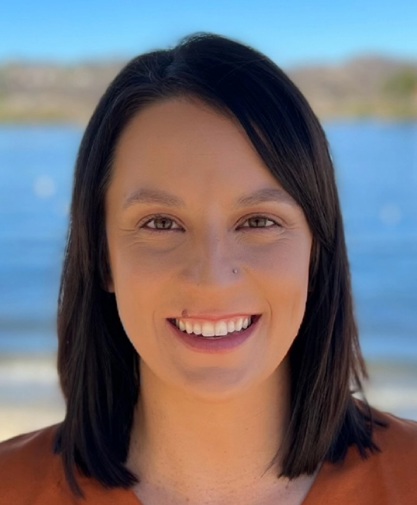
Lauren Hammond, health informatics personal statement tutor
Table of Contents
- Health informatics personal statement tips
- What to include - and avoid
- Health informatics personal statement examples
- Learn more about Lauren, our health informatics personal statement expert.
Health Informatics Personal Statements
On this page you'll find six examples of effective health informatics personal statements, written from the perspective of clinical workers transitioning to informatics, IT professionals entering healthcare, healthcare data analysts, public health professionals, and direct-entry applicants with technical backgrounds.
Each example is followed by a breakdown of what makes it work. Health informatics programs go by different names (MSHI, BMHI, MS in Biomedical Informatics, MS in Clinical Informatics), and the personal statement asks similar questions across them. Health information management (HIM) programs are a related but different field, as the FAQ below explains, so tailor your statement if you apply to both.
Lauren Hammond is our health informatics application essay expert and has been helping people write their graduate school personal statements for several years. Whether you just want some feedback on a draft, or you're staring at a blank Word doc and don't know where to begin, she is happy to help!
Contact Lauren directly at 951-395-4646 (phone or text), or send us an email. Working with Lauren is $225 per hour, or $995 for 5 hours.
Consultations are free.
3 Tips for Strong Health Informatics Personal Statements
1. Demonstrate That You Understand Both the Healthcare and the Informatics Sides
- Health informatics is a bridge discipline: The field exists at the intersection of healthcare, information science, data analysis, and organizational change management. Applicants who only demonstrate healthcare background without technical literacy - or technical background without healthcare context - are presenting half of what the admissions committee wants to see.
- Show that you understand the specific informatics problems in healthcare: Health informaticists work on problems such as EHR implementation and usability, clinical decision support, data interoperability, population health analytics, clinical workflow design, and health data privacy and security. Show that you know at least one of them well, from your own work or from close study.
- Connect both sides through a specific experience: The strongest statements describe a moment where the applicant saw a healthcare problem that was fundamentally an information problem - data that was unavailable when it was needed, a system that created friction rather than reducing it, an analysis that could have changed a clinical decision but wasn't accessible at the point of care.
Example:
"I've watched nurses spend forty-five minutes at the end of a shift reconciling documentation that a better-designed EHR would have captured in real time. I've watched residents order duplicate labs because results from an outside facility sat in a PDF instead of the structured data flow that the clinical decision support system read. Those are information architecture failures rather than clinical ones, and fixing them takes a different kind of training than clinical medicine provides."
2. Articulate a Specific Problem You Want to Solve
- Be specific about the informatics challenge you care about: Clinical decision support, precision medicine data infrastructure, public health surveillance systems, EHR usability, health equity in algorithmic tools, natural language processing for clinical notes, patient-generated health data - name the problem, not just the general field.
- Connect your specific problem to your professional background: A nurse who has lived with a hard-to-use EHR writes about usability from a different angle than an IT professional who has only read about it. Either angle works if you spell out how your background led you to the problem.
- Show that you understand the organizational and human dimensions of informatics: Many health informatics projects stall on adoption and change management, not on the technology. A system can work exactly as designed and still fail because clinicians find ways around it. Show that you understand this; a statement that treats better technology as the whole answer reads as naive to informatics faculty.
Example:
"The clinical decision support tool I watched fail most completely was poorly implemented rather than badly designed. Its alerts were clinically accurate. What it failed to account for was that nurses in our unit received an average of forty alerts per shift and had developed a reliable pattern of clicking through them without reading them. Better alert logic would not have fixed that. What the unit needed was fewer alerts and a clear rule about which ones deserved to interrupt a nurse."
3. Connect Your Goals to the Program's Specific Strengths and Your Career Direction
- Health informatics careers are diverse: Clinical informatics specialist, health data analyst, EHR implementation consultant, population health manager, healthcare IT project manager, chief medical information officer, biomedical research informaticist - name where you want to end up and connect the program's training to that direction.
- The clinical informatics vs. data science vs. health IT management distinction matters: Different programs emphasize different aspects of the field. Research the program carefully and make sure your statement reflects alignment with what the program actually trains.
- Industry or sector specificity is valuable: Hospital systems, health plans, federal agencies (CMS, CDC, VA), healthcare consulting, pharmaceutical companies, health technology startups - naming a sector makes your career goal concrete.
Example:
"Long term, I want to lead clinical informatics implementation at a regional health system. That means being the person responsible for making sure the technology investment the system has made actually changes clinical behavior, and not only documentation patterns. The role needs technical fluency to evaluate and configure systems. It also needs the clinical credibility to work with physicians and nurses as a peer rather than a vendor. The MSHI provides both, and the program's emphasis on clinical workflow analysis and change management is the specific preparation I need."
What to Include in Your Health Informatics Personal Statement - and What to Avoid
What to Include
- A specific healthcare information problem you have observed or worked on - name the actual challenge instead of describing a general interest in technology and healthcare
- Evidence of both healthcare and technical preparation - clinical background OR technical background alone is insufficient; demonstrate both, even if one is stronger
- Your intended career direction - clinical informatics, population health analytics, EHR implementation, health data science, CMIO track; be specific
- Any relevant experience with health IT systems - EHR work (Epic, Cerner, etc.), data analysis, health IT project management, clinical workflow design, research informatics
- Why the MSHI or health informatics degree specifically - rather than an MBA, an MPH, or a data science degree; explain why this particular credential serves your goals
- Program-specific detail - faculty research, a clinical informatics practicum, a health data science concentration, industry partnerships
What to Avoid
- Overly technical statements that ignore the healthcare context - health informatics takes more than computing skill applied to healthcare; you also need to understand clinical workflows, patient care, and how healthcare organizations behave
- Statements that could describe any healthcare management degree - health informatics is distinct from health administration, public health, and data science; show that you understand the difference and that this degree serves your specific goals
- "Technology will fix healthcare" - statements that treat technology as inherently beneficial and implementation as a detail signal naivety about the field's hardest problems; show that you understand the organizational and human complexity
- Generic enthusiasm for EHRs or big data - everyone in 2026 knows that healthcare generates a lot of data; show what specifically you want to do with it and why
- Submitting the same statement to clinical informatics and data science programs - the training and career trajectories are different; tailor accordingly
Video: 7 Ways to Write a Crappy Graduate School Personal Statement
For more personal statement tips, check out Vince's video: 7 Ways to Write a Crappy Graduate School Personal Statement.
Some programs ask for a statement of purpose rather than a personal statement. If one of yours does, our statement of purpose examples show three full versions with paragraph-by-paragraph analysis.
6 Health Informatics Personal Statement Examples
Below are six health informatics personal statement examples. After each one, we explain what it does well.
We wrote these six ourselves as teaching models. The applicants are invented, the programs are left generic on purpose, and nothing here is a real client's statement. Read them for structure and for how specific the detail gets, not as text to borrow.
Hospital Pharmacist to Clinical Informatics
On a night shift two years ago, I was verifying a heparin order for an 84-year-old woman admitted with a pulmonary embolism. The order came from our weight-based heparin order set, and the dose matched the protocol for the weight in her chart: 92 kilograms. She was a small woman. I opened her last admission and found a measured weight of 42 kilograms. Someone in the emergency department had entered her stated weight of 92 pounds into the kilogram field, and the order set had calculated a bolus and infusion rate for a patient more than twice her size.
I called her nurse before the bolus was given, we weighed her on the bed scale, and the order was corrected. She was not harmed. What stayed with me was that every step had worked as built. The order set did the math correctly. The verification screen showed me the dosing weight but not the weight history, so catching the error depended on my deciding to go looking.
I brought the case to our medication safety committee, and that is how I started working with our informatics pharmacist. Over the next year I helped her review our anticoagulation order sets and test a new rule that flags any dosing weight more than 10 percent off the most recent measured weight. I sat in on build meetings and learned how much of the work happens outside the build itself: deciding who sees the warning, when it fires, and what the person seeing it is supposed to do next. Our first version fired on almost every patient whose last measured weight was years old, and we had to narrow it within a week. That week taught me more about alert design than anything I had read.
I know medication-use workflows well, from order entry through verification to administration at the bedside. I am less prepared on the technical side. I can write basic SQL queries against our reporting database, and I have started learning RxNorm and how medication data moves between systems, but I have no formal training in data standards, system design or evaluation methods, and I have never led a project of my own.
I want to work in clinical informatics on medication safety, building and maintaining the order sets and decision support that pharmacists, nurses and prescribers rely on every shift. The MSHI would give me structured training in health data standards, workflow analysis and project management, which I have so far picked up piecemeal from committee work. I am applying to this program for its clinical informatics concentration and its practicum, which would put me on an implementation team before I am asked to lead one at my own hospital.
Why this statement works:
- The opening is one night shift with numbers that check out (92 pounds entered as 92 kilograms, a measured 42 kilograms on the prior admission). The reader can follow exactly what went wrong, which a line like "I have seen how EHR errors affect patients" never lets them do.
- "Every step had worked as built" names the informatics problem: the error came from a data-entry field and a screen that hid the weight history, not from a careless clinician or a bad formula. That is the distinction informatics faculty want applicants to make on their own.
- The first version of the weight alert misfired and had to be narrowed, and the applicant was part of that. A weaker draft would report only the success; this one shows alert design learned by doing it.
- "I have never led a project of my own" tells the reader what the MSHI is for. Claiming full technical readiness would make the degree look unnecessary.
- The goal is narrow (medication-safety order sets and decision support), and both program reasons, the concentration and the practicum, connect to it directly.
IT Professional to Health Informatics
I have been a software engineer for seven years, working on enterprise data systems for financial services clients. I am technically proficient and professionally successful. For the past two years I have been increasingly certain that I am working on the wrong problem.
My move toward health informatics began with a family experience. My father was hospitalized for a cardiac event, and in the weeks after discharge his records ended up scattered across offices that could not see each other's data. His cardiologist did not have his primary care records. His primary care physician did not have his discharge summary for eleven days. The medication list he left the hospital with differed from the one his pharmacist had. No single person caused any of this. Each gap was a failure of health information exchange, a problem I recognized from years of moving data between systems that were never designed to talk to each other.
I come at these problems from the technical side. I know what FHIR APIs are and why they matter, and what healthcare data infrastructure looks like at a systems level. I have also read enough about information blocking rules and data-use agreements to suspect that the biggest barriers to interoperability are contractual and organizational, not technical. What I lack is healthcare context, especially how clinical work actually happens and how health systems decide what data to share. That is what I want the MSHI to give me.
My goal is to work in health data interoperability and information exchange, specifically on the technical and policy infrastructure that makes it possible for a patient's information to follow them through the healthcare system rather than being siloed at each encounter. I am applying to this program because of its health information exchange curriculum and its faculty research in health data standards and interoperability.
Why this statement works:
- The first paragraph states the career change plainly ("I am working on the wrong problem") and saves the reason for the next paragraph, so the reader keeps going to find out what the right problem is.
- The father's hospitalization comes through three checkable failures: the cardiologist without primary care records, the eleven-day wait for a discharge summary, and a medication list that didn't match the pharmacy's. Each one is an information-exchange failure, which keeps the story about informatics rather than about the family.
- The applicant claims technical skill they can back up (FHIR APIs, data infrastructure) and then admits the hardest barriers are probably contractual and organizational. A software engineer's weaker draft would treat interoperability as a coding problem.
- "What I lack is healthcare context" is an honest gap, and it tells the reader exactly what the degree would add for this applicant.
- The goal names one area, health information exchange, and the program reasons (the HIE curriculum and standards research) match it.
Healthcare Data Analyst to MSHI
Most of the analysis I produce doesn't change what happens to patients, and I've stopped being able to ignore that. For four years I've been a healthcare data analyst in a hospital system's population health analytics department. I build dashboards and run queries, and I produce the reports that help clinical and operational leaders understand what's happening in their patient population. I'm good at the analysis.
The gap I keep running into sits between the analysis and the clinical workflow. I can produce a report identifying the 500 patients in our ACO who are at highest risk for a preventable hospitalization in the next ninety days. What I can't do is design the care management workflow that gets those patients called and triaged, then connected to the right intervention before they arrive in the ED. That connection, between what the data shows and what the clinical team actually does about it, is the health informatics problem I want to be trained to solve.
I work daily in SQL, Python and R, pulling data from Epic's Clarity database and Caboodle data warehouse. I'm familiar with the data governance structures that determine what can and can't be done with healthcare data. What I need from the MSHI is training in clinical informatics, project management and change management, so I can work on the organizational problems that keep good analysis from changing care.
I want to move into a clinical informatics or population health management leadership role, eventually at the director or VP level. I want the organizational authority to close the loop between data and clinical action. I'm applying to this program because of its population health informatics concentration and its dual emphasis on technical and organizational dimensions of the field.
Why this statement works:
- The opening admits that most of the applicant's analysis doesn't change patient care. That is an uncomfortable thing for a data analyst to say, and it is the whole reason this person needs an informatics degree rather than more analytics training.
- The ACO example gives a number (the 500 highest-risk patients over ninety days) and then names what the analyst can't do: build the workflow that gets those patients called, triaged and connected to care before they reach the ED. The gap between a report and a clinical action is a core informatics problem.
- Naming Clarity and Caboodle tells an informatics reader the applicant pulls data from Epic's reporting databases every day. "Strong data skills" would tell them nothing.
- The leadership goal follows from the gap: closing the loop between data and clinical action takes organizational authority, so the population health concentration is a logical fit.
Public Health Professional to Health Informatics
For three years I have worked in public health surveillance, contributing to the data infrastructure that monitors disease trends and tracks vaccination rates, and that generates the reports public health agencies use to make resource and policy decisions. COVID-19 exposed the limitations of that infrastructure in ways that were visible to everyone and that I experienced from the inside: during the winter surge I spent most mornings reconciling electronic lab reports by hand, because each lab sent results in its own format, and our case counts ran three or four days behind the decisions they were meant to inform.
I have training in epidemiology and biostatistics, and I use SAS, R and SQL daily in surveillance work. I have also completed coursework in database systems, and I have worked with NEDSS-based case reporting, syndromic data from the BioSense Platform, and REDCap forms for case investigation.
The problems I worked around during the pandemic were old ones. Our systems carried years of technical debt and had never been built for that volume of data or for exchanging it with hospital EHRs. Fixing them takes skills I don't have yet: health data standards such as HL7 and FHIR, cloud data architecture, and the privacy rules that govern what can be done with population health data. That is the training I want from a health informatics program.
My goal is to work in public health informatics, designing surveillance systems that can handle the volume and speed of an emergency response. I am applying to this program because of its public health informatics track and its faculty research on outbreak surveillance and health data interoperability, which address the problems I spent the pandemic working around.
Why this statement works:
- The writer says what the pandemic looked like from their desk: reconciling electronic lab reports by hand every morning while case counts ran three or four days behind. That separates them from applicants who only read about surveillance failures in the news.
- The tools named (SAS, R, SQL, NEDSS-based case reporting, the BioSense Platform, REDCap) are ones a surveillance epidemiologist actually uses, so the reader can judge the applicant's starting skill level.
- "Years of technical debt" frames the failures as old design limits rather than one bad year, and the same paragraph lists the skills needed to fix them (HL7 and FHIR, cloud data architecture, privacy rules). A weaker draft would say "I want to improve public health data" and stop.
- The statement ends on the goal and the program's track and faculty research, tied back to "the problems I spent the pandemic working around," so the program choice reads as a consequence of the experience.
Physician to Clinical Informatics (Executive MSHI)
Our institution has spent heavily on clinical decision support, including sepsis alerts, drug interaction checks and care gap reminders, and the results have been uneven. The specific problem I want to address is clinical decision support that clinicians actually use.
The tools that work were designed with clinical workflow in mind. They alert appropriately (rarely, for things that matter) and give actionable information in the right context. The tools that fail were designed from the data side alone. Their logic is correct, and clinicians ignore them anyway. I know which is which because I'm one of the clinicians who either reads the alert or clicks through it in three seconds without processing it.
After eight years as a practicing internist, I'm applying to the MSHI because the part of my work I find most technically interesting, and most broken, is the information infrastructure that underlies clinical care. I've reached the point where I want to fix it rather than work around it.
I have served on two EHR implementation committees and led a quality improvement project built on our clinical data. I have a functional understanding of our institution's Epic environment and have worked with our informatics team on CDS rule design. Committee work also showed me what I am missing: formal training in informatics methods and health data standards, and in how to design and evaluate a system before it reaches clinicians.
My long-term goal is a CMIO (Chief Medical Informatics Officer) role at an academic health system, leading the informatics function with both clinical credibility and formal informatics training. The program's physician informatics track and its executive format, which allows me to continue clinical practice during training, are why I am applying.
Why this statement works:
- The opening names the kinds of decision support the institution bought and says the results were uneven, which tells the reader this physician has watched the same tools succeed and fail in one place.
- "Clicks through it in three seconds without processing it" puts the writer inside the alert fatigue problem. Admitting that gives them more standing to write about it than criticizing other clinicians would.
- The committee work and CDS rule design with the informatics team show the applicant is already doing informatics work, and the statement says plainly what that work showed was missing: methods, standards, and design and evaluation.
- The CMIO goal fits an internist with eight years of practice, and the executive format answers the obvious question of how a practicing physician will fit in the training.
Computer Science Graduate to Health Informatics
My senior thesis was on automated extraction of clinical information from unstructured text. Specifically, it extracted medication names and dosages, plus adverse events, from clinical notes in a de-identified dataset. I majored in computer science, and my undergraduate years went to machine learning applications for natural language processing. The work was technically interesting, and it showed me a problem I hadn't expected: a model that performs well on a research dataset can still fail in a hospital, usually for reasons that have little to do with the model.
Clinical NLP tends to fail in deployment for four reasons: the training notes don't look like the notes a given hospital produces, the production environment has computing and privacy limits the research setup never had, clinicians don't trust the output, and nobody has worked out where the output fits in the way clinical decisions get made. I spent my senior year on the technical problem and only partly understood the organizational one, which is the part I want the MSHI to teach me.
I have strong technical preparation in machine learning, Python and SQL, plus experience with clinical NLP libraries. I'm familiar with de-identification methods and with HIPAA requirements for secondary use of clinical data. I have also completed an internship in a hospital's clinical analytics department, where I worked on an NLP project for adverse drug event detection. The model's flags went to a pharmacist review queue, and within a month most of them were being closed unread because no one had planned when the pharmacists would have time to look at them.
My goal is to work in clinical NLP and AI implementation in healthcare, specifically on the translation from research prototype to deployed clinical tool. I am applying to this program because of its biomedical NLP research group and its clinical informatics implementation curriculum, which addresses both sides of the problem I want to solve.
Why this statement works:
- The thesis is described precisely (medication names, dosages and adverse events extracted from de-identified clinical notes), so the reader knows what the applicant actually built.
- The second paragraph lists four ways clinical NLP fails after deployment, and only one of them is about the model. That list is the argument for an informatics degree over more computer science.
- The internship detail, flags closed unread because nobody planned when pharmacists would review them, turns a general claim about implementation into something the writer watched happen.
- The skills paragraph pairs technical tools with de-identification and HIPAA rules for secondary use of clinical data, which shows the applicant knows clinical data comes with limits on access.
- The goal (moving clinical NLP from research prototype to deployed tool) matches both program features named: the biomedical NLP group and the implementation curriculum.
Have a draft? Try our free personal statement checker. It checks your length, opening line, stock phrases, signs of AI writing, and sentence rhythm. Your draft never leaves your browser.
Feeling stuck?
Lauren Hammond, our health informatics personal statement editor, would be happy to help - whether you just need a second opinion on a draft or you're starting from scratch.
Text or call her at 951-395-4646, or send us an email.
Lauren works with you on Zoom and in Google Docs, so you get both real-time coaching and clean, trackable revisions. Most clients use 2 to 4 sessions.
Meet Lauren Hammond, health informatics personal statement tutor
Lauren: I earned my Bachelor's Degree in Literature and Writing, with a concentration in Writing, at California State University San Marcos (CSUSM) and my Master's Degree in English and Comparative Literature at San Diego State University (SDSU).
I completed my PhD in English at the University of California Riverside (UCR) in September 2023 and then worked as UCR's Graduate Writing Center Specialist and graduate Fulbright Program Advisor. I now teach at Azusa Pacific University, where I'm an Assistant Professor and Lead Faculty in the Writing Program.
I have been a writing consultant for more than 10 years, and I've helped people with research writing, thesis/dissertation projects, rhetorical and literary analyses, writing in the humanities, grammar/sentence mechanics, and more. My work for VKTP includes thesis and dissertation editing and coaching, especially in the humanities and social sciences, as well as graduate school application materials such as personal statements, diversity statements and research statements, and job market materials for academic and alt-academic positions, including resumes, CVs and cover letters.
During my downtime, I love hanging out with my husband, our daughter, and our two dogs, Link and Leia! My favorite activities are going on the boat, cruising on the golf cart, and making our way through all of the local eateries. When we aren't out and about, I typically enjoy reading and watching movies.
Working with Lauren is $225 per hour or $995 for a package purchase of 5 hours. You can reach her at 951-395-4646 (phone or text), or by sending us an email.
P.S. Our partner Julie can also help you prepare for your health informatics admissions interviews! Learn more about her professional voice training for interview prep.
P.S. Some health informatics programs require the GRE - we can help with that too!
Love For Lauren
Frequently Asked Questions
How long should a health informatics personal statement be?
Most programs request 500-1,000 words, though some use structured prompts instead. Use the space to articulate a specific informatics problem you want to solve, demonstrate both healthcare and technical preparation, and name a clear career direction - not to summarize your resume.
What do health informatics programs look for in applicants?
Evidence of both healthcare exposure and technical preparation - balance varies by program. Strong applicants demonstrate understanding of real healthcare information problems, a clear career direction, and specific preparation relevant to their background. Some health informatics programs still require or recommend the GRE, and many have dropped it, so check each program's requirements.
Do I need clinical experience to apply?
Not necessarily - it depends on the program's focus. Clinical informatics programs prefer clinical backgrounds; data science-oriented programs may be more accessible to applicants with technical backgrounds. Be honest about your background and explain how it prepares you for the program's training and your intended career direction.
What is the difference between health informatics and health information management?
Health informatics (MSHI) focuses on using IT to improve healthcare delivery, clinical decision-making, and care quality. Health information management focuses on medical records, coding, compliance, and healthcare data governance. Biomedical informatics is broader and more research-oriented. Check each program's curriculum carefully to ensure alignment with your goals.
Can I use AI to write my health informatics personal statement?
You can use AI to brainstorm or outline, but informatics readers are looking for your specific technical and clinical experiences and a real grasp of the field's problems, and AI can't supply either. Write the statement yourself or work with Lauren.
Should I apply to an MSHI or an MBA with a health IT concentration?
An MSHI provides deeper training in health informatics methods, clinical workflow analysis, and health data standards - it's the stronger credential for clinical informatics and health IT leadership roles within healthcare organizations. An MBA with health IT concentration is more valuable for consulting or cross-industry strategy roles. Research both curricula before deciding.
BTW, Lauren can also help with:
- Dissertation and thesis editing
- Graduate school CV and resume examples
- Teaching statement examples
- Academic cover letter examples
- Diversity statement examples
- Research statement examples
- MHA (Health Administration) personal statements
- MPH statement of purpose
- MBA personal statements
- MS in Business Analytics personal statements
- Physician Assistant personal statements
- Nurse Practitioner personal statements
- CRNA personal statements
- Nursing school personal statements
- Dental school personal statements
- Podiatry (DPM) personal statements
- Audiology (AuD) personal statements
- Radiation Therapy personal statements
- PharmD personal statements
- Optometry (OD) personal statements
- MSW (Social Work) personal statements
- Genetic Counseling personal statements
- Clinical Psychology PhD personal statements
- PsyD personal statements
- Marriage and Family Therapy personal statements
- Physical Therapy personal statements
- Speech-Language Pathology personal statements
- Occupational Therapy personal statements
- Law School personal statements
- Master's degree personal statements
- Master of Public Policy personal statements
- Medical Residency personal statements
- Veterinary School personal statements
- PhD personal statements
- Post Doc personal statements
- Fellowships and Grants personal statements