Radiation Therapy Personal Statement Examples and Tutoring
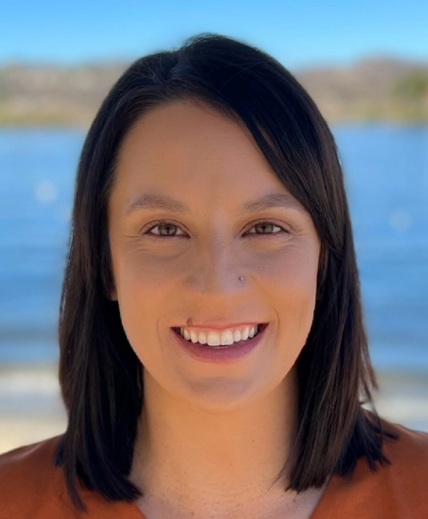
Lauren Hammond, radiation therapy personal statement tutor
Table of Contents
- Radiation therapy personal statement tips
- What to include - and avoid
- Radiation therapy personal statement examples
- Learn more about Lauren, our radiation therapy personal statement expert.
Radiation Therapy Personal Statements
On this page you'll find six radiation therapy personal statement examples, plus guidance for medical dosimetry applicants. Each example is followed by notes on what makes it work.
Note that radiation therapy (RT; certificate, associate and bachelor's programs) prepares clinicians who deliver radiation treatments and care for patients through their course of treatment, while medical dosimetry (the credential is the CMD, Certified Medical Dosimetrist) is a more technical specialty focused on the physics-based treatment planning that determines how radiation is delivered. If you are applying to a dosimetry program specifically, the fourth example and the dosimetry-specific FAQ question below address your situation directly.
Lauren Hammond is our radiation therapy and medical dosimetry application essay expert and has been helping people write their graduate and professional school personal statements for several years. Whether you just want some feedback on a draft, or you're staring at a blank Word doc and don't know where to begin, she is happy to help!
Contact Lauren directly at 951-395-4646 (phone or text), or send us an email. Working with Lauren is $225 per hour, or $995 for 5 hours.
Consultations are free.
3 Tips for Strong Radiation Therapy Personal Statements
1. Show That You Understand the Dual Nature of the Profession
- Radiation therapy combines technical precision with intensive patient support: Radiation therapists are the clinicians patients see every weekday, often for several weeks, during a course of treatment. The job is technical (operating linear accelerators, checking patient position with daily imaging, delivering plans within tight tolerances), and it is also about people, because many patients are frightened, tired and coping with side effects that build as treatment goes on.
- Name both dimensions explicitly: Statements that focus only on the technology signal that the applicant hasn't fully understood the patient care component. Statements that focus only on patient relationships signal that the applicant hasn't engaged with the technical side. The strongest statements show real interest in both.
- Connect both dimensions to your specific experience: If you've observed or worked in a radiation oncology department, describe something technical you observed and something patient-related that stayed with you. Showing both in your own experience is what convinces a reader.
Example:
"When I started shadowing in the radiation oncology department, I didn't know how much of a therapist's work happens while the beam is off. One patient's treatment took four minutes, but getting him onto the table took ten, because he wanted to tell the therapist about his new grandson and then ask whether his fatigue meant the treatment wasn't working. She answered him, set him up, checked his position on the imaging and still kept the schedule on time. By his last week he was asking for her by name."
2. Show What You Know About Radiation Oncology Science
- Show that you understand what radiation therapy does biologically: Ionizing radiation, DNA damage, the cell cycle, fractionation schedules and the radiobiology behind different treatment approaches are all fair game. Applicants who write about the science at this level show that they've prepared and that the subject interests them.
- Demonstrate familiarity with treatment delivery technology: Linear accelerators, IMRT, VMAT, SBRT, proton therapy and brachytherapy: knowing what each one is and when it's used shows you were paying attention while you shadowed.
- Connect the science to the patient outcome: The best statements tie the science to what it means for patients. If you can explain why one tumor is treated with a 30-fraction conventional course and another with 5-fraction SBRT, and what that difference means for the patient's daily life and outcome, you're showing that you think about the science and the clinic together.
Example:
"The part of my shadowing I thought about most was an hour with a dosimetrist. She was planning SBRT for a spinal metastasis that sat a few millimeters from the spinal cord. She showed me the dose-volume histogram, where the line for the cord had to stay under its limit while the tumor still got its prescribed dose, and then adjusted the plan and ran it again until both goals were met. I had studied dose falloff in physics class. That afternoon I watched someone use it to protect a patient's spinal cord."
3. Address Your Motivation for Radiation Therapy Specifically
- Why not nursing, radiography, or another imaging/treatment modality? Radiation therapy is focused on oncology and technically specialized, and therapists see the same patients daily for weeks, which is unusual in the radiologic sciences. Explaining what drew you to this specialty rather than an adjacent one shows you've thought the choice through.
- Personal experience with cancer or cancer treatment is common - handle it carefully: Many applicants to radiation therapy programs have a family member who received radiation treatment. This can be a meaningful part of your story, but it shouldn't be the whole story. Programs want to see professional preparation and clinical understanding alongside or instead of the personal narrative.
- Name the patient population or disease site you most want to work with: Head and neck, breast, prostate, pediatric oncology, CNS - naming a specific area of focus, even tentatively, shows clinical engagement rather than general interest.
Example:
"My grandfather was treated for prostate cancer, and that's how I first heard of radiation therapy. My reasons for applying come from the 80 hours of shadowing I've done since. I watched therapists line up patients to within a few millimeters every morning, and I watched the same therapists notice when a usually talkative patient went quiet in his third week and ask the nurse to see him. I want a job where both of those are part of the work."
What to Include in Your Radiation Therapy Personal Statement - and What to Avoid
What to Include
- Evidence of meaningful clinical observation in a radiation oncology department - describe specific cases, procedures, or patient interactions, not just your total hours
- Demonstration of both technical and patient care interest - the dual nature of the profession should be reflected in your statement
- Engagement with the science - radiation biology, treatment technology, fractionation, treatment planning; show that you've engaged with the technical foundations, not just the clinical environment
- Your intended focus or patient population - a disease site, a treatment modality, a patient population you most want to work with
- Any relevant healthcare or technical experience - radiography, medical imaging, cancer nursing, physics or engineering background for dosimetry applicants
- Program-specific detail - a clinical rotation site, a faculty member's research, a specific technology (proton therapy, MR-linac, brachytherapy) the program offers
What to Avoid
- Personal cancer narrative as the primary motivation - it's acceptable as part of the story; it should not substitute for professional preparation and clinical understanding
- Focusing only on patient relationships while ignoring the technical complexity - radiation therapy is a technical specialty; showing no engagement with the physics, biology, or technology signals inadequate preparation
- Describing radiation therapy as "painless" or "easy" for patients - patients don't feel the beam, but a course of treatment brings side effects and fatigue that build over weeks. Applicants who understand this read as better prepared than those who describe radiation as a gentle alternative to chemotherapy
- Generic statements about oncology or cancer care - many healthcare providers work with cancer patients; explain what is specific to radiation therapy that draws you to this modality
- Submitting the same statement to every program - programs with proton therapy centers, brachytherapy programs, or strong research emphases want to see that reflected; tailor accordingly
Video: 7 Ways to Write a Crappy Graduate School Personal Statement
For more personal statement tips, check out Vince's video: 7 Ways to Write a Crappy Graduate School Personal Statement.
Some programs ask for a statement of purpose rather than a personal statement. If one of yours does, our statement of purpose examples show three full versions with paragraph-by-paragraph analysis.
6 Radiation Therapy Personal Statement Examples
Below are six radiation therapy personal statement examples. After each one, we explain what makes it work.
We wrote these six ourselves as teaching models. The applicants are invented, the programs are left generic on purpose, and nothing here is a real client's statement. Read them for structure and for how specific the detail gets, not as text to borrow.
Radiologic Technologist to Radiation Therapy
For four years I've worked as a diagnostic radiologic technologist: I produce images, and I don't treat. The work takes technical precision, and I like doing it well. The patients I image are often there because something has been found, or might have been found, or needs to be ruled out. My contact with them lasts as long as the exam. I position them, give the breath-hold instructions, take the images and call the next name. Lately I've wanted to know what happens to them afterward.
A colleague made the transition from diagnostic radiology to radiation therapy. After that I began shadowing in the radiation oncology department at our institution, and I found the clinical context I'd been missing. The patients I observed came for a treatment course instead of a single exam: weeks of daily appointments, each one technically demanding, each one a continuation of a relationship the therapists kept up with evident care.
I watched a therapist set up a head-and-neck patient for the fifteenth treatment of a thirty-five fraction course. He was tired, the skin on his neck was red along the edge of his mask, and he asked whether his throat was supposed to hurt this much. The therapist told him that the soreness often keeps building until treatment ends, checked where the mask was rubbing, and paged the nurse to see him before he left. The beam itself was on for only a few minutes. Most of his time in the room went to the mask, the setup imaging and that conversation about his throat.
I want to practice in a comprehensive cancer center. Eventually I'd like to specialize in head and neck or CNS cases, where the technical complexity and the demands of the patient relationship are highest. I'm applying to this program because its clinical rotations include a Commission on Cancer-accredited center with a large head-and-neck caseload.
Some of what I know carries over: radiation physics and protection, patient positioning, reading a setup image, and keeping a busy schedule moving. What I don't have is oncology training, any experience with treatment planning, or practice with immobilization devices like the thermoplastic masks I watched the therapists fit.
Why this statement works:
- The first sentence, "I produce images, and I don't treat," gives the reason for the switch right away. A radiographer who opens with "I've always been drawn to oncology" leaves the reader guessing why someone with a working credential wants to start over.
- The head-and-neck scene has details a therapist on the committee will check: the fifteenth of thirty-five fractions, red skin along the mask edge, a sore throat that keeps building. They match how a real course goes, so the reader trusts the rest of the observation.
- "The beam itself was on for only a few minutes" argues for the patient-care side of the job with a fact. A weaker draft would make the same point with a general sentence about caring for patients.
- The last paragraph sorts what carries over (physics, positioning, setup images) from what doesn't (planning, masks). Programs see many radiographers, and the ones who say exactly what they still need to learn are easier to place.
- The program reason names a rotation site and a caseload that fits the head-and-neck goal, so the "why us" ties back to the scene instead of reading as pasted in.
Navy Nuclear Electronics Technician to Radiation Therapy
For six years I was an electronics technician in the Navy's nuclear power program. After Nuclear Power School and prototype training, I stood watch in a submarine reactor plant, ran instrument checks at the start of every shift, and wore a dosimeter every day I was aboard. I learned to treat radiation as a hazard you measure and keep as low as you reasonably can, a rule the Navy drills into you from the first week of training.
When I left the service I wanted work that used that training on people instead of machinery. A shipmate who had moved into medical physics arranged for me to observe in the radiation oncology department where he works, and I spent seventy hours there over five weeks. I expected the linear accelerators to hold my attention, and the morning QA checks did feel familiar within an hour. What I hadn't expected was how much of the therapists' day went to coaching patients.
The patient I remember best was a woman being treated for left-sided breast cancer with deep inspiration breath hold. A deep breath moves the heart farther from the treatment field, so the therapists needed her to take the same breath, to the same depth, for every beam on every day of her course. A surface imaging system tracked her chest, and the beam ran only while her position stayed inside the set range. On her first day she couldn't hold long enough, and the beam kept stopping. The therapist didn't hurry her. She talked her through a few practice breaths, had her watch a display of her own breathing trace, and told her that most patients get the hang of it within a few sessions. In her second week I saw the same patient hold steady through each beam while the therapist counted her down.
The therapists worked under a rule I already lived by: when a reading is out of range, you stop and find out why. Here the reading came from a nervous patient's breathing, and getting it back in range took coaching and time. That is the part of the job I'm least prepared for. In the Navy I never had to explain anything to a frightened patient. Since leaving, I've volunteered two evenings a week at a cancer center's patient resource desk, where I check people in for support groups and walk new patients to their first appointments. I've also taken anatomy and physiology and medical terminology at a community college, since my technical training never covered the human body.
I'd like to start my career in a department that treats a lot of breast and thoracic cases with breath-hold techniques and surface guidance. Later I want to take on more of the daily machine QA, which I already understand from the operator's side. I'm applying to this program because its clinical rotations include a center that uses surface-guided treatment every day, and because I want to learn to coach patients like that one alongside therapists who do it well.
Why this statement works:
- The first paragraph turns military jargon into things a program director understands: shift instrument checks, a dosimeter worn every day, keeping exposure as low as you reasonably can. A weaker draft would name the Navy rating and expect the reader to translate it.
- The breath-hold scene explains why the technique is used (a deep breath moves the heart farther from the field) before it shows the therapist at work. That shows the applicant understood what he was watching, which is the point of shadowing hours.
- "When a reading is out of range, you stop and find out why" links the old job to the new one through one specific habit. It does more than a general line about the military teaching discipline.
- He says plainly that patient care is his weak spot and lists what he's doing about it (the resource desk, anatomy and physiology, terminology). Readers trust a named gap with a plan more than a statement that has no gaps at all.
- The program reason points back to the same scene (surface guidance, breath-hold), so the closing paragraph reads as a decision he made after shadowing.
Cancer Survivor / Personal Experience to Radiation Therapy
When I was nineteen, I received radiation therapy for Hodgkin lymphoma: fifteen fractions to my mediastinum over three weeks, after four cycles of chemotherapy. I still remember one of my therapists, who found out I was studying for finals and asked about them every morning while she lined up my setup marks. That experience is part of why I'm applying. What I'm actually writing about is the professional preparation I've built in the years since.
I've worked as a medical assistant in an oncology practice for three years, mostly in the chemotherapy and infusion setting. That job showed me cancer care from the staff side. I room patients and take vitals, and I've seen how a long infusion day wears on someone who is nauseated, tired and worried about the next scan. I know a good patient day from a hard one, and I know what the clinical team does differently on each. I've also gone back to the radiation oncology department where I was treated. This time I came as an observer, to understand the clinical environment from the provider side.
In eighty hours of shadowing, I watched the same therapists treat the same patients every day for weeks. One man in his fourth week of prostate treatment came in upset because he hadn't been able to fill his bladder enough for his setup. The therapists moved him back twenty minutes, found him a water bottle, and treated him once he was ready, without making him feel he had failed at something. Decisions like that, made every day with the same people, are the part of the job I want.
I want to practice in a comprehensive cancer center. Lymphoma and thoracic cases interest me most, partly because of my own treatment and partly because I want to understand planning choices, such as limiting dose to the heart and lungs, that I didn't know to ask about at nineteen. I'm applying to this program for its clinical training volume and its rotation at a center that treats many lymphoma patients.
Why this statement works:
- The diagnosis and treatment get one plain sentence, and then the statement moves on. That is how a personal cancer history should be handled. A weaker draft would spend two paragraphs on the diagnosis and leave little room for preparation.
- The therapist who asked about finals while lining up setup marks is one remembered detail. It does more than a general line like "my therapists inspired me," and it shows the applicant noticed the routine of treatment even as a patient.
- "What I'm actually writing about is the professional preparation I've built" tells the reader where the statement is going, and the next paragraph delivers: three years as an oncology medical assistant, rooming patients and watching infusion days from the staff side.
- The bladder-filling scene shows therapists using judgment on an ordinary day. It also shows the applicant understood a routine part of prostate treatment, which tells a reader more than calling the relationship "unlike any other."
- The disease-site interest ties back to the applicant's own treatment through a specific question (dose to the heart and lungs), so the personal history points forward instead of serving as the main reason.
Medical Dosimetry Program Applicant
On our treatment team, I'm the therapist who asks the dosimetrist why a plan uses a particular beam arrangement, or what the DVH shows for the structures next to the target. I have been a radiation therapist for five years, treating patients and keeping a busy linear accelerator schedule on time. The dosimetrist I work with most closely has answered my questions for two years. Last spring she let me sit with her while she replanned a head-and-neck patient who had lost enough weight that his mask no longer fit, and I watched her rework the plan to keep his parotid glands and spinal cord under their limits. That afternoon is when I decided to apply.
Treatment planning means designing a dose distribution that covers the target volume with the prescribed dose while keeping nearby organs at risk under their limits. It is a physics and optimization problem, and the dosimetrist works it out with the medical physicist and the radiation oncologist. The difference between a plan that meets the clinical goal and one that puts too much dose on an organ at risk is often small, and working inside that difference is the job I want.
I have completed the physics and mathematics coursework this program requires. I have also reviewed the medical dosimetry curriculum, to check that my clinical background and my technical gaps line up with what the program is designed to address. My goal is to become a certified medical dosimetrist and to practice in a comprehensive cancer center with active research in treatment planning for complex disease sites.
Most dosimetry students without RT experience don't have the clinical context I have. I know how a plan looks on a patient rather than on a screen, and I know what immobilization constraints affect planning. I also know that patient positioning reproducibility and respiratory motion can compromise a technically perfect plan in practice; so can weight changes over a treatment course. I want to bring that knowledge to the planning side, where it can be accounted for before the patient is on the table.
Why this statement works:
- The opening makes the applicant the therapist who keeps asking the dosimetrist questions, which shows the interest has held up over two years of daily work. A weaker draft would say "I have always been fascinated by treatment planning."
- The replanned head-and-neck patient, whose mask stopped fitting after weight loss, is a real and common reason plans get redone. It shows the applicant has watched a plan change because a patient's body changed.
- The definition of treatment planning names the dosimetrist's partners, the medical physicist and the radiation oncologist. Readers who are dosimetrists themselves will notice that the applicant knows who signs off on what.
- The final paragraph lists what a therapist knows that a direct-entry student may not: immobilization limits, setup reproducibility, breathing motion, weight change. Each item is a planning problem, so the background reads as preparation for this program and not as a description of a different job.
Healthcare Worker (Oncology Nurse) to Radiation Therapy
The patients I looked after talked about radiation therapy differently than they talked about chemotherapy. Neither one was easy. But they talked about their therapists by name, as people who had seen them every weekday for six weeks. On our unit, the nurses and residents changed every few days, and patients rarely remembered our names. I wanted to know what the therapists were doing that made them remember theirs.
I have been an oncology nurse for four years, working primarily on a medical oncology inpatient unit. I have cared for patients across the full treatment spectrum: newly diagnosed patients beginning chemotherapy, patients in remission being monitored, and patients whose disease has recurred and who are working out what that means. I have also cared for patients whose primary treatment modality was radiation and who were referred to our unit for management of acute treatment toxicities. One woman, admitted with severe esophagitis during chemoradiation for lung cancer, explained to me why she was set on finishing her last eight fractions, and I learned more from her than from anything I had read.
I shadowed in a radiation oncology department for sixty hours over three months. It also made something clear to me. I want the kind of care where I see the same patient every day for weeks, which my inpatient job almost never allows. The technical side draws me too. I watched a therapist compare the day's cone-beam CT with the planning scan, see that a patient's tumor had shrunk, and flag it so the physicist and the radiation oncologist could decide whether to replan.
My nursing background applies directly. I understand chemo regimens and how they interact with radiation, and I have managed acute radiation toxicities in the inpatient setting. I also know how to support a patient through a prolonged and difficult treatment course. What I lack is training in treatment delivery, imaging and radiation physics, and this program's clinical rotations are where I want to get it.
Why this statement works:
- The opening reports what patients said about their therapists, seen by a nurse who wasn't one of them. The reason for the switch comes through other people's words, which is harder to fake than "I want longer patient relationships."
- The patient with esophagitis who was set on finishing her last eight fractions shows the nurse has managed real radiation side effects, which is the strongest part of her background for this program.
- The cone-beam CT scene answers the question a program will have about an experienced nurse: does she see this as a technical job? Watching a therapist catch tumor shrinkage and flag it for review answers yes, with an example.
- "Which my inpatient job almost never allows" says what she's leaving without criticizing nursing. People changing professions often run down their old field, and readers notice when an applicant doesn't.
- Sixty hours over three months is a believable amount of shadowing for a working nurse, and the number gives the reader something to check against the rest of the application.
Career Changer - Physics / Engineering Background
I hold a master's degree in biomedical engineering, and I spent three years working in medical device development, focused on imaging system design. I am applying to a radiation therapy program because I want to work in the clinic where systems like the ones I helped design are used, and to learn the patient care side that a design specification leaves out.
My interest in radiation therapy specifically came through a project that required me to understand the imaging requirements of radiation oncology workflows, specifically image-guided radiation therapy and the imaging protocols used for treatment verification. That project sent me to the radiation oncology literature and then to forty hours of shadowing in a hospital radiation oncology department.
My background gives me specific preparation for the technical dimensions of radiation therapy training. I am comfortable with imaging physics and dosimetry principles, and with the engineering logic of linear accelerator systems. What the program will give me is the clinical training and patient care skills, along with the radiation biology foundation that I am currently missing.
My long-term goal is to practice in an academic radiation oncology department and eventually help evaluate new treatment delivery systems in the clinic, where an engineer's habits are useful. I am applying to this program because of its connection to an NCI-designated cancer center and its research program in adaptive radiation therapy.
During my shadowing, the therapists I followed spent less of their day running the machine than I had expected. One morning a therapist saw that a patient's setup image showed him shifted a few millimeters more than usual. She checked his position, applied the couch shift, took a second image to confirm, and flagged the images for the radiation oncologist's review. A few minutes later, a woman in her fifth week asked the same therapist about the skin on her chest and got a straight answer and a referral to the nurse. The therapist handled both in the same fifteen-minute slot.
Why this statement works:
- The route in is one work project on imaging for image-guided radiation therapy. That explains how an engineer ended up shadowing in a clinic, which a weaker draft would skip with "I realized I wanted to help people."
- The setup-image scene shows the applicant watching a therapist use technology he understands from design work: a shift, a correction, a second image, a flag for review. It tells a program director exactly what he paid attention to.
- Putting the skin question in the same fifteen-minute slot shows he noticed the patient side too, so the statement isn't only about equipment.
- The technical preparation is named, and the gaps are named next to it (clinical training, patient care, radiation biology). That balance reads as self-aware, where a list of strengths alone would read as overqualified.
- The goal of evaluating new delivery systems in an academic department ties the engineering background to a role that exists in the field, and the program reason (an NCI-designated center with adaptive radiation therapy research) matches it.
Have a draft? Try our free personal statement checker. It checks your length, opening line, stock phrases, signs of AI writing, and sentence rhythm. Your draft never leaves your browser.
Feeling stuck?
Lauren Hammond, our radiation therapy personal statement editor, would be happy to help - whether you just need a second opinion on a draft or you're starting from scratch.
Text or call her at 951-395-4646, or send us an email.
Lauren works with you on Zoom and in Google Docs, so you get both real-time coaching and clean, trackable revisions. Most clients use 2 to 4 sessions.
Meet Lauren Hammond, radiation therapy personal statement tutor
Lauren: I earned my Bachelor's Degree in Literature and Writing, with a concentration in Writing, at California State University San Marcos (CSUSM) and my Master's Degree in English and Comparative Literature at San Diego State University (SDSU).
I completed my PhD in English at the University of California Riverside (UCR) in September 2023 and then worked as UCR's Graduate Writing Center Specialist and graduate Fulbright Program Advisor. I now teach at Azusa Pacific University, where I'm an Assistant Professor and Lead Faculty in the Writing Program.
I have been a writing consultant for more than 10 years, and I've helped people with research writing, thesis/dissertation projects, rhetorical and literary analyses, writing in the humanities, grammar/sentence mechanics, and more. My work for VKTP includes thesis and dissertation editing and coaching, especially in the humanities and social sciences, as well as graduate school application materials such as personal statements, diversity statements and research statements, and job market materials for academic and alt-academic positions, including resumes, CVs and cover letters.
During my downtime, I love hanging out with my husband, our daughter, and our two dogs, Link and Leia! My favorite activities are going on the boat, cruising on the golf cart, and making our way through all of the local eateries. When we aren't out and about, I typically enjoy reading and watching movies.
Working with Lauren is $225 per hour or $995 for a package purchase of 5 hours. You can reach her at 951-395-4646 (phone or text), or by sending us an email.
P.S. Our partner Julie can also help you prepare for your radiation therapy school admissions interviews! Learn more about her professional voice training for interview prep.
P.S. Some radiation therapy and dosimetry programs require the GRE - we can help with that too!
Love For Lauren
Frequently Asked Questions
How long should a radiation therapy personal statement be?
Programs set their own limits, and some use structured prompts instead of an open statement, so follow each program's instructions exactly. Where no limit is given, about one page is a safe target. Use the space to cover both the technical and patient care sides of the specialty and to explain what draws you to radiation therapy rather than an adjacent field.
What do radiation therapy programs look for in applicants?
Strong science preparation (biology, physics, chemistry, math), documented clinical observation in a radiation oncology department (required hours vary by program), patient care experience, letters of recommendation, and a specific explanation of why you chose radiation therapy. A few programs, mostly at the graduate level, ask for the GRE, so check each program individually.
What is the difference between radiation therapy and medical dosimetry?
Radiation therapists administer radiation treatments, operate linear accelerators, and provide daily patient care throughout a treatment course. Medical dosimetrists design the treatment plans, working from the radiation oncologist's prescription and with the medical physicist to set beam geometry, modulation and dose distribution so the target is covered and surrounding tissue is protected. Dosimetry is more physics-focused and typically less patient-facing. Most dosimetrists have prior RT clinical experience, though some programs accept direct-entry applicants with strong physics backgrounds.
Should I write a different personal statement for each program?
Yes. Programs affiliated with comprehensive cancer centers, programs with proton therapy or brachytherapy training, and research-active programs want different things. At minimum, tailor the section about why you're applying to reference something specific: a treatment modality, a clinical training site, a faculty research area.
Can I use AI to write my radiation therapy personal statement?
AI doesn't know what you saw while shadowing or why you chose radiation therapy, and those are what programs want to read about. Use AI to organize your thinking; write the statement yourself or work with Lauren.
How do I handle a personal cancer experience in my personal statement?
A personal or family experience with cancer can be a meaningful part of your statement, as long as it isn't the whole statement. Admissions committees want to see professional clinical preparation alongside or beyond the personal narrative. The strongest statements that include personal experience also show substantial observation hours, clinical work and an understanding of the profession from the provider side.
BTW, Lauren can also help with:
- Dissertation and thesis editing
- Graduate school CV and resume examples
- Teaching statement examples
- Academic cover letter examples
- Diversity statement examples
- Research statement examples
- Physician Assistant personal statements
- Nurse Practitioner personal statements
- CRNA personal statements
- Nursing school personal statements
- Physical Therapy personal statements
- Occupational Therapy personal statements
- Dental school personal statements
- Podiatry (DPM) personal statements
- Audiology (AuD) personal statements
- Health Informatics (MSHI) personal statements
- PharmD personal statements
- Optometry (OD) personal statements
- MSW (Social Work) personal statements
- Genetic Counseling personal statements
- Clinical Psychology PhD personal statements
- MHA (Health Administration) personal statements
- PsyD personal statements
- Marriage and Family Therapy personal statements
- Speech-Language Pathology personal statements
- MPH statement of purpose
- MBA personal statements
- MS in Business Analytics personal statements
- Law School personal statements
- Master's degree personal statements
- Master of Public Policy personal statements
- Medical Residency personal statements
- Veterinary School personal statements
- PhD personal statements
- Post Doc personal statements
- Fellowships and Grants personal statements