Personal Statements For MSW
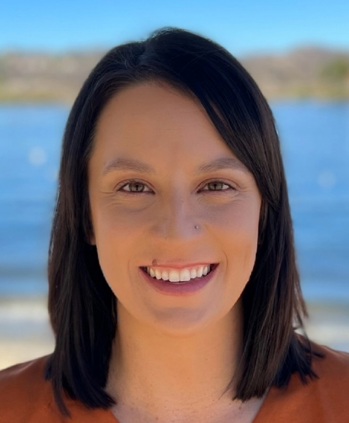
Lauren Hammond, MSW Personal Statement Tutor
Table of Contents
- MSW personal statement tips
- MSW personal statement examples
- Learn more about Lauren, our MSW personal statement expert.
MSW Personal Statements
Lauren Hammond is our MSW application essay expert and has been helping people write their Master of Social Work personal statements for several years. Whether you just want some feedback on a draft, or you're staring at a blank Word doc and don't know where to begin, she is happy to help!
Contact Lauren directly at 951-395-4646 (phone or text), or send us an email. Working with Lauren is $225 per hour, or $995 for 5 hours.
Consultations are free.
3 TIPS FOR STRONG MSW PERSONAL STATEMENTS
1. Articulate Your Population and Practice Focus Clearly
- Be specific about who you want to work with: Social work is a broad field: child welfare, mental health, healthcare, school settings, community organizing, policy, aging, substance use, housing. Admissions committees want to see that you've thought carefully about which of these you're aiming for. An applicant who sounds open to everything gives them very little to evaluate.
- Connect your population to lived or professional experience: The strongest MSW statements draw a direct line between the people the applicant has worked with (or belongs to) and the population they intend to serve as a clinician or macro practitioner. The link can come from your work rather than your own life story, as long as it's real.
- Name the practice modality you're moving toward: Say whether you're aiming for clinical licensure (the LCSW track), macro practice, policy, or school social work. Naming a track, even tentatively, shows you've thought it through and helps the committee judge whether you fit their program's strengths.
Example:
"Three years at a community mental health center taught me that a referral or a resource list only goes so far. What actually helps, in my experience, is a sustained therapeutic relationship with someone trained to provide it. I am applying to the clinical track for that training, and later I hope to supervise others who do the same."
2. Demonstrate Self-Awareness About the Emotional Demands of Social Work
- Show that you understand secondary trauma and burnout: Admissions committees have seen applicants who arrive full of enthusiasm and leave the field within three years. If you show that you've thought about sustainability (your own supervision needs, your coping strategies, the value of personal therapy for clinicians), they have reason to believe you'll stay.
- Reflect honestly on your own challenges or background: Many social work applicants have personal experience with the systems or populations they intend to serve. That history can give you insight and empathy for your future clients. It can also blur professional boundaries if you haven't worked through it, so show the committee that you have.
- Acknowledge where you are in your development: Nobody expects you to arrive at an MSW program fully formed. Committees want applicants who are ready to learn and can say plainly what they don't know yet. An applicant who admits gaps and shows how they've prepared reads better than one projecting untested confidence.
Example:
"Two years ago I started therapy myself. A supervisor suggested it, and I was also carrying my caseload home with me by then, which was showing in how I functioned. Sitting on the other side of the room taught me a great deal about what a therapeutic relationship demands from both people in it."
3. Engage with Social Work's Values Instead of Listing Them
- Show social justice orientation through experience, not vocabulary: Phrases like "culturally responsive," "trauma-informed," and "strengths-based" appear in nearly every MSW application. Strong statements show what those concepts look like in practice: a specific moment when you applied one of them or ran into its limits.
- Engage with systemic factors: Social work differs from counseling and psychology partly in how much attention it pays to the client's environment as well as the individual. Statements that place client challenges within structural contexts such as poverty, racism, housing instability, and policy gaps show that the applicant understands the field's theoretical framework.
- Be honest about complexity and tension: Social work involves hard tradeoffs: client autonomy versus safety, individual need versus agency capacity, what clients want versus what systems can provide. A statement that acknowledges these tensions is more believable than one describing the work as simply rewarding.
Example:
"One client kept turning down services I was sure would help her. My reflex was to push harder, with more contact and more offers. With supervision, and slowly, I came to see her refusals as a fair reaction to helpers who had promised things and never delivered. So the work changed. Trust had to come first, and only then did the resources make any sense to her."
Video: 7 Ways to Write a Crappy Graduate School Personal Statement
For more personal statement tips, check out Vince's video: 7 Ways to Write a Crappy Graduate School Personal Statement.
Programs vary on this more than most applicants expect: some MSW programs want a personal statement, others ask for a statement of purpose, and a few ask for both. Our guide to how to structure a statement of purpose explains what changes between the two.
6 MSW PERSONAL STATEMENT EXAMPLES
Below are six strong MSW personal statement examples. After each one, we explain what makes it work.
We wrote these six ourselves as teaching models. The applicants are invented, the programs are left generic on purpose, and nothing here is a real client's statement. Read them for structure and for how specific the detail gets, not as text to borrow.
Aging Services Case Aide to Gerontology MSW
For the past three years I have worked as a case aide at a county Area Agency on Aging. Most of my day is phone calls, from people like an adult daughter in another state who can't tell whether her father is managing, or a neighbor who hasn't seen the woman next door collect her mail in a week. I screen callers for services, enroll people in home-delivered meals and in-home support, and go on home visits when the social worker on our team needs a second person.
One of those visits is the reason I am applying. Mrs. R. was eighty-three, lived alone, and had been on our meal program for about a year when the driver called to say she had stopped coming to the door. She let us in. Physically she seemed fine, but her refrigerator held more than a week of meals, still sealed. She said she just wasn't hungry. Over the next half hour, mostly in answer to questions about the meals, she told us her husband had died in the spring, that she had stopped going to church because she couldn't stand being asked how she was doing, and that on some days she didn't get dressed.
The social worker went through the short form of the Geriatric Depression Scale with her at the kitchen table, so conversationally that Mrs. R. never seemed to notice she was being assessed. Then they negotiated. Mrs. R. would not have agreed to see a therapist, and the social worker didn't suggest it. She agreed instead to a weekly check-in call, a ride to a grief group at the senior center, and a call from her doctor's office about the blood pressure medication she had also stopped taking. I had the forms and the phone numbers in my bag. What I didn't have was the training to recognize what was going on, or to know how much to offer and when to stop.
Since then I have paid closer attention to the parts of the job I am not equipped for. Twice I have been part of a team decision to refer a client to Adult Protective Services for self-neglect, and both times I left unsure we had it right. One was a retired machinist who kept a house most people would call unsafe and who was, as far as I could tell, completely clear about wanting to stay in it. His son wanted him moved. I could see both sides, but I had no framework for weighing an older adult's right to take risks in his own home against his family's fear, and no training in how capacity is actually assessed. I also underestimated caregivers for a long time. The spouse making the call is often in worse shape than the person the call is about.
I am applying to the clinical track with a focus on aging. I want coursework in assessment and diagnosis, especially for late-life depression and grief, and a field placement where I carry cases under supervision instead of handing them off. After graduating I plan to work toward the LCSW in community-based aging services, with older adults who live alone and with the family members trying to help them. Our agency's call volume has gone up every year I have been there. Most of those callers will never walk into a clinic, and I want to be trained to do clinical work in their homes.
Why this statement works:
-
The opening is the job itself. Two real calls ("a neighbor who hasn't seen the woman next door collect her mail in a week") tell the reader what an Area Agency on Aging does faster than a job description would. A weaker draft would open with "I have always loved working with older adults."
-
One home visit carries the essay. The sealed meals in the refrigerator are the detail a reader remembers, and the applicant lets Mrs. R.'s grief come out through small answers ("on some days she didn't get dressed") instead of labeling her as depressed.
-
The applicant gives credit to someone else's skill. Watching the social worker use the Geriatric Depression Scale "so conversationally that Mrs. R. never seemed to notice" shows the applicant knows what clinical skill looks like, and "What I didn't have was the training" turns that into the reason for applying.
-
The gap is specific. The self-neglect referral names a real tension in aging work (an older adult's right to take risks against the family's fear) and admits the applicant can't yet weigh it. That tells a committee more than a general promise to be "open to learning."
-
The plan names a track, a license and a population. Clinical track, LCSW, older adults living alone and their caregivers. The reader can picture the applicant's first job after graduation.
Former Foster Youth to Child Welfare MSW
I entered foster care at ten and aged out at eighteen, after seven placements in eight years. The reunification plan was unrealistic from the day it was written. I have been a client of the systems I intend to work in, and that shapes how I read them.
One person held steady. A CASA volunteer showed up consistently for four years and was the most stabilizing presence of my adolescence. I also had a caseworker I met twice. Wanting to spare other children what I went through is part of why I'm applying, but only part. The rest is a specific, lived understanding of what the foster care system does well, where it fails, and what the difference looks like from inside a placement rather than inside a case file.
For the past four years I have worked as a youth advocate in a transitional housing program for young adults aging out of foster care. The work is concrete: I help with benefits and housing applications. I help with educational supports too, and with the life skills that most families pass along without thinking. A lot of it is also emotional work, though nobody calls it that. The young people I work with are often processing grief and anger, along with a mistrust of institutions that is entirely rational given their history.
I've asked myself whether my history is a clinical asset or a liability. After four years of professional work and two years of my own therapy, my answer is that it's an asset that needs ongoing management. I understand my clients' experiences in a way that builds rapport quickly. I can name my triggers and my tendency to over-identify, and I lean on supervision structures that keep me grounded. Court dates and placement anniversaries still hit harder than I expect, and I now tell my supervisor ahead of time when one is coming.
I plan to become a licensed clinical social worker in child welfare. I would work with children and families, with a particular focus on youth approaching emancipation. My CASA volunteer gave me consistency and honesty. I want to offer young people the same thing, with clinical training in trauma and attachment behind it, in the last year or two before they leave care.
Why this statement works:
-
Facts do the emotional work. "Seven placements in eight years," a CASA volunteer who stayed four years, a caseworker met twice. The reader feels the instability without being told how it felt. A weaker draft would say "my childhood was full of uncertainty."
-
The applicant separates motive from qualification. Saying that wanting to spare other children "is part of why I'm applying, but only part" clears the way for the professional case: knowing the system "from inside a placement rather than inside a case file."
-
The current job is described in tasks. Benefits, housing applications, educational supports and life skills show four years of practice with youth aging out of care, so the application rests on work as well as history.
-
The asset-or-liability paragraph answers the question readers are already asking. Committees wonder whether someone with this history can hold boundaries with clients like them. Naming "my tendency to over-identify," supervision, and the practice of warning a supervisor before court dates and placement anniversaries answers it with specifics.
-
The goal loops back to the CASA volunteer. The essay ends on a population (youth about to leave care) and a skill set (trauma and attachment work), which shows why the MSW and not only why social work.
School Counselor Aide to School Social Work MSW
Eleven-to-fourteen-year-olds are gaining the capacity for abstract thought and losing the identity they had last year. On top of that they are handling friendships that feel life-or-death to them. In my experience that makes middle school the most emotionally intense setting in education, and it is where I want to work.
For three years I've been a counselor's aide at a middle school, helping the school counselor with scheduling, crisis referrals, check-in/check-out programs and individual student support, a role with significant responsibility and limited authority. I can spot a student in distress but I can't deliver the intervention; I can make a referral but I can't make sure it lands. Meanwhile I've watched students cycle through interventions that never matched their real situation. Sometimes the issue underneath was an unstable home or a learning disability nobody had identified. Either way, the intervention never reached it.
School social workers occupy a position that is easy to underrate from the outside. They sit inside the educational system with access to the family context, and they carry both clinical and systems-level tools. I've watched the role done well enough to know what it demands, and I want to be the person who can go after those underlying issues directly.
The student who pointed me toward this work was a seventh-grader referred to us for chronic absenteeism, and the standard response was attendance contracts and calls to a parent. What the counselor and I gradually pieced together through patient relationship-building and one honest conversation was that this student was the primary caregiver for a parent with a serious illness and simply couldn't get to class reliably on certain days. The cause was a family in crisis with no services, and a social worker with the right training and connections could have stepped in at the family level and changed things for both of them.
From the degree I want clinical training so I can work with students directly, and enough knowledge of community services and school policy to get a family connected before a student has missed a month of class. I'm applying to the school social work concentration because I want my coursework and my field placement pointed at the same setting I plan to work in.
Why this statement works:
-
The opening is about the students, not the applicant. Describing eleven-to-fourteen-year-olds as "gaining the capacity for abstract thought and losing the identity they had last year" shows someone who has watched this age group closely. Most drafts open with "I have always wanted to help children."
-
"Significant responsibility and limited authority" sums up the aide's position in four words, and the next line ("I can make a referral but I can't make sure it lands") shows what that limit costs students.
-
The absenteeism case is the argument. The standard response was attendance contracts and calls home; the real cause was a seventh-grader caring for a seriously ill parent. The applicant uses the story to show what a school social worker could have done at the family level, instead of casting themselves as the rescuer.
-
School vocabulary is used correctly and left unexplained. Check-in/check-out, crisis referrals and chronic absenteeism are terms school social work faculty know, and using them in passing signals real time in a school.
-
The reason for the concentration is practical. Wanting coursework and a field placement "pointed at the same setting I plan to work in" is a plain reason a reader can check against the program. A weaker draft would praise the program in general terms.
Hospital Social Work Associate to Clinical MSW
My title is social work associate. In my hospital that means a bachelor's degree, no clinical caseload and no license for the work I've watched and helped with for three years. It can be a frustrating position, and it has also been a very good education.
Our team handles discharge planning and psychosocial assessment, with crisis support layered on top, for a 400-bed community hospital. I help with insurance authorizations and SNF placements. I make community referrals. Now and then I take the conversations the licensed social workers can't get to, because each of them is carrying twenty or more patients. Last spring one of those was with a man in his sixties who had just been told he couldn't go home alone after his stroke. He didn't want the list of facilities I'd brought. He wanted to talk about his dog, and then about his wife, who had died in the same hospital two years earlier. I sat with him for most of an hour and realized I had no training for what he needed from me. That conversation is why I'm applying for clinical training.
Medical social work lives at an odd intersection: the patient's medical and emotional reality on one side, and the family's finances and the discharge date the hospital is working toward on the other. Those pull against each other. The social worker is often the one managing the tension, asking for more time or a different plan, inside a system that's optimizing for something other than the patient's wellbeing.
I've learned to hold that tension without freezing up (mostly) and to find room inside it to be useful. What I want now is the clinical training to do more: brief interventions at the bedside, groups for patients with chronic illness, and eventually a caseload of my own under clinical supervision. My BSW got me into the hospital. I need the MSW, and then licensure, to do the part of the job I keep getting pulled toward.
After the MSW I plan to pursue the LCSW and stay in a hospital, ideally in oncology or palliative care. I'm drawn to patients and families facing serious illness, and the conversations I've already had have shown me how hard that work is. I want to be trained well enough to do it for a long time.
Why this statement works:
-
The job title does the setup. Opening with "social work associate" and what it does and doesn't allow tells the reader exactly where the applicant sits in the hospital and why the MSW is the next step, before any claim about motivation.
-
Hospital detail is accurate and unexplained. Discharge planning, psychosocial assessment, SNF placements and insurance authorizations are the working vocabulary of medical social work, and the applicant uses them the way someone who does the job would.
-
The stroke patient scene shows the gap. The man "wanted to talk about his dog, and then about his wife," the applicant stayed most of an hour, and then noticed there was no training behind it. That is a clearer reason for clinical training than "I find these conversations meaningful."
-
The tension paragraph shows systems thinking. Naming the pull between the patient's reality and "the discharge date the hospital is working toward" shows the applicant understands where a hospital social worker's time actually goes.
-
The goal is narrow on purpose. LCSW, hospital, oncology or palliative care. The applicant says the work is hard and asks to be trained "well enough to do it for a long time," which addresses burnout without making a show of toughness.
Nonprofit Community Organizer to Macro MSW
The heat had been off in one apartment building for three weeks and the landlord had stopped returning calls, so I knocked on doors and then knocked on more doors until enough neighbors agreed to sit down together in a cold apartment. Eleven households signed a joint letter that night, and the heat came back on four days later. Most of my last five years has moved more slowly than that, with a lot more phone banking.
I've been a community organizer for those five years, and along the way I've run tenant meetings, helped people file housing complaints and reach legal aid, and watched a process that should take two weeks stretch to six months. That is where my view of change comes from. It is slow, and no single campaign or policy win delivers it. In the buildings I've worked in, it has depended on repeated contact and on trust that builds over months, until tenants are willing to act together. I've also learned that tenants should decide what they are asking for. My job has been to get them in a room and keep the meeting going, not to write the demands for them.
I'm applying to the macro practice track because I want a theoretical and methodological footing for what I've been doing by instinct and observation. I've read enough Saul Alinsky and community development literature to know there is a framework under my work. I want formal training in program development and policy advocacy in particular, because those are the two areas where I have done the most guessing.
I should say where I've struggled. Organizing requires a tolerance for slow, nonlinear progress that I haven't always had. I have burned out twice in five years, both times because I was holding too much and asking for too little. I'm a better organizer now. Some of that is skills, and some is learning to spread the work around instead of carrying it. The MSW's coursework in supervision and nonprofit management is where I want to build the leadership to run sustainable teams rather than overextended individuals.
Within ten years I want to be running a housing-focused community development or tenant organizing nonprofit, one large enough to pay organizers a living wage and keep them for more than two years. I don't yet know how to build an organization like that, and that is a large part of why I'm applying.
Why this statement works:
-
The opening is a scene with a result. No heat for three weeks, a landlord who stopped calling back, a meeting in a cold apartment, then eleven households signing a letter. The reader sees what organizing produces and how much door-knocking it takes.
-
The theory of change is stated in plain terms. "Tenants should decide what they are asking for" and "my job has been to get them in a room" express a real organizing principle without jargon. A weaker draft would lean on "empower" and "amplify voices."
-
Burnout is admitted with a cause. "Holding too much and asking for too little" explains why it happened twice, and the applicant ties it directly to the supervision and nonprofit management coursework they want.
-
The macro rationale says what the coursework is for. Naming program development and policy advocacy as "the two areas where I have done the most guessing" tells the committee what the applicant expects to get from a macro track.
-
The goal grows out of the burnout story. A nonprofit "large enough to pay organizers a living wage and keep them for more than two years" turns the applicant's own experience into a problem they want to fix for other organizers.
Veteran to MSW
I served for eight years as a military police officer. My last assignment was twelve months at a military corrections facility, guarding service members who had been sentenced at court-martial. Most people would not connect that to social work. Looking back, that rotation did more than anything else to make me interested in systems and what they do to the people inside them.
Most of the prisoners I dealt with every day came from places like the town I grew up in. Many had enlisted to get out of poverty, and many had untreated depression, a drinking problem or childhood trauma that no one had looked at before their court-martial. Confinement held them. As far as I could tell, it did very little to change what had put them there. Watching that for a year changed what I wanted to do after I got out.
When I left the military I earned a BSW. For the past two years I have worked as a social services assistant at a Veterans Affairs outpatient clinic, supporting the social workers on its substance use and reintegration team. The work is harder than anything I did in uniform, and I like it more. Veterans are a population I know: the culture, the reluctance to ask for help, and the particular shame attached to mental health treatment in a world that prizes self-sufficiency. I can reach people who would never open up to a provider who had not shared some version of their experience.
I am applying to the clinical track because I want to specialize in trauma-focused treatment with military veterans and, eventually, with justice-involved populations. Both groups have serious treatment needs and serious barriers to access. Both sit where individual clinical problems meet systemic failures, and I have seen that meeting place from more than one side. From the MSW I want the clinical foundation that trauma treatment depends on: assessment, diagnosis and supervised practice. After that I plan to train in prolonged exposure and cognitive processing therapy, two PTSD treatments the VA trains many of its clinicians to deliver.
Last year I started therapy on my own. Some of what I saw on that assignment, and some of what I hear from veterans now, stays with me, and I would rather deal with it before I carry a clinical caseload than after. I know which kinds of stories hit me hardest, and I have a therapist and a supervisor I tell when they do.
Why this statement works:
-
The unexpected background is used, not hidden. Twelve months guarding service members sentenced at court-martial gave the applicant a close view of people whose depression, drinking and trauma went unaddressed. A weaker draft would skip the assignment because it seems unrelated to social work.
-
Observation instead of argument. "Confinement held them. As far as I could tell, it did very little to change what had put them there" makes a point about systems through what the applicant saw, so the reader never braces for a lecture.
-
The current job is described at its real level. As a social services assistant supporting a VA substance use and reintegration team, the applicant claims only what a BSW-level role allows. Social work faculty notice when an applicant inflates a title.
-
Population knowledge is specific. The reluctance to ask for help and the shame around mental health treatment are real barriers among veterans, and the applicant names them as things met on the job.
-
The training plan is in the right order. The MSW for assessment, diagnosis and supervised practice, then prolonged exposure and cognitive processing therapy afterward. The sequence shows the applicant knows how trauma clinicians are actually trained, and the therapy paragraph ("I have a therapist and a supervisor I tell when they do") shows a plan for staying in the work.
Feeling stuck?
Lauren Hammond, our MSW personal statement editor, would be happy to help, whether you just need a second opinion on a draft or you're starting from scratch.
Text or call her at 951-395-4646, or send us an email.
Lauren works with you on Zoom and in Google Docs, so you get both real-time coaching and clean, trackable revisions. Most clients use 2 to 4 sessions.
Meet Lauren Hammond, MSW Personal Statement Tutor
Lauren: I earned my Bachelor's Degree in Literature and Writing, with a concentration in Writing, at California State University San Marcos (CSUSM) and my Master's Degree in English and Comparative Literature at San Diego State University (SDSU).
I completed my PhD in English at the University of California Riverside (UCR) in September 2023 and then worked as UCR's Graduate Writing Center Specialist and graduate Fulbright Program Advisor. I now teach at Azusa Pacific University, where I'm an Assistant Professor and Lead Faculty in the Writing Program.
I have been a writing consultant for more than 10 years, and I've helped people with research writing, thesis/dissertation projects, rhetorical and literary analyses, writing in the humanities, grammar/sentence mechanics, and more. My focus for VKTP centers on graduate school application materials - including personal statements, diversity statements, and research statements - as well as job market materials for academic and alt-academic positions - resumes, CVs, cover letters, etc.
During my downtime, I love hanging out with my husband, our daughter, and our two dogs, Link and Leia! My favorite activities are going on the boat, cruising on the golf cart, and making our way through all of the local eateries. When we aren't out and about, I typically enjoy reading and watching movies.
Working with Lauren is $225 per hour or $995 for a package purchase of 5 hours. You can reach her at 951-395-4646 (phone or text), or by sending us an email.
P.S. Our partner Julie can also help you prepare for your MSW admissions interviews! Learn more about her professional voice training for interview prep.
P.S. We also do GRE prep!
Love For Lauren
Frequently Asked Questions
How long should an MSW personal statement be?
Length varies a lot between MSW programs. Some cap the statement at 2 or 3 double-spaced pages (roughly 500 to 800 words), many ask for 3 to 5 pages, and a few allow up to 7 pages or 3,000 words. Some also set a minimum, so a short statement can fall below a program's requirement. Check each program's prompt and length requirement: some ask open-ended questions, while others ask specifically about your practice interest, population focus, or understanding of social work values. Answering each program's prompt matters more than hitting a generic length target.
How long should I spend writing my MSW personal statement?
We generally recommend about 4-8 weeks, and 6 weeks is a good target. It takes time to come up with ideas and get them onto paper in a form that reads well.
How can I make my personal statement stand out?
MOST personal statements are BORING! Usually the writer isn't boring. The statement is, often for one of these reasons:
- Their focus is too broad. They try to cover everything they've done, so nothing gets enough room to be memorable.
- They're impersonal. It's a personal statement, so the reader needs a sense of who you are and what you're actually like, not some sanitized "professional" version of you.
- They're too safe. A statement that takes no risks reads like everyone else's, and you're not applying to a program hoping to blend in with all the other applicants!
Granted, the above things can be overdone, or done wrong. But most statements make no impact, so it's worth thinking about how yours actually can.
What do MSW programs look for in applicants?
MSW programs look for relevant experience in social service, healthcare, education, nonprofit, or community settings, paid or volunteer. They also want a clear statement of your practice focus and the population you want to serve, an understanding of social work's core values (such as social justice, the dignity and worth of the person, and the importance of human relationships), and the interpersonal and emotional maturity to handle demanding client work and rigorous training. Some MSW programs still require or recommend the GRE, and many have dropped it, so check each program's requirements. The personal statement often carries a lot of weight because it is the main way admissions committees judge your fit, focus, and self-awareness.
BTW, Lauren can also help with:
- CRNA personal statements
- Dental school personal statements
- PharmD personal statements
- MS in Business Analytics personal statements
- MBA personal statements
- Law School personal statements
- PsyD personal statements
- Physician Assistant personal statements
- Physical Therapy personal statements
- Speech-Language Pathology personal statements
- Occupational Therapy personal statements
- Marriage and Family Therapy personal statements
- Master's degree personal statements
- Master of Public Policy personal statements
- Medical Residency personal statements
- Nursing school personal statements
- Veterinary School personal statements
- PhD personal statements
- Post Doc personal statements
- Fellowships and Grants personal statements