Personal Statements For PharmD
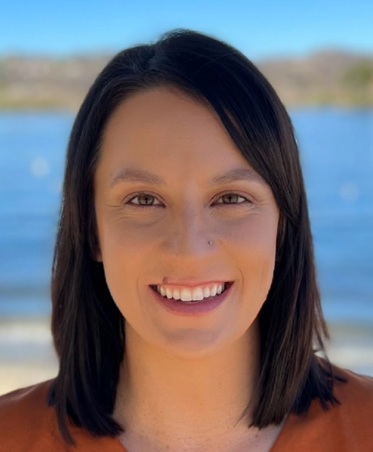
Lauren Hammond, PharmD Personal Statement Tutor
Table of Contents
- PharmD personal statement tips
- PharmD personal statement examples
- Learn more about Lauren, our PharmD personal statement expert.
PharmD Personal Statements
Lauren Hammond is our PharmD application essay expert and has been helping people write their pharmacy school personal statements for several years. Whether you just want some feedback on a draft, or you're staring at a blank Word doc and don't know where to begin, she is happy to help!
Contact Lauren directly at 951-395-4646 (phone or text), or send us an email. Working with Lauren is $225 per hour, or $995 for 5 hours.
Consultations are free.
3 TIPS FOR STRONG PHARMD PERSONAL STATEMENTS
1. Show That You See Pharmacy as Patient Care
- Show that pharmacy is a people profession: Many applicants come to pharmacy through science coursework, and that's fine. Admissions committees still want to see that you understand pharmacy as a patient-facing profession. The strongest statements connect pharmaceutical knowledge to what actually happens to patients: their outcomes and their relationship with the pharmacist.
- Describe a meaningful patient interaction: It might come from a pharmacy technician job, hospital volunteering, or your own experience with the healthcare system. Describe a specific moment when a pharmacist's expertise made a difference to one patient. That will do more for you than a paragraph about your interest in drug mechanisms.
- Show you understand the counseling side of the job: For many patients, the pharmacist is the easiest healthcare professional to reach. If you show that you understand the pharmacist's role in medication counseling, adherence, and patient education, you'll be ahead of applicants who write only about the science.
Example:
"Watching our pharmacist with an elderly patient changed how I understood pharmacy. He was confused about a new blood thinner, and she gave him eight minutes. She drew him a diagram and checked three times that he had followed it. With his permission she phoned his daughter, so someone at home could reinforce the instructions. She also knew every one of his seven other prescriptions."
2. Describe Your Pharmacy or Healthcare Experience and What You Learned from It
- Pharmacy technician experience is valuable, so go beyond the tasks: Many applicants have worked as pharmacy technicians, so the job itself is a baseline. Strong applicants write about what they noticed and took in: counseling they watched, errors they saw caught or nearly missed, particular patients they still remember.
- Connect experience to specific pharmacy practice areas: Community pharmacy, hospital pharmacy, ambulatory care, long-term care, industry, and specialty pharmacy are all distinct settings. If you have exposure to more than one, reflect on the differences. If you have a clear direction, name it and explain why.
- Demonstrate awareness of pharmacy's evolving scope: Pharmacists in many states now have expanded prescriptive authority, administer vaccines, conduct medication therapy management, and serve as members of interdisciplinary care teams. Applicants who know about these changes, and don't picture pharmacy as dispensing and nothing else, show that they've done their homework.
Example:
"In the hospital pharmacy where I worked as a technician, a pharmacist caught a dosing error on a child's order. Someone had entered a weight-based calculation wrong during a rush. She fixed it before the order reached the floor, in forty-five seconds and with no fuss, and I still think about how quietly she did it."
3. Articulate the Kind of Pharmacist You Want to Become
- Name a practice area or population: The field is broad: oncology pharmacy, pediatrics, geriatrics, infectious disease, ambulatory care, compounding, industry research. Naming a direction, even a tentative one, shows you've thought about where you're headed. It also helps the admissions committee judge whether you fit their program's strengths or residency connections.
- Connect your background to your goals: The strongest statements draw a clear line from where you've been to where you're going. A pre-pharmacy student with research experience who wants to work in the pharmaceutical industry makes sense, and so does a community pharmacy tech who wants to focus on medication access for uninsured patients. Spell out how your own background leads to your goal.
- Be specific about how PharmD training, and this program in particular, fits your goals: Readers forget generic praise for a program's "excellence" or "reputation." Mention a specific faculty member's research, a residency partnership, a specialized rotation, or a clinical training model that matches your direction.
Example:
"I plan to work as a clinical pharmacist in oncology, where drug interactions and polypharmacy come up every day and the pharmacist's place on the care team is demanding and clearly defined. This program fits because of its oncology rotation partnership with [Hospital Name] and its record of placing graduates in oncology residencies."
Video: 7 Ways to Write a Crappy Graduate School Personal Statement
For more personal statement tips, check out Vince's video: 7 Ways to Write a Crappy Graduate School Personal Statement.
If any program on your list asks for a statement of purpose instead, the expectations shift toward your coursework, research, and practice experience. Our guide to how to structure a statement of purpose walks through that version with three annotated examples.
6 PHARMD PERSONAL STATEMENT EXAMPLES
Below are six example PharmD personal statements. After each one, we explain what makes it work.
We wrote these six ourselves as teaching models. The applicants are invented, the programs are left generic on purpose, and nothing here is a real client's statement. Read them for structure and for how specific the detail gets, not as text to borrow.
Pharmacy Technician to PharmD
I have filled a lot of prescriptions. Four years as a technician at a community pharmacy adds up to thousands, from routine refills to new scripts stuck waiting on a prior authorization. I know the workflow from the inside, and I know where it stops.
What I can't do is read a patient's whole medication list, catch the problem hiding in it, and act on it with clinical authority. I watch our pharmacists do that every day. Last spring a woman came in with a new prescription for a fluoroquinolone. I pulled up her profile to run it. Her profile also showed warfarin, filled with us every month for three years. I didn't know how risky that combination was. Our pharmacist knew right away. She called the prescriber. The prescriber switched her to a different antibiotic, and the pharmacist told her to get her INR checked at her anticoagulation clinic that week. I drove home thinking about the pharmacokinetics I didn't understand. When I got there, I looked it up.
That habit of wanting the reasoning behind a step, after the step is already done, is what has pushed me toward pharmacy school for the past two years. In that time I've finished my prerequisites and brought my GPA up. I've shadowed pharmacists in hospital and ambulatory care settings. And I've asked myself, hard, whether this is real interest or just proximity, since I've been standing next to pharmacy for years. It's real interest. I like the science of drug action and the mess of polypharmacy in older patients. The pharmacokinetic variables that make two people respond differently to the same dose pull me in. I'd study it even if nobody asked me to justify it.
I want to work in a hospital, eventually in clinical pharmacy with a focus on anticoagulation or infectious disease. Both call for patient-specific, evidence-based decisions. I've watched pharmacists make those for four years, and now I want the training to make them myself.
Why this statement works:
-
The first line, "I have filled a lot of prescriptions," starts from something the applicant knows firsthand. An opening like "I have always been fascinated by medicine" gives the reader nothing to check; four years of fills is a fact the rest of the essay builds on.
-
The warfarin and fluoroquinolone case is a real, common interaction, and the applicant admits "I didn't know how risky that combination was." That admission marks exactly where a technician's knowledge stops, which is the argument for the degree.
-
"When I got there, I looked it up" shows curiosity through one small action. Most drafts would claim "a thirst for knowledge" and ask the reader to take it on faith.
-
The third paragraph asks whether this is "real interest or just proximity." Committees reading technician applications wonder the same thing, and answering it before they ask is better than hoping they won't.
-
The goal names anticoagulation and infectious disease, the two drug classes in the scene. A plain "clinical pharmacy" goal would have left the reader to make that connection alone.
Nursing Home Medication Aide to PharmD
For three years I worked evenings as a certified medication aide in a 90-bed nursing home. The 5 p.m. pass on my hall took most of two hours: twenty-two residents, one cart, and a binder of medication administration records that I initialed one box at a time. I learned which residents would only take pills in pudding and who needed the blinds closed before anything else could happen. In my first month I also learned that not everything can go in the pudding. I was about to crush a resident's extended-release metoprolol when the charge nurse stopped my hand and showed me the do-not-crush list taped inside the cart drawer. I had passed the state exam without understanding that the way a tablet is built can be part of its dose.
The resident I think about most was a retired machinist I'll call Mr. D. He fell twice in one month, both times on his way to the bathroom a few hours after my evening pass. Paging back through his records, I noticed that both falls came on nights he had been given a 25 mg diphenhydramine tablet for sleep, ordered as needed. I told the charge nurse, and she added him to the list for the consultant pharmacist, who came in once a month to review every resident's chart.
I asked if I could sit in on part of her next visit. She went through Mr. D's fourteen medications and wrote a recommendation to his physician to stop the diphenhydramine, because its anticholinergic effects in a man his age could cause confusion and unsteadiness at night. She also asked the nurses to check his blood pressure lying down and standing, since one of his blood pressure medications had recently been increased. The physician signed off within the week, and Mr. D didn't fall again that winter. All I had done was notice two dates. She knew why they lined up, which drug to remove, and how to write the recommendation so a busy physician would act on it.
That visit is why I went back to school. I was twenty-six, with an associate degree and almost no chemistry. I spent two years at a community college finishing prerequisites while still working evenings, and my transcript shows the strain. I earned a C in the first semester of organic chemistry while working thirty-two hours a week, then a B+ when I retook it after cutting my shifts. The retake taught me how to study a subject I couldn't coast through, and I expect to need that again.
The aide job taught me things a transcript can't show. I know which recommendations a nurse can realistically carry out at 9 p.m. on a short-staffed hall, and I know how often a family wants someone to explain why their father's sleeping pill was taken away. Those are the people a consultant pharmacist's recommendations land on.
I want to practice in geriatrics: a residency first, then work as a consultant pharmacist in long-term care, with board certification in geriatric pharmacy as a goal along the way. Deprescribing is the part of that work I most want to get good at. It is slow, it depends on the trust of the physicians and nurses who have to agree to it, and most of the residents I passed medications to would have benefited from someone doing it more often. I am looking for programs with long-term care rotation sites, and this program's are a large part of why I applied.
Why this statement works:
-
The statement opens on a mistake the applicant almost made, crushing an extended-release tablet, and the charge nurse who stopped it. Starting there shows the reader the honest limits of a medication aide's training and gives the essay its reason to exist. A weaker draft would open with how much the applicant loved helping residents.
-
Mr. D's falls are traced through one detail: both came on nights he got as-needed diphenhydramine. It is small and checkable, and it lets the applicant contribute something real (spotting the dates) without claiming she solved the problem.
-
"All I had done was notice two dates" divides the credit plainly between the aide and the consultant pharmacist. That one line tells the committee she understands what a pharmacist's training adds to what she already does.
-
The C in organic chemistry gets three sentences: the grade, the work hours, the retake. Hiding it invites suspicion and over-apologizing wastes space; stating the facts and moving on is the right size for a weak grade.
-
The goal (geriatrics residency, consultant pharmacy, deprescribing) grows straight out of the job she has, and the line about what "a nurse can realistically carry out at 9 p.m." shows she will bring practical knowledge to that work, not only an interest in it.
Career Changer (Nurse to PharmD)
In seven years as a registered nurse I have given thousands of doses, and more often than I like to admit, I have given one knowing the order was correct without knowing why it was written that way.
Nursing training gives you a strong foundation in giving drugs safely: the rights of administration and the interactions worth watching for. It doesn't give you the depth to know why a patient absorbs a drug poorly, or why two patients on the same dose have different serum levels, and it doesn't teach you to reason through polypharmacy in someone with renal impairment. Those questions belong to pharmacy, and for years I've been sending them to the pharmacist on call. Last winter a patient of mine on IV vancomycin had a creatinine that climbed over two days, and pharmacy held his next dose until a level came back. When I called to ask why, the pharmacist walked me through how his kidneys were clearing the drug and how she would re-dose once she had the level. I had been charting vancomycin levels for years as numbers to report, and that call was the first time I saw one used to make a dosing decision.
I decided on a PharmD over staying in nursing for one specific reason. My strongest clinical contribution on any team is medication thinking. When there is a question about a drug, I'm the nurse who looks it up and flags the interaction, and I ask the pharmacist to explain the mechanism before I accept "just don't give these together" as an answer. I want to be the one on the team who can answer them.
Pharmacy school will be a different kind of training from nursing. I expect to rebuild my clinical thinking around pharmacokinetics and pharmacodynamics, and to relearn from first principles some things I now do by habit at the bedside. As part of my post-baccalaureate preparation I took graduate-level pharmacology. For the first time, drug classes I had given for years came with their mechanisms attached, and it was also the hardest course I had taken since nursing school.
My goal is to practice as a clinical pharmacist in a hospital or ICU, eventually with direct patient rounds as a member of the care team. I spent years on that team as a nurse. I want to come back to it in the pharmacist's role.
Why this statement works:
-
The opening admits something a nurse might be tempted to hide: giving a dose without knowing why it was written that way. That admission is what makes the move to pharmacy sound necessary to the reader, and not just like a promotion.
-
The second paragraph separates what nursing school covers (the rights of administration, interactions to watch for) from what it leaves to pharmacy, such as different serum levels on the same dose and dosing in renal impairment. A career changer has to show she knows where one profession ends and the other begins, and this paragraph does it in four sentences.
-
The vancomycin call gives the argument one real case. Without it, the paragraph is a list of things she wishes she knew; with it, the reader sees the exact moment a lab value she had charted for years turned into a dosing decision.
-
"I'm the nurse who looks it up and flags the interaction" describes a habit her coworkers would recognize. It does the job that "I am detail-oriented" never does, because it can be pictured.
-
The ICU rounding goal returns her to a team she already knows from the bedside, so the committee can see why seven years of nursing count as preparation and not as a detour.
First-Generation / Immigrant Background
When I was fourteen, my grandmother kept her medications in a plastic grocery bag: seven bottles on different schedules, every label printed in English, which she couldn't read. Whenever she needed to take something, she called me. I didn't always know the answer, so I'd read the label out loud and try to explain it as best I could. There was no single moment that sent me toward pharmacy. I have just kept thinking about that bag for ten years, and about how many other families manage their medications the same way.
Pharmacy access and medication literacy are spread unevenly. Patients who speak limited English or have low health literacy, who have no primary care relationship or can't afford consistent care, are the ones most likely to take the wrong dose or mix medications unsafely. Some quit a treatment and tell no one. I grew up in a community where that was the norm, so none of it looked like an edge case to me.
I want to practice in settings that serve communities like mine, because I think my background will make me better at that work. I know how hard it is to ask a question you think you should already know the answer to, and how often people decide not to ask.
I finished an undergraduate degree in biochemistry and worked two years as a pharmacy technician in a community pharmacy serving mostly Spanish-speaking patients. I also volunteered with a free medication assistance program. Because I'm bilingual, I often interpreted when our pharmacist counseled Spanish-speaking patients, and I noticed she got far more honest answers when she asked "How are you taking this at home?" than when she asked "Do you have any questions?" I've shadowed in a hospital pharmacy and an ambulatory care clinic too, to understand settings beyond community practice.
In the long run, I want to work in the pharmacy of a federally qualified health center. The patients there are the ones I grew up around, and the mission is the work I want to do. Later I hope to help build pharmacy practice models that put medication literacy and health equity first. The community pharmacy residency track and the health equity curriculum here are why I'm applying to this program.
Why this statement works:
-
The plastic grocery bag and seven bottles give the reader one image to hold. Many health-care statements open on a relative's illness and stay vague; this one names the actual problem, a grandmother who couldn't read her own labels.
-
"There was no single moment that sent me toward pharmacy" keeps the opening honest. Inventing an epiphany at fourteen would have made the reader doubt everything that follows.
-
The second paragraph turns one family's story into a pattern pharmacists deal with daily: patients who take the wrong dose, mix medications, or stop a drug without telling anyone. That moves the essay from personal history to a problem the profession has to solve.
-
The interpreting detail, and the difference between "How are you taking this at home?" and "Do you have any questions?", shows something the applicant learned by watching closely at the counter. Writing "I am culturally competent" would claim the same thing with no evidence.
-
The FQHC goal is tied to the patients she grew up around and to a named residency track and curriculum. An ending about "serving underserved communities" would tell the committee nothing about where she will work or why this program.
Research Background to PharmD
After college I spent two years in a pharmaceutical research lab, working on formulation development, specifically on how lipid-based delivery systems change the bioavailability of poorly soluble compounds. I liked the work, and by the end of the second year I also knew I wanted to be closer to the patients it was meant for.
Formulation research matters. A compound that works in vitro but can't reach the target tissue is a failed project, and the delivery barrier is a real problem worth solving. Still, at the bench the people those projects would eventually serve were abstractions to me, and I wanted a job where they would be in the room.
During my shadowing year I watched one pharmacist more closely than any other. She practiced in an ambulatory care clinic embedded in a primary care practice. She ran medication therapy management (MTM) visits and, under a collaborative practice agreement (CPA) with the clinic's physicians, adjusted diabetes and blood pressure medications on her own. In one visit I sat in on, a man's A1c had barely moved in six months. She spent most of the appointment finding out that he had quietly stopped his evening metformin because of stomach upset, then switched him to the extended-release form, taken once a day with dinner, and booked a follow-up. Her work called for the applied pharmacokinetic and pharmacodynamic thinking I'd been building at the bench. It also asked for patient communication and clinical judgment that a lab never required of me.
That mix of pharmaceutical science and direct patient care is what the PharmD trains for. I liked research and would do it again, but I think what I learned in the lab will be most useful to patients if I am the one talking to them.
Long term, I'm drawn to specialty pharmacy in oncology. Many oral cancer drugs come with strict rules about food and timing, and whether a patient follows them at home decides whether the formulation work behind the drug pays off. I'm applying here for the strong clinical science curriculum and the specialty pharmacy elective track.
Why this statement works:
-
The research gets one sentence of specifics (lipid-based delivery systems, poorly soluble compounds) and then the essay moves on. Research applicants often spend half the statement on the lab; this one gives the reader only what explains the change of direction.
-
"The people those projects would eventually serve were abstractions to me" gives the reason for leaving the bench without running research down, which matters if the reader's own faculty do research.
-
The metformin visit shows what a CPA actually lets an ambulatory care pharmacist do: find out why a patient stopped a dose and change the regimen herself. It also links back to the applicant's own field, since the fix was a different formulation of the same drug.
-
The oncology goal is argued, not just named. Oral cancer drugs with food and timing rules are where formulation science meets adherence, so the reader can see why someone from a formulation lab would want that work. A weaker ending would list "oncology or rare disease" and stop.
Military Medic to PharmD
As a Special Operations medic, I was responsible for the medications in my unit's aid bag. I knew what we carried and what each drug was for. Our physician was usually a radio call away, and I worked under his protocols, but some decisions about what to give and how much could not wait for the call to go through.
A short formulary with no substitutes made me learn the mechanism of every drug I carried and how much room there was between a helpful dose and a harmful one. It also made me a counselor, at first by accident. On one deployment I issued doxycycline for malaria prevention to the whole team, and within two weeks two of them had stopped taking it because of heartburn. I hadn't told them to take it with a full glass of water and stay upright for a while afterward. From then on I explained every drug I handed out, side effects included, and far fewer people quietly stopped.
After I left the service, I spent two years as a pharmacy technician in a VA hospital pharmacy. It showed me the same population from a different side. The pharmacists there gave a continuity of care that surprised me. They knew each veteran's full medication list and caught interactions that had piled up over years of specialty care. They also managed the polypharmacy of an aging veteran population living with several chronic conditions and psychiatric medications at once.
I want that expertise. I plan to practice as a clinical pharmacist with veterans, or wherever the same clinical complexity shows up. My drug knowledge was built under operational constraints, and two years at the VA showed me where that same population's medication lists end up decades later. I also know from the inside why many veterans put off asking for help. What I lack is the clinical training to act on any of it on my own.
I am applying to this program for its clinical pharmacy focus and its veteran health partnerships. Its record of placing graduates in VA residency programs matters to me too, since a VA residency is the most direct route to practicing with veterans.
Why this statement works:
-
The aid bag puts drugs at the center of the first sentence. A military applicant who opens with discipline or leadership leaves the reader waiting a paragraph to find out what any of it has to do with pharmacy.
-
The radio-call line is accurate about how medics work, under a physician's protocols, while still showing the weight of the decisions. Overstating a medic's independence is a common mistake, and a pharmacy faculty reader would catch it.
-
The doxycycline story is a mistake the applicant made and fixed, with correct counseling detail (a full glass of water, staying upright). It shows he learned to counsel by watching people stop a drug, which says more than "I developed strong communication skills."
-
The VA years show the other end of the same population: veterans whose medication lists grew over decades of specialty care. That gives the polypharmacy goal a basis in work he has already done.
-
"What I lack is the clinical training to act on any of it on my own" names the gap in one line, and the closing reason for the program (VA residency placement) answers it. The essay ends on the plan instead of on a promise to work hard.
Feeling stuck?
Lauren Hammond, our PharmD personal statement editor, would be happy to help, whether you just need a second opinion on a draft or you're starting from scratch.
Text or call her at 951-395-4646, or send us an email.
Lauren works with you on Zoom and in Google Docs, so you get both real-time coaching and clean, trackable revisions. Most clients use 2 to 4 sessions.
Meet Lauren Hammond, PharmD Personal Statement Tutor
Lauren: I earned my Bachelor's Degree in Literature and Writing, with a concentration in Writing, at California State University San Marcos (CSUSM) and my Master's Degree in English and Comparative Literature at San Diego State University (SDSU).
I completed my PhD in English at the University of California Riverside (UCR) in September 2023 and then worked as UCR's Graduate Writing Center Specialist and graduate Fulbright Program Advisor. I now teach at Azusa Pacific University, where I'm an Assistant Professor and Lead Faculty in the Writing Program.
I have been a writing consultant for more than 10 years, and I've helped people with research writing, thesis/dissertation projects, rhetorical and literary analyses, writing in the humanities, grammar/sentence mechanics, and more. My focus for VKTP centers on graduate school application materials - including personal statements, diversity statements, and research statements - as well as job market materials for academic and alt-academic positions - resumes, CVs, cover letters, etc.
During my downtime, I love hanging out with my husband, our daughter, and our two dogs, Link and Leia! My favorite activities are going on the boat, cruising on the golf cart, and making our way through all of the local eateries. When we aren't out and about, I typically enjoy reading and watching movies.
Working with Lauren is $225 per hour or $995 for a package purchase of 5 hours. You can reach her at 951-395-4646 (phone or text), or by sending us an email.
P.S. Our partner Julie can also help you prepare for your PharmD admissions interviews! Learn more about her professional voice training for interview prep.
P.S. We also do GRE prep!
Love For Lauren
Frequently Asked Questions
How long should a PharmD personal statement be?
PharmCAS (the Pharmacy College Application Service) allows up to 4,500 characters for the personal statement, including spaces, which works out to roughly 700 to 800 words. Some programs also ask for a secondary essay, so check each program's requirements. With that limit, cut any sentence that doesn't add a specific detail or point.
How long should I spend writing my PharmD personal statement?
We generally recommend 4-8 weeks, and 6 weeks works well for most people. It takes time to come up with ideas and get them onto paper in a form that holds a reader's attention.
How can I make my personal statement stand out?
MOST personal statements are BORING! Usually the writer isn't boring. The problem tends to be one of these:
- Their focus is too broad. They try to cover everything they've done, so nothing gets enough space to register.
- They're impersonal. It's a personal statement . The reader should come away knowing who you are and what you're actually like, instead of meeting a sanitized "professional" version of you.
- They're too safe. A statement that takes no risks is easy to forget when the committee is reading a stack of them. We're not applying to a program with the intent of blending in with all the other applicants!
Granted, the above things can be overdone, or done wrong. But most statements make no impact, so it's worth thinking about how yours actually can.
What do pharmacy schools look for in applicants?
Pharmacy programs look for strong academic preparation in the prerequisite sciences (biology, chemistry, math, and anatomy/physiology at many schools), pharmacy or healthcare work experience, and letters of recommendation from pharmacists and science faculty. The PCAT was discontinued after the January 2024 test date, so you won't need to take it. Beyond those basics, strong applicants show a real orientation toward patient care, an understanding of how pharmacists' clinical scope is expanding, and a specific sense of the kind of pharmacist they want to become. The personal statement is often the only place to show who you are beyond your transcript, so keep it specific and honest.
BTW, Lauren can also help with:
- CRNA personal statements
- Dental school personal statements
- MSW (Social Work) personal statements
- MS in Business Analytics personal statements
- MBA personal statements
- Law School personal statements
- PsyD personal statements
- Physician Assistant personal statements
- Physical Therapy personal statements
- Speech-Language Pathology personal statements
- Occupational Therapy personal statements
- Marriage and Family Therapy personal statements
- Master's degree personal statements
- Master of Public Policy personal statements
- Medical Residency personal statements
- Nursing school personal statements
- Veterinary School personal statements
- PhD personal statements
- Post Doc personal statements
- Fellowships and Grants personal statements