Personal Statements For Dental School
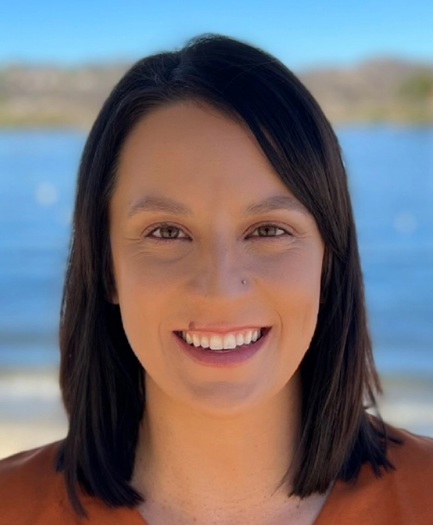
Lauren Hammond, Dental School Personal Statement Tutor
Table of Contents
- Dental school personal statement tips
- Dental school personal statement examples
- Learn more about Lauren, our dental school personal statement expert.
Dental School Personal Statements
Lauren Hammond is our dental school application essay expert and has been helping people write their dental school personal statements for several years. Whether you just want some feedback on a draft, or you're staring at a blank Word doc and don't know where to begin, she is happy to help!
Contact Lauren directly at 951-395-4646 (phone or text), or send us an email. Working with Lauren is $225 per hour, or $995 for 5 hours.
Consultations are free.
3 TIPS FOR STRONG DENTAL SCHOOL PERSONAL STATEMENTS
1. Show What Draws You to Dentistry Beyond Wanting to Help People
- Be specific about what draws you to oral health: "I want to help people" describes every applicant to every health profession. Say what draws you to the mouth and face in particular: the manual precision, the link between oral and systemic health, the way aesthetics and function meet, or a procedure you watched and couldn't stop thinking about.
- Connect your interest to a concrete moment: The strongest dental school statements start from something specific, such as a personal dental experience, a patient whose case you followed while shadowing, or a restoration that stuck with you. One real moment does more for you than a general claim about "always wanting to help."
- Demonstrate that you understand dentistry's scope: Dentistry covers far more than cleanings and cavities. Mentioning oral surgery, orthodontics, pediatric dentistry, prosthodontics, or the link between periodontal disease and cardiovascular health shows the committee you have looked at the whole profession before applying to it.
Example:
"Watching a full-arch implant restoration over four visits made dentistry real for me. The work was meticulous and could not be undone, and the stakes were both medical and personal. The patient had avoided smiling for years, and the self-consciousness showed in every interaction. By the last visit the patient could chew normally again and had stopped covering their mouth to laugh."
2. Demonstrate Meaningful Clinical Exposure and Manual Aptitude
- Shadowing hours matter, but what you noticed matters more: Admissions committees can see your hours on your application. In the personal statement, describe a specific technique or patient interaction you observed instead of simply stating that you shadowed.
- Show manual skill development: Dentistry is among the most technically demanding health professions. If you have experience that built fine motor skill, such as dental assisting, sculpture, or instrument repair, mention it and connect it to your readiness for clinical training.
- Acknowledge the patient communication dimension: Dental anxiety is extremely common. Applicants who show they understand patient psychology and how much communication matters in the dental chair make a stronger case than those who write only about technique.
Example:
"In my time as a dental assistant I noticed that the most technically gifted dentist in the practice was not always the one patients asked for. The one they wanted explained every step before starting, paused when someone tensed up, and remembered small things from earlier visits. I began to watch those choices as closely as I watched the technique."
3. Connect Your Background Authentically to Your Goals
- Don't apologize for a non-traditional path: Career changers, applicants who took a gap year, and people who didn't settle on dentistry until junior year are common, and none of those backgrounds is a liability. Show the committee how where you've been leads to where you're going.
- Be specific about the kind of dentist you want to become: Name a direction, such as general practice, pediatric dentistry in an underserved community, oral surgery, or cosmetic and restorative work. Even a tentative goal shows you have thought about your career and gives the committee a concrete picture.
- Know what each program values: Research-focused programs look for intellectual curiosity and research potential, community health programs look for a record of service, and urban programs often value multilingual applicants. Your AADSAS personal statement goes to every school on your list, so don't name or tailor it to one school. Let this research guide which experiences you emphasize, and save school-specific detail for supplemental essays and interviews.
Example:
"Before dentistry I taught, and teaching made me good at reading the person in front of me. Within thirty seconds of class starting I can usually tell which students are anxious, which are resistant and which have checked out, and I change what I am doing. When I started shadowing, the first thing I recognized was a dentist making the same kind of adjustment for a nervous patient."
Video: 7 Ways to Write a Crappy Graduate School Personal Statement
For more personal statement tips, check out Vince's video: 7 Ways to Write a Crappy Graduate School Personal Statement.
If a program on your list asks for a statement of purpose instead of the standard essay, the statement of purpose format is worth reading first. It asks for more about your academic and clinical preparation and less about the origin of your interest in dentistry.
6 DENTAL SCHOOL PERSONAL STATEMENT EXAMPLES
Below are six example dental school personal statements, each followed by a short explanation of what makes it work.
We wrote these six ourselves as teaching models. The applicants are invented, the programs are left generic on purpose, and nothing here is a real client's statement. Read them for structure and for how specific the detail gets, not as text to borrow.
Dental Assistant to Dental School
I have handed instruments to dentists for three years. I know what a well-executed composite restoration looks like from six inches away, and I have seen what a rushed one looks like a year later, when the patient comes back with staining at the margin. I want to be the person who decides which of the two a patient goes home with.
I became a dental assistant because I needed to be sure. From outside, dentistry looked like precise work and long relationships with patients. I wanted to check that from the inside before I committed to it. It held up. What kept me interested were parts of the job I hadn't thought about from outside.
The science pulled me in first. I have assisted during periodontal consults where the talk turned to a patient's uncontrolled diabetes. I have watched a dentist flag a lesion that turned out to be an early sign of something systemic. Since then I have been reading about the links between periodontal disease and diabetes on my own time, mostly review articles I only half follow, and I want the training to read them properly.
Then the art, which surprised me. Our prosthodontist once spent forty-five minutes matching the shade of a central incisor. The patient would never have caught a one-shade miss. The dentist would have. I want to hold myself to that standard.
Psychology took me longest to understand. Dental anxiety shows up in more ways than I expected. Some patients arrive medicated. Others cancel appointments they've held for six months because they can't make themselves walk through the door, and I've watched one hyperventilate through an exam. The dentists I respect most take that seriously. They slow down and explain, and they let a patient grip the armrest for an extra thirty seconds before going on. I want that kind of care taught to me alongside the technical side.
Three years chairside have also shown me what I can't do. I can usually predict which instrument a dentist will ask for next, but I can't read a radiograph with any confidence, and I couldn't tell you why one tooth gets an onlay and the tooth beside it gets a crown. Those are the decisions I want to learn to make.
Why this statement works:
-
The first sentence, "I know what a well-executed composite restoration looks like from six inches away," tells the reader where this applicant has been standing for three years before making any claim about motive. A weaker draft opens with "I have always been fascinated by dentistry" and spends the rest of the page trying to prove it.
-
"I became a dental assistant because I needed to be sure" answers the question a committee has about every assistant: did you drift into this job, or use it to test the career? One sentence settles it.
-
The shade-matching paragraph gives a number (forty-five minutes) and a consequence (a one-shade miss only the dentist would catch). The reader works out the applicant's standards from that; nobody has to announce them.
-
The anxiety paragraph lists what patients actually do (arrive medicated, cancel, hyperventilate) and what the better dentists do in response (slow down, explain, wait thirty seconds). That is the kind of observation assisting is supposed to produce, and most drafts replace it with "I learned the importance of communication."
-
The ending names two things the applicant can't do yet, read a radiograph and choose between an onlay and a crown. A specific gap makes the case for training concrete, where a closing line about being ready only asserts it.
Pre-dental Science Student
My undergraduate research was in oral microbiology. For two years I studied the conditions under which a Streptococcus mutans biofilm stops being merely present and becomes pathogenic, as it applies to early childhood caries. Most days that meant growing biofilms in well plates and repeating assays when the numbers didn't hold, and it changed what I think a cavity is.
In practical terms, I came to see caries as a diet-mediated disease with a bacterial mechanism at the center, one that brushing affects but does not fully explain. Parents in low-income communities do not care any less than anyone else. Their children have higher rates because the conditions that promote pathogenic shift, high-sugar diets and limited access to fluoridated water, are concentrated in communities with fewer resources. Understanding that made dentistry more interesting to me rather than less, and it gave me a direction.
I want to practice pediatric dentistry in an underserved community, with the same population I spent two years studying, only now in a chair with a patient in front of me instead of as a subject of research. I want to tell a parent what is actually happening inside the mouth of a child and why the $1 box of raisins in the lunchbox counts as a clinical variable. I can describe the pH drop that follows a sugary snack, but I have never had to explain it to a tired parent in a way that changes what goes into tomorrow's lunch.
My preparation went beyond the lab. Over the past two years I have shadowed in a community dental clinic, a private general practice, and a pediatric specialty office, and the differences were hard to miss. The community clinic saw patients who had put off care for years: extractions that could have been restorations, restorations that could have been preventive treatments. The private practice saw patients for whom prevention was routine. The pediatric office sat somewhere between the two, and the dentist there spent as much time talking with parents as she did working on teeth.
I know that community pediatric care pays less than private practice and that pediatric dentistry means a residency after dental school, and I have looked at what the loan repayment programs for underserved areas actually require. What I keep returning to is that the patients who most need excellent dental care are, systematically, the ones least likely to receive it. I want to practice in that gap, in a clinic where a child's first dental visit happens by age one instead of after the first toothache.
Why this statement works:
-
The first sentence names the organism and the disease ("Streptococcus mutans," "early childhood caries"), so within one line the reader knows this research is about dentistry and not a general biology credential pressed into service.
-
Paragraph two moves from mechanism to population: caries rates follow diet and access to fluoridated water, and both follow income. That step is what makes the pediatric goal grow out of the research instead of sitting next to it.
-
The raisin line shows the applicant turning lab knowledge into something a parent could act on, which is the job they say they want. The next sentence admits they have never actually done that with a parent, which keeps the claim honest.
-
The three shadowing settings are compared on one point, how long patients had put off care. Comparing settings on a single variable reads as observation; listing them reads as an hours log.
-
The cost paragraph names the real obstacles (lower pay, a specialty residency, loan repayment terms). A committee reading about underserved practice wants to know the applicant has checked the math, and one sentence covers it.
Career Changer (Engineer to Dental School)
For eight years I worked as a mechanical engineer, designing precision components for aerospace, parts where a tolerance of a few thousandths of an inch decided whether something worked or failed. I was good at it. Eventually I worked out that what I loved was the precision, and the aerospace part was incidental.
Dentistry came into my thinking through a bicycle accident. Afterward came two years of restorative work that included implants and a bridge. My dentist was technically exceptional. He fixed everything correctly and never once said what he was doing or why. I left each appointment knowing more than when I walked in, only because I'd asked. Somewhere in there I quit being merely grateful and got curious about his decision tree and the biomechanics of osseointegration. I read what I could find on implant success rates, and within a year I was shadowing.
Two years of observation showed me how much of dentistry an engineer would recognize. A crown margin left open by a fraction of a millimeter lets plaque and decay in underneath, the same way a bad seal lets corrosion into a joint. I once asked a prosthodontist why she chose monolithic zirconia over layered porcelain for a molar crown on a patient who ground his teeth, and her answer was a fracture-toughness argument I could follow. The decisions are more complicated than I'd anticipated: every restoration is a tradeoff between longevity and aesthetics, and between tissue preservation and patient compliance. I spent eight years making tradeoffs like that, although no bracket I designed ever skipped wearing its night guard.
I completed a post-baccalaureate pre-dental program to cover my science prerequisites and earned a 3.9 GPA. I shadowed over 200 hours across general dentistry, oral surgery, and prosthodontics. When I took a dental anatomy course, the manual side turned out to be less intimidating than I'd expected, probably because I had spent years at a bench measuring prototype parts with micrometers and calipers.
I am thirty-four. I will be close to forty when I finish, and I have gone through the timeline and the loans with my family. The precision and the analysis carry over. Diagnosis, patient management and the feel of a handpiece on a real tooth instead of a plastic typodont do not, and those are what I am coming to learn.
Why this statement works:
-
The first paragraph reduces eight years of engineering to the one thing that transfers, precision, and drops the rest. A weaker draft lists every engineering skill and leaves the reader to work out which ones matter.
-
The origin story turns on one detail, a dentist who "never once said what he was doing or why." It explains the applicant's curiosity and hints at the kind of dentist they want to be, without spending a paragraph criticizing anyone.
-
The zirconia question to the prosthodontist shows the engineering habit applied to a real clinical choice. It does the job that "ceramics fascinate me" can only claim to do.
-
The preparation paragraph gives the numbers (3.9 GPA, 200 hours, three specialties) in two sentences and moves on. Career changers often spend too many words here, and the committee already has the transcript.
-
The age paragraph states the age, the timeline and the loans, then names exactly what does not transfer. Answering the obvious question directly stops the reader from wondering about it for the rest of the file.
First-Generation Student
My family did not go to dentists.
We didn't go because of cost. We also didn't go because dentistry seemed to belong to families with dental insurance, and nobody in mine had ever had a checkup when nothing hurt.
My first appointment was at nineteen, at a community health clinic. A tooth had been hurting for six months and I couldn't ignore it anymore. The dentist was a recent graduate doing a service rotation, and she was the first medical professional who explained what was going on in language I could follow without a dictionary. She treated the tooth and referred me for two more appointments. Then she asked about the rest of my health. I left with a treatment plan and a printed cost estimate, and for once I kept the follow-up appointments.
I became a dental assistant four years ago because I needed steady work. I stayed because the work meant something to me, and I hadn't expected that.
I've worked in two places: a private cosmetic practice and a Federally Qualified Health Center. They were nothing alike. At the private practice, patients came in regularly and compliance was high, and most of the clinical challenges were elective. At the FQHC people mostly came in because something had broken. Put-off care and health conditions made the picture complicated, and so did barriers I recognized from my own background.
I'm applying to dental school to work as a dentist in community health, because I know those patients. I understand the trust barriers and the scheduling problems. I understand the money worry that makes someone agree to a treatment plan they don't intend to follow, because they're embarrassed to ask the price. At the FQHC I watched one dentist split a full treatment plan into phases, pain and infection first and fillings over the following months, so a patient could pay as she went. More of her patients finished treatment. I want to practice that way.
I'm the first in my family to attend a four-year university, and I'll be the first to go to professional school. I finished my prerequisites while working full time as an assistant, retook the DAT to bring up my perceptual ability score, and asked for letters from the two dentists who have supervised my chairside work.
Why this statement works:
-
"My family did not go to dentists" is a plain fact with no explanation attached. The next paragraph supplies the reasons (cost, and the sense that checkups were for insured families), so the opener informs the reader instead of trying to hook them.
-
The dentist at the community clinic is described by what she did: explained the problem in plain language, referred the applicant on, asked about the rest of their health. That gives the reader a concrete model of the care the applicant wants to give, which "an inspiring dentist" would not.
-
The private practice versus FQHC paragraph contrasts who comes in and why, routine and elective visits against people who come in "because something had broken." It shows the applicant has seen both ends of the profession and picked one.
-
The phased treatment plan ties the goal to a specific clinical habit the applicant watched work. "I want to serve underserved patients" is in half the statements a committee reads; a dentist splitting a plan so a patient can pay as she goes is not.
-
The last paragraph lists preparation with one honest blemish, a DAT retake, and names which section it was for. That reads as more believable than a clean list, and it answers an interview question before it gets asked.
Multilingual Applicant / International Background
"Yes, I understand." I hear that at the free dental clinic where I translate during patient intakes, and I have learned to tell when it is true. I grew up speaking three languages and filling out forms for relatives before I was old enough to understand them. My mother is an immigrant, and my father's family speaks a regional dialect that doesn't map cleanly onto standard language instruction. By twelve I was the one who went along to my grandmother's medical appointments, and I learned that "yes" from a nervous patient often means "please stop talking."
That background shaped how I think about access to health care. At the clinic I watched a patient nod through an explanation of his root canal and then never schedule the crown, because nobody had made clear that a molar treated that way can crack without one. He came back eight months later with the tooth split below the gumline, and it had to come out.
Over two years I have shadowed in three clinical settings and seen the same pattern in each: patients with limited English were often rushed through treatment planning, handed instructions that assumed a health literacy nobody had checked, and less likely to ask follow-up questions. In one practice a bilingual dental assistant was the most clinically effective person in the building, and her technique had little to do with it. She could tell when a patient hadn't really understood the post-op instructions.
My goal is to practice general dentistry in a multilingual urban setting and to help build clinical communication protocols that work for patients with limited English proficiency. For the past two years I have finished my prerequisites while working as a medical interpreter at a county hospital, and I still volunteer at that same free clinic on Saturdays.
The science matters to me too. My undergraduate degree is in biochemistry, and while researching a course project I found the materials literature in dentistry unexpectedly engaging, from adhesion protocols to ceramic fracture mechanics. So far I have only read about them, and I'm looking forward to learning them properly in the didactic years, before I ever apply them in a patient's mouth.
Why this statement works:
-
The opening quote, "Yes, I understand," introduces the problem the rest of the statement is about: patients who agree to things they have not understood. The applicant's claim that they can tell when it is true gives the reader a skill to look for in the next paragraphs.
-
The root canal patient who never scheduled the crown is the evidence for the whole argument. One case with a clinical outcome, a lost tooth, does more than a paragraph about health literacy and compliance, which is what the earlier draft had.
-
The bilingual dental assistant is described by the one thing she did better than anyone else in the building: she could tell when a patient hadn't understood the post-op instructions. That makes the applicant's goal something a reader can picture in a real office.
-
The goal is specific enough to check: general dentistry in a multilingual city, plus communication protocols for patients with limited English. A reader can imagine the job and the kind of program that fits it.
-
The biochemistry paragraph keeps the statement from being only about access, and the applicant admits they have only read about adhesion and ceramics so far. That honesty about the science sits well next to an essay that is mostly about clinical communication.
Memory Care Nursing Assistant to Dental School
For three years I worked early-morning shifts as a certified nursing assistant on a memory care unit. Most mornings I had eleven residents to get through: vitals, toileting, dressing, breakfast and mouth care. On a short-staffed day, mouth care was the task that slipped first. I didn't think much about that until one resident, a retired piano teacher with moderate dementia, stopped eating.
She had always finished her oatmeal. Over about a week she started pushing the bowl away, and then pushing my hand away when I tried to help. The nurse checked her weight and her blood sugar and asked the physician to review her medications. Nobody looked in her mouth. When I finally took out her lower denture to clean it, I found a raw ulcer on the gum underneath, right where the edge of the denture pressed. She couldn't tell anyone it hurt, so she stopped eating.
The visiting dentist came the next week. He adjusted the edge of the denture in about ten minutes, told us to leave it out at night, and showed me how to check the tissue underneath whenever I cleaned it. Within a few days she was eating again. I remember thinking that ten minutes of skilled work had done more for her that month than everything the rest of us had tried.
After that I paid attention to mouths. I learned to give a resident a second toothbrush to hold, so her hands had something to do while I brushed with the first, and to approach from the front so I didn't startle anyone. At an oral care in-service, our nurse educator explained that bacteria from dental plaque can be aspirated into the lungs, and that pneumonia is one of the most common serious infections in nursing homes. I started keeping a list of which residents had refused brushing that week and handing it to the charge nurse. I can't say whether the list changed anyone's outcome. After a month, the charge nurse started asking me for it.
I began shadowing the visiting dentist on his facility days and then in his office. I watched him work from a portable unit at a bedside, deciding what he could do safely there and what had to wait for a referral. I also saw what he couldn't fix. Many of our residents had no dental coverage, since original Medicare does not pay for routine dental care or dentures, and families sometimes had to decide whether a new denture was worth the cost for someone who might have a year or two left. He talked those decisions through with families plainly and without hurrying them, and I learned as much from those conversations as from the procedures.
My academic record is uneven. I took my science prerequisites at a community college while working, and I earned a C in my first semester of organic chemistry. I retook it the next year on a lighter shift schedule and earned an A, and my upper-division biology grades since then have been steadier. I know the didactic load in dental school will be heavier than anything I have done, and I have spent this past year studying the way I expect to have to study there.
I want to practice general dentistry with a large share of older patients, including people who can no longer come to an office. I plan to apply for a general practice residency after dental school, because the patients I want to treat often arrive with heart disease, diabetes and a long medication list, and I want more supervised experience with that before I work on my own.
Why this statement works:
-
The statement opens on routine (eleven residents, and mouth care as the first task to slip) before the scene. That tells the reader the applicant knows how oral care actually gets skipped in a facility, which makes the next paragraph believable.
-
The ulcer under the denture is the center of the essay, and it is told flatly: weight checked, blood sugar checked, "Nobody looked in her mouth." The reader reaches the conclusion about dentistry's place in elder care without being handed it in a closing moral.
-
The second toothbrush and the refusal list show what a nursing assistant can really do, and the applicant says outright, "I can't say whether the list changed anyone's outcome." Keeping claims sized to the role is what makes the rest of the essay easy to trust.
-
The Medicare paragraph shows the applicant watched a dentist work through cost and prognosis with families. That is a large part of geriatric dentistry, and most applicants never see it while shadowing.
-
The academic paragraph names the C in organic chemistry, the retake and the A in three sentences, with no apology. A weaker draft skips it and leaves the committee to find it on the transcript.
Feeling stuck?
Lauren Hammond, our dental school personal statement editor, would be happy to help, whether you just need a second opinion on a draft or you're starting from scratch.
Text or call her at 951-395-4646, or send us an email.
Lauren works with you on Zoom and in Google Docs, so you get both real-time coaching and clean, trackable revisions. Most clients use 2 to 4 sessions.
Meet Lauren Hammond, Dental School Personal Statement Tutor
Lauren: I earned my Bachelor's Degree in Literature and Writing, with a concentration in Writing, at California State University San Marcos (CSUSM) and my Master's Degree in English and Comparative Literature at San Diego State University (SDSU).
I completed my PhD in English at the University of California Riverside (UCR) in September 2023 and then worked as UCR's Graduate Writing Center Specialist and graduate Fulbright Program Advisor. I now teach at Azusa Pacific University, where I'm an Assistant Professor and Lead Faculty in the Writing Program.
I have been a writing consultant for more than 10 years, and I've helped people with research writing, thesis/dissertation projects, rhetorical and literary analyses, writing in the humanities, grammar/sentence mechanics, and more. My focus for VKTP centers on graduate school application materials - including personal statements, diversity statements, and research statements - as well as job market materials for academic and alt-academic positions - resumes, CVs, cover letters, etc.
During my downtime, I love hanging out with my husband, our daughter, and our two dogs, Link and Leia! My favorite activities are going on the boat, cruising on the golf cart, and making our way through all of the local eateries. When we aren't out and about, I typically enjoy reading and watching movies.
Working with Lauren is $225 per hour or $995 for a package purchase of 5 hours. You can reach her at 951-395-4646 (phone or text), or by sending us an email.
P.S. Our partner Julie can also help you prepare for your dental school admissions interviews! Learn more about her professional voice training for interview prep.
P.S. We also do GRE prep!
Love For Lauren
Frequently Asked Questions
How long should a dental school personal statement be?
The AADSAS (ADEA's Associated American Dental Schools Application Service) personal statement has a 4,500-character limit, which works out to roughly one single-spaced page. Some schools request a supplemental essay in addition to the primary statement. Always check each program's specific requirements. With a limit that tight, cut any sentence that repeats something or doesn't tell the reader something new about you.
How long should I spend writing my dental school personal statement?
We generally recommend about 4-8 weeks, and 6 weeks is a good target. It takes time to come up with ideas and then get them onto paper in a form that holds a reader's attention.
How can I make my personal statement stand out?
MOST personal statements are BORING! The writers usually aren't boring people. The trouble tends to be one of these:
- Their focus is too broad. They try to cover everything they've done, and no single experience gets enough room to register.
- They're impersonal. It's a personal statement. The reader should come away knowing who you are and what you're actually like, not a sanitized "professional" version of you.
- They're too safe. A statement with nothing surprising in it reads like every other one in the pile, and nobody applies to a program hoping to blend in with the other applicants!
Granted, the above things can be overdone, or done wrong. But most statements make no impact, so it's worth thinking about how yours actually can.
What do dental schools look for in applicants?
Dental programs look for strong academic credentials (GPA and DAT scores), meaningful shadowing experience (typically 100+ hours with a licensed dentist), letters of recommendation, and evidence of manual dexterity and patient care interest. Beyond those requirements, strong applicants show curiosity about oral health, an understanding of how oral health connects to overall health, and awareness of how much clinical dentistry depends on communicating with patients. The personal statement is where the committee learns who you are beyond your GPA and DAT score.
BTW, Lauren can also help with:
- CRNA personal statements
- MSW (Social Work) personal statements
- PharmD personal statements
- MS in Business Analytics personal statements
- MBA personal statements
- Law School personal statements
- PsyD personal statements
- Physician Assistant personal statements
- Physical Therapy personal statements
- Speech-Language Pathology personal statements
- Occupational Therapy personal statements
- Marriage and Family Therapy personal statements
- Master's degree personal statements
- Master of Public Policy personal statements
- Medical Residency personal statements
- Nursing school personal statements
- Veterinary School personal statements
- PhD personal statements
- Post Doc personal statements
- Fellowships and Grants personal statements