Personal Statements For CRNA
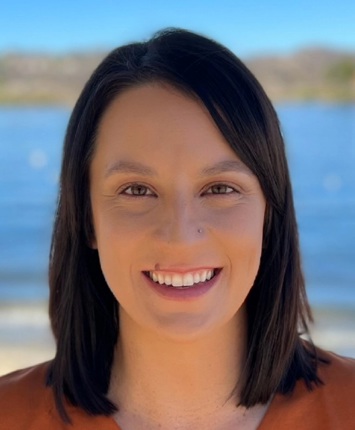
Lauren Hammond, CRNA Personal Statement Tutor
Table of Contents
- CRNA personal statement tips
- CRNA personal statement examples
- Learn more about Lauren, our CRNA personal statement expert.
CRNA Personal Statements
Lauren Hammond is our CRNA application essay expert and has been helping people write their nurse anesthesia personal statements for several years. Whether you just want some feedback on a draft, or you're staring at a blank Word doc and don't know where to begin, she is happy to help!
Contact Lauren directly at 951-395-4646 (phone or text), or send us an email. Working with Lauren is $225 per hour, or $995 for 5 hours.
Consultations are free.
3 TIPS FOR STRONG CRNA PERSONAL STATEMENTS
1. Demonstrate Your Clinical Excellence and ICU Readiness
- Show, don't just claim, ICU competence: CRNA programs receive applications from nurses with ICU experience, so simply listing your unit isn't enough. Describe a specific high-acuity case (a rapid deterioration, a complex titration, a code) that shows you can think under pressure.
- Be specific about your patient population: Whether you've worked in CVICU, SICU, MICU, neuro-ICU, or PICU, name it. Programs want to know you've managed lines, vents, drips, and hemodynamic instability, and a unit name on its own doesn't tell them that.
- Show clinical curiosity: The best CRNA applicants are competent nurses who also ask why: why this patient's SVR is climbing, or why the attending chose a particular induction agent. Showing that habit tells the committee you'll do well in a didactic and clinical program built on advanced physiology.
Example:
"Overnight with a post-op CABG patient, I saw the filling pressures creeping up while the pulse pressure narrowed, and nobody had flagged either yet. I phoned the attending before the numbers reached a critical threshold, and that early call changed the outcome. Anticipating a problem, rather than reacting once it arrives, is the part of critical care that interests me most, and it is what drew me toward anesthesia."
2. Articulate Your Fascination with Anesthesia Science
- Connect nursing experience to anesthetic principles: Strong applicants can draw a line between what they already do (vasopressors, ventilator management, sedation) and what anesthesia adds (pharmacokinetics, airway management, neuraxial techniques). Show that you see the connection.
- Name the moment anesthesia became the goal: Most applicants can point to a specific experience: observing a case, working alongside a CRNA, or struggling with an aspect of patient care they knew anesthesia could address better. Name that moment instead of writing in generalities.
- Demonstrate that you understand the full scope: Show that you know the job goes well beyond keeping patients asleep: preoperative assessment, intraoperative management, regional techniques, and the responsibility of being the sole anesthesia provider in many settings.
Example:
"In a long case I watched the CRNA adjust the volatile agent as surgical stimulation changed, get ahead of the fluid shifts during retraction, and start preparing for emergence while closure was still underway. The precision was impressive, but what held my attention was the thinking behind it. The CRNA was assessing and adjusting the whole time and owned every choice, and I have wanted to practice that way ever since."
3. Show Maturity and Self-Awareness About the Demands of the Role
- Acknowledge the weight of independent practice: CRNA programs admit nurses who will eventually function as the primary anesthesia provider. Applicants who show they understand that responsibility, and who temper their enthusiasm with realism, make a stronger case.
- Reflect on a weakness or challenge honestly: The strongest statements name something the applicant is actively working on, which shows the self-awareness of a safe, coachable clinician.
- Connect the program to specific learning goals: Avoid generic statements about a program's "reputation." Instead, reference specific elements (a simulation curriculum, a faculty member's research area, clinical site diversity) and explain why they matter to your development.
Example:
"I've learned something about myself in the ICU: I default to action, and I'm quick at the next task. Where I still need to grow, and where I want help, is pausing before I act, taking in the whole picture before I reach for the syringe. I'm looking for a rigorous program that will train that habit into how I practice."
Video: 7 Ways to Write a Crappy Graduate School Personal Statement
For more personal statement tips, check out Vince's video: 7 Ways to Write a Crappy Graduate School Personal Statement.
Some DNP and DNAP nurse anesthesia programs ask for a statement of purpose rather than a personal statement. The statement of purpose format puts more weight on your ICU record and your reasons for choosing a specific program, and less on the narrative of how you got into critical care.
6 CRNA PERSONAL STATEMENT EXAMPLES
Below are six examples of strong CRNA personal statements. After each one, we explain what makes it work.
We wrote these six ourselves as teaching models. The applicants are invented, the programs are left generic on purpose, and nothing here is a real client's statement. Read them for structure and for how specific the detail gets, not as text to borrow.
Burn ICU Nurse
The patient had been pulled from a house fire about two hours before he reached our unit. He had burns over his face, chest and arms, soot in the back of his throat, and a voice that got hoarser every time he answered a question. He was talking and his oxygen saturation was fine. I had started his fluid resuscitation and was titrating lactated Ringer's to his urine output when a CRNA from the anesthesia department came up to look at his airway.
She listened to him for less than a minute and said she wanted to intubate right away. My first thought was that he looked stable. She explained while she set up. Over the next several hours I would be giving him a large volume of fluid, his face and airway would swell along with the rest of him, and the easy intubation in front of her would turn into a difficult one. She was planning for the patient he would be at midnight, and I had been managing the patient in front of me.
I have worked in our burn ICU for four years, and that conversation changed how I practice there. I now ask earlier what a patient will look like in six hours and what I need ready for it. It also made me curious about the people who take our patients to the OR. A large burn means a long series of trips for excision and grafting, and I prepare those patients and receive them back, so I began reading their anesthesia records. Excision can lose a lot of blood quickly, and the records showed how the team kept up with it and kept the patient warm in a room heated for that reason. When I asked a CRNA why succinylcholine was off the table for a patient two weeks after his injury, she explained how the changes in the muscle's acetylcholine receptors after a burn can make it raise potassium to a dangerous level. She sent me a review article on it, and I read it that night.
I have shadowed CRNAs for six days, on burn excisions, general surgery cases and one trauma laparotomy, and I finished a graduate pathophysiology course this year. My experience is thin in one area. Burn patients are resuscitated mainly with volume, so I have managed fewer vasopressor infusions than nurses from cardiac or medical units. Last year I asked to cross-train in our surgical ICU, and I now work a few shifts a month there titrating vasopressors on post-operative and septic patients. That is not the same as years on that unit, and I expect to work harder than some classmates in the hemodynamics coursework.
Eventually I want to give anesthesia in a hospital with a burn center, to the patients I care for now. They come to the OR again and again, often with high opioid tolerance and airways changed by injury, and many of them dread the next trip. I would like to be the person who makes those trips easier to face. This program's rotation at a regional burn and trauma center is the main reason it is first on my list.
Why this statement works:
-
The opening shows the danger before naming it: "Soot in the back of his throat" and a voice "that got hoarser every time he answered" are the signs of an inhalation injury, and the writer lets them speak. A reader who knows critical care sees the problem coming, which tells them the applicant knows what to watch for. A weaker draft would open with "I have cared for many patients with inhalation injuries."
-
The writer is not the hero of the scene: "She was planning for the patient he would be at midnight, and I had been managing the patient in front of me." The applicant puts themselves on the wrong side of that comparison, which shows a nurse who can learn from a better clinician. Admissions readers trust that more than a story where the applicant makes the save.
-
Curiosity is shown with follow-through: The succinylcholine question is the kind the tips section asks for, and the writer reads the article that night. One real question plus the reading behind it does more than a paragraph about being "a lifelong learner."
-
The weakness is specific to this unit: Burn patients get mostly volume, so the writer has titrated fewer vasopressors, and says so before the reader can raise it. Naming the cross-training in the surgical ICU turns the gap into something the applicant is already working on.
-
The goal comes back to the same patients: Repeated OR trips, opioid tolerance and changed airways tie the career plan to the opening scene, so the ending does not switch to a generic line about serving the underserved.
Respiratory Therapist to SICU Nurse to CRNA
Before I became a nurse I worked seven years as a respiratory therapist, most of it in ICUs. A good part of that job happened at the head of the bed during intubations. I preoxygenated patients, bagged them, confirmed tube placement with end-tidal CO2, and set up the ventilator once the tube was secured.
One night a man with pneumonia was failing on high-flow oxygen, and the CRNA on call came up to intubate him. The intubation went smoothly. About two minutes later his systolic pressure fell into the 70s. I understood why. Switching him to positive-pressure ventilation had cut his venous return, and the induction drug had lowered his vascular tone on top of that. The CRNA had expected it. She had phenylephrine drawn up before she started, gave a dose, asked the nurse to open the fluids, and his pressure was back within a few minutes. I could explain everything that had happened to him and could not have treated any of it. A month later I applied to nursing school.
I went back to school at thirty-one and kept working weekend shifts as a therapist until I finished my BSN. I have now spent three years in a surgical ICU, mostly with post-operative general, thoracic and transplant patients. The ventilator side came easily. Drips did not. In my first year I was slower than nurses fresh out of school at titration math and at managing several infusions at once, and I asked our unit educator for extra sessions on our pump library and our sedation and vasopressor protocols. I also had to drop an old habit. As a therapist I walked into a room and looked at the ventilator first, and more than once a preceptor caught me reading a waveform before I had noticed a dressing soaking through.
I know my respiratory therapy years do not count toward the critical care nursing experience programs require, and I am not offering them as a substitute. What they give me is comfort with airway equipment and ventilation that I would otherwise be building from scratch. That should leave more room in training for what is new to me: anesthetic pharmacology at a depth I have not studied, and regional techniques I have only watched.
I have shadowed CRNAs on general, ENT and thoracic cases, and the thoracic cases held my attention most. I watched a CRNA place a double-lumen tube, check its position with a fiberoptic scope, and keep the patient oxygenated on one lung while the surgeon worked on the other. It was the first time I had seen both of my careers in one job. I want to build my practice around thoracic and airway-heavy surgery, and this program's thoracic rotation is a large part of why I am applying.
Why this statement works:
-
One event explains the career change: Post-intubation hypotension that the writer "could explain" but "could not have treated" gives the move from respiratory therapy to nursing a concrete cause. Most career-change drafts say "I wanted to do more for my patients" and leave the reader to guess what that means.
-
The writer states the experience rule before the reader does: "My respiratory therapy years do not count toward the critical care nursing experience programs require." Admissions committees know this, and showing that the applicant knows it keeps the RT background from reading like padding on a thin ICU record.
-
The weakness comes with an embarrassing detail: A preceptor catching the writer "reading a waveform before I had noticed a dressing soaking through" proves the habit was real. A general line like "I learned to look at the whole patient" proves nothing.
-
The goal joins both careers in one kind of case: A double-lumen tube, fiberoptic confirmation and one-lung ventilation are airway work and anesthesia at once, so the reader can see why this applicant wants thoracic surgery and not just "the OR."
Military Medic to ICU to CRNA
At a forward operating base in Afghanistan, I managed my first airway outside a simulation. I was a Special Operations medic, and the patient was a coalition soldier with a blast injury and an airway going bad fast. There was no one to hand it to, so I secured it with the training I had, and he was still oxygenating when the medevac helicopter landed.
That night showed me how I work under pressure. I take in what I can and commit to a decision quickly, and that habit has held up in every clinical setting since. It has served me well, and it has also worked against me.
Leaving the military for nursing meant learning a different pace. A big academic critical care unit rewards thoroughness as much as speed. So I slowed down. I learned to document carefully and to build the whole picture before acting. Three years in a surgical trauma ICU drilled that into me. Many of my patients came up from damage-control surgery with an open abdomen, cold and still bleeding, and I learned to recheck their labs and drain output again and again instead of trusting the last set. It was slower learning than I was used to, and I needed it.
In my second year of ICU nursing I started shadowing CRNAs, and I recognized something I hadn't expected. The work combined pieces of my training that I had only ever practiced separately. Airway, pharmacology, hemodynamic control, procedural precision, independent judgment: in anesthesia they all happen at once instead of one after another. The CRNA I watched longest put it plainly. "You're running the physiology of the case." That line has stayed with me.
I bring a steady head under high-stakes uncertainty and three years of surgical trauma critical care, along with a working knowledge of the accountability culture that military and surgical teams share. I can also tell you what I still have to build. My pharmacology is solid, though it has gaps at the depth anesthesia practice demands. My regional experience is observational, never hands-on. I expect the didactic year to expose both, and I have already started on the pharmacology with a graduate-level course.
Long term, I want to practice trauma anesthesia, either at a Level I center or back in uniform. Military CRNAs often provide all of the anesthesia on small forward surgical teams, and I have worked in that setting before, as the medic who handed patients off to teams like that.
Why this statement works:
-
The opening gets to the patient fast: One airway, one soldier, one sentence of context about the writer's role. A weaker draft would spend a paragraph on deployments and rank before any clinical work appears.
-
The story becomes a self-assessment: The habit of committing quickly "has served me well, and it has also worked against me." That sentence gives the essay its spine, and the next paragraph pays it off by showing the writer learning to slow down in the neuro-ICU.
-
A quoted line carries the "why anesthesia" moment: "You're running the physiology of the case" is something a CRNA said during shadowing. Letting someone else's words do this job is more convincing than the writer describing anesthesia in their own abstract terms.
-
The gaps are named and already being worked on: Pharmacology depth and regional anesthesia that has only been observed are real limits, and the writer points to a graduate course already underway. The reader sees an applicant who will not be surprised by the first exam.
-
The goal connects to the opening: Returning to military anesthesia, where CRNAs often staff forward surgical teams, closes the loop from medic to provider without a summary line telling the reader what it all meant.
PICU Nurse
Pediatric critical care teaches you to read patients who cannot tell you what is wrong. A two-year-old in respiratory distress will not rate his pain, and a post-op infant will not describe her discomfort. Instead you read color and tone, the work of breathing, the trend in the heart rate, the way a baby feeds, the expression on a parent's face. After five years in a pediatric ICU, I read those signs fluently.
Monitoring and responding is the shape of my work today. Next I want a practice where that observational skill comes with direct control of the patient's physiologic state, so that I am the one adjusting the variables that decide how a child gets through a procedure and out the other side. In the operating room, that person is often a CRNA.
My interest in pediatric anesthesia started on my first shadowing day, with a four-year-old scheduled for a tonsillectomy who had cried from pre-op all the way into the OR. The CRNA let him choose a scent for the mask and asked him to blow up the balloon, which was the reservoir bag, while she turned up the sevoflurane. He was asleep within a couple of minutes, still holding the stuffed rabbit he had brought from home, and the IV went in after that. Afterward she showed me the dosing sheet she had filled out before he came back, with every drug calculated by his weight, including the emergency drugs she hoped not to use.
I know the transition will be steep. Anesthesia school asks me to rebuild my clinical framework around pharmacokinetics and airway management, which my PICU work has touched only at the edges. To get ready I completed graduate-level pharmacology and human pathophysiology. I have shadowed CRNAs in pediatric, general and cardiac cases, and I have talked frankly with current and former CRNA students about what the program demands.
I learn best with a preceptor who makes me explain my reasoning out loud, and I expect to need that kind of teaching early on. My goal is a setting heavy in pediatric anesthesia, ideally a children's hospital where my ICU background applies directly and where I can eventually help train the next generation of pediatric-focused CRNAs. This program draws me for its pediatric clinical volume and its record of placing graduates in children's hospitals.
I have been in the PICU long enough to be comfortable there. The shifts I still think about afterward are the ones when anesthesia came up to the unit for a difficult airway, and I would like to be someone who can answer that call.
Why this statement works:
-
The opening makes the ICU type an asset: It lists what a PICU nurse actually reads in a child who cannot talk, from the work of breathing to the way a baby feeds. That gives the reader a reason pediatric experience matters for anesthesia, where a weaker draft would apologize for not being an adult ICU nurse.
-
The induction is one case with details you could check: The scented mask, "blow up the balloon," the IV placed after the child was asleep, and emergency doses worked out by weight in advance. A weaker draft would say "I watched a pediatric induction and was inspired."
-
The gap is stated plainly next to the preparation: Pharmacokinetics and airway management are things "my PICU work has touched only at the edges," followed by the coursework and shadowing already done. The reader gets the weakness and the response in the same paragraph.
-
The ending gives a concrete reason to leave: The shifts the writer remembers are the ones when anesthesia came up for a difficult airway. That is a specific pull toward the field, which is more useful to a reader than a general wish for "the next challenge."
Travel Nurse to CRNA
I've been the new nurse in seven states over four years, and every hospital goes the same way. You walk in with no reputation and no allies, and within days you have to be competent and trusted. Orienting fast, reading a team's dynamics (who to ask, when to just act): I didn't expect a staffing choice to teach me any of that.
Travel also gave me a wide look at how ICUs differ. Cultures differ, and so do protocols and thresholds for intervention. I've watched the same patient profile managed three different ways at three institutions. Why does this center transfuse at 7 and that one at 8? Why does one team sedate hard while the next aims for light sedation? I got tired of not knowing, so I started reading. The reading kept pulling me down toward the physiology under critical care, and eventually toward anesthesia.
I started shadowing CRNAs in my third year of travel nursing, at a facility with a CRNA-only model, so every anesthesia provider there worked independently. On my second day there, a CRNA finished a pre-op assessment on a man with sleep apnea and a short, thick neck who was scheduled for a hernia repair. She decided he could be a difficult airway and had the video laryngoscope and a smaller tube in the room before he came back. Nobody signed off on that decision, and there was no anesthesiologist in the building to call if the airway went badly. In the ICU, a call like that always goes up the chain. That was the kind of responsibility I had been moving toward without knowing it.
CRNA school also means moving for clinical rotations, and I have done that seven times. The harder adjustment will be the opposite one. Travel contracts usually run thirteen weeks, and I am used to leaving a unit before I have had to master it. A three-year doctoral program will keep me on difficult material long after it stops being new, and that is part of why I want it.
I want to practice in a rural or frontier setting, where the CRNA is often the only anesthesia provider in the building. Being the new person in the room doesn't bother me anymore, and my ICU years give me the clinical footing to be safe there. This program's rotations at rural, CRNA-only sites are the main reason I'm applying here, because I would rather learn that model as a student than meet it for the first time as a new graduate.
Why this statement works:
-
The opening turns a job choice into a skill: "The new nurse in seven states over four years" means getting competent quickly among strangers, which is what clinical rotations will ask of a student. The writer points that out instead of treating travel nursing as a gap to explain.
-
The questions come from real variation: "Why does this center transfuse at 7 and that one at 8?" reflects actual differences in transfusion thresholds between hospitals. Questions like that show curiosity that started at the bedside and led to reading, which is stronger than writing "I am naturally curious."
-
One pre-op decision shows what independent practice means: A CRNA flags a likely difficult airway, has the video laryngoscope ready, and has no anesthesiologist to call. A weaker draft would say "I admired their autonomy" and leave it there.
-
The weakness grows out of the strength: Thirteen-week contracts mean the writer is used to leaving before mastering a unit, and a three-year program forces the opposite. That is an honest limit the reader would not have thought to ask about.
-
The program reason matches the goal: Rural, CRNA-only rotations follow from both the travel background and the shadowing site, so the "why this program" line does real work.
Neuro ICU Nurse
Managing intracranial pressure is an education in how much a small decision weighs. A ventilator setting that lifts the CO₂ by two points changes cerebral vasodilation. A blood pressure fifteen points above target for twenty minutes changes perfusion pressure. Four years in a neuro-ICU have taught me to watch these small decisions and to make them correctly.
That habit of tracking what one change will do downstream is what I most want to bring to anesthesia training.
An awake craniotomy I observed on a shadowing day made that concrete for me. The CRNA ran the dexmedetomidine infusion that kept the patient sedated but responsive. What stayed with me was how the CRNA titrated a moving target, keeping the patient calm enough to hold still and alert enough to answer questions while the surgical team worked. There was no protocol for it. The CRNA adjusted the rate in small steps for several hours, watching the patient's speech as closely as the monitor. I walked out of that case wanting the skill.
I finished graduate coursework in pharmacology and neurophysiology, and I've shadowed CRNAs in neurosurgical and cardiac ORs and on general cases. I've also read the primary literature on total intravenous anesthesia (TIVA) and processed EEG monitoring, areas I expect to revisit in far greater depth in training. My ICU years give me a solid foundation. They will not make anesthesia school easy, and I am applying with that understanding.
My goal is neurosurgical anesthesia, where the physiologic precision I've built in the ICU applies directly: craniotomies, spine cases, interventional neuroradiology. I'm especially interested in anesthesia for stroke thrombectomy, where the choice between sedation and general anesthesia is still being studied, and I want to work somewhere that takes part in that research. The neurosurgical case volume here and the faculty's published work in neuroanesthesia are why this program is the one I want.
Why this statement works:
-
The opening uses numbers a neuro ICU nurse works with: A two-point CO₂ change and a blood pressure fifteen points over target are accurate examples of how small adjustments move cerebral blood flow and perfusion. They are there to make a point about small decisions, not to show off vocabulary.
-
The trigger case names the actual problem: In the awake craniotomy, the CRNA had to keep the patient "calm enough to hold still and alert enough to answer questions." Naming that tension shows the writer understood what they were watching, where a weaker draft would describe the case as "fascinating."
-
The reading is tied to training: TIVA and processed EEG are topics the writer expects "to revisit in far greater depth in training," so the literature line reads as preparation and not as a list of things they have heard of.
-
The limit of ICU experience gets one sentence: "They will not make anesthesia school easy" admits the gap and moves on. Dwelling on it would sound anxious, and leaving it out would sound naive.
-
The goal points at an open clinical question: Sedation versus general anesthesia for stroke thrombectomy is still being studied, which tells the reader the applicant follows the field beyond their own unit.
Feeling stuck?
Lauren Hammond, our CRNA personal statement editor, would be happy to help, whether you just need a second opinion on a draft or you're starting from scratch.
Text or call her at 951-395-4646, or send us an email.
Lauren works with you on Zoom and in Google Docs, so you get both real-time coaching and clean, trackable revisions. Most clients use 2 to 4 sessions.
Meet Lauren Hammond, CRNA Personal Statement Tutor
Lauren: I earned my Bachelor's Degree in Literature and Writing, with a concentration in Writing, at California State University San Marcos (CSUSM) and my Master's Degree in English and Comparative Literature at San Diego State University (SDSU).
I completed my PhD in English at the University of California Riverside (UCR) in September 2023 and then worked as UCR's Graduate Writing Center Specialist and graduate Fulbright Program Advisor. I now teach at Azusa Pacific University, where I'm an Assistant Professor and Lead Faculty in the Writing Program.
I have been a writing consultant for more than 10 years, and I've helped people with research writing, thesis/dissertation projects, rhetorical and literary analyses, writing in the humanities, grammar/sentence mechanics, and more. My focus for VKTP centers on graduate school application materials - including personal statements, diversity statements, and research statements - as well as job market materials for academic and alt-academic positions - resumes, CVs, cover letters, etc.
During my downtime, I love hanging out with my husband, our daughter, and our two dogs, Link and Leia! My favorite activities are going on the boat, cruising on the golf cart, and making our way through all of the local eateries. When we aren't out and about, I typically enjoy reading and watching movies.
Working with Lauren is $225 per hour or $995 for a package purchase of 5 hours. You can reach her at 951-395-4646 (phone or text), or by sending us an email.
P.S. Our partner Julie can also help you prepare for your CRNA admissions interviews! Learn more about her professional voice training for interview prep.
P.S. We also do GRE prep!
Love For Lauren
Frequently Asked Questions
How long should a CRNA personal statement be?
Most CRNA programs specify a page limit or word count, typically 1-2 pages or 500-1,000 words. Always check each program's specific requirements. If no limit is given, aim for one tight, well-organized page. Admissions committees read hundreds of statements, so keep yours concise and clear.
How long should I spend writing my CRNA personal statement?
We generally recommend about 4-8 weeks; 6 weeks is a good sweet spot. It takes time to come up with ideas and get them onto the page in a form that holds a reader's attention.
How can I make my personal statement stand out?
MOST personal statements are BORING! That's rarely because the writer is boring. More often it's because:
- Their focus is too broad. They try to cover everything they've done, and nothing ends up memorable.
- They're impersonal. It's a personal statement, so the reader needs to get a sense of who you are and what you're actually like, and a sanitized "professional" version of you won't give them that.
- They're too safe. Playing it safe makes a statement easy to forget. We're not applying to a program with the intent of blending in with all the other applicants!
Granted, the above things can be overdone, or done wrong. But most statements make no impact, so it's worth thinking about how yours actually can.
What do CRNA programs look for in applicants?
Most CRNA programs require a Bachelor of Science in Nursing (BSN), an active RN license, and a minimum of one to three years of full-time acute care ICU experience - typically in a medical, surgical, cardiovascular, or neuro ICU. Programs also look for a strong GPA, GRE scores (where required), letters of recommendation from clinical supervisors, and evidence of shadowing or observation of nurse anesthesia practice. Beyond those requirements, competitive applicants show clinical depth, curiosity about anesthesia science, and the maturity to handle a very demanding training program. The personal statement is often the only part of the application where you can demonstrate those qualities with real examples.
BTW, Lauren can also help with:
- Dental school personal statements
- MSW (Social Work) personal statements
- PharmD personal statements
- MS in Business Analytics personal statements
- MBA personal statements
- Law School personal statements
- PsyD personal statements
- Physician Assistant personal statements
- Physical Therapy personal statements
- Speech-Language Pathology personal statements
- Occupational Therapy personal statements
- Marriage and Family Therapy personal statements
- Master's degree personal statements
- Master of Public Policy personal statements
- Medical Residency personal statements
- Nursing school personal statements
- Veterinary School personal statements
- PhD personal statements
- Post Doc personal statements
- Fellowships and Grants personal statements