Genetic Counseling Personal Statement Examples and Tutoring
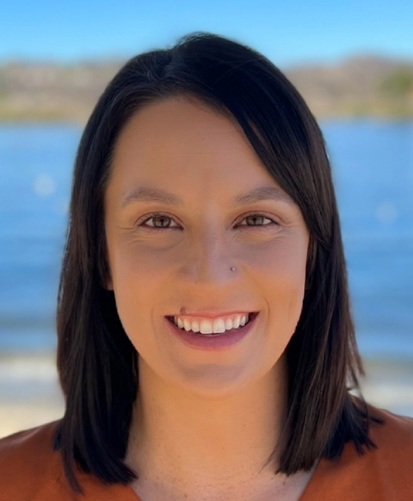
Lauren Hammond, Genetic Counseling Personal Statement Tutor
Table of Contents
- Genetic counseling personal statement tips
- What to include - and avoid
- Genetic counseling personal statement examples
- Learn more about Lauren, our genetic counseling personal statement expert.
Genetic Counseling Personal Statements
On this page you'll find six examples of effective genetic counseling personal statements, written from the perspective of a genetics research assistant, an applicant whose father has Huntington's disease, a clinical lab technician, a genetic counseling assistant, a bioethics graduate and a high school biology teacher.
Each example is followed by a breakdown of what makes it work. Admission to genetic counseling programs is competitive (in the 2024 and 2025 admissions Match cycles, about 60% of participating applicants matched to a program), so the personal statement carries real weight.
Lauren Hammond is our genetic counseling application essay expert and has been helping people write their graduate school personal statements for several years. Whether you just want some feedback on a draft, or you're staring at a blank Word doc and don't know where to begin, she is happy to help!
Contact Lauren directly at 951-395-4646 (phone or text), or send us an email. Working with Lauren is $225 per hour, or $995 for 5 hours.
Consultations are free.
3 Tips for Strong Genetic Counseling Personal Statements
1. Demonstrate That You Understand Both the Science and the Counseling
- Show that you know the genetics: Use your research, coursework or clinical observation to show that you understand the science the job rests on, such as inheritance patterns, molecular mechanisms and variant interpretation.
- Show equal engagement with the counseling dimension: Genetic counselors work with patients facing serious diagnoses, hard reproductive decisions and real uncertainty about their own health. Show that you know what that work asks of a counselor, such as active listening and non-directive communication. A statement that covers only the science leaves out half the job.
- Connect the two explicitly: The strongest statements show the science and the counseling meeting in one real moment, such as a counselor explaining a result to a patient, and say why that combination is what draws the applicant to the field.
Example:
"Two patients can sit in the same chair holding the same genetic result and hear completely different things. A BRCA2 variant means one thing to a thirty-year-old woman with two young children and something else to a sixty-year-old whose kids are grown, even though the science is identical. I first noticed this while shadowing in a cancer genetics clinic, and watching the counselor adjust her approach for each patient is what drew me to the field."
2. Be Specific About Your Clinical Observation Experience
- Describe specific cases or interactions you observed: Most genetic counseling programs require shadowing hours. In the personal statement, describe what you actually observed - a prenatal counseling session where a family faced a difficult decision, a cancer genetic counseling visit where a variant of uncertain significance was returned, a pediatric case where the diagnosis changed the family's understanding of their child's future.
- Reflect on what the counselor did well - and why it was hard: Identifying the skill in a counselor's practice - the way they explained penetrance to a patient who had just received a life-altering result, or the way they sat with silence - shows attentiveness that generic "I shadowed" statements don't.
- Show familiarity with multiple specialty areas if possible: Prenatal, pediatric, cancer, cardiovascular, neurogenetics - genetic counseling is practiced in different clinical contexts with different patient populations. Exposure to more than one setting strengthens your application narrative.
Example:
"The prenatal session that has stayed with me longest involved a couple getting chromosomal microarray results. The finding was a deletion of uncertain significance. The genetic counselor explained it three times, each time differently, with a diagram, with an analogy, and in plain language about what was known and what was not. The couple left without a firm answer, but they could say back to her what was known and what wasn't, and they had agreed to the parental testing she offered, which could show whether the deletion was inherited."
3. Address Your Research or Scientific Background Honestly
- Research experience matters and should be described specifically: Most competitive applicants have worked in a genetics or biology lab. Describe the work - the questions being asked, your role, what you learned - not just the lab name and PI. The best descriptions connect the research to the clinical work of genetic counseling.
- If your background is less research-heavy, address it strategically: Applicants from clinical, social science or other nontraditional backgrounds should explain how that experience carries over to genetic counseling, and show enough science preparation through coursework to make the case.
- Connect your research to the questions genetic counseling addresses: The applicant who worked on BRCA variant classification and wants to practice cancer genetic counseling, or who studied rare pediatric disorders and wants to work in a pediatric genetics clinic, has a coherent story, and the statement should tell it.
Example:
"Two years of my life went to classifying variants of uncertain significance on a hereditary breast cancer panel. I learned the ACMG criteria and the literature on particular variants, and I learned that 'uncertain' is often the most honest answer available, however frustrating that is. The lab gave me no way to sit across from the person whose result read 'uncertain' and help them decide what to do next. That is the work I am applying to learn."
What to Include in Your Genetic Counseling Personal Statement - and What to Avoid
What to Include
- A specific shadowing experience - describe a case or interaction you observed, not just your total observation hours
- Your scientific background - research experience, genetics coursework, lab skills; be specific about what you did and what you learned
- Real engagement with the counseling side - the interpersonal, ethical, and psychological dimensions of the work, not just the science
- Your specialty interest - prenatal, cancer, pediatric, neurogenetics, cardiovascular; even a preliminary direction shows purposeful thinking
- Personal history with genetic conditions, if relevant - this can help your application if handled carefully; see the "what to avoid" section for how to frame it
- Program-specific detail - a faculty member's research, a specialty rotation, a clinical site, the program's mission
What to Avoid
- Overemphasizing personal family history - if you have a family member with a genetic condition, this can be a meaningful part of your story, but it should not be the entire story. Programs want to see that your motivation extends beyond the personal to the professional.
- Focusing only on the science and ignoring the counseling - genetic counselors are not lab scientists or physicians. If your statement reads like a molecular biology research proposal, you've misread the audience.
- Generic statements about "helping people" - genetic counseling involves specific, demanding forms of non-directive communication with patients in crisis. Show that you understand what "helping" actually looks like in this context.
- Understating the difficulty of the work - a statement that describes genetic counseling as rewarding without acknowledging that it is also emotionally demanding, ethically complex, and sometimes without clear answers will not convince admissions readers who know what the field requires.
- Submitting the same statement everywhere - programs with strong prenatal focuses and programs with strong cancer genetics focuses want different things. Research and tailor.
Video: 7 Ways to Write a Crappy Graduate School Personal Statement
For more personal statement tips, check out Vince's video: 7 Ways to Write a Crappy Graduate School Personal Statement.
If a program on your list asks for a statement of purpose instead, it is a different document with different expectations. Our guide to how to structure a statement of purpose covers what changes.
6 Genetic Counseling Personal Statement Examples
Below are six genetic counseling personal statement examples. After each one, we explain what makes it work.
We wrote these six ourselves as teaching models. The applicants are invented, the programs are left generic on purpose, and nothing here is a real client's statement. Read them for structure and for how specific the detail gets, not as text to borrow.
Genetics Research Assistant to Genetic Counseling
Somewhere downstream of every interpretation I write sits a genetic counselor with a patient across the table, a person who may have waited months to hear what their DNA says about their own health and their family's. For two years, in a hereditary cancer genetics lab, my days have gone to population databases, primary literature and the ACMG criteria, and what comes out of that work is a written assessment that the lab submits to ClinVar, where clinical labs and counselors look it up when a patient's result comes back.
I have never been in the room where that report is explained. Two years of contributing to what happens there, without once seeing it happen, is the gap this application is meant to close.
The science holds my interest on its own terms. Pathogenicity criteria have a logic to them, and I am drawn to variants in the ambiguous zone, where the evidence is real but insufficient, and to the way a single classification can shift as data accumulates. I expect to stay close to that science as a counselor. What I lack is the clinical training to carry a result that is probabilistic and frightening across to a patient and then help that person decide what to do with it.
During my second year in the lab I logged thirty hours observing in a hereditary cancer clinic, and one session changed what I thought the job was. A young woman was receiving a VUS result on a BRCA panel, and the counselor spent most of the session on the word "uncertain" rather than on the variant itself. The counselor explained that a VUS is a real answer rather than a failure, that it may be reclassified as evidence grows (and that most reclassifications go toward benign), and that her screening plan in the meantime would rest on her personal and family history, not on the variant. The patient walked out better informed than she had walked in, and less frightened.
I want to work in a clinical practice centered on inherited cancer risk and eventually help build a direct line between the lab and the clinic, so that the people who classify variants and the people who explain them can talk to each other. I am applying to this program for its cancer genetics rotation and for its faculty research in variant classification, work I already know from the lab side and would like to keep doing from the clinical side.
Why this statement works:
- The first sentence places the applicant's lab work in relation to a patient ("Somewhere downstream of every interpretation I write sits a genetic counselor"), so the reader knows where the essay is going before the lab details start. A weaker draft would open with "I have always been fascinated by genetics."
- Terms like "population databases", "ACMG criteria" and "ClinVar" show variant curation experience in passing, without a paragraph explaining what the applicant knows.
- The shadowing paragraph reports what the counselor spent the session on (the word "uncertain") instead of how the applicant felt, which shows the applicant noticed the counseling task and not just the science.
- The applicant names the missing skill plainly ("the clinical training to carry a result that is probabilistic and frightening across to a patient"). That reads as self-aware, and it gives the program a clear reason to train this person.
- The last paragraph ties two program features to work the applicant has already done. "Excellent faculty and clinical opportunities" would have told the reader nothing.
Personal / Family History with a Genetic Condition
When I was twelve, my father was diagnosed with Huntington's disease. I am twenty-four now and have not been tested. I say that up front because anyone reading an application like mine will wonder, and I would rather answer the question than leave it hanging. My father's illness is where I first met genetic counseling.
Huntington's has taught my family what genetic information does. My mother runs my father's care while carrying her own fear about my siblings and me. My siblings have made different choices about testing. On his clearer days, my father has said he was relieved to know his diagnosis and grieved that his children might share it. I have watched all of this up close. The diagnosis changed what each of us expected of the future and how we treated each other, and none of that was on his lab report.
I did not come straight here from that. I majored in biochemistry and worked in a neurogenetics research lab. Then I shadowed a genetic counselor in a neurological disease clinic, because I needed to know I was choosing the profession and not simply reacting to my own history.
The shadowing settled it. I watched a counselor give a woman in her thirties a result of forty-two CAG repeats, explain what that number does and does not predict about when symptoms might start, and then wait without filling the silence until the woman asked how to tell her sister. The counselor had to know the science of trinucleotide repeat expansion and also know when to stop talking about it. I want that training, for families in a situation I understand from the inside.
I want to work in neurogenetics or adult-onset disease counseling. This program's neurogenetics rotation is one reason I am applying. The other is that my professional and personal background gives me something real to bring to families facing what mine did.
Why this statement works:
- The diagnosis, the applicant's age and "have not been tested" all arrive in the first two sentences. The reader isn't left guessing about the applicant's own risk, and the statement doesn't build suspense around a family illness.
- The second paragraph shows three family members responding differently to the same information (the mother managing care, siblings making different testing choices, the father relieved and grieving). Noticing that is a counselor's skill, and the applicant shows it before claiming it.
- "I needed to know I was choosing the profession and not simply reacting to my own history" answers the concern committees have about personal-history statements before the reader can raise it.
- The shadowing scene gives a real number (forty-two CAG repeats) and a real limit (what it can't predict about onset), then turns to what the counselor did with the silence. A weaker draft would say "the shadowing confirmed my interest" and stop there.
- The ending names a direction (neurogenetics or adult-onset disease) and a program feature instead of a lesson about life.
Lab Technician to Genetic Counseling
I'm a laboratory technician in a clinical diagnostics lab. I process samples and run the next-generation sequencing, then handle quality control and produce the raw data that ends up in patient reports. I know what a test can detect and where it fails, and I can tell a good result from one nobody can interpret.
What I don't have is any view of what comes after the report leaves us. A counselor puts a result I helped generate in front of a patient, and I don't know what that conversation looks like. Knowing the process inside out and the clinical end not at all is the main reason I'm applying.
Two years ago I started shadowing in a prenatal genetics clinic to close the gap. It was more complicated than I'd expected. I already understood assay sensitivity, and why a negative result doesn't mean zero risk, and that helped me follow what the counselors were saying. The clinical skills were another matter, especially explaining probabilities to someone who isn't thinking in probabilities, and I left most sessions knowing I couldn't yet do what the counselor had just done.
One session taught me the most. A couple sat down after the karyotype from their amniocentesis came back 47,XXY, a finding with a wide range of possible outcomes, and the counselor handled it with a precision I recognized from my own work. She was specific where she could be and honest where the evidence ran thin, and she watched the couple closely enough to change her explanation as she went. When I got back I wrote three pages of notes.
I want to practice in prenatal or preconception genetics. This program has a strong prenatal rotation structure and connections to the regional maternal-fetal medicine program, where I hope to complete my clinical training.
Why this statement works:
- The first paragraph lists the actual work (sample processing, next-generation sequencing, quality control, raw data) and ends on a skill, telling "a good result from one nobody can interpret." A job title alone wouldn't show that.
- The gap is stated once ("Knowing the process inside out and the clinical end not at all") and the rest of the statement builds on it instead of repeating it.
- "Why a negative result doesn't mean zero risk" shows lab knowledge put to use in a clinic, which is the connection this applicant most needs to make.
- In the 47,XXY session, the applicant notices that the counselor changed her explanation as she watched the couple. That is an observation about counseling skill. A weaker draft would summarize the diagnosis and say the session was moving.
- "When I got back I wrote three pages of notes" shows engagement through a small action instead of claiming it.
Genetic Counseling Assistant (Cardiovascular Clinic) to Genetic Counseling
For the past two years I have worked as a genetic counseling assistant in a cardiovascular genetics clinic. Most of my day is logistics. I take family histories by phone before new-patient visits and draft the pedigrees the counselors review, I track pending tests and insurance prior authorizations, and I send the family letters that tell relatives a pathogenic variant has been found and that they can be tested for it.
Those letters are where I started paying attention. Our clinic mostly sees families with inherited cardiomyopathies and arrhythmia syndromes, and once we find a pathogenic variant in one patient, the next job is cascade testing: offering targeted testing to parents, siblings and children, so that relatives who carry the variant can be followed and relatives who don't can usually stop coming in for repeat echocardiograms. On paper it is one of the most useful things we do. In practice, a lot of letters go out and nobody calls back.
Last spring I was scheduling a man in his forties whose sister had been diagnosed with hypertrophic cardiomyopathy and found to carry a pathogenic MYBPC3 variant. He had agreed to testing and then cancelled twice. On the third call he asked me whether his teenage son would have to quit basketball if he tested positive. I had a rough idea of what the guidelines said, and I also knew it was not my question to answer. I told him the counselor could go through it with him, and I put a note in the chart. He kept the appointment. I sat in, as I do when patients agree, and the counselor spent very little time on the gene at first. She asked what had happened when his sister was diagnosed, and it came out that their father had died suddenly in his fifties and nobody in the family had ever been told why. The basketball question was the smaller part of what he had come in with, and she let him get to the larger part in his own order. By the end he understood what a positive or negative result would mean for his son, and he had the blood draw that afternoon.
I have watched our counselors do some version of that many times, and I have also learned where my own role stops. I can explain autosomal dominant inheritance when a patient asks, and I can make sure nothing falls through between the lab and the clinic. I can't interpret a result for a family or help a relative work through the fear that usually sits behind a cancelled appointment. That is what I want to be trained to do, under supervision and across more than one specialty.
My science preparation has a gap I have been working to close. I came to this job with a psychology degree, and since then I have taken genetics and biochemistry at a community college while working full time. I expect the molecular coursework to be harder for me than for classmates coming from research labs, and I am planning my first semester around that.
Long term I want to stay in cardiovascular genetics, and I am especially interested in how clinics can raise the share of at-risk relatives who actually get tested. This program's cardiology rotation and its faculty research on family communication after a genetic diagnosis are the reasons I am applying.
Why this statement works:
- The opening lists the real duties of a genetic counseling assistant (phone intakes, draft pedigrees, prior authorizations, family letters). That tells a reader the applicant has seen how a genetics clinic runs, without saying "I have extensive clinical exposure."
- Cascade testing gets two sentences of plain explanation, followed by the problem the applicant has noticed ("a lot of letters go out and nobody calls back"). Pointing to a real weakness in the field shows more understanding than praising it.
- In the scene, the applicant recognizes that the basketball question is not theirs to answer and hands it off. Programs reading a GCA's statement look for that sense of scope.
- The counselor's move, asking about the sister's diagnosis and surfacing the father's unexplained death, shows what counseling adds beyond a test result. A weaker draft would have said "the counselor made him feel heard."
- The coursework paragraph names a weakness (a psychology degree, molecular science still to strengthen) and a plan for it, which reads as honest and organized rather than defensive.
Bioethics / Social Science Background to Genetic Counseling
My undergraduate degree is in bioethics and philosophy, and four years of it went to studying how the values we hold shape what we do with science and medicine. I wrote about reproductive genetic technologies and about the ethics of predictive testing in asymptomatic people, and I wrote about genetic privacy too, so the theoretical terrain of this field is familiar to me. Practicing inside it is the part I have not yet done, and it is what clinical training would give me.
A course on the ethics of genomic medicine, which required a clinical observation component, brought me to genetic counseling. I spent ten hours in a prenatal genetics clinic, and it rearranged my thinking. The questions I had been taking apart on paper, about disclosure, about non-directive counseling, about reproductive autonomy, turned up live in every session I sat through. In one session, a woman whose cell-free DNA screen had come back high-risk for trisomy 21 asked the counselor what she would do in her place. The counselor didn't answer and didn't dodge. She asked the woman what she already knew about her own values, explained that only a diagnostic test like amniocentesis could confirm the result, and let the woman decide what to do next.
I wanted to be in that room instead of writing about it, so I took the genetics, biochemistry and statistics courses most programs list as prerequisites while working as a research assistant in a genomics policy lab. Since then I have shadowed in a cancer genetics clinic and in a pediatric genetics clinic, to be sure my interest reached past the prenatal setting where I first met the field.
I would like to practice where the ethical weight of genetic information is heaviest, in prenatal counseling or in adult-onset disease, and in time help build counseling frameworks that make room for the questions about values that patients actually bring to their results. Those are the sessions where I think my bioethics training will be most useful, and where I most need supervised clinical practice.
Why this statement works:
- The first paragraph names the topics the applicant actually wrote about (reproductive genetic technologies, predictive testing in asymptomatic people, genetic privacy). Those are live ethical issues in genetic counseling, so the background reads as relevant without the applicant arguing that it is.
- The cell-free DNA scene shows non-directive counseling in practice: the patient asks what the counselor would do, and the counselor neither answers nor avoids the question. A bioethics applicant who can recognize that move is showing they understand a core skill of the field.
- "I wanted to be in that room instead of writing about it" is the turn of the statement, and it comes in plain words.
- Naming the prerequisite courses, and adding cancer and pediatric shadowing after the first prenatal exposure, answers the reader's practical questions: does this person have the science, and is the interest bigger than one clinic?
- The ending points to the kind of session where the applicant expects to be useful and admits what they still need, instead of insisting the background was "no detour."
Career Changer from Education to Genetic Counseling
I have been a high school biology teacher for six years, and every year the genetics unit covers Mendelian inheritance, chromosomal disorders and the basics of genetic testing. Somewhere in it, students realize the material isn't abstract. It applies to families, and sometimes to their own. Dominant and recessive stop being exam words and become explanations for things that have happened, or might happen, in their real lives.
Six years of that unit have taught me where people get stuck. Most students assume a recessive trait must be a rare one, and most are surprised that two unaffected parents can have an affected child. I have learned to start from a family the student already knows rather than from the Punnett square, and to ask what they heard before assuming they heard what I said.
One day a student told me her family had just learned it carries a BRCA mutation. She was seventeen. She wanted to know what that meant for her mother and her aunts, and for herself someday. I could explain autosomal dominant inheritance and what a fifty percent chance means. I could not tell her whether she should be tested herself, and that night I read that testing minors for an adult-onset condition is generally put off until they can decide for themselves. Her mother had already met with a genetic counselor, and the student went with her to the follow-up appointment. When she told me afterward how the counselor had answered her questions, I started reading about the profession, and that spring I enrolled in my first post-baccalaureate course.
I have finished a post-baccalaureate certificate in genetics and molecular biology and shadowed in both a prenatal and a pediatric genetics clinic. I also volunteered for a patient advocacy organization that supported families affected by rare genetic diseases. My teaching background matters here because so much of a genetic counselor's work is explaining probabilistic information to people who are frightened.
I want to practice in pediatric genetics, with a population I already know how to talk to and families I know how to support. I am applying to this program for its pediatric rotation and for its supervised clinical communication training, the piece I most want to develop.
Why this statement works:
- The opening grounds the career change in what the applicant teaches (Mendelian inheritance, chromosomal disorders, genetic testing), so the reader sees the link to the field in the first two sentences.
- The second paragraph names specific misconceptions ("a recessive trait must be a rare one") and a teaching habit built around them. That is evidence of communication skill, where a weaker draft would just say "I am a strong communicator."
- The BRCA scene includes what the applicant couldn't answer (whether a seventeen-year-old should be tested) and what they did about it. Showing a limit and the follow-up is more convincing than a smooth story of instant calling.
- The post-baccalaureate certificate, two shadowing settings and advocacy volunteering are concrete steps that answer the question every career-change applicant faces: is this a whim?
- The final paragraph names the skill the applicant most wants to build (supervised clinical communication) instead of claiming to be ready already.
Have a draft? Try our free personal statement checker. It checks your length, opening line, stock phrases, signs of AI writing, and sentence rhythm. Your draft never leaves your browser.
Feeling stuck?
Lauren Hammond, our genetic counseling personal statement editor, would be happy to help - whether you just need a second opinion on a draft or you're starting from scratch.
Text or call her at 951-395-4646, or send us an email.
Lauren works with you on Zoom and in Google Docs, so you get both real-time coaching and clean, trackable revisions. Most clients use 2 to 4 sessions.
Meet Lauren Hammond, Genetic Counseling Personal Statement Tutor
Lauren: I earned my Bachelor's Degree in Literature and Writing, with a concentration in Writing, at California State University San Marcos (CSUSM) and my Master's Degree in English and Comparative Literature at San Diego State University (SDSU).
I completed my PhD in English at the University of California Riverside (UCR) in September 2023 and then worked as UCR's Graduate Writing Center Specialist and graduate Fulbright Program Advisor. I now teach at Azusa Pacific University, where I'm an Assistant Professor and Lead Faculty in the Writing Program.
I have been a writing consultant for more than 10 years, and I've helped people with research writing, thesis/dissertation projects, rhetorical and literary analyses, writing in the humanities, grammar/sentence mechanics, and more. My work for VKTP includes thesis and dissertation editing and coaching, especially in the humanities and social sciences, as well as graduate school application materials such as personal statements, diversity statements and research statements, and job market materials for academic and alt-academic positions, including resumes, CVs and cover letters.
During my downtime, I love hanging out with my husband, our daughter, and our two dogs, Link and Leia! My favorite activities are going on the boat, cruising on the golf cart, and making our way through all of the local eateries. When we aren't out and about, I typically enjoy reading and watching movies.
Working with Lauren is $225 per hour or $995 for a package purchase of 5 hours. You can reach her at 951-395-4646 (phone or text), or by sending us an email.
P.S. Our partner Julie can also help you prepare for your genetic counseling admissions interviews! Learn more about her professional voice training for interview prep.
P.S. Some genetic counseling programs still require or recommend the GRE - we can help with that too!
Love For Lauren
Frequently Asked Questions
How long should a genetic counseling personal statement be?
Most programs ask for roughly 500 to 1,000 words, and some set their own prompts and limits. Most programs take applications directly, while a few housed in schools of public health use SOPHAS (the Schools of Public Health Application Service), which has its own personal statement section. Check each program's requirements before you write, and tailor the statement to each one.
How competitive are genetic counseling programs?
Competitive. Programs admit small classes, and in the 2024 and 2025 admissions Match cycles about 60% of participating applicants matched to a program. Competitive applicants typically have research experience in genetics or molecular biology, shadowing time with practicing genetic counselors, strong GRE scores where required, and letters of recommendation from genetics researchers or clinical genetic counselors.
Do I need research experience to apply?
Research experience is highly valued but not universally required. Most competitive applicants have worked in a genetics or molecular biology lab. Applicants without traditional research backgrounds can strengthen their applications with clinical experience, shadowing hours, and strong science coursework. In the statement, be specific about whatever scientific preparation you have and connect it clearly to the clinical dimensions of the work.
How should I handle personal family history with a genetic condition?
Personal or family history can be a meaningful part of your statement, because it shows where your interest started. But it should not be the only reason you give. Programs want to see professional preparation (shadowing, research, coursework) alongside the personal motivation. If you include personal history, pair it with professional experience and reflect honestly on how you've processed it.
Can I use AI to write my genetic counseling personal statement?
AI cannot accurately represent your shadowing experiences, your research background or your own voice. Given how carefully competitive programs read applications, a generic or AI-sounding statement will hurt you. Use AI to help organize your thoughts; write the actual statement yourself or work with a specialist like Lauren.
What GRE score do I need for genetic counseling programs?
Many genetic counseling programs no longer require the GRE, and some still require or recommend it, so check each program's requirements. Programs that do use it generally don't publish a cutoff score. If you need GRE prep, our GRE tutoring team can help.
BTW, Lauren can also help with:
- Dissertation and thesis editing
- Graduate school CV and resume examples
- Teaching statement examples
- Academic cover letter examples
- Diversity statement examples
- Research statement examples
- CRNA personal statements
- Dental school personal statements
- MSW (Social Work) personal statements
- PharmD personal statements
- Nurse Practitioner personal statements
- Optometry (OD) personal statements
- Clinical Psychology PhD personal statements
- MHA (Health Administration) personal statements
- Physician Assistant personal statements
- PsyD personal statements
- PhD personal statements
- Physical Therapy personal statements
- Speech-Language Pathology personal statements
- Occupational Therapy personal statements
- Marriage and Family Therapy personal statements
- MBA personal statements
- MS in Business Analytics personal statements
- Law School personal statements
- Master's degree personal statements
- Master of Public Policy personal statements
- MPH statement of purpose
- Medical Residency personal statements
- Nursing school personal statements
- Veterinary School personal statements
- Post Doc personal statements
- Fellowships and Grants personal statements