Clinical Psychology PhD Personal Statement Examples and Tutoring
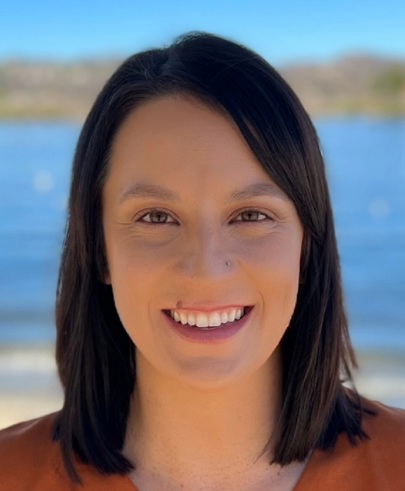
Lauren Hammond, Clinical Psych PhD Personal Statement Tutor
Table of Contents
- Clinical psychology PhD personal statement tips
- What to include - and avoid
- Clinical psychology PhD personal statement examples
- Learn more about Lauren, our clinical psychology PhD personal statement expert.
Clinical Psychology PhD Personal Statements
On this page you'll find six examples of effective clinical psychology PhD personal statements, written from the perspective of a research assistant, a mental health technician, a neuroscience undergraduate, a master's student, a social worker changing careers, and a sleep lab research coordinator. Each example is followed by a breakdown of what makes it work.
Note that this page addresses PhD programs in clinical psychology - which are research-focused, typically funded, and distinct from PsyD programs, which are practitioner-focused and typically not funded. If you're applying to PsyD programs, see our separate PsyD personal statement page.
Lauren Hammond is our clinical psychology PhD application essay expert and has been helping people write their graduate school personal statements for several years. Whether you just want some feedback on a draft, or you're staring at a blank Word doc and don't know where to begin, she is happy to help!
Contact Lauren directly at 951-395-4646 (phone or text), or send us an email. Working with Lauren is $225 per hour, or $995 for 5 hours.
Consultations are free.
3 Tips for Strong Clinical Psychology PhD Personal Statements
1. Lead with Research - This Is a Research Program
- Research fit is the primary selection criterion: Clinical psychology PhD programs admit students primarily based on fit with a faculty member's research agenda. Your personal statement must demonstrate that you have a specific research interest, that you understand the relevant literature, and that your interests align with the work of faculty members you're applying to work with.
- Name the faculty member you want to work with - and show that you've read their work: Most PhD applications require or strongly encourage naming a potential advisor. In the personal statement, go further: reference a specific paper, study, or line of inquiry from that faculty member's lab and explain why it connects to your research interests.
- Describe your research experience concretely: Say what the research question was, what your role was, what you found, and what you learned about doing research well. "Working in a lab" tells a reader very little; the questions you helped answer and the skills you built tell them a lot.
Example:
"For my honors thesis I asked whether flexibility in emotion regulation strategies tracks depression severity in a college sample. I recruited and assessed 87 participants, then managed the data and conducted the regression analyses. What puzzled me was that flexibility predicted severity independently of overall strategy use, and that result is why I have spent the past year reading Dr. [Name]'s work on regulation flexibility across contexts."
2. Show That You Understand the PhD, Not Just Clinical Training
- Articulate what research questions you want to pursue: A clinical psychology PhD trains you to be a researcher who also does clinical work. If your statement is framed entirely around wanting to help clients with depression or anxiety, the committee will conclude you have misread the program you're applying to.
- Distinguish your PhD goals from your PsyD goals: If you are applying to PhD programs rather than PsyD programs, say why: the funding, the research training, the academic career path, or the chance to generate knowledge rather than only apply it.
- Show intellectual curiosity about psychology as a science: Write about a question that puzzles you, or a finding that changed how you think. PhD programs want to train scientists, so the statement should show how you reason about evidence.
Example:
"PhD training appeals to me over PsyD training because I want to learn how to generate knowledge as well as apply it. The questions I keep coming back to are about the mechanisms underneath psychopathology. Why does one emotion regulation strategy help one person and hurt another? Why do some patients change with an intervention while others stay put? Those are empirical questions, and I want to design the studies that answer them."
3. Address Clinical Experience - But in Its Proper Place
- Clinical experience matters but is secondary to research experience: Unlike PsyD programs, clinical psychology PhD programs weight research experience more heavily than clinical hours. Clinical experience should appear in your statement, but it should not dominate it.
- Use clinical experience to motivate research questions: The strongest PhD statements use clinical observation to generate research questions rather than to demonstrate counseling competence. "Working as a mental health technician, I observed a pattern that I don't understand and want to study" will interest a PhD committee far more than "working as a mental health technician, I developed excellent rapport with clients."
- Show that your clinical and research interests are integrated: The scientist-practitioner model means your research and your clinical work should inform each other. A statement that treats these as parallel but unconnected tracks misses an opportunity to show coherent intellectual development.
Example:
"Working as a research coordinator on an anxiety treatment trial, I kept running into one gap. Symptoms dropped by post-treatment, yet at six-month follow-up many patients had little to show for it in daily functioning. I want to study why symptom scores and daily functioning come apart after treatment, and how to measure the outcomes patients care about."
What to Include in Your Clinical Psychology PhD Personal Statement - and What to Avoid
What to Include
- Specific research experience - name the questions, your role, your findings, and what you learned; avoid vague descriptions of "working in a lab"
- Your specific research questions and interests - the more concrete, the better; programs want to know what you want to study, not just that you're interested in "psychopathology" or "intervention research"
- Named faculty members and why you want to work with them - reference specific papers or lines of inquiry; generic statements about a program's "excellence" are forgettable
- Your clinical experience - briefly, and in service of your research questions; it should support and motivate your research interests, not substitute for them
- Why PhD, not PsyD - if you are choosing a research-focused program over a practitioner program, explain why; it signals that you understand the difference and have made a deliberate choice
- Your long-term career goals - academic, research institute, policy-facing, applied research setting; be specific about where you want to take the training
What to Avoid
- Statements that read like PsyD applications - "I want to help people with mental health challenges" is not a PhD application; it is a practitioner application. Reframe around research questions.
- Vague research interests - "I am interested in anxiety and depression" describes a large share of clinical psychology applicants. Be specific: what aspect of anxiety? What mechanism? What population? What methodology?
- Overpersonalizing - lived experience with mental health challenges can be part of your story if handled carefully, but it should not be your primary motivation in a PhD application. If you include it, connect it to the research question you want to study.
- Lengthy descriptions of clinical hours - unless you have a particularly unusual or relevant clinical experience, detailed descriptions of therapy sessions or client cases are not what PhD programs are looking for.
- Generic program praise - "I am applying to [University] because of its excellent clinical psychology program and diverse faculty" tells the committee nothing. Name a specific faculty member. Reference a specific paper.
Video: 7 Ways to Write a Crappy Graduate School Personal Statement
For more personal statement tips, check out Vince's video: 7 Ways to Write a Crappy Graduate School Personal Statement.
Many clinical psychology PhD programs call this essay a statement of purpose, and some ask for both a statement of purpose and a separate personal statement. The statement of purpose format puts more weight on your academic and professional preparation, so it is worth reading before you adapt anything here.
6 Clinical Psychology PhD Personal Statement Examples
Below are six example clinical psychology PhD personal statements. After each one, we explain what it does well and why.
We wrote these six ourselves as teaching models. The applicants are invented, the programs are left generic on purpose, and nothing here is a real client's statement. Read them for structure and for how specific the detail gets, not as text to borrow. Where you see a bracketed placeholder, that is where your own program research has to go.
Research Assistant with Honors Thesis
Emotion regulation and depression were the subject of my undergraduate research. I wondered whether the flexibility with which someone moves among strategies, matching the response to what a situation demands, would predict depression severity better than any single strategy could, even a healthy one.
The study became my honors thesis. For it I recruited 87 participants and administered a battery of self-report and behavioral measures, and the analysis showed that regulation flexibility predicted depression severity beyond overall strategy use and beyond any single strategy. The effect was moderate and held up under several different ways of operationalizing flexibility. One result surprised me: among participants with a prior depressive episode the relationship was stronger than among those without one, which suggests that flexibility may matter most for people already at elevated risk.
That last result still occupies me. Flexible regulation might keep depression from recurring, or living through depression might teach people to regulate flexibly as a form of adaptation. My cross-sectional design could not separate those accounts. They are longitudinal questions, and they point directly to the research I want to do in graduate school.
Dr. [Name]'s longitudinal work on how regulation develops across adolescence and early adulthood supplies the methods that question requires. Her paper on intraindividual variability in strategy use over time comes closer than anything else I have read to the study I hope to run next, so her lab is where I want to train.
In the long run I want an academic career studying when and how protection against depression takes shape in adolescence and early adulthood, and whether early intervention could strengthen it.
Why this statement works:
- The thesis paragraph gives details a reader can check: 87 participants, self-report plus behavioral measures, and flexibility predicting severity "beyond overall strategy use." A vaguer draft would say "I conducted research on emotion regulation" and leave the committee guessing what the applicant actually did.
- The prior-episode result is reported as a surprise, and the next paragraph treats it as a problem to work on. Faculty want to see how an applicant reacts to data they didn't predict, and this shows it.
- "My cross-sectional design could not separate those accounts" names the study's limit in the applicant's own words. That tells a PhD committee the applicant already thinks about design, not just results.
- The faculty paragraph ties one named paper (intraindividual variability in strategy use over time) to the exact study the applicant wants to run next, so fit is argued instead of asserted.
- The closing goal stays inside the same question the thesis raised, so the statement ends where its research began rather than jumping to a general wish to help people.
Mental Health Technician with Research Interest
I have worked as a mental health technician on an acute inpatient psychiatric unit for two years. I do safety checks every 15 minutes, run coping-skills groups, chart behavior for the treatment team, and help with admissions when the unit fills up.
Treatment non-response is the pattern I find most difficult to understand and most want to study. The patients who keep returning aren't always the sickest ones. Some very ill patients stabilize and never come back. Others carry diagnoses that should respond well to what we have, and they cycle through every few months. Diagnosis doesn't sort them, and neither do medication adherence or social support. I don't know what does.
I started reading the literature on treatment-resistant depression and the neuroscience of stress responsivity. In my second year as a tech, I joined a cognitive neuroscience lab. I started running participants through fMRI protocols on emotional reactivity in patients with MDD. Learning the protocol, from screening participants for metal implants to checking each run for head motion, confirmed that I want a research career.
I'm applying to work with Dr. [Name]. Her research on HPA axis dysregulation and antidepressant response addresses the pattern I've watched on the unit, because it proposes a biological mechanism, disruption of the stress system, that could explain some of the variance I keep seeing. I want to chase that question with her. I'd bring the neuroimaging skills I've been building and the clinical context I've been working in.
Long term, I want a research program on the biological and psychological predictors of treatment response. The payoff would be better matching of patients to treatments in the early stages of intervention.
Why this statement works:
- The first paragraph now lists real duties (15-minute safety checks, coping-skills groups, charting for the treatment team), so the reader knows what the applicant has seen. The old line "taught me things no classroom or lab could" told them nothing.
- The second paragraph rules out the obvious explanations one at a time (diagnosis, medication adherence, social support) before admitting "I don't know what does." That is how a research question gets built, and it keeps the clinical material working for the research case.
- The lab paragraph shows the applicant acted on the question, first by reading and then by joining an fMRI study, with task-level detail (screening for metal, checking head motion) that only someone who did the work would include.
- The faculty paragraph links one mechanism, HPA axis dysregulation, to the pattern on the unit. Fit comes from the applicant's own observations rather than from the lab's reputation.
- The goal, matching patients to treatments early, names a payoff a grant reviewer would recognize. A weaker ending would promise to "make a difference in mental health."
Neuroscience Undergraduate to Clinical Psychology PhD
I majored in neuroscience, and most of my research has been in basic science labs, where I studied the neural correlates of fear extinction in rodents. I'm applying to clinical psychology PhD programs instead of neuroscience programs because I want to study fear in people with anxiety and trauma-related disorders, not only in animal models.
Fear extinction shows the gap clearly. The basic science is well developed. We know the vmPFC supports extinction recall and the amygdala supports fear acquisition, and we know extinction depends on context and can renew. Exposure therapy for PTSD and anxiety disorders rests on those principles. The translation, though, is rough. Exposure doesn't work for everyone, and extinction doesn't last forever. The neural mechanisms that predict who will respond well are not well understood.
To prepare, I took extra coursework in clinical psychology and psychopathology. I also volunteered about 200 hours with a research team at a VA PTSD clinic, scoring PCL-5 checklists and tracking veterans' symptoms across courses of prolonged exposure. Seeing some scores fall steadily while others barely moved over the same protocol made the translational question concrete for me.
I'm applying to work with Dr. [Name] because she studies neural predictors of exposure therapy response, which is the translational gap I've been describing. She pairs neuroimaging with clinical outcome data, and that pairing is the method I want to learn.
Down the road, I'd like to build a translational research program that uses methods from brain science to personalize evidence-based psychological treatment for anxiety and trauma-related disorders.
Why this statement works:
- The second sentence answers the question every committee will ask (why not a neuroscience PhD?), so the reader isn't left wondering for the rest of the essay.
- The extinction paragraph shows command of the literature (vmPFC and extinction recall, context dependence, renewal) and then names its limit: exposure doesn't work for everyone, and nobody knows who will respond. That limit becomes the research question.
- The VA paragraph gives a specific role, scoring PCL-5 checklists across courses of prolonged exposure, and ties what the applicant saw back to the question. A weaker draft would list shadowing hours and call the experience "eye-opening."
- The faculty paragraph is two sentences and does its job: it names the lab's question (neural predictors of exposure response) and the method the applicant wants to learn, pairing neuroimaging with outcome data.
- The goal sentence names the disorders, the method and the aim (personalizing treatment), so the ending is as specific as the opening.
Master's Student to Clinical Psychology PhD
Two years ago I finished a master's degree in clinical psychology. I am applying for PhDs now because the training showed me something I had been avoiding: I am more interested in the questions than in the practice.
My thesis tested mindfulness-based interventions for perinatal depression. The specific question was whether gains in mindfulness skills mediated the link between taking part in the intervention and feeling less depressed. They did, significantly, but only partly. That partial result interested me more than a clean one would have, because it meant something else was also driving the change, and my study had not measured it. I spent more time on the methodological implications than on finishing the practicum hours I still needed.
I care about clinical work, but that imbalance showed me where I fit: on the side of the field that studies how treatments work and how to make them better.
The thesis left me with a methodological itch too: mediation analysis, and where it breaks. Because I measured mindfulness skills and depression at the same post-treatment visit, I could not show that the skills changed before the symptoms did, and statistical mediation alone cannot rule out a third variable driving both. I want to test psychological mechanisms experimentally. I am applying to work with Dr. [Name], whose lab manipulates candidate mechanisms in experimental psychopathology studies instead of only measuring them, which is the approach my thesis was missing. After the PhD, I want to run a lab that tests why mindfulness-based treatments for perinatal depression work, so that programs can keep the parts that matter.
Why this statement works:
- The opening explains the master's-to-PhD move in one plain sentence, "I am more interested in the questions than in the practice," instead of apologizing for the master's or defending it at length.
- The thesis paragraph reports a partial mediation result and treats the unexplained part as the interesting part. Committees look for exactly this response to an incomplete finding.
- The practicum-hours detail is a small admission that does real work: it shows the applicant noticed where their attention actually went and took it seriously.
- The methods paragraph names the thesis's real weakness (mediator and outcome measured at the same visit) and the approach the applicant wants to learn (manipulating the mechanism). That is more convincing than "I want to strengthen my methodological skills."
- The faculty sentence says what the lab does differently, and the closing goal tells the committee what the PhD is for, which the earlier version left out.
Career Changer (Social Worker) to Clinical Psychology PhD
I have been a licensed clinical social worker for five years, working with adults with serious mental illness at a community mental health center. I am applying to clinical psychology PhD programs because the work keeps handing me questions that I cannot answer without research training.
The one I return to most is about implementation: why treatments that work in clinical trials so often work less well in a setting like mine. I have been trained in CBT for psychosis and in motivational interviewing, and I deliver both with fidelity. They help some of my clients. They don't help others, and I have no good way to explain the split. The outcome literature says these treatments work; my caseload says the picture is more complicated.
Two years ago I started looking for research training. I enrolled in a research methods course at the local university and found a faculty member who studies implementation science. For the past eighteen months I have worked part-time as a research coordinator on an implementation study. The work has shown me that I like research, including the slow parts: coding fidelity checklists, cleaning site data, and shortening a clinician survey after staff told us it took too long. It has also shown me that the questions I care about (the gap between efficacy and effectiveness, and the organizational and clinician factors that shape how a treatment gets delivered) can be studied, and I want the training to study them well.
That is why I am applying to work with Dr. [Name], whose research on implementation determinants in community mental health speaks to the gap I keep running into at work. I bring five years of community practice, a working sense of what delivering these treatments feels like with too few resources, and research questions I have spent eighteen months sharpening. After the PhD I want to run implementation trials inside community clinics, with clinicians as partners in the design.
Why this statement works:
- The statement moves from five years of LCSW practice to one question: why treatments that work in trials help some clients in a community clinic and not others. A weaker draft would list the populations served and stop there.
- "The outcome literature says these treatments work; my caseload says the picture is more complicated" puts practice and research side by side, which is the scientist-practitioner thinking a PhD reader is looking for.
- The research paragraph shows action, not only interest: a methods course, a faculty contact, eighteen months as a coordinator, and named tasks like coding fidelity checklists.
- The faculty paragraph names a research area (implementation determinants in community mental health) and spells out what the applicant brings, so years in practice read as an asset rather than a detour.
- The closing line gives a concrete career goal, implementation trials run with clinicians, so the committee can see where the training leads.
Sleep Lab Research Coordinator to Clinical Psychology PhD
For the past two years I have coordinated a randomized trial of cognitive behavioral therapy for insomnia (CBT-I) for adults with insomnia and depressive symptoms. My part of the study is the unglamorous middle: screening callers, scheduling assessments, collecting two weeks of sleep diaries and actigraphy before treatment starts, and chasing missing diary entries before each weekly session.
The diaries are where my research question came from. Sleep restriction, the core of CBT-I, limits time in bed to roughly the time a person actually sleeps. A participant who averages five and a half hours of sleep across nine hours in bed gets a five-and-a-half-hour window and a fixed rise time, and the therapist widens the window by 15 minutes once her sleep efficiency climbs above about 85 percent. The rule is easy to explain and hard to follow, and in our diaries adherence breaks down in a recognizable way. Some participants hold their window through the first two weeks, which are the hardest, and their Insomnia Severity Index scores fall quickly. Others drift back toward their old bedtimes in week two, and their depression scores often stay flat even when their sleep improves a little.
I wanted to know whether that drift could be predicted. With my PI's approval I wrote a secondary analysis plan for our first 64 completers, testing whether baseline anhedonia and daytime sleepiness predicted how far participants strayed from their prescribed window in weeks one and two. Anhedonia predicted early drift; sleepiness did not, once I controlled for baseline insomnia severity. I presented the result as a poster at a regional sleep conference. It is a small, exploratory finding from one sample, and the analysis can't tell me why anhedonic participants give up the schedule. Maybe the payoff of better sleep arrives too slowly to keep them going, or maybe the hours awake in bed were one of the few parts of the day that felt like rest. I would like to find out which, if either, is right.
In graduate school I want to study whether the processes that maintain depression also make behavioral treatments for sleep harder to stick with, and whether those treatments can be adapted for the people most likely to drop them. Dr. [Name]'s work on reward processing in depression, especially her trial adding a behavioral activation module to CBT-I, is the closest thing I have found to the study I want to run. I want to learn her lab's experimental and longitudinal methods. In return I can offer two years of running a trial day to day, from recruitment and protocol deviations to missing data and the phone call where a participant says they are thinking of dropping out.
Long term, I want to run a lab that treats sleep as a target in depression treatment and tests versions of CBT-I that community clinics can deliver.
Why this statement works:
- The research question grows out of a routine task, "chasing missing diary entries." A weaker draft would say "I became interested in the link between sleep and depression" and never show where the interest came from.
- The sleep restriction paragraph gets the protocol right (a window matched to actual sleep, a fixed rise time, 15-minute increases once efficiency passes about 85 percent). Faculty who run treatment studies will notice whether an applicant knows the intervention from the inside.
- The secondary analysis is reported with its limits stated: 64 completers, a poster, and "the analysis can't tell me why." That shows the committee the applicant can separate a finding from an explanation.
- The two possible reasons for the drift are offered as hypotheses and left open, which is how a research proposal reads. A weaker draft would pick one and present it as fact.
- The faculty paragraph names a specific line of work (reward processing, a combined CBT-I and behavioral activation trial) and says what the applicant brings in return, so fit runs in both directions.
Have a draft? Try our free personal statement checker. It checks your length, opening line, stock phrases, signs of AI writing, and sentence rhythm. Your draft never leaves your browser.
Feeling stuck?
Lauren Hammond, our clinical psychology PhD personal statement editor, would be happy to help - whether you just need a second opinion on a draft or you're starting from scratch.
Text or call her at 951-395-4646, or send us an email.
Lauren works with you on Zoom and in Google Docs, so you get both real-time coaching and clean, trackable revisions. Most clients use 2 to 4 sessions.
Meet Lauren Hammond
Lauren: I earned my Bachelor's Degree in Literature and Writing, with a concentration in Writing, at California State University San Marcos (CSUSM) and my Master's Degree in English and Comparative Literature at San Diego State University (SDSU).
I completed my PhD in English at the University of California Riverside (UCR) in September 2023 and then worked as UCR's Graduate Writing Center Specialist and graduate Fulbright Program Advisor. I now teach at Azusa Pacific University, where I'm an Assistant Professor and Lead Faculty in the Writing Program.
I have been a writing consultant for more than 10 years, and I've helped people with research writing, thesis/dissertation projects, rhetorical and literary analyses, writing in the humanities, grammar/sentence mechanics, and more. My work for VKTP includes thesis and dissertation editing and coaching, especially in the humanities and social sciences, as well as graduate school application materials such as personal statements, diversity statements and research statements, and job market materials for academic and alt-academic positions, including resumes, CVs and cover letters.
During my downtime, I love hanging out with my husband, our daughter, and our two dogs, Link and Leia! My favorite activities are going on the boat, cruising on the golf cart, and making our way through all of the local eateries. When we aren't out and about, I typically enjoy reading and watching movies.
Working with Lauren is $225 per hour or $995 for a package purchase of 5 hours. You can reach her at 951-395-4646 (phone or text), or by sending us an email.
P.S. Our partner Julie can also help you prepare for your clinical psychology PhD admissions interviews! Learn more about her professional voice training for interview prep.
P.S. Some clinical psychology PhD programs still require or recommend the GRE - we can help with that too!
Love For Lauren
Frequently Asked Questions
What is the difference between a clinical psychology PhD and a PsyD?
Clinical psychology PhD programs are research-focused, typically fully funded, and train scientist-practitioners pursuing academic or research careers. Acceptance rates are typically 2-8%. PsyD programs are practitioner-focused, usually not fully funded, and train clinicians. If your primary goal is research and academic training, pursue a PhD. If your primary goal is clinical practice, a PsyD may be the better fit.
How long should my clinical psychology PhD personal statement be?
Most programs ask for 1-2 pages (about 500-1,000 words), though some set their own limits or give structured prompts. Since research fit drives admissions, spend the space on your research interests, your experience, and the specific faculty you want to work with.
How important is naming faculty members in my statement?
Extremely important. Clinical psychology PhD admissions are driven primarily by faculty interest - a faculty member has to want to take you on as a student. Name the faculty you want to work with and reference specific papers or lines of inquiry. Generic statements that don't name faculty are significantly less competitive.
How competitive are clinical psychology PhD programs?
Very. Most APA-accredited programs accept 2-8% of applicants, and some receive 300-500 applications for 4-8 spots. Competitive applicants typically have 2+ years of research experience, some clinical exposure, strong GRE scores where required, and research interests that clearly align with specific faculty.
Can I use AI to write my personal statement?
AI doesn't know your research experience, the questions you actually want to study, or what you've read of a faculty member's work, and those are what a clinical psychology PhD committee reads for. Use AI to organize your thinking if it helps, but write the statement yourself.
Do clinical psychology PhD programs still require the GRE?
Some clinical psychology PhD programs still require or recommend the GRE, and many have dropped it, so check each program's requirements. Policies have changed often since the pandemic, so look at the current cycle's admissions page, not last year's. If you need GRE prep, our tutoring team can help.
BTW, Lauren can also help with:
- Dissertation and thesis editing
- Graduate school CV and resume examples
- Teaching statement examples
- Academic cover letter examples
- Diversity statement examples
- Research statement examples
- PsyD personal statements
- PhD personal statements (other fields)
- Marriage and Family Therapy personal statements
- MSW (Social Work) personal statements
- CRNA personal statements
- Dental school personal statements
- PharmD personal statements
- Nurse Practitioner personal statements
- Optometry (OD) personal statements
- Genetic Counseling personal statements
- MHA (Health Administration) personal statements
- Physician Assistant personal statements
- Physical Therapy personal statements
- Speech-Language Pathology personal statements
- Occupational Therapy personal statements
- MBA personal statements
- MS in Business Analytics personal statements
- Law School personal statements
- Master's degree personal statements
- Master of Public Policy personal statements
- MPH statement of purpose
- Medical Residency personal statements
- Nursing school personal statements
- Veterinary School personal statements
- Post Doc personal statements
- Fellowships and Grants personal statements