Respiratory Therapy Personal Statement Examples and Tutoring
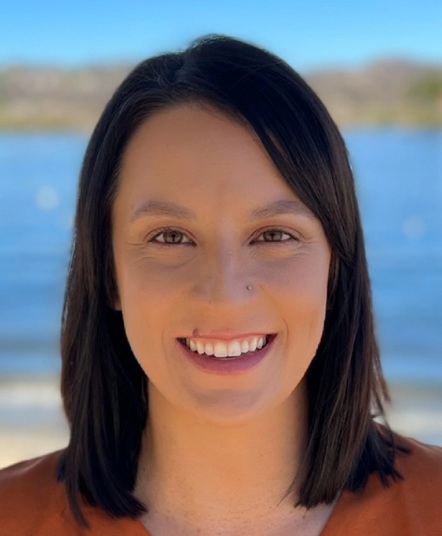
Lauren Hammond, respiratory therapy personal statement tutor
Table of Contents
- Respiratory therapy personal statement tips
- What to include - and avoid
- Respiratory therapy personal statement examples
- Learn more about Lauren, our respiratory therapy personal statement expert.
Respiratory Therapy Personal Statements
On this page you'll find six examples of effective respiratory therapy personal statements, written from the perspective of healthcare workers entering the field, applicants with personal respiratory illness experience, working RTs pursuing BS completion or graduate credentials, and career changers.
Each example is followed by a breakdown of what makes it work. Bachelor's and master's entry programs in respiratory therapy are growing in number, and many of them ask for a personal statement, so it is worth getting right.
Lauren Hammond is our respiratory therapy application essay expert and has been helping people write their graduate and professional school personal statements for several years. Whether you just want some feedback on a draft, or you're staring at a blank Word doc and don't know where to begin, she is happy to help!
Contact Lauren directly at 951-395-4646 (phone or text), or send us an email. Working with Lauren is $225 per hour, or $995 for 5 hours.
Consultations are free.
3 Tips for Strong Respiratory Therapy Personal Statements
1. Show That You Understand Respiratory Therapy's Full Clinical Scope
- Respiratory therapy is far more than oxygen delivery: The work includes mechanical ventilation management, arterial blood gas interpretation, pulmonary function testing, airway management (including intubation in many hospitals), bronchoscopy assistance, cardiopulmonary rehabilitation, neonatal and pediatric critical care, sleep medicine, and home care. An applicant who shows some awareness of this range reads as better prepared than one who describes RT as "helping people breathe."
- Show specific clinical knowledge: Ventilator modes, ABG interpretation, nebulized medication delivery, high-flow oxygen therapy, non-invasive positive pressure ventilation - using even a few RT concepts correctly shows preparation that goes past general interest.
- Connect the scope to the patient population: Premature neonates on ventilators in the NICU, COPD patients in pulmonary rehabilitation, ICU patients requiring prolonged ventilatory support, asthmatic children in the ED - naming the patients respiratory therapists actually care for shows the reader you've looked at the day-to-day work.
Example:
"The case that did the most to expand my understanding of respiratory therapy was an ARDS patient I observed during my clinical shadow. I hadn't expected that much precision from the RT with the ventilator settings. The RT adjusted the PEEP and titrated the FiO2, read the compliance curves, and told the intensivist about every change. I watched the RT manage a hard physiologic problem minute by minute and keep the intensivist informed of each change."
2. Be Specific About What Drew You to Respiratory Therapy
- The most common weak answer: "I want to help patients with breathing problems." Nearly every applicant writes some version of this. Show what draws you in particular: the respiratory system itself, the critical care environment, the problem of mechanical ventilation, or the long-term work of pulmonary rehabilitation.
- Personal experience with respiratory illness is common - handle it thoughtfully: Many RT applicants have asthma, have had a family member on a ventilator, or have another personal connection to respiratory disease. That story can work well in a statement, as long as your clinical exposure and preparation carry most of the weight and the illness is where your interest started.
- The critical care dimension is often the strongest angle: Respiratory therapists are central to ICU care in a way that few allied health professionals are. If the ICU is where you want to work, make that explicit and show that you understand the role RT plays in that environment.
Example:
"I want to work in the ICU. During my shadow hours, the respiratory therapist was the person reading the ventilator at the bedside and running the morning spontaneous breathing trial that showed whether a patient was ready for extubation. I want to be trained to make those calls."
3. For BS Completion and Graduate Applicants - Frame Your Experience as an Asset
- Working RTs applying for credential advancement should show clinical maturity: If you are an RRT pursuing a BS or MS for career advancement, your statement should describe your clinical experience in specific terms - your specialty area, the patient population you manage, the specific clinical skills you've developed - and connect it clearly to what the advanced degree will enable.
- Show what the degree is for: Leadership, research, education, or a specialty area such as adult critical care or neonatal care. Name what you want to do with the degree and why it is the next step.
- Avoid assuming your experience speaks for itself: Admissions readers want to see reflection, not just a career summary. What has your clinical work taught you? What questions has it raised? What do you want to learn that your current practice hasn't been able to teach you?
Example:
"I have managed ventilators in a medical ICU for seven years. I can do my job without another degree. I am applying because my clinical work keeps raising research questions I don't have the training to study. They concern optimal weaning protocols, the long-term pulmonary outcomes of prolonged ventilation, and what predicts successful extubation in patients who have failed multiple prior attempts. I want the MS to give me the research methods to study them."
What to Include in Your Respiratory Therapy Personal Statement - and What to Avoid
What to Include
- A specific answer to why respiratory therapy - something particular to the respiratory system, the critical care environment, or the RT scope of practice, rather than "I want to help patients"
- Meaningful clinical observation or healthcare experience - describe what you observed; name a patient scenario, a piece of equipment, a clinical concept that demonstrated what RT practice actually involves
- Awareness of RT's full clinical scope - ventilation management, ABGs, pulmonary rehabilitation, neonatal care, sleep medicine; show that you understand the profession's breadth
- Any relevant healthcare background - CNA, EMT, medical assistant, paramedic, respiratory aide, nursing; connect it explicitly to RT
- Your intended specialty area or patient population - neonatal, critical care, pulmonary rehabilitation, home care, sleep medicine; a stated direction shows purposeful thinking
- Program-specific detail - a clinical training site, a simulation lab, a specialty concentration, faculty research
What to Avoid
- "I want to help people breathe" - this is the most common RT personal statement opening and the least distinctive; find a more specific entry point
- Describing RT as primarily "supporting" other providers - respiratory therapists work under physician orders, but they assess patients and adjust ventilator settings and treatments themselves within therapist-driven protocols; show that you understand that clinical judgment
- Personal respiratory illness as the only motivation - pair it with clinical preparation and professional understanding
- Vague descriptions of clinical observation - "I observed respiratory therapists working with patients" tells the committee nothing; be specific about what you saw and what you learned
- Submitting the same statement everywhere - programs with NICU emphasis, adult critical care focus, or research missions want different things; tailor accordingly
Video: 7 Ways to Write a Crappy Graduate School Personal Statement
For more personal statement tips, check out Vince's video: 7 Ways to Write a Crappy Graduate School Personal Statement.
If a program on your list asks for a statement of purpose instead, it is a different document with different expectations. Our guide to how to structure a statement of purpose covers what changes.
6 Respiratory Therapy Personal Statement Examples
Below are six example respiratory therapy personal statements. After each one, we explain what it does well.
We wrote these six ourselves as teaching models. The applicants are invented, the programs are left generic on purpose, and nothing here is a real client's statement. Read them for structure and for how specific the detail gets, not as text to borrow.
CNA / Healthcare Aide to Respiratory Therapy
The long-term acute care hospital where I have worked for three years as a certified nursing assistant is a setting most people outside healthcare have never heard of. It treats the patients who are too medically complex for a skilled nursing facility and too stable to remain in an acute hospital. The patients here are predominantly on prolonged mechanical ventilation, because they have not been able to wean from the ventilator following an acute illness or surgery. Often, the work of the respiratory therapists I assist is the most consequential clinical work happening in the building.
Three years of watching RTs work led me to respiratory therapy. What I saw was more clinical judgment than I had expected to find in allied health. The RTs on my unit assess each patient's breathing and run the ventilator and weaning protocols for patients whose survival depends on how well that work is done. Last spring one RT noticed that a patient the team expected to stay on the ventilator was tolerating longer trach collar trials each day. She charted his respiratory rate and oxygen saturation through every trial, brought the numbers to the weekly team meeting, and the physician agreed to keep extending the trials. Six weeks later he was off the ventilator entirely.
My CNA work has taught me things about LTACH patients that RT students usually meet only in their clinical rotations. I turn and bathe patients who have been on the ventilator for months and see how weak they become, and I talk with the families who visit every evening and ask when their father or wife will be able to speak again. What I don't have is the training to assess their lungs or manage their ventilators, and that is what I am applying for.
I want to practice in a critical care or LTACH setting, specializing in ventilator management and weaning. This program appeals to me for its critical care emphasis and for its clinical training sites in complex care environments.
Why this statement works:
- The opening explains what an LTACH is ("too medically complex for a skilled nursing facility and too stable to remain in an acute hospital") before saying anything about the applicant. That precision tells an RT reader the applicant knows exactly where they work. A weaker draft would open with "I have always been interested in healthcare."
- The trach collar story gives one patient, one RT and a timeline of weeks. It shows the applicant watched weaning as a slow process driven by charted numbers, which is how it usually goes in an LTACH.
- The CNA paragraph sticks to what a CNA actually does (turning, bathing, talking with families) and doesn't claim clinical skills the applicant hasn't earned.
- "What I don't have is the training to assess their lungs or manage their ventilators" names the gap in one sentence, so the request for training reads as a plan.
- The goal (ventilator management and weaning in critical care or an LTACH) comes straight out of the setting already described, so the reader doesn't have to connect the dots.
Personal Asthma / Respiratory History to RT
Waking at 2 a.m. unable to breathe: I know what that is. I have had severe asthma since childhood. My parents had to weigh every activity against the risk of an exacerbation, and I spent a significant part of my childhood in emergency departments and pulmonary clinics. I also know what good respiratory care looks like from the receiving end, because I received it. RTs managed my acute exacerbations with technical precision and patient calm, which I now understand as a specific clinical skill.
Asthma is not the main reason I am applying to respiratory therapy. The three years of healthcare experience I pursued after I understood that RT was the direction I wanted to go matter more. I worked as a medical assistant in a pulmonary medicine clinic. I assisted with pulmonary function testing and observed bronchoscopy procedures, and I developed a working understanding of the diagnostic side of respiratory medicine that my patient experience alone could never have given me.
What I saw in the pulmonary clinic was a respiratory therapy scope that reaches well beyond acute care. I ran spirometry before and after bronchodilator, helped with six-minute walk tests for patients being evaluated for home oxygen, and called home care companies to sort out concentrators and follow-up visits. Very little of it looked like the emergency care I remembered, and I wanted to learn all of it.
I also shadowed in a hospital RT department for forty hours to see the acute side, including a night when the therapist I followed spent most of her shift with a teenager in status asthmaticus. My goal is to practice where acute and chronic respiratory disease management intersect, in a pulmonary medicine or step-down unit where the full RT scope is in daily use. I'm applying to this program because of its dual emphasis on acute care and pulmonary medicine rotations.
Why this statement works:
- The first sentence puts the reader in the experience before any explanation. The second paragraph then moves the weight off the illness with one plain line, "Asthma is not the main reason I am applying to respiratory therapy," and spends the rest of the essay on work the applicant did.
- The clinic paragraph lists tasks the applicant performed: spirometry before and after bronchodilator, six-minute walk tests for home oxygen, calls to home care companies. Those cover the outpatient side of RT, which most applicants never mention.
- The shadowing night with a teenager in status asthmaticus ties the patient history to the hospital side without retelling the childhood story. A weaker draft would have gone back to "I know how that patient felt."
- The goal (a pulmonary medicine or step-down unit) fits both halves of the applicant's experience, and the program reason names something concrete about its rotations.
EMT / Paramedic to Respiratory Therapy
My patients in hypercapnic respiratory failure leave my care at the emergency department door. I give report, take my stretcher back, and almost never learn what happened next. For four years I have wanted to know what the next forty-eight hours look like for them: how the ventilator is managed, and what decides who gets extubated and who doesn't. Respiratory therapists work through those questions every day, and I want the training to do the same.
I've been a paramedic for four years. I've intubated in the field and managed CPAP for acute pulmonary edema. I've given albuterol and ipratropium for severe bronchospasm and delivered positive pressure ventilation through a BVM in patients who had stopped breathing. I'm good at managing an airway in the back of a moving ambulance or on a bathroom floor, often with one partner and no one else to call.
I shadowed in a hospital RT department for fifty hours, moving between the ICU, the ED, and the pulmonary step-down unit. The ICU held my attention more than any setting I've seen since I started as a paramedic. One afternoon I watched an RT raise a COPD patient's ventilator rate, with the physician's agreement, after a blood gas showed his CO2 climbing, then draw another gas an hour later to see whether the change had worked. In the field I never see the second blood gas.
My prehospital experience is a specific preparation for respiratory therapy training. I'm comfortable with the acute airway, and I understand the physiologic basis of the interventions I've delivered. I've worked in high-stakes environments where the clinical decision can't wait for consultation. I don't yet know how to manage a ventilator over days, and my blood gas interpretation stops at the basics. That is the training I am asking this program for.
My goal is a critical care RT role, eventually with the ACCS specialty credential. I'm applying to this program because of its ICU clinical training emphasis and its critical care specialty preparation curriculum.
Why this statement works:
- The opening uses the handoff at the ED door to explain the career change. In three sentences the reader learns the applicant's current role and the exact question driving the move, with no "I have always wanted" language.
- The second paragraph names interventions a paramedic actually performs (field intubation, CPAP for acute pulmonary edema, albuterol and ipratropium, BVM ventilation). An RT reader can check each one against paramedic scope, and they hold up.
- The ICU paragraph gives one observed event: a rate change after a rising CO2, then a repeat blood gas. "In the field I never see the second blood gas" ties that back to the opening without restating it.
- The applicant names what they can't do yet (multi-day ventilator management, blood gas interpretation past the basics). A weaker draft would lean on field experience and imply the paramedic is already most of the way to being an RT.
- The ACCS goal is a real NBRC specialty credential for adult critical care, and it matches the ICU emphasis named in the last sentence.
Family Experience with Mechanical Ventilation to RT
My father was on a mechanical ventilator for eleven days following a CABG complication. I was twenty years old and had no clinical background. In the ICU I asked the respiratory therapist every question I could think of, about the machine, the settings, the numbers on the screen, what it meant when the alarm went off and what the RT was doing about it. She answered every question with patience and precision. All the while she kept monitoring my father's respiratory status and communicating with the intensivist about how ready he was to be weaned.
My father was extubated on day eleven, and he is well. I spent the next three years completing a biology degree and pursuing the clinical preparation I needed to apply to respiratory therapy programs with something more than a family experience to offer. I worked as a patient care technician in a cardiothoracic ICU, where I learned to recognize when a patient was working too hard to breathe and to get the nurse or RT right away. I also shadowed RTs for forty hours in the ICU and the pulmonary step-down unit, and took a cardiopulmonary physiology course that explained much of what I had been watching.
Now I understand why that RT's work was so demanding. After cardiac surgery the ventilator affects the heart as well as the lungs, because positive pressure changes how much blood returns to the heart, so the RT has to watch both. She also had to work with the nurse on sedation and check each morning whether my father was ready for a breathing trial. Weaning follows a protocol, but applying it to a patient whose heart is still recovering takes judgment, and that judgment is what I want to learn.
My goal is to work in cardiothoracic critical care and eventually earn the adult critical care specialty credential (ACCS). I'm applying to this program because of its cardiopulmonary physiology curriculum and its clinical training partnership with a cardiac surgery program.
Why this statement works:
- The family story takes one paragraph and stays exact: eleven days, a CABG complication, a twenty-year-old with no clinical background. The second paragraph turns straight to what the applicant did next, so the father's illness is the starting point and not the whole argument.
- The questions the applicant asked the RT ("the numbers on the screen, what it meant when the alarm went off") show curiosity about the equipment and the reasoning behind it, which is the interest an RT program wants to see.
- The PCT detail (spotting a patient working too hard to breathe and getting help) is a realistic task for that job, and it shows the applicant already watches breathing as a clinical sign.
- The reflection explains one reason ventilation after heart surgery is hard (positive pressure changes venous return) and says weaning follows a protocol but still takes judgment. That is accurate and stays within what a pre-RT applicant could reasonably know. A weaker draft would pile up terms to sound advanced.
- Ending on the goal and the program's cardiac surgery partnership leaves the reader with a concrete reason this applicant fits this program.
Working RT Pursuing BS Completion
The question I find most clinically urgent is ventilator-induced lung injury. I understand the current standard of care: lung-protective ventilation with low tidal volume, and permissive hypercapnia in appropriate patients. What I do not understand well enough is the underlying mechanism, and without it I cannot apply the principle intelligently when the standard protocol conflicts with the clinical picture.
I have been a registered respiratory therapist for seven years. I earned the RRT credential soon after finishing my associate's degree, and I have worked in an adult medical ICU since then. In that time I have managed ventilated patients, run weaning protocols, assisted physicians with bronchoscopies and responded to rapid response calls. I am good at that work, and it keeps raising questions I can't answer with the training I have.
When a patient's plateau pressure is acceptable but their driving pressure is high, what does the evidence say? When a patient in prone position continues to worsen on lung-protective settings, what comes next? These are research questions embedded in clinical practice, and answering them takes scientific literacy that my associate's degree did not fully develop.
The BS program will give me the research foundation to engage with the primary literature directly and the analytical skills to evaluate the evidence behind the protocols I follow. It will also give me the academic credential to pursue leadership, education, or advanced practice roles in respiratory care. My goal is to move into a clinical educator or research role within respiratory therapy, where I can contribute to the evidence base that guides the practice I have spent seven years developing. I am applying to this program for its research methods curriculum and its flexible format for working RTs.
No one at my hospital requires me to have a BS. I want it because last month a new graduate asked me why we were keeping a patient's driving pressure under 15 cm H2O, and I could tell her the rule but not the reason.
Why this statement works:
- The statement opens on a clinical problem (ventilator-induced lung injury) instead of a résumé, and the first paragraph separates what the applicant knows (low tidal volume, permissive hypercapnia) from what they don't (the mechanism).
- The work history uses tasks an ICU RT actually does: running weaning protocols, assisting with bronchoscopy, rapid response calls. It takes two sentences, because the committee only needs to know the experience exists.
- The questions about driving pressure and prone positioning are open problems in the ventilation literature, so they show why a degree with research methods makes sense for this person.
- The closing story about the new graduate gives a concrete reason for the degree ("I could tell her the rule but not the reason"). A weaker draft would end on "I want to grow as a professional."
- The educator or research goal follows from both the questions and that teaching moment.
Home Oxygen Delivery Technician to Respiratory Therapy
For three years I have delivered oxygen to people's homes. I work for a home medical equipment company, and my job is to set up concentrators, drop off portable cylinders, replace tubing and show patients and their families how to use what I bring. I am not a clinician. I can't change a flow rate, and I don't assess anyone. But I am often the only person from the healthcare system who walks into these houses in a given month.
Last winter I delivered a portable cylinder to a man in his seventies with COPD whose order was for 2 liters per minute. When I got there, his concentrator was turned up to 4. He told me he had turned it up himself because he couldn't get from the bedroom to the kitchen without stopping to rest. I knew that more oxygen isn't automatically better for some people with COPD, but I didn't know whether that applied to him, and it wasn't my decision. I left the setting alone, wrote down what I saw, and called our company's respiratory therapist from his driveway.
She went out the next morning. She checked his oxygen saturation at rest and then while he walked the hallway, and within a minute of walking on 2 liters he dropped into the low 80s. She called his pulmonologist's office with the numbers, and he got a new order with a higher flow for activity and a portable concentrator light enough to carry. When I went back two weeks later, he told me he had walked to the mailbox for the first time since summer.
That visit showed me where my job stops. I can deliver the equipment and teach someone to use it, but the RT is the one who measures what the patient's lungs are doing and turns that into a change in treatment. I want to be able to do her part.
Since then I have taken anatomy and physiology, microbiology and chemistry at my community college in the evenings, and I have spent twenty hours shadowing respiratory therapists at a regional hospital, mostly on a medical floor and in the ICU. The hospital was harder for me to follow. I recognized every oxygen device, but I was lost when the therapists talked through blood gases or ventilator alarms. That gap is what I expect this program to close.
After I'm licensed, I want to return to home care and eventually work with patients on home ventilators and the families who manage their care. Many of the people I visit now have lived with lung disease at home for years, and they need someone who can assess them where they live. I am applying to this program because its clinical rotations include home care and outpatient pulmonary sites as well as hospital units.
Why this statement works:
- The first paragraph states the applicant's job and its limits ("I can't change a flow rate, and I don't assess anyone"). That matters later, because the whole story turns on the applicant knowing where the job stops.
- The concentrator scene has numbers an RT reader can follow: an order for 2 liters, a setting of 4, a saturation in the low 80s with walking. The applicant reports and calls the RT instead of adjusting anything, which shows judgment without claiming clinical skill.
- The RT's next-morning visit makes the case for the field. The applicant watches someone measure, call the pulmonologist and get the order changed, then says plainly, "I want to be able to do her part."
- The shadowing paragraph admits being lost during blood gas and ventilator discussions. A weaker draft would say the hospital "confirmed" everything; this one names the gap the program will close.
- The goal (home care, eventually home ventilator patients) comes out of three years of the applicant's actual work, and the program reason names home care and outpatient rotations.
Have a draft? Try our free personal statement checker. It checks your length, opening line, stock phrases, signs of AI writing, and sentence rhythm. Your draft never leaves your browser.
Feeling stuck?
Lauren Hammond, our respiratory therapy personal statement editor, would be happy to help - whether you just need a second opinion on a draft or you're starting from scratch.
Text or call her at 951-395-4646, or send us an email.
Lauren works with you on Zoom and in Google Docs, so you get both real-time coaching and clean, trackable revisions. Most clients use 2 to 4 sessions.
Meet Lauren Hammond, respiratory therapy personal statement tutor
Lauren: I earned my Bachelor's Degree in Literature and Writing, with a concentration in Writing, at California State University San Marcos (CSUSM) and my Master's Degree in English and Comparative Literature at San Diego State University (SDSU).
I completed my PhD in English at the University of California Riverside (UCR) in September 2023 and then worked as UCR's Graduate Writing Center Specialist and graduate Fulbright Program Advisor. I now teach at Azusa Pacific University, where I'm an Assistant Professor and Lead Faculty in the Writing Program.
I have been a writing consultant for more than 10 years, and I've helped people with research writing, thesis/dissertation projects, rhetorical and literary analyses, writing in the humanities, grammar/sentence mechanics, and more. My work for VKTP includes thesis and dissertation editing and coaching, especially in the humanities and social sciences, as well as graduate school application materials such as personal statements, diversity statements and research statements, and job market materials for academic and alt-academic positions, including resumes, CVs and cover letters.
During my downtime, I love hanging out with my husband, our daughter, and our two dogs, Link and Leia! My favorite activities are going on the boat, cruising on the golf cart, and making our way through all of the local eateries. When we aren't out and about, I typically enjoy reading and watching movies.
Working with Lauren is $225 per hour or $995 for a package purchase of 5 hours. You can reach her at 951-395-4646 (phone or text), or by sending us an email.
P.S. Our partner Julie can also help you prepare for your respiratory therapy school admissions interviews! Learn more about her professional voice training for interview prep.
P.S. Some respiratory therapy programs require the GRE - we can help with that too!
Love For Lauren
Frequently Asked Questions
How long should a respiratory therapy personal statement be?
Length limits vary a lot. Some programs ask for a short essay of a few hundred words, others allow 1,000 words or more, and some associate's degree programs don't ask for a statement at all. Always check each program's requirements. Focus on demonstrating awareness of RT's full clinical scope, a specific reason for choosing the field, and any relevant healthcare or science background.
What do respiratory therapy programs look for in applicants?
Strong science coursework, healthcare observation or work experience, and a specific explanation of why you chose RT. Some respiratory therapy programs, mostly at the master's level, still require or recommend the GRE, and many don't ask for it, so check each program's requirements. Competitive applicants show awareness beyond basic oxygen delivery - mechanical ventilation, pulmonary rehab, neonatal care, cardiopulmonary diagnostics.
What is the difference between an AS and a BS in respiratory therapy?
An AS provides entry-level clinical training and qualifies you for the RRT exam. A BS adds research methods, leadership, and advanced clinical content, and some hospitals prefer it for hiring and promotion. Many working RRTs pursue BS completion programs. Direct-entry BS and MS programs are growing in number, but the associate's degree is still the most common route into the field.
What specialty certifications can respiratory therapists pursue?
The NBRC offers ACCS (Adult Critical Care Specialist), NPS (Neonatal/Pediatric Specialist), SDS (Sleep Disorders Specialist), and CPFT/RPFT (pulmonary function) credentials. Eligibility differs by credential, and ACCS requires the RRT. The RPSGT for polysomnography comes from a separate board, the BRPT. If you have a specialty direction, mentioning it in your statement shows purposeful career planning.
Can I use AI to write my respiratory therapy personal statement?
AI doesn't know your clinical experiences or your actual reasons for choosing RT, so it can only produce a generic version of them. Write the statement yourself or work with Lauren.
Do respiratory therapy programs require the GRE?
Most associate's and bachelor's programs don't ask for it. Some master's programs still require or recommend the GRE, and many don't, so check each program's requirements. If you need GRE prep, our tutoring team can help.
BTW, Lauren can also help with:
- Dissertation and thesis editing
- Graduate school CV and resume examples
- Teaching statement examples
- Academic cover letter examples
- Diversity statement examples
- Research statement examples
- CRNA personal statements
- Nurse Practitioner personal statements
- Nursing school personal statements
- Physician Assistant personal statements
- Physical Therapy personal statements
- Radiation Therapy personal statements
- Podiatry (DPM) personal statements
- Audiology (AuD) personal statements
- Chiropractic (DC) personal statements
- Athletic Training personal statements
- Dental school personal statements
- PharmD personal statements
- MSW (Social Work) personal statements
- MS in Counseling personal statements
- ABA / BCBA personal statements
- Genetic Counseling personal statements
- MHA (Health Administration) personal statements
- Health Informatics (MSHI) personal statements
- PsyD personal statements
- PhD personal statements
- Law School personal statements
- MBA personal statements
- MPH statement of purpose
- Post Doc personal statements
- Fellowships and Grants personal statements