Athletic Training Personal Statement Examples and Tutoring
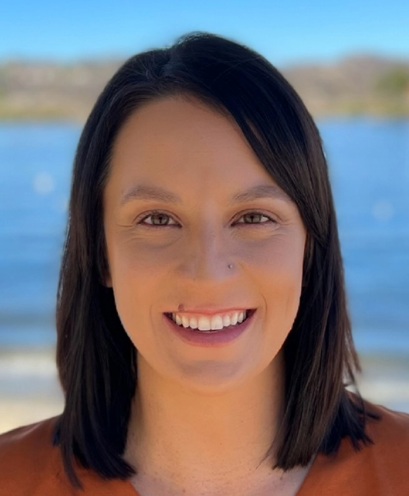
Lauren Hammond, athletic training personal statement tutor
Table of Contents
- Athletic training personal statement tips
- What to include - and avoid
- Athletic training personal statement examples
- Learn more about Lauren, our athletic training personal statement expert.
Athletic Training Personal Statements
On this page you'll find six examples of effective athletic training personal statements for entry-level Master of Science in Athletic Training programs, post-professional Doctor of Athletic Training (DAT) programs, and working ATCs seeking credential advancement.
Each example is followed by a breakdown of what makes it work. Since 2022, new athletic trainers have entered the profession through master's programs, so nearly everyone starting out now goes through graduate admissions, and most programs ask for a personal statement.
Lauren Hammond is our athletic training application essay expert and has been helping people write their graduate school personal statements for several years. Whether you just want some feedback on a draft, or you're staring at a blank Word doc and don't know where to begin, she is happy to help!
Contact Lauren directly at 951-395-4646 (phone or text), or send us an email. Working with Lauren is $225 per hour, or $995 for 5 hours.
Consultations are free.
3 Tips for Strong Athletic Training Personal Statements
1. Demonstrate Understanding of the Full Athletic Training Scope of Practice
- Athletic training is a healthcare profession, not a sports job: The most common weakness in AT personal statements is describing the profession primarily in terms of sideline coverage, taping ankles, and working with athletes. Athletic trainers are healthcare providers with a full scope that includes injury evaluation and diagnosis, acute care, surgical referral, rehabilitation, prevention, and organizational and professional health and wellness - across settings that include not just sports but military, performing arts, industrial, and clinical environments.
- Show awareness of the profession's evolving practice settings: Traditional collegiate and high school sports settings remain important, but the growth areas in athletic training are clinical, military, occupational, and tactical settings. Applicants who show they know that range come across as better prepared than those who describe AT as "working with the sports team."
- Engage with the clinical reasoning dimension: Athletic trainers practice in collaboration with physicians, but on the field or in the training room they often make evaluation and treatment decisions on the spot, without imaging or a physician present. If you show that this kind of clinical reasoning is what draws you, more than being close to sport, the committee reads you as someone applying to a healthcare profession.
Example:
"Acute injury management is demanding, but the part I find most interesting is the differential diagnosis. Picture an athlete who presents with lateral knee pain after a step-cut: it could be an LCL sprain, a lateral meniscus tear, or an ACL tear, which often bruises the bone on the outside of the knee. Working through that differential in real time, without an MRI suite next door, is the clinical challenge I want to spend my career developing expertise in."
2. Be Specific About Your Clinical Background and What You've Observed
- Observation and clinical experience are required and expected: Many CAATE-accredited programs require or recommend observation hours with an athletic trainer, so check each program's minimum. In the personal statement, describe specific clinical experiences - an injury evaluation you observed, a rehabilitation protocol you helped implement, an acute care situation that showed you what athletic training looks like at its best.
- Distinguish your experience from that of coaches, trainers, or sports medicine assistants: Many applicants have worked in adjacent roles - personal training, sports medicine student aide, physical therapy tech - that are valuable but distinct from athletic training. Be precise about your role and what you observed ATs doing that your role didn't allow you to do.
- For working ATCs applying to DAT programs: Describe the clinical questions or practice challenges that have motivated you to pursue doctoral training. The DAT is a post-professional degree for practicing clinicians, so the statement should show clinical maturity and say where you want to develop. Wanting a higher credential isn't enough of a reason on its own.
Example:
"The ACL case I think about most is one I followed nine months into rehabilitation, long after the diagnosis and the surgical referral. By every objective measure she had full range of motion and strength symmetry. She still refused to cut at full speed. Her athletic trainer spent three weeks on the psychological readiness piece, the fear of reinjury and the loss of trust in her own knee, which the objective tests couldn't measure. That part of the work, helping someone trust the knee again, is the part I most want to learn."
3. Name Your Intended Setting and Population
- Collegiate athletics, high school, professional sports, military, clinical, occupational, performing arts - name where you want to work and explain the connection to your background. A veteran who wants to practice as a tactical AT has a clear line from background to goal. So does an exercise science student who observed AT in a performing arts medicine clinic and wants to specialize there. Show the reader how your experience leads to the setting you name.
- For DAT applicants, name a professional contribution goal: Research, clinical education, program development, specialty certification advancement, leadership - the doctoral degree is designed for practitioners who want to contribute to the profession beyond their individual clinical practice. Show that contribution direction clearly.
- Connect your setting interest to the program's strengths: Programs with strong clinical AT emphases, military or tactical AT concentrations, or research-active faculty in specific sport or injury areas can be referenced specifically. Generic praise for a program's "excellent clinical training" is forgettable.
Example:
"Long term, I want to work in a military or tactical setting. Its population has occupational demands and injury patterns, and a relationship to pain and performance, that differ from collegiate athletics in ways I find clinically interesting and personally motivating. I am applying to this program for its tactical athletic training concentration and its clinical training partnerships with military and law enforcement agencies."
What to Include in Your Athletic Training Personal Statement - and What to Avoid
What to Include
- A specific clinical observation or experience that shows you understand what athletic training actually involves - not just watching games from the sideline
- Demonstration of AT's full scope - injury evaluation, clinical reasoning, rehabilitation, prevention, and the range of practice settings beyond traditional athletics
- Your intended practice setting and patient population - collegiate, high school, clinical, military, occupational, performing arts; be specific
- Any relevant clinical, healthcare, or sports medicine background - student AT aide, exercise science, PT tech, military medic; connect it explicitly to AT
- For DAT applicants: a specific professional contribution direction - research question, clinical education goal, practice area development
- Program-specific detail - a clinical site, a faculty member's research, a specialty concentration, a fieldwork partnership
What to Avoid
- Describing athletic training primarily as "helping athletes" - AT is a healthcare profession; show that you understand the clinical, diagnostic, and rehabilitation dimensions of the scope, not just the sports environment
- Personal sports injury as the only motivation - if you were treated by an AT after an injury, it can be part of the story; it should be paired with professional preparation and clinical observation
- Conflating athletic training with physical therapy, personal training, or coaching - these are distinct roles; show that you understand what makes AT's scope and identity specific
- Vague descriptions of observation experience - "I shadowed an athletic trainer for 50 hours" tells the committee nothing; describe what you observed and what you learned
- Submitting the same statement everywhere - programs with military, performing arts, or clinical AT emphases want to see that reflected; tailor accordingly
Video: 7 Ways to Write a Crappy Graduate School Personal Statement
For more personal statement tips, check out Vince's video: 7 Ways to Write a Crappy Graduate School Personal Statement.
A few athletic training programs ask for a statement of purpose rather than a personal statement. The statement of purpose format puts more weight on your academic and professional preparation, so it is worth reading before you adapt anything here.
6 Athletic Training Personal Statement Examples
Below are six example athletic training personal statements. After each one, we explain what it does well.
We wrote these six ourselves as teaching models. The applicants are invented, the programs are left generic on purpose, and nothing here is a real client's statement. Read them for structure and for how specific the detail gets, not as text to borrow.
Exercise Science Undergraduate to Entry-Level MSAT
Four years of exercise science, and three of those years as a student aide in our university's athletic training room, have given me a specific view of what athletic training is and what it is not.
Knowing a lot about exercise and caring about athletes describes coaches, personal trainers and sports science staff too. What sets it apart from those adjacent roles is clinical judgment. That starts with an athlete who presents with a complaint. The athletic trainer evaluates the structure and mechanism behind it and makes a differential diagnosis, then decides whether imaging or referral is indicated and designs a rehabilitation program that addresses both the injury and the athlete's return to sport timeline. That is healthcare. My exercise science degree gave me the foundation for it but not the training.
The clinical experience that clarified this most was observing our head AT evaluate a basketball player who presented with hip pain. He had landed awkwardly coming down from a rebound and the pain was at the front of the hip, so the first impression was a hip flexor strain. On evaluation the AT found limited internal rotation, deep groin pain when she flexed, adducted and internally rotated the hip, and pain on log roll. Those findings pointed away from a muscle strain and toward a possible labral tear, so she referred him to the orthopedist. An MR arthrogram confirmed the tear. I understood the anatomy. I couldn't have conducted that evaluation or reached that conclusion independently, and I want the training that would let me.
My goal is to practice in a collegiate athletics setting and eventually pursue a specialty in lower extremity injury evaluation and rehabilitation. The orthopedic clinical evaluation curriculum and the collegiate athletic training clinical placements are why I am applying to this program.
Why this statement works:
- Paragraph two separates athletic training from coaching and personal training by listing what the AT actually does: evaluate, work out a differential, decide on imaging or referral, plan the rehab. A weaker draft would say "athletic training is more than sports" and stop there.
- The hip case moves in the order an evaluation does (first impression, exam findings, referral, imaging), so the reader sees that the applicant followed the reasoning and not just the result.
- "I understood the anatomy. I couldn't have conducted that evaluation" names the exact gap the program exists to fill. Committees read that as readiness to be trained; claiming you already think like an AT reads the other way.
- The goal (collegiate setting, lower extremity evaluation and rehab) comes straight out of the case in paragraph three, and the two program features in the last line match it.
Personal Injury Experience to MSAT
"The knee is ready. You have to decide if you are." My athletic trainer said that to me the day she and my surgeon cleared me to play, and I still think about it. I tore my ACL during a high school soccer match, and my rehabilitation took eight months.
A torn ACL is only part of why I'm applying to athletic training. The rest is the athletic trainer who managed my rehabilitation, and what I have done in the years since.
She was two years out of her master's program, and she managed every phase, from swelling control after surgery through progressive strengthening and balance and landing work. The last stage was a return-to-sport progression: cutting and agility drills, hop tests compared against my other leg, and a questionnaire on how confident I felt in the knee. My surgeon signed off only after she sent him those results. She never rushed a phase. She explained every decision.
She treated my fear of cutting as part of the injury, and that is the kind of athletic trainer I want to be. Since then I have built the preparation to apply: an exercise science degree, work as a student aide in our university's AT room, and 150 hours of clinical observation across collegiate and clinical AT settings.
I want to practice in a collegiate or high school setting. Long term, I'm interested in the psychological aspects of injury rehabilitation and return to sport. My AT introduced me to that dimension of the practice, and I've been reading about it in the sports psychology literature ever since.
Why this statement works:
- The opening quote puts the reader in one clinical moment before the injury story starts, and paragraph two says outright that the injury is only part of the reason. That answers the committee's first worry about a personal-injury statement before they have to raise it.
- The rehab paragraph names real phases (swelling control, strengthening, landing work, hop tests, a confidence questionnaire). A weaker draft would say "my athletic trainer helped me get back on the field."
- The preparation sentence lists the degree, the aide job and 150 observation hours in one line. The injury explains the interest; this line shows the work since.
- The long-term interest in the psychology of return to sport grows out of the AT treating "my fear of cutting as part of the injury," so the goal doesn't arrive out of nowhere.
Rodeo Sports Medicine Volunteer to MSAT
The bull rider came off on his left side and landed on the point of his shoulder. He walked out of the arena holding his left elbow against his ribs, and by the time he reached our trailer behind the chutes there was a visible step at the top of the shoulder.
I was nineteen and in my second summer volunteering with a sports medicine team that covers rodeos across our part of the state. My job was to carry the kit, restock tape and ice, and write down whatever the athletic trainer told me to write down. That night I watched her work through his shoulder in about ten minutes. She asked how he landed. She checked his pulse at the wrist and his grip before anything else, then palpated the length of the clavicle before she went near the joint. The clavicle was intact to palpation. The tenderness and the step were at the AC joint, and bringing his arm across his chest reproduced the pain. She called it a likely AC separation, put him in a sling, and told him he needed X-rays before he rode again, which he did not want to hear. Then she ran a concussion screen, because he had also hit his head, and he could not hold a tandem stance with his eyes closed. That finding, more than the shoulder, kept him out of the short round.
I had taken human anatomy the semester before, and I could name every structure she touched. What I couldn't do was decide which one mattered, or in what order, with a crowd at the fence and a cowboy telling her he was fine. She kept a sequence in her head and didn't skip a step because he was in a hurry. I want to learn that sequence well enough to run it myself.
Rodeo also showed me how thin athletic training coverage can be outside college and professional sports. Several of the riders we treated were high school students from towns where the school had no athletic trainer, so the person deciding whether a kid with a headache went back to practice was a coach. I grew up in one of those towns. Our football team had a volunteer EMT on Friday nights and nobody at practice.
Since that summer I have finished my kinesiology degree and my science prerequisites (I retook general chemistry after a C and earned an A-minus the second time). I have logged 120 observation hours with athletic trainers at a Division II university and at a rural high school district that shares one AT across three schools. At the high school, most of what I saw was preseason work: weighing players before and after practice, watching for heat illness, keeping a concussion baseline file for every athlete. It looked nothing like the rodeo, and it was most of her job.
I want to work as an athletic trainer in a rural high school setting and keep covering rodeos on summer weekends. I am applying to this program for its emergency care and concussion management coursework and for its clinical placements in rural high schools, because those are the situations I expect to handle on my own.
Why this statement works:
- The opening drops the reader behind the chutes with one injury, and the AT's exam follows in the order she actually did it: mechanism, circulation and grip, clavicle, AC joint, then a concussion screen. That order is the point of the scene.
- The concussion finding, not the obvious shoulder injury, is what keeps the rider out. The applicant noticed how the AT set priorities, which is what a committee wants an observer to notice.
- "I could name every structure she touched. What I couldn't do was decide which one mattered" states the gap in plain terms. A weaker draft would list observation hours and say the experience "confirmed my interest."
- The retaken chemistry grade gets one parenthetical with the result, no apology and no long explanation.
- The rural high school goal is tied to the applicant's own town and to the AT they shadowed who covers three schools, so the setting reads as chosen from experience.
Military Background to Tactical Athletic Training MSAT
I served five years as a Special Forces medic. My clinical work there covered a range of emergencies: trauma, infectious disease, environmental injury, dental emergencies. In those environments the nearest definitive care was hours away. Whatever I decided in the field had to hold until evacuation. I left the military wanting to keep working with people whose physical performance is their job, in settings where a missed injury has real consequences.
A fellow veteran who had transitioned into athletic training described the tactical AT role to me. It made sense to me immediately. The role meant injury prevention and performance optimization for military, law enforcement, and first responder populations, plus acute care for training injuries in high-physical-demand occupations. It also meant rehabilitation designed around the specific demands of tactical performance rather than civilian activity levels. I already knew that population and that way of working.
I have since completed an exercise science degree. I kept my National Registry paramedic certification current through the transition. I shadowed in a collegiate athletic training room and with the athletic trainer assigned to a county sheriff's training academy. During one week of academy runs she pulled three recruits with shin pain, sent the one with focal tenderness on the bone for imaging as a possible stress fracture, managed the other two as shin splints, and cut the running volume for the whole class. My goal is to practice as a tactical AT in a military or law enforcement setting. I want to help build injury prevention programs for police officers, firefighters and service members.
I'm applying to this program for its tactical athletic training concentration and its faculty research in occupational AT. That is the specialty direction I intend to pursue as a clinician and eventually as a researcher.
Why this statement works:
- The opening gives the medic's scope in one list and the reason it mattered (definitive care hours away), which tells the committee this applicant is used to making calls without backup.
- The academy scene shows the AT separating a possible stress fracture from shin splints and then changing the training load for everyone. It gives the reader something the applicant actually watched, where a weaker draft would describe tactical AT in general terms.
- Keeping the paramedic certification current is a small detail that shows the transition was planned, not drifted into.
- The goal names the populations (police, firefighters, service members) and the kind of work (injury prevention), and the program reasons in the last paragraph match it.
Utility Lineworker Apprentice to Industrial Athletic Training
Pole-top rescue is the drill every lineworker apprentice dreads. You climb a forty-foot pole on gaffs, secure a dummy that weighs about as much as a grown man, and lower it to the ground on a handline against the clock. Two years into my apprenticeship at an electric utility, I watched a crewmate finish that drill and then shake out his right arm for the rest of the afternoon.
The utility had hired an athletic trainer the year before to cover its training yard and two service centers. Most of the crew treated her clinic as a place to get ice. My crewmate went in because his foreman made him, and I went with him because I had a kinesiology degree and wanted to see what she would do.
She asked where it hurt and when: the outside of the shoulder, worst when reaching overhead and when lying on that side at night. She watched him raise both arms and noted pain through the middle of the arc that eased near the top. She screened his neck first, then tested his rotator cuff muscles against resistance one at a time. External rotation was painful but strong, and she found no sign of instability. She told him the findings fit rotator cuff tendinopathy rather than a tear and explained the difference in two sentences. She gave him a short band program, worked out two weeks off rescue drills and overhead pole work with his foreman, and set a recheck date. If he lost strength or the night pain didn't settle, he would see the occupational medicine physician. He was back on full duty in five weeks.
I knew every muscle she tested. I also knew the job better than she did, from how the climbing belt loads the low back to what hours of overhead work with hot sticks do to a shoulder. But she could look at one apprentice and decide what was wrong, what he could still do safely and when he needed a physician, and I could not.
Over my last year at the utility I spent lunch breaks and some days off in her clinic and logged about 80 observation hours, then added 40 at a high school to see the traditional setting. At the utility, most of the work was early care for sore backs and shoulders, warm-up sessions before crews rolled out, and helping supervisors decide which tasks an injured worker could do while he recovered. She also tracked which tasks the complaints came from and brought that record to the safety meetings.
My limitation is that I know the work better than the clinic. I have the anatomy and the prerequisites, but no clinical coursework and no supervised practice, and my first instinct with a sore shoulder is still to think about what the crew needs that day. I want training that puts the evaluation first.
I want to work as an athletic trainer for a utility or another employer with physically demanding field work, where workers rarely see a clinician until an injury is serious. I am applying to this program because its clinical rotations include an industrial placement and because its faculty study work-related musculoskeletal injury.
Why this statement works:
- The pole-top rescue drill opens with a physical demand most readers won't know, and it explains the injury before the athletic trainer appears.
- The exam is written in the order it happened: history, the painful arc, a neck screen, resisted cuff testing, a working impression, modified duty and a clear point for physician referral. A weaker draft would say "she evaluated him and he got better."
- The applicant claims what they do know (the job's demands, the anatomy) and names what they can't do: "decide what was wrong, what he could still do safely and when he needed a physician." That is the gap the degree fills.
- Describing industrial AT as mostly early care, warm-ups and modified duty shows the applicant understands the setting is about prevention and keeping people at work, not dramatic injuries.
- The limitation paragraph names a habit (thinking about the crew's needs first) that training should change, without turning into an apology.
Working ATC to Doctor of Athletic Training (DAT)
I have been a certified athletic trainer for nine years, the first six in a collegiate athletics setting and the last three in a clinical sports medicine practice. I am applying to the Doctor of Athletic Training program because that clinical practice has raised questions that require research training to answer, and because the faculty role I want usually calls for a doctoral degree.
The question I find most clinically urgent is the return-to-sport decision for athletes following anterior cruciate ligament reconstruction. The objective criteria we use (strength symmetry and hop test performance, along with psychological readiness assessments) predict return-to-sport success imperfectly at best. I have returned athletes who met every criterion and reinjured within six months, and I have held athletes back past the point the criteria said they were ready and watched them play for years without another injury. Our tools are not predicting what happens to these athletes, and I want to study why.
Nine years of practice have given me a clear view of the problem I want to study and of how slowly research findings reach the athletic training room. They have also given me professional relationships with colleagues, team physicians and orthopedic surgeons, and those relationships will be essential for the clinical research I am planning. From the DAT program I need training in applied research methods, a mentor for a practice-based project on return-to-sport testing, and the degree that will let me teach in an accredited program.
My goal is a faculty position at a CAATE-accredited athletic training program, where I can maintain a clinical practice alongside an active research program in return-to-sport decision-making. I am applying to this program because of its research-active faculty in sport injury outcomes and its clinical research infrastructure.
Why this statement works:
- The ACL return-to-sport question comes from the applicant's own caseload: athletes who passed every test and reinjured, and athletes held back who did fine. That is the kind of practice-based question a clinical doctorate is built around.
- The first paragraph covers the career (six years collegiate, three clinical) and the reason for the degree in two sentences, with no backstory.
- Listing working relationships with team physicians and orthopedic surgeons as a research asset tells the committee the project will have access to patients and outcome data. A weaker draft would leave that out.
- The ask from the program is concrete: applied research methods, a mentor for a specific project, and the degree needed to teach. A weaker draft would say "I want to grow as a clinician and a leader."
- The faculty goal fits what DAT graduates commonly go on to do, and the last line ties it to the program's faculty and research setup.
Have a draft? Try our free personal statement checker. It checks your length, opening line, stock phrases, signs of AI writing, and sentence rhythm. Your draft never leaves your browser.
Feeling stuck?
Lauren Hammond, our athletic training personal statement editor, would be happy to help - whether you just need a second opinion on a draft or you're starting from scratch.
Text or call her at 951-395-4646, or send us an email.
Lauren works with you on Zoom and in Google Docs, so you get both real-time coaching and clean, trackable revisions. Most clients use 2 to 4 sessions.
Meet Lauren Hammond, athletic training personal statement tutor
Lauren: I earned my Bachelor's Degree in Literature and Writing, with a concentration in Writing, at California State University San Marcos (CSUSM) and my Master's Degree in English and Comparative Literature at San Diego State University (SDSU).
I completed my PhD in English at the University of California Riverside (UCR) in September 2023 and then worked as UCR's Graduate Writing Center Specialist and graduate Fulbright Program Advisor. I now teach at Azusa Pacific University, where I'm an Assistant Professor and Lead Faculty in the Writing Program.
I have been a writing consultant for more than 10 years, and I've helped people with research writing, thesis/dissertation projects, rhetorical and literary analyses, writing in the humanities, grammar/sentence mechanics, and more. My work for VKTP includes thesis and dissertation editing and coaching, especially in the humanities and social sciences, as well as graduate school application materials such as personal statements, diversity statements and research statements, and job market materials for academic and alt-academic positions, including resumes, CVs and cover letters.
During my downtime, I love hanging out with my husband, our daughter, and our two dogs, Link and Leia! My favorite activities are going on the boat, cruising on the golf cart, and making our way through all of the local eateries. When we aren't out and about, I typically enjoy reading and watching movies.
Working with Lauren is $225 per hour or $995 for a package purchase of 5 hours. You can reach her at 951-395-4646 (phone or text), or by sending us an email.
P.S. Our partner Julie can also help you prepare for your athletic training school admissions interviews! Learn more about her professional voice training for interview prep.
P.S. Many athletic training MS programs no longer ask for test scores, but some still require or recommend the GRE - we can help with that too!
Love For Lauren
Frequently Asked Questions
How long should an athletic training personal statement be?
Follow each program's limit, since they vary. When a program gives no limit, 500 to 1,000 words is a reasonable range for an MSAT statement. DAT applicants usually need more room to explain the clinical question or professional goal behind the application. Either way, spend the words on specific clinical experiences, your understanding of AT's full scope, and the setting you want to practice in.
What do MSAT programs look for in applicants?
A strong undergraduate GPA (often in exercise science, kinesiology or a related major), completed science prerequisites, GRE scores where required, observation hours with a certified athletic trainer where the program asks for them (minimums vary), letters of recommendation, and a specific explanation of why you chose athletic training. Competitive applicants understand AT's full scope - not just sideline coverage - and name a specific setting or population interest.
What is the difference between athletic training and physical therapy?
Athletic trainers specialize in prevention, evaluation, treatment, and rehabilitation of injuries in athletic and physically active populations - across athletics, military, performing arts, and clinical settings. Physical therapists restore functional movement across a broader patient population. The scope overlaps in rehabilitation, but AT specializes in the active population context and works under a distinct credential. Your statement should reflect that you understand the difference and chose AT deliberately.
Why did athletic training move to master's-level entry?
In 2015 the profession's main organizations (the BOC, CAATE, NATA and the NATA Foundation) decided that the professional degree in athletic training belongs at the graduate level, and since fall 2022 CAATE-accredited programs can no longer enroll new students in bachelor's-level professional programs. The change moved AT's entry-level education to the graduate level, as in other health professions such as OT and PA, and gave programs more room for clinical content. You don't need to explain this history in your statement, but knowing it helps you describe AT as the healthcare profession it is.
Can I use AI to write my athletic training personal statement?
AI can't know what you saw during your observation hours or why you chose AT over PT, coaching or personal training, and those are what the committee is reading for. Write the statement yourself or work with Lauren.
Do athletic training MS programs require the GRE?
Some athletic training programs still require or recommend the GRE, and many have dropped it, so check each program's requirements. If you need GRE prep, our tutoring team can help.
BTW, Lauren can also help with:
- Dissertation and thesis editing
- Graduate school CV and resume examples
- Teaching statement examples
- Academic cover letter examples
- Diversity statement examples
- Research statement examples
- Physical Therapy personal statements
- Occupational Therapy personal statements
- Chiropractic (DC) personal statements
- Podiatry (DPM) personal statements
- Physician Assistant personal statements
- Nurse Practitioner personal statements
- CRNA personal statements
- Respiratory Therapy personal statements
- Radiation Therapy personal statements
- Audiology (AuD) personal statements
- Dental school personal statements
- PharmD personal statements
- Optometry (OD) personal statements
- ABA / BCBA personal statements
- MS in Counseling personal statements
- MSW (Social Work) personal statements
- Marriage and Family Therapy personal statements
- PsyD personal statements
- Genetic Counseling personal statements
- MHA (Health Administration) personal statements
- Health Informatics (MSHI) personal statements
- MBA personal statements
- Law School personal statements
- MPH statement of purpose
- PhD personal statements
- Post Doc personal statements
- Fellowships and Grants personal statements