Medical School Personal Statement Examples and Tutoring
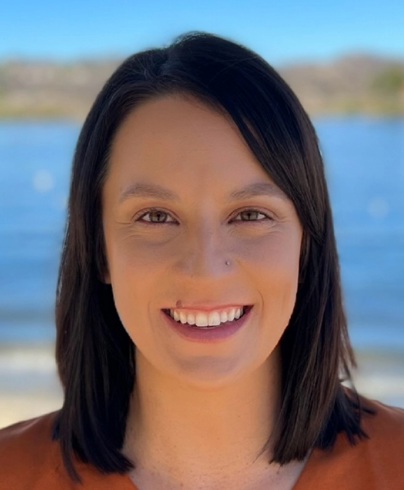
Lauren Hammond, medical school personal statement tutor
Table of Contents
- Medical school personal statement tips
- What to include - and avoid
- Medical school personal statement examples
- Learn more about Lauren, our medical school personal statement expert.
Medical School Personal Statements
On this page you'll find six examples of effective medical school personal statements (the AMCAS Personal Comments Essay), written from the perspective of a traditional pre-med applicant, a career-changer, a reapplicant, an applicant from a non-clinical background, a first-generation applicant, and a non-traditional applicant.
Each example is followed by a breakdown of what makes it work. If you're applying to residency rather than medical school, our medical residency personal statement page covers that application stage instead.
Lauren Hammond is our medical school application essay expert and has been helping applicants write their AMCAS personal statements for several years. Whether you just want feedback on a draft, or you're staring at a blank page and don't know where to begin, she is happy to help!
Contact Lauren directly at 951-395-4646 (phone or text), or send us an email. Working with Lauren is $225 per hour, or $995 for 5 hours.
Consultations are free.
P.S. Some applicants also need help with secondary essays once primaries are submitted - Lauren can help with those too, just ask.
3 Tips for Compelling Medical School Personal Statements
1. Open With a Specific Scene, Not a Thesis Statement
- Start inside a moment, not before it: a specific shift, patient, lab result, or classroom exchange - not "I have always wanted to help people" or "ever since I was a child."
- Reach your personal stakes early: the strongest statements connect the opening scene to something real about the writer within the first paragraph or two, not on the last page.
- Avoid the famous quote, the "calling," and the family-of-doctors framing: admissions readers see all three constantly, and none of them is about you specifically.
2. Use One Developed Anecdote, Not a Highlight Reel
- Pick one sustained story and follow it through: a single patient, shift, or project you can develop in detail beats five one-line mentions of different activities.
- Include what went wrong, not just what went well: a mistake you caught, a moment you weren't useful, a habit you're still correcting - named plainly, without a tidy moral attached.
- Don't narrate your activities list: admissions committees already have your Work and Activities section. The personal statement is where you show who you are, not a second list of what you've done.
3. Connect the Anecdote to a Concrete "Why Medicine," Not an Abstract One
- Say what you actually want to do, specifically: not "make a difference" or "combine science and compassion," but a concrete description of the kind of physician you're trying to become.
- Don't theorize about medicine as a field: your reader has usually spent more time in medicine than you have. Write about your own experience, not your opinions about the profession.
- Stay constructive if you write about a hard experience with the healthcare system: needless criticism of doctors, hospitals, or the system reads as score-settling, not insight.
What to Include in Your Medical School Personal Statement - and What to Avoid
| Include | Avoid |
|---|---|
|
|
Video: 7 Ways to Write a Crappy Graduate School Personal Statement
For more personal statement tips, check out Vince's video: 7 Ways to Write a Crappy Graduate School Personal Statement.
6 Medical School Personal Statement Examples
We wrote these six ourselves as teaching models. The applicants are invented, the programs are left generic on purpose, and nothing here is a real client's statement. Read them for structure and for how specific the clinical detail gets, not as text to borrow. Where you see a bracketed placeholder, that is where your own program research has to go.
These six are written in six deliberately different styles, because admissions readers see hundreds of essays that sound identical. One is plain and clipped. One is conversational and a little messy. One is warm and full of dialogue. Yours should sound like you, not like whichever of these you liked best.
AMCAS allows 5,300 characters including spaces - about a page and a half single-spaced. Each example below runs under that limit, as a real submission must.
The Traditional Applicant: Biology Major, Research Assistant, ED Scribe
I spent two years measuring a single inflammatory marker in the blood of patients with poorly controlled diabetes, and for most of that time I believed the disease itself was what I was studying.
The project was not glamorous. My duties were preparing samples and running assays, along with maintaining a database that had been assembled by three previous students with three incompatible ideas about labeling. In my third year our postdoctoral fellow left and I inherited the whole thing, and I spent most of a semester reconstructing what four hundred patient records actually meant. Somewhere in that reconstruction I found that I had mislabeled two cohorts myself several months earlier and had to take this to my principal investigator before we submitted. She was gracious about it. She also asked a question I have thought about since, which was how I had found the error, and when I described the cross-check I had built she suggested that I write the procedure into the methods. Two sentences in that paper are mine; they concern data integrity, and I am more attached to them than to the result.
Tuesday nights taught me what the laboratory could not. I worked those nights as a scribe in an emergency department, roughly nine hundred hours of it.
One patient, whom I will call Mr. Alvarez, arrived with a diabetic foot ulcer that had progressed well past the point where it could be managed at home, and his hemoglobin A1c was above eleven. I had an entire explanatory framework ready for a patient like him, since I had been measuring the relevant biology for two years. The attending physician asked something else instead. She wanted to know when he had last been able to afford his insulin, and he answered that he had been splitting doses since March.
I knew the term for this. It appears in the literature I had been reading, where it is a variable to be controlled for. I was sitting three feet away with a laptop balanced on my knees, watching him decide whether to say it in front of his daughter, and I understood that the biology I knew was accurate and incomplete, and that his actual life was happening in the incomplete part.
That understanding is what moved me from wanting to study medicine to wanting to practice it.
Scribing also showed me what competence looks like at close range. The physicians I came to admire were the ones who sat down, which had little to do with being the fastest. After one shift in which we discharged a woman who plainly had not understood her return precautions, one of them told me that a note is a promise to whoever reads it next. He then went back and rewrote his, which took eleven minutes he did not have.
It taught me what I cannot yet do as well. My responsibility during my first cardiac arrest was to document, and my hands shook so badly that I could not type with any accuracy. I improved. Still, I remember precisely what it felt like to be the only person in that room who was not useful, and I expect the first weeks of clerkship to feel much the same.
Alongside all of this I spent two years at a free clinic on Saturday mornings, mostly conducting intake interviews. My Spanish is functional and imperfect; early on I asked a patient about embarazo when I meant embarrassment, which she enjoyed considerably more than I did. The clinic taught me the arithmetic our patients perform constantly. One man declined a specialist referral because the appointment fell on a Thursday and he could not afford to lose the shift. He understood his own situation better than I did, and he had chosen correctly between two poor options.
I want to work where the biology I find genuinely beautiful meets the conditions of a particular life. Internal medicine interests me most at present, though I hold that loosely, since I have been wrong before about what I would find compelling.
[Program-specific paragraph goes here. Name the school and the specific clinic, curricular thread, or research group that follows from what you have described above, and explain the connection concretely rather than praising the program's reputation.]
I have watched residents at hour twenty-six, and I do not imagine that my affection for this work will be continuous. What I can offer instead is a small amount of evidence about my own conduct. I re-ran the contaminated assays and reported the mislabeled cohorts myself. I also went back and learned the Spanish word I had gotten wrong. I would like to be in the room when the result reaches the person it belongs to.
Why this statement works:
- Formal, careful voice - almost no contractions, several long subordinated sentences - reads like someone who writes the way they think.
- "Why medicine" arrives by paragraph six - inside the first page, not buried at the end.
- Every failure named is followed by conduct, not a moral - the mislabeled cohorts, the shaking hands during the cardiac arrest.
- The Spanish mistake is genuinely self-deprecating - a small, real admission rather than manufactured humility.
The Career-Changer: Structural Engineer to Post-Bacc
Six years of my working life went to deciding whether buildings would stand up.
I liked the work. A load path is a satisfying thing. Force travels from a roof, through a column, into a footing, into the ground. One undersized connection undoes the whole chain, and finding that connection was what I was good at.
In 2022 I was assigned to a seismic retrofit at a hospital in [city]. The ward stayed open while we worked. I walked it with a clipboard for four months.
That is the honest beginning. There was no calling and no family illness, only four months of proximity.
The nurses were doing a version of my job. They read a system under load and worked out what would fail first. A charge nurse named Denise could tell which of her patients was about to deteriorate before the monitors agreed with her. I asked how. Her answer was all pattern recognition, built over nineteen years.
It was engineering. It was engineering on something that could talk back, and I had picked the version of the problem that could not.
I gave myself eleven months' notice before I gave any to my firm. I took general chemistry at a community college at seven in the morning and went to work at nine. I was worse at both than I wanted to be.
My first organic chemistry exam came back at sixty-four percent. I was thirty-one, and I had not scored below a B on anything since high school. I sat in my car in the parking lot for a while.
Then I went to office hours and asked the professor to look at the exam with me. I did not ask for points. I wanted to know how I was thinking wrong. She showed me that I was memorizing mechanisms as sequences instead of following electron movement. I was treating chemistry as a code. It is a physics problem. Physics I already knew.
I rebuilt my approach around that and finished the sequence with an A-. The next year I tutored the course and met eleven students making my exact mistake.
I also needed to find out whether I wanted medicine or wanted to have been a doctor. So I took a job as a patient care technician on a medical-surgical floor and worked nights for eighteen months while I finished prerequisites.
Nights are clarifying. There is no romance at three in the morning. I cleaned a lot of stool. I turned patients every two hours and learned that the technique is mostly about protecting your own back. I held a woman's hand while she waited forty minutes for a transport that was late. I could not fix anything, and there was no engineering in it. All I had that was useful was a willingness to stay.
For six years I was valuable because of what I could calculate. That floor taught me that a large part of this work is being present inside a problem you cannot optimize.
I won't oversell the transfer. A beam has no family in the waiting room. Two things carry.
First, responsibility that is unambiguously mine. When I stamped a drawing, an error of mine was structural and permanent. I learned early to say "I don't know, I'll check" out loud and without embarrassment.
Second, tolerance for the boring middle of a problem. Engineering as I practiced it was verification, which had little to do with the elegant solution.
I have done the arithmetic. I will be thirty-seven when I finish residency. I ran the debt and the years on a spreadsheet, twice, the way I used to run a project budget.
[Program-specific paragraph goes here. Name the school and the concrete feature - a curriculum structure, a clinic, a research group, a community partnership - that follows from the path above. Be specific about why it fits what you have done.]
Denise retired last year. I sent her a note when I finished the post-bacc, and she wrote back one line. "You'll be fine, you already ask good questions."
I have decided to take her word for it.
Why this statement works:
- Short sentences, short paragraphs - reads like an engineer's writing, not an essayist's.
- One metaphor, introduced and then explicitly limited - "A load path," bounded by "a beam has no family in the waiting room."
- No origin story - refusing the "calling" narrative in paragraph four buys credibility for everything that follows.
- Flat, short ending with no summary - the essay simply stops instead of tying a bow on it.
The Reapplicant: Clinical Research Coordinator and EMT
The first time I applied, I wrote a personal statement about wanting to help people, and I didn't get in. I reread it last spring. It's a competent essay about nobody in particular, written by a guy who'd done just enough to apply and nowhere near enough to know what he was applying to.
I've stopped being surprised about that.
The two years since have been the most useful of my life, and I'd rather account for them specifically than ask anyone to give me credit for persistence.
First job, a hepatology trial, where I was the coordinator. Phase III, an antifibrotic, patients with advanced liver disease. My work was consent and scheduling. It also meant sample handling and the long unglamorous business of keeping a hundred and forty participants inside protocol. It's the closest I've come to understanding what a study costs the people in it. There was a woman, participant 0093, fifty-four, who drove ninety minutes each way for visits. By month eight she was doing it with a walker. When she withdrew, our site lost a data point. She lost the thing her whole year had been organized around.
I also learned to consent people properly, which mostly meant learning to stop reciting. The document is fourteen pages. Nobody reads fourteen pages. So I started asking participants to tell me in their own words what they thought was going to happen to them, and maybe a third of the time it turned out they believed the trial was going to cure them. Walking that back, gently, without killing the hope entirely, was something I couldn't do two years ago. I can do some of it now.
Second job, overlapping, EMT on a 911 ambulance in [county]. About fifteen hundred hours.
I'd assumed this would be the dramatic part. Some of it is. Most of it is lift assists and psych transports, plus a lot of elderly people who called because they were scared and by themselves, and the ambulance is the only thing in this county that comes when you call. My partner has twenty-two years on. He taught me to sit down on the couch next to them while we take vitals, because standing over somebody makes them a patient and sitting next to them keeps them a person. Honestly, that's the single most useful thing anybody has taught me about anything.
I've also been wrong in ways that mattered. Call for weakness. Elderly patient, August. The skin turgor fit. I anchored on dehydration and went looking for reasons I was right. My partner ran a twelve-lead I hadn't thought to ask for. Inferior STEMI.
He didn't make a thing of it. Afterward he just said, "You had a story and you went looking for evidence for it."
I've thought about that sentence maybe four hundred times. It's the specific failure mode of somebody who's pattern-hungry and wants to be right fast, and I'd rather know that about myself at twenty-five than find it out as an intern.
What's different this time is that I know what I'm asking to be let into, and I don't want it any more than I did before. I know medicine is mostly documentation and phone calls, with the same thing explained five separate times, and that both of my jobs were, in their way, tourism, because I got to go home. What I'm actually decent at is being steady and unhurried with somebody who's frightened, which is a small talent that needs an enormous amount of knowledge bolted onto it before it's worth anything to anyone.
[Program-specific paragraph goes here. Name the program and the concrete element - a longitudinal clinic, a rural or urban track, a research infrastructure - that connects to what you've actually done. Be specific about the connection.]
I don't think my first application was dishonest. I think it was empty, and back then I genuinely couldn't tell which was which. If the last two years bought me one thing, it's that I can now.
Why this statement works:
- Spoken, unpolished voice - contractions and sentence fragments the other five essays don't use.
- Names the reapplication in the first line - and never asks the reader for sympathy.
- Calls his own experience "tourism" - the kind of candor most applicants avoid.
- The STEMI miss names a durable habit, not a one-time error - far more convincing than a generic "I learned from my mistakes."
The Non-Clinical Background: Middle-School Science Teacher
Thirty-one eighth graders will let you know right away if you don't know what you're talking about.
Four years of teaching physical science in [city] is long enough to quit performing authority and start earning it. In my second year we were on the respiratory system, and a kid named Andre put his hand up to ask why his brother's inhaler had two different colors on it.
I didn't know. I said so. (You can say so. Kids respect it more than the alternative, and they can always tell.) We looked it up together the next morning, and that turned into three weeks in which a class that had been completely indifferent to biology got deeply invested in asthma, because eleven of my thirty-one had it and four of those eleven had been to the emergency room for it that school year.
Eleven of thirty-one. That ratio is the reason I'm writing this.
Questions started coming that I had no business trying to answer. Why were my students missing school for asthma at a rate I couldn't explain away? The school nurse covered three campuses. The nearest pediatric practice taking our families' coverage was a bus transfer away. Two kids told me they didn't use their controller inhaler because it lived at home and their mom worked nights.
None of that is exotic. It's just the ordinary weather of the neighborhood, and I'd been teaching in it for two years without seeing it.
So I did what a teacher can do, which turns out to be more than nothing and much less than enough. I wrote a grant for a spacer and a spare rescue inhaler for the classroom (more paperwork than you'd think, plus one memorable conversation with a district attorney about liability). With our nurse I built an asthma action plan template, and twenty-two families actually filled it out. Attendance in my class went up that spring. I'm careful about claiming credit, since spring attendance goes up anyway, but none of those four kids went back to the ER that year.
The whole episode showed me exactly where my ceiling was. I can't prescribe. I can't look at a wheezing twelve-year-old and tell you whether this is a rough afternoon or a hospital.
When Andre had an attack in the hallway in March, all I had was a rescue inhaler and no idea how bad it was. I counted his respirations, because it was the only clinical thing I knew how to do. He was fine. I wasn't, especially.
What I want is the knowledge that would have let me know.
Teaching isn't clinical experience, and I've never pretended otherwise. For the last two years I've done prerequisites at night and worked weekends as a medical assistant at a community pediatrics clinic, about a thousand hours of vitals and injections, plus the long translation work between what the physician says and what a family actually hears. I'm good at that part. It's the same skill as explaining Newton's second law to a kid who decided in fourth grade that she's bad at science: you find out what she already believes, and you build from there instead of over the top of her.
The clinic also taught me what the classroom couldn't, which is the physical exam as a kind of attention. The first time I watched a pediatrician really listen to a chest, I realized I'd been picturing diagnosis as a database lookup. That exam ran thirty full seconds, the bell moving, the kid asked to blow out a birthday candle. Diagnosis is a craft. Crafts can be learned. I'd like to learn this one.
I should say plainly that I still believe in teaching, and it's the most consequential thing I've ever done. I'm leaving because I kept walking up to the edge of what a classroom can reach, and everything on the other side of that edge (an inhaler prescribed right, a plan a family can follow, a wheeze assessed by somebody who knows) turned out to decide whether my students were even in the room to learn anything.
[Program-specific paragraph goes here. Name the school and the specific structure - a community pediatrics track, a school-based health partnership, a longitudinal clinic in a comparable neighborhood - that connects to this work, and say what you'd bring to it as well as what you'd take from it.]
Andre graduates this year. He wants to be a paramedic, which he announced to me in eighth grade in a tone that suggested he expected an argument.
I didn't argue.
Why this statement works:
- Dialogue and a named student carried through the whole essay - Andre appears in paragraph two and again in the closing line.
- Advocacy is reported with its limits attached - the attendance caveat, the "I wasn't, especially" admission.
- Parentheticals and direct questions - give it the rhythm of someone used to talking to a room.
- Ends on the student, not the applicant.
The First-Generation Applicant: Family Medical Interpreter
"Sugar sickness." That is what I said at eleven, the first time I told my mother she had diabetes.
The doctor had said it to me in English, because I was the only person in the room who spoke it. I translated it into Vietnamese. I did not know the word.
She understood that something was wrong with sugar. She did not understand that it would not go away, or that the medicine had to continue after she felt better. She did not see that the numbers on the paper meant anything.
She stopped taking it in about six weeks.
I do not blame that doctor. He was busy and there was no interpreter available. I think he did what he could. I am writing this because I know exactly what gets lost in a room like that, and I have spent fourteen years getting into a position to be on the other side of it.
Being a child interpreter is a strange apprenticeship. I learned to watch a doctor's face to find out whether the next sentence was going to be bad. I learned that "we will monitor it" means one thing to a clinician and something much worse to a frightened person, who hears that nothing will be done.
By fifteen I kept a notebook of vocabulary. Biopsy. Benign. Outpatient. By seventeen I was my family's medical record, because I was the only one who remembered which specialist had said what.
I also learned that I was not qualified. That is an odd thing for a teenager to know about himself.
I mistranslated a dosing instruction for my grandfather once. He took twice what he should have, for four days. He was fine. It was a medication where that mattered less than it might have. I still remember the temperature of that fear.
My path has not been direct. I started at [community college] because it was free and I could live at home. I worked thirty hours a week at a grocery store the entire time.
My first two semesters were mediocre. I did not know how to study. I mean that literally: nobody in my house had ever done it, and I thought reading the chapter was studying.
A biology instructor noticed and spent an hour showing me how to build a concept map. That hour changed my life, and I am aware of how that sentence sounds, and I am not going to soften it. I transferred with a 3.9 and finished with a degree in biochemistry.
At university I helped start a student interpreter program at a free clinic. It has forty volunteers now, across six languages. I contributed a training curriculum and a scheduling system. I also insisted on one rule: no volunteer under eighteen interprets for their own family.
I wrote that rule because of a specific eleven-year-old.
For two years I have worked as a certified medical assistant. What surprises me now is how much of clinical communication has nothing to do with language.
I watched a physician spend four minutes explaining a diagnosis to a man who did not believe her. Then she asked him what he thought was causing it. He said he believed his cousin had put a curse on him.
She did not laugh or correct him. She asked what would make him feel the curse had been dealt with.
He took the medication.
That is the practice I want, and it goes beyond translation in the narrow sense. It is the larger work of finding out what a person actually believes is happening to them, and building the plan from there.
[Program-specific paragraph goes here. Name the program and the specific feature - a language-concordant care initiative, a community clinic partnership, a health literacy thread - that connects to this experience, and be concrete about what you would contribute.]
My mother takes her medication because her current doctor, who does not speak Vietnamese either, spent twenty minutes with a phone interpreter explaining why it continues after she feels well. It is not complicated. It only requires deciding that the twenty minutes is the work, and not an interruption of the work. Her A1c has been under seven for three years.
Why this statement works:
- Short, plain, stripped-down sentences - the most restrained of the six - and the restraint carries the emotional weight better than elaboration would.
- Declines to blame the doctor - converts a grievance into a systems observation instead.
- The grocery store and the concept map do the first-generation work - with no vocabulary of "hardship" needed.
- Ends on a number and a fact - the A1c reading, not a reflection.
The Non-Traditional Applicant: Nine Years as a Paramedic
Front room of a house in February. Christmas tree still up. Cardiac arrest.
I have run a lot of them. I remember this one because the patient's wife asked me, while I was doing compressions, whether she should call their daughter. I had about a second to decide whether to tell her the truth.
I said yes. I said it in a way that told her what yes meant.
Nine years on an ambulance gives you a strange education. You get genuinely expert at a narrow and violent slice of medicine: airway and rhythm in the first fifteen minutes. You stay almost completely ignorant of everything on either side of it. I can spot florid pulmonary edema from the doorway. I can't tell you what happened after I handed off. For most of my career I never found out.
Around year six that started to bother me.
Woman in her forties. Diabetic. Infected foot. Textbook call. I did my job well, she went to the ED, I went to the next one.
Four months later, same address. She had lost the leg below the knee.
Somewhere in those four months there was a decision point. A referral and a follow-up appointment nobody made, a conversation about her glucose. An entire arc of medicine I had no part in and no visibility into, and it mattered more to her life than my fifteen minutes ever did.
Nine years arriving at the worst moment of a long story. Never reading the rest of it.
Going back at thirty-four with a mortgage and a four-year-old took a conversation with my wife that lasted most of a winter, and I'll be direct about what it looked like, because it bears on whether I can do the next part. Shifts ran twenty-four hours. Classes fell on my off days. Organic chemistry happened with a toddler asleep on my chest, more than once. My wife is a high school registrar, and she carried more than her share for four years and has said, repeatedly, that she'd do it again.
I finished with a 3.8. The grade I'm proudest of is a B+ in physics II, the semester our second was born.
What I bring is nine years of a particular composure and a very large number of patient contacts. Raw academic horsepower is not part of that.
I have told people their family member is dead. Kitchens. Front lawns. A parking garage, once. In that minute people need information delivered slowly and in order by somebody in no hurry to leave, more than they need comfort exactly.
I have also learned that I can do that and then eat lunch. That bothered me for years, until a chaplain explained that the alternative isn't sustainable. She was right. What I had built was load-bearing capacity, and it took me most of a decade. Callousness had nothing to do with it.
None of which makes me a good medical student. I'll be a bad one for a while. I've watched enough new residents to know that prehospital confidence transfers badly to a ward. The first time somebody asks me to manage a problem over eight weeks instead of eight minutes, I will be well outside my competence.
I'm looking forward to that, which surprises me.
[Program-specific paragraph goes here. Name the program and the specific element - an emergency medicine research group, a rural track, early clinical exposure, a track built for non-traditional students - and connect it to the arc above rather than to reputation.]
I'm thirty-eight. Forty-two at graduation. Forty-five or more out of training. People ask if that's worth it.
Nine years of arriving and leaving after the loud part. I'd rather spend the next twenty-five staying for the rest of it.
The tree was no metaphor, only something that happened to still be up. But I have thought about that address for a year, and what I keep landing on is that I never learned the daughter's name.
Why this statement works:
- Verbless opening fragments and unglossed jargon - reads like someone who talks on a radio for a living.
- The terseness relaxes exactly once - the paragraph about his wife - which is why it registers.
- Admits he can eat lunch afterward - the risk that makes everything else believable.
- Ends without resolving.
How the Process Works
| Stage | What happens |
|---|---|
| Get in touch | Text or call 951-395-4646, or send an email. |
| Share where you are | Whether you already have a draft or you're starting from a blank page, Lauren will tell you where to start. |
| Work together | Sessions at $225 per hour or $995 for a 5-hour package. |
Feeling stuck?
Lauren Hammond, our medical school personal statement editor, would be happy to help - whether you just need a second opinion on a draft or you're starting from scratch.
Text or call her at 951-395-4646, or send us an email.
Lauren works with you on Zoom and in Google Docs, so you get both real-time coaching and clean, trackable revisions. Most clients use 2 to 4 sessions.
Meet Lauren Hammond, medical school personal statement tutor
Lauren: I earned my Bachelor's Degree in Literature and Writing, with a concentration in Writing, at California State University San Marcos (CSUSM) and my Master's Degree in English and Comparative Literature at San Diego State University (SDSU).
I completed my PhD in English at the University of California Riverside (UCR) in September 2023. Upon graduating, I began my current position as UCR's Graduate Writing Center Specialist and Fulbright Program Advisor last summer.
I have been a writing consultant for nearly 10 years now, and I've helped people with research writing, thesis/dissertation projects, rhetorical and literary analyses, writing in the humanities, grammar/sentence mechanics, and more. My focus for VKTP centers on graduate and professional school application materials - including personal statements, diversity statements, and research statements - as well as job market materials for academic and alt-academic positions.
During my downtime, I love hanging out with my husband, 2-year-old daughter, and our two dogs, Link and Leia! My favorite activities are going on the boat, cruising on the golf cart, and making our way through all of the local eateries. When we aren't out and about, I typically enjoy reading and watching movies.
Working with Lauren is $225 per hour or $995 for a package purchase of 5 hours. You can reach her at 951-395-4646 (phone or text), or by sending us an email.
Love For Lauren
Frequently Asked Questions
How long can a medical school personal statement be?
The AMCAS Personal Comments Essay has a hard 5,300-character limit, including spaces - about a page and a half single-spaced. You will get an error message if you go over it, so write to the limit from the start rather than cutting a longer draft down.
How long should I spend writing my medical school personal statement?
We generally recommend about 6–8 weeks, starting well before your first application deadline. It takes real time to find the right anecdote and revise a piece this short until every sentence is doing work.
What do medical schools look for in a personal statement?
A specific, developed sense of why you want to practice medicine - grounded in real clinical or personal experience, not an abstract interest in science or a desire to help people. Admissions readers are also looking for self-awareness: a candidate who can name what they don't yet know, not just what they've accomplished.
Does the personal statement matter if my Work and Activities section already covers my experience?
Yes - they do different jobs. The Work and Activities section is where you list what you did. The personal statement is where you show who you are and how you think, usually through one well-developed story rather than a summary of your activities.
Can I use AI to write my medical school personal statement?
AI tools can help you brainstorm or organize your thinking, but they cannot accurately represent your specific experiences, your reasons for choosing medicine, or your actual voice. Admissions committees are increasingly able to identify AI-generated writing, and a statement that sounds polished but generic is weaker than one that is specific and genuinely yours. Use AI as a thinking tool if you like; write the statement yourself - or work with Lauren, who helps you develop your own voice rather than replace it.
BTW, Lauren can also help with:
- Medical Residency personal statements
- CRNA personal statements
- Dental school personal statements
- Optometry school personal statements
- MSW (Social Work) personal statements
- PharmD personal statements
- Nurse Practitioner personal statements
- Genetic Counseling personal statements
- Clinical Psychology PhD personal statements
- MHA (Health Administration) personal statements
- Physician Assistant personal statements
- Physical Therapy personal statements
- Speech-Language Pathology personal statements
- Occupational Therapy personal statements
- Nursing school personal statements
- PsyD personal statements
- Marriage and Family Therapy personal statements
- Veterinary School personal statements
- PhD personal statements
- General graduate school personal statements