Optometry School Personal Statement Examples and Tutoring
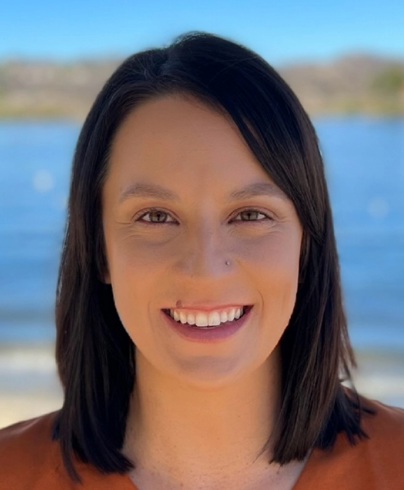
Lauren Hammond, optometry personal statement tutor
Table of Contents
- Optometry personal statement tips
- What to include - and avoid
- Optometry personal statement examples
- Learn more about Lauren, our optometry personal statement expert.
Optometry School Personal Statements
On this page you'll find six examples of effective optometry school personal statements, written from the perspective of ophthalmic technicians, pre-optometry science students, career changers, and applicants with a global health or research background.
Each example is followed by a breakdown of what makes it work. If you're applying to OD school and need help with your personal statement, you may also find our dental school personal statement page useful, as the application profiles are similar.
Lauren Hammond is our optometry school application essay expert and has been helping people write their OD personal statements for several years. Whether you just want some feedback on a draft, or you're staring at a blank Word doc and don't know where to begin, she is happy to help!
Contact Lauren directly at 951-395-4646 (phone or text), or send us an email. Working with Lauren is $225 per hour, or $995 for 5 hours.
Consultations are free.
3 Tips for Strong Optometry Personal Statements
1. Show Specific Fascination with Vision - Not Generic Healthcare Interest
- Name what draws you to the eye specifically: Pick the part you find interesting, whether it's optics, the link between the eye and the brain, systemic disease visible in the fundus, or the mix of primary care and specialty work, and write about that instead of a general desire to help people with their health.
- Connect your interest to a specific experience: Use one real moment, such as your own experience with vision correction, an OD catching something unexpected in a routine exam you shadowed, or a patient whose daily life changed after treatment. One moment like that does more than a general claim.
- Show awareness of optometry's expanding scope: Optometry includes therapeutic prescribing, management of ocular disease (glaucoma, dry eye, diabetic retinopathy) and co-management of surgical cases, along with refraction and contact lenses. Showing that you understand that full clinical scope tells the committee you've done your homework.
Example:
"While shadowing, I saw an OD catch early diabetic macular edema in someone who had booked a routine prescription update and suspected nothing. She referred the patient on the spot and explained what she had found. A follow-up was on the books before the patient left. The whole conversation took about six minutes, and it may have saved that patient's central vision. Before that day I thought of an eye exam as mostly a prescription check, and I hadn't realized it could be the first place anyone noticed what diabetes was doing to a patient."
2. Demonstrate Meaningful Shadowing and Clinical Exposure
- Quality of observation matters as much as hours: OptomCAS will show your shadowing hours. In the personal statement, describe what you learned from them, such as a piece of clinical reasoning you watched unfold or a patient interaction that changed how you think about optometric care.
- Shadow in more than one setting if possible: Private practice, community health, hospital-based optometry, and specialty settings offer different perspectives. If you've seen more than one, the comparison is worth noting.
- Mention relevant technical or clinical experience: Optician experience, ophthalmic tech roles, vision therapy assistant positions, or research in visual science all demonstrate more than passive interest.
Example:
"Technician work put me in front of clinical decision-making earlier than I had expected. I learned visual field testing, tonometry and retinal imaging; even more useful was learning to talk anxious patients through each one. What I don't have yet is the training to interpret those results, and that is what I want from OD school."
3. Articulate a Specific Vision for Your Future Practice
- Name a practice setting and patient population: Primary care optometry in a rural area, pediatric optometry, low vision rehabilitation, specialty contact lenses, ocular disease management: pick one and say why. A stated direction shows you've thought past getting admitted.
- Connect your background to your goals: A neuroscience major who wants to work in binocular vision, or a former teacher who wants to practice pediatric optometry, has an obvious through-line. Make the logic of your own path just as easy to follow.
- Engage with access and shortage where relevant: Optometrists are primary eye care providers in many communities where ophthalmologists are unavailable. If your goals include addressing vision care access, make it explicit.
Example:
"Down the road I see myself in a community health clinic where eye care sits inside primary care. There, a patient's diabetes and diabetic eye disease are managed by providers who talk to one another. I would like to be the optometrist who connects what shows up in the eye to the rest of that patient's health."
What to Include in Your Optometry Personal Statement - and What to Avoid
What to Include
- A specific moment that made optometry the choice for you, such as a patient, a shadowing day or your own eye care, rather than a general love of science or helping people
- Evidence from your shadowing - describe what you observed, not just that you observed it; name a procedure, a patient interaction, or a clinical finding that stayed with you
- Awareness of optometry's full clinical scope - ocular disease management, systemic disease detection, therapeutic prescribing, not just refraction and glasses
- Your intended practice setting and patient population - low vision, pediatric, specialty contact lens, community health, etc.
- Any relevant technical experience - ophthalmic tech, optician, vision therapy assistant, visual science research
- Program-specific detail - the main OptomCAS statement usually goes to every school, so save school-specific references for any extra questions or essays a program asks for: a faculty member's research, a clinical rotation site, a specialty track
What to Avoid
- Starting with "I have always wanted to be an optometrist" - it's one of the most common openings. Start with a specific moment instead.
- Describing optometry only as vision correction - admissions committees know optometry is broader than glasses and contacts; showing that you don't signals inadequate preparation.
- Confusing optometry and ophthalmology - a common error that undermines the whole statement. Check that everything you say about scope fits what ODs actually do.
- A list of your credentials - admissions committees have your transcript and your activity list. Use the personal statement to show who you are, not what you've done.
- Writing your main statement for one school - OptomCAS programs generally receive the same personal statement, so a line aimed at one school reads oddly at the others. Put school-specific detail in supplemental essays.
Video: 7 Ways to Write a Crappy Graduate School Personal Statement
For more personal statement tips, check out Vince's video: 7 Ways to Write a Crappy Graduate School Personal Statement.
Some programs ask for a statement of purpose rather than a personal statement. If yours does, our statement of purpose examples show three full versions with analysis of what each paragraph is doing.
6 Optometry School Personal Statement Examples
Below are six example optometry personal statements. After each one, we explain what it does well.
We wrote these six ourselves as teaching models. The applicants are invented, the programs are left generic on purpose, and nothing here is a real client's statement. Read them for structure and for how specific the detail gets, not as text to borrow.
Ophthalmic Technician to OD
I've spent three years as an ophthalmic technician. I take the history and run the pre-testing, and when the OD walks in, I step back to the wall. From there I've watched a lot of exams, and I know what it looks like when an OD finds something unexpected: the pause, then the next question worded with care. I've been waiting three years to be on the other side of that slit lamp.
The job gave me more clinical exposure than shadowing ever could. I run OCT scans, visual field tests, corneal topography and fundus imaging. Patients get nervous around those machines because they figure the machine will tell on them. So I explain each test plainly, and I don't make it sound scarier than it is. I can produce clean, reliable results on every one of those machines, but I don't yet have the training to interpret what they show and act on it.
One patient settled it for me. She was in her mid-forties and had come in for a contact lens update. Halfway through the history she mentioned in passing that she'd been getting headaches and some blurry vision. The OD ordered a visual field test on instinct. The printout showed field loss on the outer side in both eyes, the OD referred her for imaging, and the scan found a pituitary adenoma that nobody had diagnosed. Months later she came back to thank the doctor. I was the one who'd done her pre-testing.
I want to be the clinician in that room who hears a headache mentioned in passing and knows which test to order. Refractive error is a small piece of what a visit can turn up, and I'd like the training to read the rest of it, neurological and systemic findings included.
Why this statement works:
- The opening puts the reader in the exam room: the tech steps "back to the wall" when the OD walks in. That one physical detail shows the applicant knows exactly where their role ends, which a line like "I have extensive clinical experience" never could.
- Listing OCT, visual fields, topography and fundus imaging gives the committee real skills to check against the activity list. The next sentence names what's missing, the training to interpret the results, and that admitted gap is what turns a tech job into a reason for OD school.
- The pituitary adenoma case is a smart pick: a headache mentioned in passing, a field test, outer-field loss in both eyes, a referral for imaging. It shows the applicant understands that an eye exam can catch neurological disease, which is the scope point committees look for.
- "I was the one who'd done her pre-testing" is left as a plain fact with no comment after it. A weaker draft would add a sentence about how meaningful that felt; leaving it out lets the reader draw the conclusion.
- The closing goal reuses the case ("a headache mentioned in passing") instead of ending on a general wish to help, so the last paragraph points back to evidence the reader has already seen.
Pre-Optometry Student - Diabetic Eye Screening at a Health Center
On Tuesday and Thursday afternoons I turn off the overhead lights in a small exam room at a community health center and give a patient's pupils a few minutes to open up. I work there as a medical assistant while I finish my biology degree, and one of my jobs is running the clinic's retinal camera, which photographs the back of the eye without dilating drops. Every adult with diabetes who is due for an eye check gets two photos per eye. I make sure the optic nerve and the macula are in frame, upload the images, and an eye care provider reads them remotely within a few days.
Most of the people I photograph haven't had an eye exam in years, and a few have never had one. A full dilated exam means a separate appointment, a ride home and sometimes a copay they can't cover, so a photo taken during a primary care visit they were already making is often the only eye screening they get.
Two summers ago I photographed a man in his late fifties who drove a delivery route and had been living with type 2 diabetes for about a decade. His A1c that day was over 10. His report came back as severe nonproliferative diabetic retinopathy with a recommendation for prompt referral. When I called to set up the appointment, he told me his eyes were fine, and by our wall chart they were: 20/25 in each eye. It took three calls and a conversation with his daughter before he went. The optometrist who examined him found macular edema in his right eye and sent him to a retina specialist, who started injections that month.
His case showed me both what the camera does and where it stops. It found disease he couldn't feel, but a photo of the central retina is a screening, not an eye exam. It doesn't check eye pressure or the peripheral retina, and some of my images come back ungradable because of a small pupil or a cataract. I've gotten good at producing a clean image. I still can't tell a patient what it shows, and after that summer I wanted the training to do it.
Since then I've shadowed two optometrists for about 80 hours in total, one in a private practice and one at the clinic that sees our referred patients. At the second clinic I watched the OD examine a dilated fundus through a handheld 90-diopter lens at the slit lamp, then order an OCT scan to confirm the swelling she suspected. She spent almost as long explaining the patient's A1c as she did the eye findings, and she sent a message to his primary care provider through the shared chart before he had checked out. My shadowing so far is mostly adult medical eye care. I haven't spent real time in pediatrics or specialty contact lenses, and I'm adding hours in both this year so I understand the parts of the field I know least.
I want to practice in a community health center where the eye exam happens in the same building as the primary care visit, and where an OD can walk down the hall to talk with a patient's physician. I hope to complete a residency in primary care or ocular disease after graduation, so that I can manage diabetic eye disease with confidence and recognize quickly when a patient like the delivery driver needs a retina specialist. The schools I'm applying to all place students in community health rotations, and that clinical time is the part of the training I'm most eager to start.
Why this statement works:
- It opens on a routine task, turning off the lights so a patient's pupils open for the camera, instead of a statement of interest. Within three sentences the reader knows the applicant's job, setting and patient population.
- The delivery driver case carries the essay: an A1c over 10, a 20/25 chart reading, three phone calls before he went. Those details show the applicant understands that diabetic retinopathy is often silent and that follow-through is part of care. A vaguer draft would say "I learned how important early detection is."
- The paragraph on where the camera "stops" shows the applicant knows a screening photo is not a comprehensive exam (no pressure check, no peripheral retina, ungradable images). That is the kind of scope awareness an OD committee is checking for.
- Shadowing is described through what the OD did (the 90-diopter lens, the OCT, the message to primary care), and the applicant names the areas they haven't seen yet. Naming the gap with a plan reads as honest planning, where a weaker draft would just report the hours.
- The goal, a community health center and a primary care or ocular disease residency, grows straight out of the case. The last line refers to "the schools I'm applying to" as a group, which suits OptomCAS, where the same statement goes to every program.
Career Changer - Optician to OD
Last week a new wearer put on her first progressives and told me the floor looked tilted. I explained why that happens and that it fades in about a week. I've dispensed glasses for seven years, so I've had that conversation many times, and I'm good at it, the same way I'm good at frame geometry and progressive design. What I can't do is answer the harder questions. Why the headaches keep coming with a fresh prescription, or why a child loses their place on every line they read: those go down the hall to the optometrist. So does the patient whose eyesight changed a lot in six months and who can't get a reason. I've spent seven years handing those patients off, and I want the training to answer their questions myself.
I came to the decision slowly, over years of working next to ODs and seeing what the clinical side asks of a person, and then one patient settled it: a teenage girl whose parents brought her in for glasses because school kept going badly. The OD found convergence insufficiency. Three months of vision therapy later, her mother called to say the grades were up. If she had only come to my counter, she would have left with new frames and the same problem.
I finished my pre-optometry prerequisites with a 3.8 GPA while working full-time, and I've shadowed in an OD's office that runs a vision therapy program. That's where I want to end up: primary care optometry alongside vision therapy, working mostly with children who have learning-related vision problems.
Why this statement works:
- The opening scene, a first-time progressive wearer saying "the floor looked tilted," proves seven years of optician work in one line. Naming "frame geometry and progressive design" afterward lands because the reader has already watched the skill in use.
- The questions the applicant can't answer (headaches with a fresh prescription, a child losing their place on the line, an unexplained change in six months) mark the line between optician and OD more clearly than any explanation of scope would.
- The convergence insufficiency case fits this applicant well: the patient came in for glasses, and the answer was a binocular vision problem treated with three months of vision therapy. The closing line about leaving "with new frames and the same problem" makes the point from the applicant's own counter rather than as a general lesson.
- The 3.8 prerequisite GPA "while working full-time" is one clause of evidence. A weaker draft would spend a paragraph on credentials the committee can already see in OptomCAS.
- The goal, primary care plus vision therapy for children with learning-related vision problems, follows directly from the case, so it doesn't read as tacked on.
Personal Vision History - Keratoconus
I have had keratoconus since I was sixteen. (For anyone unfamiliar: the disease thins and steepens the cornea unevenly. The cornea is the clear front of the eye, so ordinary glasses correct less and less as it progresses.) I've worn scleral lenses for four years and had one cross-linking procedure. After a decade on the receiving end of topography and fittings, I can read my own corneal maps, and I know what midday fogging under a scleral lens feels like from the inside.
Some readers will assume I am applying because my own eyes gave me trouble. The trouble matters less to me than the care I received. Those years gave me a detailed picture of excellent eye care and a real admiration for the ODs who managed my condition well, and I understand the reasons for that admiration far better now than I did at sixteen.
Those ODs told me honestly how the disease would progress, without catastrophizing. They gave me realistic expectations about the fitting process. They treated my questions (and I had plenty) as part of the appointment itself. When my topography showed the cone was still steepening, they explained why cross-linking was now the right call and co-managed my care with the corneal surgeon who performed it. That is the kind of OD I'm training to be: one who can fit a difficult lens and also tell a scared sixteen-year-old what the next few years will probably look like.
I've shadowed in a specialty contact lens practice and a corneal disease clinic. Long term, I want to work in that same subspecialty. It is the work closest to my own care, and I'd come to it knowing the patient's side of a long fitting process, including the weeks when nothing seemed to work.
Why this statement works:
- The parenthetical explaining keratoconus is short and accurate (the cornea thins and steepens, so glasses correct less and less). It also shows the applicant can explain a condition to a layperson, which ODs do all day.
- Details like "my own corneal maps" and "midday fogging under a scleral lens" show knowledge from the patient's chair without claiming clinical skill the applicant doesn't have yet.
- The second paragraph names the obvious objection, that they're applying because of their own eyes, and answers it once. A weaker draft would either ignore it or spend half the essay defending it.
- What the ODs did well is broken into specific behaviors: an honest prognosis, realistic expectations for fitting, and a clear explanation when cross-linking was needed. Those behaviors then become the model for the OD the applicant wants to be.
- The specialty contact lens and corneal disease goal lines up with both the shadowing sites and the personal history, so the reader doesn't have to connect the dots.
Global Health Focus
Most of the world's visual impairment is preventable or treatable. I had read that in a textbook without it meaning much, until a week-long medical mission took me to a rural community in Guatemala. Our team ran basic eye screenings and handed out glasses to people who had never had access to either. We could do nothing about the cataracts we found except write down the name of a hospital several hours away.
The adults are the ones who stay with me, middle-aged men and women whose uncorrected presbyopia had cut into their work and independence for years. One woman was a seamstress. She put on her first pair of reading glasses, threaded a needle on the first try, and started to cry. The correction she needed cost perhaps three dollars to produce, and the price was never what stood between her and it. The barrier was the missing infrastructure around that lens: a trained provider, the equipment, a supply chain to carry it to her.
I came home with a firmer idea of what optometry requires. Clinical skill is one part of it, and a public health framework is the other, because it explains why access gaps exist at all. Since then I have completed a global health certificate program and kept volunteering with a vision screening program for uninsured adults here at home. My pre-optometry prerequisites are finished as well.
Long term, I want to practice primary care optometry in an underserved community here and spend part of each year with an eye care program abroad that trains local staff, so the care continues after visiting teams leave. In optometry school I'll be looking for community health rotations and any global health electives on offer.
Why this statement works:
- The opening statistic is tied to one person within a few lines: the seamstress who "threaded a needle on the first try." The scene makes the point the number can't.
- "The barrier was the missing infrastructure around that lens" moves the essay from a mission story to an argument about access (a trained provider, equipment, a supply chain). That shift is what a committee wants from an applicant who cites global health.
- Mentioning the cataracts the team couldn't treat keeps the trip in proportion. A weaker draft would present one week abroad as a turning point with no limits, which experienced readers tend to distrust.
- The certificate and the domestic screening program show the interest continued after the trip, answering the reader's natural doubt about short-term mission work.
- The closing goal names a model of global work (programs that train local staff) and a domestic setting, and it talks about what the applicant will look for in school rather than praising one program, so it works for every school that receives it.
Research Background to OD
For two years I worked as a research assistant in a vision science lab, studying the neural mechanisms of contrast sensitivity in aging populations. I went in assuming vision science and clinical optometry were separate worlds, and two years of collecting contrast sensitivity data from older adults convinced me the distance between them is short.
The questions we asked had obvious clinical stakes. Why older adults struggle in low-contrast settings bears directly on driving safety and falls prevention. Still, the patients were abstractions in our lab: data points in a protocol, people I was never responsible for. The closer I got to the research, the more I wanted to be in the clinical setting where it might change something.
I shadowed an OD at a low vision rehabilitation clinic affiliated with our institution. She adapted exam techniques for patients with severe visual impairment, prescribed magnification devices, and coordinated with orientation and mobility specialists. She checked contrast sensitivity on a Pelli-Robson chart, the same measure I had been collecting in the lab, and used the result to recommend lighting changes for a patient with macular degeneration. It also confirmed that an OD, rather than a vision science PhD, was the right direction for me.
I want to practice in low vision rehabilitation and stay involved in clinical research, ideally helping test whether lab measures like contrast sensitivity can predict which patients will struggle with driving or falls.
Why this statement works:
- The first paragraph names the lab work exactly (contrast sensitivity in older adults) and states the assumption it overturned, which gives the essay its argument in two sentences.
- "The patients were abstractions in our lab" is an honest admission about the distance of research, and it is the actual reason this person wants clinical training. Without it, the move from research to OD would look unexplained.
- The low vision paragraph links lab and clinic through one tool, a Pelli-Robson chart, used for one decision (lighting for a patient with macular degeneration). A vaguer draft would say the experience "connected research and practice."
- The choice of an OD over a vision science PhD is stated and explained, which heads off the obvious interview question.
- The closing goal names a research question the applicant could plausibly work on (whether contrast sensitivity predicts driving or fall risk), so the clinical-plus-research plan sounds concrete.
How the Process Works
Have a draft? Try our free personal statement checker. It checks your length against the OptomCAS limit, your opening line, stock phrases, signs of AI writing, and sentence rhythm. Your draft never leaves your browser.
Feeling stuck?
Lauren Hammond, our optometry school personal statement editor, would be happy to help - whether you just need a second opinion on a draft or you're starting from scratch.
Text or call her at 951-395-4646, or send us an email.
Lauren works with you on Zoom and in Google Docs, so you get both real-time coaching and clean, trackable revisions. Most clients use 2 to 4 sessions.
Meet Lauren Hammond, optometry personal statement tutor
Lauren: I earned my Bachelor's Degree in Literature and Writing, with a concentration in Writing, at California State University San Marcos (CSUSM) and my Master's Degree in English and Comparative Literature at San Diego State University (SDSU).
I completed my PhD in English at the University of California Riverside (UCR) in September 2023 and then worked as UCR's Graduate Writing Center Specialist and graduate Fulbright Program Advisor. I now teach at Azusa Pacific University, where I'm an Assistant Professor and Lead Faculty in the Writing Program.
I have been a writing consultant for more than 10 years, and I've helped people with research writing, thesis/dissertation projects, rhetorical and literary analyses, writing in the humanities, grammar/sentence mechanics, and more. My work for VKTP includes thesis and dissertation editing and coaching, especially in the humanities and social sciences, as well as graduate school application materials such as personal statements, diversity statements and research statements, and job market materials for academic and alt-academic positions, including resumes, CVs and cover letters.
During my downtime, I love hanging out with my husband, our daughter, and our two dogs, Link and Leia! My favorite activities are going on the boat, cruising on the golf cart, and making our way through all of the local eateries. When we aren't out and about, I typically enjoy reading and watching movies.
Working with Lauren is $225 per hour or $995 for a package purchase of 5 hours. You can reach her at 951-395-4646 (phone or text), or by sending us an email.
P.S. Our partner Julie can also help you prepare for your optometry school admissions interviews! Learn more about her professional voice training for interview prep.
P.S. Most optometry programs require the OAT, but some accept the GRE - check your target programs!
Love For Lauren
Frequently Asked Questions
How long should an optometry personal statement be?
OptomCAS allows up to 4,500 characters - roughly one single-spaced page. Some programs request a supplemental essay. Given the character limit, prioritize specificity over breadth: one well-developed story or insight is more effective than a summary of everything you've done.
How long should I spend writing my optometry personal statement?
We generally recommend about 4-8 weeks, and 6 weeks is a good target. It takes time to come up with ideas and then get them onto the page in a form that holds a reader's attention.
What do optometry schools look for in applicants?
Strong prerequisite GPA, competitive OAT scores, and meaningful shadowing (typically 100+ hours with a licensed OD). Strong applicants also show that they understand optometry's clinical scope beyond refraction, including how ODs detect systemic disease, and they have a specific sense of where they want to practice and why.
Should I write a different statement for each optometry school?
Usually not. In OptomCAS you paste your personal statement into each program's essay prompt, but the prompt is the same, and advisors generally recommend one statement that works for every school. Save school-specific detail for any supplemental questions or essays a program adds, and make it concrete there: a clinical rotation site, a faculty member's research, a specialty track, or the school's community health mission.
Can I use AI to write my optometry personal statement?
AI can help you brainstorm or organize, but it can't know what you saw while shadowing or why you chose optometry. AI drafts also tend to sound alike, and admissions readers see a lot of them. Use AI as a thinking tool and write the statement yourself, or work with Lauren, who helps you develop your own voice rather than replace it.
What is the difference between optometry and ophthalmology for a personal statement?
Optometrists (OD) are primary eye care providers who examine eyes, diagnose visual conditions, prescribe corrective lenses, and manage ocular disease. Ophthalmologists (MD or DO) are physicians who complete medical school and an ophthalmology residency, and they handle eye surgery and complex medical cases. Confusing the two in a personal statement is a significant red flag - make sure your statement reflects a clear understanding of what ODs specifically do.
BTW, Lauren can also help with:
- Dissertation and thesis editing
- Graduate school CV and resume examples
- Teaching statement examples
- Academic cover letter examples
- Diversity statement examples
- Research statement examples
- CRNA personal statements
- Dental school personal statements
- MSW (Social Work) personal statements
- PharmD personal statements
- Nurse Practitioner personal statements
- Genetic Counseling personal statements
- Clinical Psychology PhD personal statements
- MHA (Health Administration) personal statements
- Physician Assistant personal statements
- Physical Therapy personal statements
- Speech-Language Pathology personal statements
- Occupational Therapy personal statements
- PsyD personal statements
- Marriage and Family Therapy personal statements
- MBA personal statements
- MS in Business Analytics personal statements
- Law School personal statements
- Master's degree personal statements
- Master of Public Policy personal statements
- MPH statement of purpose
- Medical Residency personal statements
- Nursing school personal statements
- Veterinary School personal statements
- PhD personal statements
- Post Doc personal statements
- Fellowships and Grants personal statements