Nurse Practitioner Personal Statement Examples and Tutoring
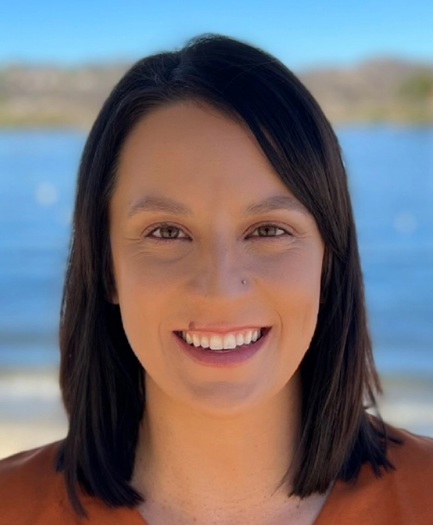
Lauren Hammond, NP personal statement tutor
Table of Contents
- NP personal statement tips
- What to include - and avoid
- NP personal statement examples
- Learn more about Lauren, our NP personal statement expert.
Nurse Practitioner Personal Statements
On this page you'll find six examples of effective nurse practitioner personal statements, written from the perspective of applicants pursuing FNP, AGACNP, PMHNP, PNP, WHNP and other NP tracks. Each example is followed by a breakdown of what makes it work. Whether you're applying to a Family NP, Acute Care NP, or Psychiatric Mental Health NP program, we hope you'll find useful guidance here for your own statement.
Lauren Hammond is our NP application essay expert and has been helping nurses write their NP personal statements for several years. Whether you just want some feedback on a draft, or you're staring at a blank Word doc and don't know where to begin, she is happy to help!
Contact Lauren directly at 951-395-4646 (phone or text), or send us an email. Working with Lauren is $225 per hour, or $995 for 5 hours.
Consultations are free.
3 Tips for Strong Nurse Practitioner Personal Statements
1. Explain Why NP - Not Just Why Advanced Practice
- Be specific about your specialty track: FNP, AGACNP, PMHNP, PNP, NNP, WHNP - these are different programs with different clinical training. Your statement should reflect which track you're pursuing and why, not describe NP practice generically.
- Distinguish the NP role specifically: Admissions committees see statements that could have been written for a CRNA or CNS program interchangeably. Articulate what is specific to the NP role - the diagnostic scope, prescriptive authority, and the kind of longitudinal patient relationship your track allows - and connect it to your experience.
- Name the moment nursing showed you its limits: The strongest NP statements have a specific experience where the applicant recognized what their nursing role couldn't do. Name that moment rather than describing a general desire for "more."
Example:
"I have sent patients home from the ED when I knew they were not ready. I can tell the physician what worries me, but the plan is not mine to change. Some patients stayed in my head for days afterward, and I kept asking whether a different call would have gone another way. That frustration is the main reason I am applying."
2. Demonstrate Clinical Depth in Your Area of Focus
- Show specific knowledge of your patient population: An FNP applicant should demonstrate understanding of primary care across the lifespan. An AGACNP applicant should show comfort with complex acute illness. A PMHNP applicant should show awareness of the mental health access crisis and the NP's role in it.
- Describe what you observed NPs doing in your specialty: Shadowing or working alongside NPs in your target practice area is the strongest preparation you can describe. Pick one case or decision you watched and say what the NP did and why it mattered.
- Acknowledge the transition from expert nurse to novice NP: Experienced nurses sometimes underestimate how different advanced practice training is from bedside nursing. Showing that you understand you will be a learner again signals maturity and coachability.
Example:
"Six years in a cardiac step-down unit have made me a competent nurse. As an NP student I will start out as a novice again, and I know the difference between the two. I am prepared for that. Those years give me a base that should shorten the climb, though they cannot stand in for the training."
3. Connect Your Goals to the Program's Specific Strengths
- Research the program before you write: A statement that shows you know the program (its clinical site partnerships, specialty tracks and cohort structure) does more for you than one that could be submitted anywhere.
- Articulate a specific post-graduation practice vision: Say where you want to practice, with which patients and in what setting. A specific plan, even a tentative one, tells a committee more than "I want to make a difference in healthcare."
- Address access and shortage where relevant: NPs play a significant role in addressing primary care and mental health provider shortages, particularly in rural and underserved communities. If your goals include that kind of practice, make it explicit.
Example:
"My hometown had 4,000 people and a single primary care physician, who was about to retire. A provider shortage is something I have seen from the inside. I plan to go back to a place like that as an FNP. I am choosing it because that is where an FNP is most needed and where I think I will do my best work."
What to Include in Your NP Personal Statement - and What to Avoid
What to Include
- Your specific NP specialty track and why you chose it - not just "I want to be an NP" but "I want to be an FNP / PMHNP / AGACNP because..."
- A concrete clinical experience that revealed the gap between what you can do as a nurse and what you would be able to do as an NP
- Specific NP shadowing or observation - describe what you watched an NP do, not just that you shadowed
- Your intended patient population and practice setting - rural primary care, inpatient psychiatry, pediatric specialty, community health, etc.
- Acknowledgment that you will be a learner again - demonstrates the self-awareness programs want to see in nurses transitioning to advanced practice
- Program-specific details - reference something real about where you're applying (clinical rotation sites, a faculty member's focus, a specific track)
What to Avoid
- "I've always wanted to help people" - this describes every applicant to every health profession. Start more specifically.
- A chronological resume in paragraph form - admissions committees have your CV. Use the statement to show who you are, not to list what you've done.
- Generic praise for the NP role - phrases like "NPs provide holistic, patient-centered care" are true but forgettable. Show what that looks like in your specific experience.
- Overstating your readiness - claiming you are "essentially already functioning as an NP" tends to backfire. Be confident about what you can do and honest about what you still have to learn.
- Submitting the same statement to every program - even minor tailoring to each program's mission and strengths is worth the effort and will show.
Video: 7 Ways to Write a Crappy Graduate School Personal Statement
For more personal statement tips, check out Vince's video: 7 Ways to Write a Crappy Graduate School Personal Statement.
If you are also applying to research-track or PhD programs, several will ask for a statement of purpose instead. Our guide to how to structure a statement of purpose explains the difference.
6 Nurse Practitioner Personal Statement Examples
Below are six example NP personal statements. After each one, we explain what makes it work.
We wrote these six ourselves as teaching models. The applicants are invented, the programs are left generic on purpose, and nothing here is a real client's statement. Read them for structure and for how specific the detail gets, not as text to borrow.
Med-Surg RN to Family NP
"Will I be okay?" Patients usually ask it once the assessment is done and I am halfway to the door, sometimes followed by "Is this going to get worse?" or "What happens if the medication does not work?" Those questions belong to someone with the authority to answer them, and for six years the most honest thing I have been able to say is that I will go and get the nurse practitioner. I want to be the person who answers them.
I have worked on a medical-surgical unit since graduating, and the work has given me a wide clinical base: post-op care and acute illness management, with frequent admissions from the ED. It has also taught me exactly where my practice stops. If I think a treatment plan is wrong, or that a patient needs a different medication or a specialist, I can advocate and escalate. Those things matter, but the decision still belongs to someone else.
A year of watching the nurse practitioners in our hospital's transition-of-care clinic settled the question of track for me. Their patients had been admitted again and again with the same conditions, and what set the practice apart was continuity. The NPs knew each full history and could adjust medications as things changed. They also dealt with the social pressures behind the readmissions, which acute nursing has no room to do. One of them spent forty minutes with a man who had congestive heart failure, going over his fluid intake, yes, but also his housing, what his medications cost him, and whether he could get back for follow-up. He left with a daily weight log, a cheaper generic for one of his prescriptions and a ride arranged for his next appointment, and he was not readmitted in the following ninety days.
My goal is to practice as an FNP in primary care, with a particular interest in chronic disease management. I want the training so that I can offer that continuity and make the clinical decisions that change long-term outcomes, instead of managing the acute consequences of plans that had already stopped working.
Why this statement works:
- The opening uses the patient's own questions ("Will I be okay?") and the nurse's honest answer: "I will go and get the nurse practitioner." The reader sees the gap between the two roles in the first paragraph, without the applicant having to say they want "more autonomy."
- The second paragraph credits what nurses do (advocate and escalate) before saying where it ends. A weaker draft would complain about the limits; this one states them and moves on.
- The heart failure visit carries the case for FNP. Forty minutes, a daily weight log, a cheaper generic, a ride to the next appointment and no readmission for ninety days are details only someone who was in the room would have.
- The goal paragraph names chronic disease management in primary care, which follows directly from that visit. The reader can trace the track choice back to something the applicant saw.
ICU RN to Adult-Gerontology Acute Care NP
On a night shift I can often tell a patient is sliding toward shock before the lactate comes back, and I know what a change in the ventilator waveform means. I work in a medical ICU. After twelve hours with the same one or two patients, I know them well enough that a patient on a ventilator who can't speak still tells me plenty.
I can call the fellow. I can lay out my assessment and argue for the intervention I think is right. Then I wait for someone else to decide, and for three years that has been the most frustrating part of my job. It is also the clearest sign of what I want next.
For two years I've been watching the AGACNPs in our unit. The ones I respect most work as real clinical partners. They bring their own assessment to rounds and act on it. Last spring one of them noticed that a patient admitted with pneumonia had a rising oxygen requirement and a new tachycardia that the pneumonia didn't explain. She ordered a CT angiogram, started anticoagulation when it showed a pulmonary embolism, and updated the attending afterward. Nobody on the unit questioned that the call was hers.
I'm applying to the AGACNP track because my training is in acute illness, and the program should match the place I practice. I don't want to manage a primary care panel. I want critical illness and complex acute presentations, in a setting where my ICU background applies directly and the work keeps pushing me for as long as I'm in this career.
I know this training will ask me to think differently. I'll take on diagnostic responsibility and build a clinical reasoning framework that goes past nursing assessment, with a kind of accountability I don't have now. I expect to be slow at first, and I plan to ask a lot of questions in my first rotations.
Why this statement works:
- The first paragraph shows ICU judgment through concrete signals (a patient sliding toward shock before the lactate result, a change in the ventilator waveform) instead of calling the applicant "detail-oriented" or "highly skilled."
- "I can call the fellow. I can lay out my assessment" draws the line between nursing and NP practice exactly where it falls in an ICU: the nurse makes the case, someone else decides.
- The pulmonary embolism case shows what the applicant means by a clinical partner. A weaker draft would say the NPs "have autonomy"; this one shows an NP noticing a finding that didn't fit, ordering the test and starting treatment.
- "I don't want to manage a primary care panel" settles AGACNP versus FNP in one sentence, which is the question many acute care applicants leave unanswered.
- The close names the new responsibilities and admits the applicant will be slow at first. That answers a reader's worry that an experienced ICU nurse will resist being a student again.
Labor and Delivery RN to Women's Health NP
The patient who came into our labor and delivery triage at two in the morning was 34 weeks pregnant and had never had a prenatal visit. She came in for a headache that would not go away. Her blood pressure was 158/102. Within a day she had been worked up for preeclampsia, started on magnesium, and delivered, and she and her baby both did well. What stayed with me was her answer when I asked about her care so far. The closest clinic that took her insurance had a two-month wait for new patients, and by the time an appointment opened up she had stopped trying.
I have been an L&D nurse for five years. I am good at the part of pregnancy that happens on my unit: reading a fetal heart rate tracing, catching a postpartum hemorrhage early. Most of what decides how a delivery goes, though, happens before the patient reaches us, and most of what decides how her next year goes happens after she leaves. We discharge every patient with a postpartum follow-up appointment, and any nurse on my unit can tell you how many of those appointments go unkept.
I thought about midwifery first and spent several shifts with the certified nurse-midwives at our hospital before deciding against it. I respect their work, but labor is not the part I want more of. What I keep thinking about is the clinic visit: the first prenatal appointment, the contraception conversation, the follow-up for gestational diabetes, the annual exam where someone finally mentions bleeding she has put up with for a year. Those visits are the core of the women's health NP role, and they are where I think I can do the most good.
Over the past year I have shadowed a WHNP at a county family planning clinic one Saturday a month. On my second day there she saw a 19-year-old who had come in for birth control and mentioned, almost on her way out, that she had been having pelvic pain. The NP sat back down. She did a pelvic exam, sent testing for sexually transmitted infections, and started antibiotics that day because the exam was consistent with pelvic inflammatory disease, which is treated before the results come back. The appointment had been booked as a birth control visit, and it could easily have ended there.
I also know where my gaps are. My assessment skills are built around pregnancy and the hours after birth. I have never managed menopause symptoms, worked up abnormal bleeding in a patient who isn't pregnant, or followed someone with an abnormal Pap over several years. I expect those to be the hardest parts of the program for me, and I plan to ask for clinical placements in gynecology and midlife care rather than more obstetrics.
After I graduate, I want to work in a federally qualified health center or a public health family planning clinic in a county like mine, where the wait for a first prenatal visit is measured in months. This program's clinical placements in community clinics are the main reason it is at the top of my list.
Why this statement works:
- The opening triage scene does two jobs at once. It shows the applicant's clinical setting in accurate detail (34 weeks, a headache, 158/102, magnesium), and it ends on the real subject of the essay: a patient who could not get a prenatal appointment.
- "Most of what decides how a delivery goes, though, happens before the patient reaches us" turns five years of L&D experience into a reason to leave L&D. A weaker draft would list skills and never explain why they point to a clinic.
- The midwifery paragraph answers the question every WHNP reader will have, which is why not a CNM. The answer is specific (the applicant wants the clinic visits, not labor) and doesn't run down midwifery.
- The shadowing scene shows what the NP did that a rushed visit would not have: she sat back down, examined the patient, and treated presumptively. The reader learns what the applicant values without the applicant spelling it out.
- The gaps paragraph names three areas the applicant hasn't practiced in and a concrete plan for clinical placements. That reads as self-knowledge, not as a confession.
Inpatient Psych RN to Psychiatric Mental Health NP
I have been an inpatient psychiatric nurse for five years. Psychosis, mania, severe depression, suicidal crisis: I meet people in the acute phase of each. What I have learned is that most of them are not dangerous or fundamentally different from anyone else. They are people in pain who have run out of ways to cope, and the family support, housing or outpatient care that should have held them often gave way long before they reached my unit. It is the hardest work I have done and the work I most want to keep doing.
What limits me is access. Psychiatric care in this country is chronically undersupplied, and the shortage of prescribers is the tightest bottleneck. Our patients leave with a discharge plan that promises follow-up psychiatry, and many cannot get the appointment within a month. Some cannot get one inside three months. Last year we discharged a man with schizophrenia who was stable on a monthly long-acting injectable. His first outpatient psychiatry appointment was seven weeks out, and his next injection was due in four. He was back on our unit in six weeks.
I am applying to the PMHNP track to become a prescriber in outpatient community mental health, where that gap is widest. I want a caseload of adults with serious mental illness whose medications I manage, and I want to see them often enough to catch a relapse before it turns into an admission. To prepare, I have shadowed a PMHNP at a county mental health clinic one day a month for the past eight months, and I took a graduate psychopharmacology course as a non-degree student.
Why this statement works:
- The opening lists the conditions the applicant sees (psychosis, mania, severe depression, suicidal crisis) and then says what five years taught the applicant about the people behind them. It shows clinical exposure and a stance toward patients in two sentences.
- The readmission example makes the access problem concrete: an injection due in four weeks and an appointment seven weeks out. A weaker draft would cite a national shortage statistic and leave the reader to imagine the consequence.
- The PMHNP goal follows from that patient. The applicant wants to be the outpatient prescriber whose absence sent him back, which is a tighter argument than "I want to help with the mental health crisis."
- The preparation sentence gives numbers (one day a month for eight months, one graduate course) instead of "extra clinical observation," so the reader can judge it for themselves.
Pediatric RN to Pediatric NP
Ask a four-year-old about a stomachache and you'll hear "a lot" or "a little," which is about as fine-grained as it gets; cramping and pressure sound the same to them, so I watch how they climb onto the bed and whether they will hop for me. A ten-year-old will hide the pain so well you may never know it is there. A teenager plays it down with a parent in the room and tells the truth once you've made it safe to. Four years on a pediatric unit have taught me to read all three, and the work turned out harder and better than I expected.
I'm applying to the PNP-AC track because I want the diagnostic authority these patients need and my current role can't give me. Children's illness doesn't behave like adult illness at a smaller size. Their physiology is different and dosing follows weight and development. The family is always part of the clinical picture. I want to be trained to handle that on my own, in a specialty I've spent four years getting to know.
The NP I shadowed most closely works in a pediatric hematology-oncology clinic. One morning I watched her review a seven-year-old's blood counts before his chemotherapy, hold the dose because his neutrophil count was too low, and then explain the delay to parents who had driven three hours to get there. It was a hard morning, and it made me more certain that I wanted her job.
Long term, I want to work in a pediatric specialty setting, probably hematology-oncology or critical care. This program appeals to me for its clinical volume with children and its record of placing graduates in children's hospitals.
Why this statement works:
- The opening goes straight to a pediatric skill: getting a pain history from a four-year-old, a ten-year-old and a teenager, each in a different way. Watching whether a child will hop is the kind of bedside detail an experienced pediatric nurse would know and a generic draft would never include.
- "Children's illness doesn't behave like adult illness at a smaller size" is followed by the reasons (physiology, weight-based dosing, the family), so the line works as a claim the applicant backs up rather than a slogan.
- The hematology-oncology morning shows the NP making a real decision (holding chemotherapy for a low neutrophil count) and then handling the family. It tells the reader what kind of NP work the applicant is drawn to.
- The final paragraph names a likely specialty and two concrete reasons for choosing this program. It is short, which suits a statement whose case has already been made.
Medicare Counselor to Direct-Entry Adult-Gerontology Primary Care NP
For three years I have worked as a Medicare counselor at our county's agency on aging, helping older adults compare drug plans during open enrollment. Most of the job is data entry. A client brings in their medications, and I type each one into the Medicare plan finder to see which plan covers them at the lowest cost. Last fall a 79-year-old man brought a grocery bag holding eleven bottles from four prescribers. Two of them were the same blood pressure drug, one under its brand name from his cardiologist and one as a generic from his primary care office. He had been taking both for a month. He had also been dizzy for weeks and had fallen in his kitchen, and he assumed that was just getting older.
I am not a clinician, and it was not my place to tell him what to stop. I told him not to change anything on his own and helped him call his primary care office from my desk. The nurse practitioner there saw him two days later for what she called a brown-bag visit. He brought every bottle, and she went through them one by one, checked his blood pressure lying down and standing, and called his cardiologist. When he came back to finish his plan comparison, he had seven medications instead of eleven and a single list that each of his prescribers now has.
I see smaller versions of that problem every enrollment season: a long list, several prescribers, and nobody looking at all of it together. After that visit I asked the NP whether I could shadow her, and I have spent about 60 hours in her clinic over eight months, mostly on Thursdays, when her schedule is full of older adults with several chronic conditions. I watched her adjust insulin for a woman whose appetite had dropped after her husband died. I watched her spend most of another visit on a fall risk assessment that ended with a referral to physical therapy and a plan to taper a sleep medication. While working full time, I also finished the prerequisites this program requires, including anatomy and physiology, microbiology and statistics.
I know the obvious objection to an applicant like me. I have never worked as a nurse. A direct-entry program will prepare me for RN licensure in its first phase and for NP practice after that, and some clinicians question whether that leaves enough time at the bedside. I take that concern seriously. Once I am licensed, I plan to work as an RN while I finish the NP coursework if the schedule allows, and I will ask for clinical placements in internal medicine and geriatrics, where I can see the conditions I will later manage. What I bring is three years of reading older adults' medication lists line by line and a habit of noticing when something on a list does not fit.
I am applying to the adult-gerontology primary care track because the patients I know best are older adults with long medication lists and more than one prescriber. I want to be the clinician who looks at the whole list and is responsible for it.
Why this statement works:
- The opening uses the applicant's actual job, entering drug names into a plan finder, to show how a non-clinician ended up noticing a clinical problem. A weaker career-changer draft would open with a general interest in health care and never explain where it came from.
- "I am not a clinician, and it was not my place to tell him what to stop" matters for a direct-entry reader. It shows the applicant already understands scope of practice before having any.
- The brown-bag visit shows exactly what the NP did that the applicant could not (orthostatic blood pressures, the call to the cardiologist, the cut from eleven medications to seven), which is the clearest possible answer to "why NP."
- The objection paragraph names the main concern about direct-entry applicants, no nursing experience, and answers it with a plan rather than an argument.
- The AGPCNP choice is tied to the population the applicant already knows. The closing line is plain and points back to the opening scene.
Have a draft? Try our free personal statement checker. It checks your length, opening line, stock phrases, signs of AI writing, and sentence rhythm. Your draft never leaves your browser.
Feeling stuck?
Lauren Hammond, our nurse practitioner personal statement editor, would be happy to help - whether you just need a second opinion on a draft or you're starting from scratch.
Text or call her at 951-395-4646, or send us an email.
Lauren works with you on Zoom and in Google Docs, so you get both real-time coaching and clean, trackable revisions. Most clients use 2 to 4 sessions.
Meet Lauren Hammond, NP personal statement tutor
Lauren: I earned my Bachelor's Degree in Literature and Writing, with a concentration in Writing, at California State University San Marcos (CSUSM) and my Master's Degree in English and Comparative Literature at San Diego State University (SDSU).
I completed my PhD in English at the University of California Riverside (UCR) in September 2023 and then worked as UCR's Graduate Writing Center Specialist and graduate Fulbright Program Advisor. I now teach at Azusa Pacific University, where I'm an Assistant Professor and Lead Faculty in the Writing Program.
I have been a writing consultant for more than 10 years, and I've helped people with research writing, thesis/dissertation projects, rhetorical and literary analyses, writing in the humanities, grammar/sentence mechanics, and more. My work for VKTP includes thesis and dissertation editing and coaching, especially in the humanities and social sciences, as well as graduate school application materials such as personal statements, diversity statements and research statements, and job market materials for academic and alt-academic positions, including resumes, CVs and cover letters.
During my downtime, I love hanging out with my husband, our daughter, and our two dogs, Link and Leia! My favorite activities are going on the boat, cruising on the golf cart, and making our way through all of the local eateries. When we aren't out and about, I typically enjoy reading and watching movies.
Working with Lauren is $225 per hour or $995 for a package purchase of 5 hours. You can reach her at 951-395-4646 (phone or text), or by sending us an email.
P.S. Our partner Julie can also help you prepare for your NP admissions interviews! Learn more about her professional voice training for interview prep.
P.S. We also do GRE prep for NP programs that still require it!
Love For Lauren
Frequently Asked Questions
How long should an NP personal statement be?
Most NP programs request a personal statement of 500-1,000 words, though requirements vary by program. Some use a structured prompt; others leave the format open. Always check each program's specific requirements before writing. A well-organized, specific statement that directly addresses the prompt will outperform a longer, generic one.
How long should I spend writing my NP personal statement?
We generally recommend about 4-8 weeks, and 6 weeks is a good target. It takes time to come up with ideas and get them onto paper in a form that reads well.
What do NP programs look for in applicants?
Most NP programs require an active RN license and a BSN, and many ask for one to two years of clinical nursing experience, though some admit new graduates. Direct-entry programs are different: they admit people with a bachelor's degree in another field, who prepare for RN licensure in the program before starting NP coursework. Beyond the requirements, competitive applicants show a specific specialty focus, a clear understanding of NP scope of practice, and the clinical maturity to handle advanced training. Some NP programs still require or recommend the GRE, and many have dropped it, so check each program's requirements.
Should I write a different personal statement for each NP program?
Yes - at minimum, tailor the final paragraph of each statement to reference something specific about that program: its clinical rotation sites, specialty tracks, or mission. Programs that emphasize community health should see that reflected in your statement. Even minor tailoring significantly outperforms a generic statement submitted everywhere.
Can I use AI to write my NP personal statement?
You can use AI for brainstorming or organizing notes, but admissions readers are getting better at spotting AI-generated writing. More important, AI does not know your clinical experiences or your actual reasons for choosing a particular NP track. Use AI to help organize your thoughts; write the actual statement yourself. (Or work with Lauren, who will help you develop your own voice rather than replace it.)
Where can I find good NP personal statement examples?
This page has six examples from different backgrounds and NP specialty tracks, including one career changer applying to a direct-entry program.
BTW, Lauren can also help with:
- Dissertation and thesis editing
- Graduate school CV and resume examples
- Teaching statement examples
- Academic cover letter examples
- Diversity statement examples
- Research statement examples
- CRNA personal statements
- Nursing school personal statements
- Dental school personal statements
- MSW (Social Work) personal statements
- PharmD personal statements
- Optometry (OD) personal statements
- Genetic Counseling personal statements
- Clinical Psychology PhD personal statements
- MHA (Health Administration) personal statements
- Physician Assistant personal statements
- Physical Therapy personal statements
- Speech-Language Pathology personal statements
- Occupational Therapy personal statements
- PsyD personal statements
- Marriage and Family Therapy personal statements
- MBA personal statements
- MS in Business Analytics personal statements
- Law School personal statements
- Master's degree personal statements
- Master of Public Policy personal statements
- MPH statement of purpose
- Medical Residency personal statements
- Veterinary School personal statements
- PhD personal statements
- Post Doc personal statements
- Fellowships and Grants personal statements