Diagnostic Medical Sonography Personal Statement Examples and Tutoring
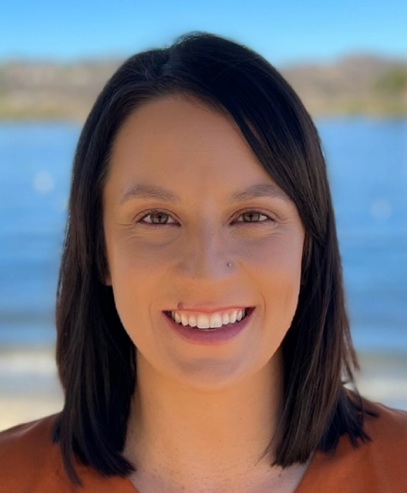
Lauren Hammond, sonography personal statement tutor
Table of Contents
- Sonography personal statement tips
- What to include - and avoid
- Sonography personal statement examples
- Learn more about Lauren, our sonography personal statement expert.
Diagnostic Medical Sonography Personal Statements
On this page you'll find six examples of diagnostic medical sonography personal statements for DMS and ultrasound technology programs, including programs that prepare you for the RDMS credential. They're written from the perspective of radiologic technologists, healthcare workers, career changers and direct-entry students.
Each example is followed by notes on what makes it work. Diagnostic medical sonographers use high-frequency sound waves to make images that guide decisions in cardiology, vascular medicine, obstetrics, abdominal imaging and more, and your statement should show that you know the field covers all of that.
Lauren Hammond is our sonography application essay expert and has been helping people write their graduate and professional school personal statements for several years. Whether you just want some feedback on a draft, or you're staring at a blank Word doc and don't know where to begin, she is happy to help!
Contact Lauren directly at 951-395-4646 (phone or text), or send us an email. Working with Lauren is $225 per hour, or $995 for 5 hours.
Consultations are free.
3 Tips for Strong Sonography Personal Statements
1. Show That You Understand Sonography's Full Clinical Scope
- Sonography covers far more than pregnancy scans: The field includes cardiac sonography (echocardiography), vascular sonography (duplex studies for DVT and carotid stenosis), abdominal and pelvic, musculoskeletal, neurosonology and breast. Applicants who show they know this range read as better prepared than those who write only about OB.
- Connect imaging to the clinical decision it drives: A carotid ultrasound helps decide whether a patient needs a vascular surgery consult. An echocardiogram measures ejection fraction and grades valve disease, which shapes decisions about when to replace a valve. Show that you understand what rides on the images.
- Name a specialty area: OB/GYN, cardiac/echo, vascular, abdominal, musculoskeletal, pediatric - even a preliminary direction shows purposeful thinking.
Example:
"In a vascular ultrasound I observed, the sonographer found a deep vein thrombosis in a patient who was being managed conservatively for leg swelling. Once the radiologist confirmed the finding, the patient was started on anticoagulation within the hour."
2. Demonstrate Hands-On or Clinical Preparation
- Describe specific examinations you observed: Programs see your observation hours on the application. In the statement, name the examination types - fetal anatomy survey, cardiac echo, vascular duplex, hepatic evaluation - and what you learned about the sonographer's diagnostic role.
- Medical imaging experience is directly relevant: Radiologic technology, nuclear medicine, echo tech - connect it explicitly to sonography and what it has prepared you for.
- Patient care experience matters: Sonographers work directly with patients in emotionally sensitive situations. Any nursing, medical assisting, or patient transport background is worth mentioning.
Example:
"Working as a radiologic technologist gave me specific preparation. I'm comfortable with patient positioning, I understand image quality variables, and I know the clinical environment where sonography results are used. Cross-training with the sonography department then taught me that ultrasound demands a different real-time spatial reasoning: a sonographer builds the diagnostic picture continuously instead of capturing it in a single exposure."
3. Articulate Why Sonography Specifically
- Name what distinguishes sonography: Real-time imaging, no ionizing radiation, direct patient interaction throughout, the sonographer's active role in finding and evaluating pathology, portability for bedside and point-of-care use.
- Acknowledge the technical demand: Sonography requires mentally reconstructing three-dimensional anatomy from two-dimensional images in real time while manipulating a transducer and communicating with a patient. Showing awareness of this signals preparation.
- Handle personal experience carefully: If ultrasound played a role in your own care or a family member's, pair it with clinical observation and professional preparation.
Example:
"Sonography differs from other imaging modalities in one respect: the sonographer takes an active diagnostic role. In radiography, the technologist captures the image and the radiologist interprets it. In sonography, the person holding the transducer decides where to look next. Placement, angle and settings all change based on what the sonographer is seeing in real time. The radiologist still makes the diagnosis, but what the radiologist gets to read depends on those choices."
What to Include in Your Sonography Personal Statement - and What to Avoid
What to Include
- Sonography's full clinical scope - cardiac, vascular, abdominal, OB/GYN, musculoskeletal; not just one specialty
- Specific clinical observation - name examination types and what the sonographer's diagnostic role looked like in practice
- Medical imaging or patient care background - RT, echo tech, nursing, MA; connect it to sonography preparation
- Why sonography specifically - real-time diagnostic participation, no radiation, direct patient interaction, specialty interest
- Intended specialty area - OB/GYN, cardiac, vascular, abdominal, MSK; a stated direction shows purposeful thinking
- Program-specific detail - specialty track, clinical rotation site, ARDMS exam preparation curriculum
What to Avoid
- "Taking ultrasound pictures" - the sonographer is an active diagnostic participant; language that suggests otherwise undersells the profession
- Focusing exclusively on OB ultrasound - show awareness of the full scope even if OB is your primary interest
- Personal pregnancy experience as the only motivation - pair it with clinical observation and professional preparation
- Generic patient care statements - show what specifically about sonography's diagnostic role draws you
- Same statement everywhere - echo programs, vascular concentrations, and clinical site partnerships want tailored statements
Video: 7 Ways to Write a Crappy Graduate School Personal Statement
For more personal statement tips, check out Vince's video: 7 Ways to Write a Crappy Graduate School Personal Statement.
If a program on your list asks for a statement of purpose instead, it is a different document with different expectations. Our guide to how to structure a statement of purpose covers what changes.
6 Diagnostic Medical Sonography Personal Statement Examples
Below are six sonography personal statement examples. After each one, we explain what makes it work.
We wrote these six ourselves as teaching models. The applicants are invented, the programs are left generic on purpose, and nothing here is a real client's statement. Read them for structure and for how specific the detail gets, not as text to borrow.
Radiologic Technologist to DMS
I've been a registered radiologic technologist for four years. I position patients, set technical factors, capture the image and send it to the radiologist. Once the image is taken, the diagnostic process moves forward without me. I'm good at my part, but for four years I've watched the sonographers down the hall work out what they're looking at while the exam is still going, which my modality doesn't allow.
The difference is in how the image gets made. I capture a predetermined view and move on. A sonographer starts with a transducer, an anatomy, and a clinical question. From there the sonographer adjusts depth and gain, follows a structure through more than one plane, and stops to measure anything that looks wrong while the patient is still on the table.
I cross-trained in the sonography department for six months. It was a departmental initiative, and I observed abdominal, pelvic, OB and vascular exams. What settled it for me was a patient sent in for a routine gallbladder study. The sonographer finished the gallbladder views, kept scanning through the liver, and found a mass nobody had asked about. She measured it, checked it with color Doppler and flagged it for the radiologist before the patient got dressed. I want to be trained to do that part of the work.
My goal is a hospital-based sonography department. Eventually I'd like to earn the RDMS credential in abdomen and the RVT credential in vascular technology. I'm applying to this program because of its vascular sonography concentration and its clinical rotation sites in a high-volume radiology department.
Why this statement works:
- The opening walks through the RT's actual routine ("position patients, set technical factors, capture the image") before saying what's missing from it. That tells the reader the applicant knows both modalities from the inside and isn't just admiring the department down the hall.
- The gallbladder study that turns up a liver mass is the reason for the application, and it's told as a sequence of things the sonographer did: kept scanning, measured, used color Doppler, flagged it. A weaker draft would say "I saw how sonographers find unexpected pathology" and stop there.
- "Six months" of departmental cross-training gives a time frame and a setting the reader can match against the rest of the application.
- The credential goal uses the right names (RDMS in abdomen, RVT for vascular) and ties the vascular half to the program's concentration. Mixing up credential names is a small slip that tells a program director the applicant hasn't looked closely.
Hospital Phlebotomist to Sonography
For three years I've worked as a phlebotomist in a hospital outpatient lab. Most draws take me under two minutes. The patients I remember are the ones I couldn't get: veins scarred from chemotherapy, veins buried under swelling, arms that have been stuck too many times. After two missed attempts on a man who came in for weekly labs, our policy was to call the vascular access team. The nurse who came put a linear transducer on his forearm, found a vein I couldn't feel, and placed the needle while watching the tip on the screen.
Afterward I asked her how she knew which dark circle was the vein. She showed me. When she pressed down with the transducer, the vein flattened and the artery next to it kept pulsing. That was the first time I understood that the picture on the screen had to be read, and that reading it was a skill someone had trained for.
I wanted to see that skill used for diagnosis, so I arranged 60 hours of observation in general ultrasound through the hospital's volunteer office, documented and signed off by the lead sonographer. One afternoon a woman came in with right upper quadrant pain. The sonographer found bright echoes in the gallbladder with shadowing behind them, measured the gallbladder wall, and pressed over it with the transducer to check for focal tenderness. Then she had the patient roll onto her left side to see whether the echoes moved, because stones shift and polyps don't. Before she finished, she measured the common bile duct. Each step answered a question the radiologist would ask, and the answers were on the images before he read the study.
I know what I'm bringing and what I'm not. I'm comfortable with nervous patients and with people who are tired of being poked, and I can talk someone through an uncomfortable minute without slowing the work down. I have never held a transducer on a patient, and my physics background is one algebra-based course. I'm taking a second physics course this spring, because the SPI physics exam is part of earning any ARDMS credential and I would rather start the program with that groundwork in place.
My goal is general sonography, starting with the RDMS in abdomen and OB/GYN, and later the RVT, since vascular work builds on what I already know about where veins run. I'm applying to this program for its general sonography curriculum and its outpatient imaging rotation, which matches the setting where I want to start.
Why this statement works:
- It opens on something the applicant couldn't do: two missed sticks and a call to the vascular access team. Starting from a real limit is more convincing than opening with a claim like "I have strong patient communication skills."
- The vein that flattens beside a pulsing artery is the moment ultrasound makes sense to the writer, and the detail is accurate. The reader sees the applicant learning something on the spot, not just standing nearby.
- The gallbladder scene lists the sonographer's steps in order (shadowing, wall measurement, the roll onto the left side, the duct). Anyone on the admissions committee will recognize a real right upper quadrant exam, and "the answers were on the images before he read the study" puts the sonographer and the radiologist in their correct roles.
- "Documented and signed off by the lead sonographer" settles whether the hours can be verified, which many programs check.
- The fourth paragraph names a weak spot (one physics course) and what the applicant is doing about it (a second course aimed at the SPI). That does more than a closing line like "I'm ready for this challenge."
Pre-Health Science Student to Direct Entry DMS
I am applying straight from undergraduate, with a degree in biomedical sciences and no clinical imaging job behind me. Everything I've done toward this field in the last two years, I chose with sonography training in mind.
My interest started with a junior-year research project on ultrasound-guided vascular access, where I spent a semester scanning gel phantoms to compare how well a needle showed up at different transducer frequencies. The project introduced me to the physics of sound wave propagation and the acoustic properties of different tissue types, along with the engineering basis for how clinical ultrasound systems produce diagnostically useful images. The phantoms made one tradeoff obvious: the higher-frequency transducer showed the needle tip more sharply but lost detail on the deeper vessel. Frequency, resolution and depth trade against each other on every exam, and I want to understand that well enough to fix a poor image when the standard settings don't work.
I completed 80 observation hours across general abdominal, OB/GYN, vascular, and musculoskeletal sonography. Because I knew why a sonographer switched transducers or moved the focal zone, I could follow most of what I was watching. What I couldn't yet do was talk a nervous patient through an exam the way they did, so I've started volunteering in the emergency department to get more time with patients.
My goal is to practice general sonography and work toward musculoskeletal ultrasound. The MSK exam I remember best was a shoulder, where the sonographer had the patient raise his arm during the scan so she could watch the tendon move under the acromion. I am applying to this program because of its direct entry curriculum design and its MSK sonography elective track.
Why this statement works:
- The first sentence states the direct-entry situation plainly and moves on. Opening with a question like "How does an applicant with no experience prepare?" spends the reader's attention on a setup instead of an answer.
- The gel phantoms turn "a research project" into something the reader can picture, and the lesson drawn from them (higher frequency, sharper detail, less depth) is the physics a sonographer actually uses.
- "Fix a poor image when the standard settings don't work" connects the physics to the job. Without that line, the physics would read as a résumé item.
- The applicant admits a gap (talking a nervous patient through an exam) and names a step to close it. Direct-entry applicants are often read as lab-only, and this answers that before the reader raises it.
- The MSK goal rests on one shoulder exam the writer watched. A weaker draft would name MSK because it sounds unusual and leave it there.
Personal Experience to Sonography (Carefully Handled)
I am applying to sonography partly because of a personal experience, and I'd rather say so up front. When I was 28, my 20-week anatomy survey showed a low-lying placenta. The sonographer who found it stayed calm and took her time with the images. She couldn't tell me what they meant, so she explained that the physician would go over them with me, told me what would happen next, and stayed in the room until he came in. My outcome was good. I've thought about that examination many times since.
That experience started my interest. This application rests on the three years of preparation I built after it. That meant work as a medical assistant in an OB/GYN clinic and 100 hours of clinical observation across obstetric, abdominal, vascular, and cardiac sonography. Those years tested whether the interest would hold up in daily work, and it did.
The sonographer I observed most closely worked in a vascular department. I watched her conduct a lower extremity venous duplex study. The study included the systematic compression technique, the color Doppler assessment, and the recognition of an absent augmentation response. I liked how methodical it was: every segment of the vein checked the same way, every time. My long-term interest is in maternal-fetal medicine ultrasound, the specialty most directly connected to my original experience and to the three years of preparation I have built since.
Why this statement works:
- The personal reason is in the first sentence, stated once and plainly. A reader expecting "my ultrasound inspired me" sees right away that the writer knows how that kind of essay usually goes.
- In the pregnancy scene the sonographer says she can't interpret the images and brings in the physician. That's accurate to a sonographer's scope of practice. A draft where the sonographer walks the patient through possible outcomes would make a program director wonder whether the applicant understands the job.
- "Three years" as a medical assistant in an OB/GYN clinic plus 100 observation hours across four areas is the evidence that the interest outlasted the event that started it.
- The venous duplex paragraph names compression, color Doppler and augmentation in order, and it shows the applicant spent time outside OB, which answers the page's warning about OB-only statements.
- The maternal-fetal medicine goal links back to the opening without retelling it. A weaker ending would return to the pregnancy for an emotional close.
Career Changer - Veterinary Technician
For six years I've been a credentialed veterinary technician at a specialty animal hospital, and for the last two I've worked mostly with the cardiology service. During an echocardiogram my job is to hold the patient. For a cat, that means laying it on its right side on a table with a cutout, so the cardiologist can scan from underneath, and keeping it calm and still for ten or fifteen minutes, without sedation if we can manage it.
The study I think about most was a nine-year-old cat with a new murmur and fast breathing. The cardiologist measured the left ventricular wall in diastole and found it thickened, then compared the left atrium to the aorta and found the atrium enlarged. The diagnosis was hypertrophic cardiomyopathy. The owner left with a treatment plan, and I left wanting to know how to get those measurements myself. On our team the cardiologist does the scanning and the reading, and the technician holds the cat.
In human medicine that work is split. A cardiac sonographer acquires the images and measurements, and a cardiologist interprets them. I saw that split during 50 hours of observation in a hospital echo lab, where I watched sonographers work through full transthoracic studies, moving from parasternal to apical to subcostal windows and running Doppler across each valve. When a view was poor, they asked the patient to roll farther onto the left side or to breathe out and hold it, and the image cleared. In my work, I'd been on the other side of that request, coaxing a cat into position. Here the patient could help.
The part I'm least prepared for is the patient who talks back. My patients never needed a procedure explained, and none of them asked me what I saw on the screen. In the echo lab I watched a sonographer answer "Is everything okay?" honestly without giving a result she wasn't allowed to give, and I know that takes practice. I've started weekend shifts as a hospital patient transporter to get that practice, and I'm finishing human anatomy and physiology this term.
My goal is adult echocardiography and the RDCS credential. I'm applying to this program because of its cardiac sonography track and its echo lab rotations, which would give me the scanning hours I've spent six years watching from the other end of the table.
Why this statement works:
- The first paragraph explains exactly what a vet tech does during an echo, down to the table with a cutout. An admissions reader learns the applicant has spent real time around cardiac ultrasound, and the detail is specific enough that it couldn't be borrowed from someone else's essay.
- The cat with hypertrophic cardiomyopathy gives the clinical reasoning in order (wall thickness, then left atrium against the aorta, then the diagnosis). A weaker draft would say "I was fascinated by cardiac imaging" without showing what was measured or why.
- "In human medicine that work is split" shows the applicant understands the sonographer's role and its limits before applying for it. That matters more for a career changer, whose first exposure was a setting where one person did everything.
- The paragraph on patients who talk back names the real gap and pairs it with a concrete step (transporter shifts). The "Is everything okay?" line also shows the applicant knows sonographers don't give results.
- The RDCS goal and the cardiac track tie the application to one direction. Naming the correct credential for echo is a small detail that shows homework.
Allied Health (Respiratory Therapy) to Sonography
I've worked as a respiratory therapist for five years, mostly in a medical ICU where our physicians now use point-of-care ultrasound most days. I have assisted with lung ultrasound examinations and observed bedside echo assessments for volume status and cardiac function. One night I watched an intensivist scan a patient whose oxygen needs kept climbing, find B-lines across both lungs, and stop the IV fluids within minutes. In the ICU there is often no time to wait for a scheduled imaging study.
Those bedside scans answer one focused question, and the patient often goes on to get a complete study from the echo or vascular lab. Those complete studies are the work I want to do. A full echocardiogram or a lower extremity venous duplex follows a set protocol with required views and measurements, and doing one to ARDMS standards takes formal training I don't have yet.
My respiratory therapy background gives me specific preparation for sonography training. I'm used to working with critically ill patients, and I read ventilator waveforms and blood gases every shift, so the cardiopulmonary physiology behind an echo is familiar ground. What I lack is transducer skill, and that is what I'm coming to learn.
My goal is to practice in a cardiac or vascular sonography setting, pursuing the RDCS credential in adult echocardiography and the RVT credential in vascular technology. I am applying to this program because of its cardiac and vascular sonography dual certification preparation curriculum and its ICU clinical rotation site.
Why this statement works:
- The setting is specific from the first sentence: a medical ICU where physicians scan most days. The reader knows where the applicant's ultrasound exposure came from and who was holding the transducer.
- The B-lines scene shows an image changing a treatment plan within minutes. A weaker draft would say "I've seen ultrasound change clinical management" and leave the reader to imagine how.
- The difference between a focused bedside scan and a full protocol study is accurate, and it's the core of the argument: it explains why someone who already sees ultrasound every shift still needs formal training.
- The physiology claim rests on daily tasks (ventilator waveforms, blood gases) instead of a general statement about understanding cardiopulmonary physiology, and the next sentence admits the gap.
- The credential goal uses the correct names, RDCS for echo and RVT for vascular, and lines up with the program's dual-track curriculum and ICU rotation.
Have a draft? Try our free personal statement checker. It checks your length, opening line, stock phrases, signs of AI writing, and sentence rhythm. Your draft never leaves your browser.
Feeling stuck?
Lauren Hammond, our diagnostic medical sonography personal statement editor, would be happy to help - whether you just need a second opinion on a draft or you're starting from scratch.
Text or call her at 951-395-4646, or send us an email.
Lauren works with you on Zoom and in Google Docs, so you get both real-time coaching and clean, trackable revisions. Most clients use 2 to 4 sessions.
Meet Lauren Hammond, sonography personal statement tutor
Lauren: I earned my Bachelor's Degree in Literature and Writing, with a concentration in Writing, at California State University San Marcos (CSUSM) and my Master's Degree in English and Comparative Literature at San Diego State University (SDSU).
I completed my PhD in English at the University of California Riverside (UCR) in September 2023 and then worked as UCR's Graduate Writing Center Specialist and graduate Fulbright Program Advisor. I now teach at Azusa Pacific University, where I'm an Assistant Professor and Lead Faculty in the Writing Program.
I have been a writing consultant for more than 10 years, and I've helped people with research writing, thesis/dissertation projects, rhetorical and literary analyses, writing in the humanities, grammar/sentence mechanics, and more. My work for VKTP includes thesis and dissertation editing and coaching, especially in the humanities and social sciences, as well as graduate school application materials such as personal statements, diversity statements and research statements, and job market materials for academic and alt-academic positions, including resumes, CVs and cover letters.
During my downtime, I love hanging out with my husband, our daughter, and our two dogs, Link and Leia! My favorite activities are going on the boat, cruising on the golf cart, and making our way through all of the local eateries. When we aren't out and about, I typically enjoy reading and watching movies.
Working with Lauren is $225 per hour or $995 for a package purchase of 5 hours. You can reach her at 951-395-4646 (phone or text), or by sending us an email.
P.S. Our partner Julie can also help you prepare for your sonography program admissions interviews! Learn more about her professional voice training for interview prep.
P.S. Some sonography programs require the GRE - we can help with that too!
Love For Lauren
Frequently Asked Questions
How long should a sonography personal statement be?
Programs set their own limits, so follow each one's word or page count exactly. Where none is given, about one page is a safe target. Use the space for specific clinical observation, what the sonographer's role looked like up close, and the specialty area you're aiming for.
What do sonography programs look for?
Strong science coursework, clinical observation hours with a registered sonographer, patient care experience, and a statement demonstrating awareness of the full DMS scope. Competitive applicants show they understand that the sonographer makes decisions during the exam that shape what the interpreting physician sees.
What is the difference between a sonographer and a radiologic technologist?
RTs capture X-ray images following prescribed protocols; the radiologist interprets them. Sonographers use real-time ultrasound to find and measure abnormalities during the exam, adjusting technique and following structures as they go, so their choices shape what is found. A radiologist or cardiologist then interprets the study and makes the diagnosis.
What specialties can sonographers pursue?
ARDMS offers the RDMS (with specialties in abdomen, OB/GYN, breast, pediatric sonography and fetal echocardiography), the RDCS for adult, pediatric and fetal echocardiography, the RVT for vascular technology, and the RMSKS for musculoskeletal sonography. Many sonographers hold credentials in two or more areas.
Can I use AI to write my sonography personal statement?
AI doesn't know what you saw during your observation hours or why you chose sonography, and those are what the statement has to show. Write it yourself, or work with Lauren.
Do sonography programs require the GRE?
Most sonography programs are certificate, associate or bachelor's programs and don't ask for the GRE. If you're applying to a graduate-level program, check its current requirements. If you need GRE prep, our tutoring team can help.
BTW, Lauren can also help with:
- Dissertation and thesis editing
- Graduate school CV and resume examples
- Teaching statement examples
- Academic cover letter examples
- Diversity statement examples
- Research statement examples
- Radiation Therapy personal statements
- Medical Laboratory Science personal statements
- Respiratory Therapy personal statements
- Physician Assistant personal statements
- Nurse Practitioner personal statements
- CRNA personal statements
- Perfusion Science personal statements
- Dental school personal statements
- Optometry (OD) personal statements
- PharmD personal statements
- Orthotics and Prosthetics personal statements
- Biomedical Sciences MS personal statements
- Epidemiology MS personal statements
- Art Therapy personal statements
- MHA (Health Administration) personal statements
- Health Informatics (MSHI) personal statements
- PsyD personal statements
- PhD personal statements
- Post Doc personal statements
- Fellowships and Grants personal statements