Perfusion Science Personal Statement Examples and Tutoring
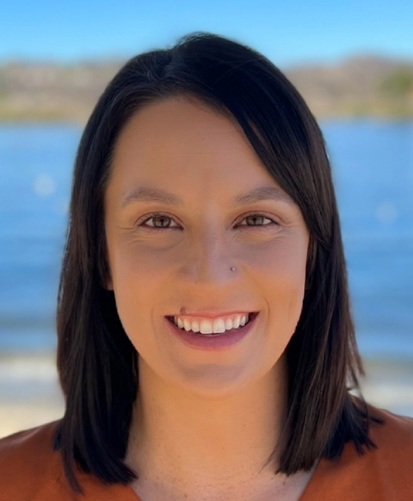
Lauren Hammond, perfusion science personal statement tutor
Table of Contents
- Perfusion science personal statement tips
- What to include - and avoid
- Perfusion science personal statement examples
- Learn more about Lauren, our perfusion science personal statement expert.
Perfusion Science Personal Statements
On this page you'll find six examples of effective perfusion science personal statements, written from the perspective of two cardiac ICU nurses, a respiratory therapist, an autotransfusion technician, a cardiovascular technician, and a cardiac surgery data abstractor applying straight from college. Each example is followed by a breakdown of what makes it work.
Perfusion science is one of the less familiar allied health professions. Clinical perfusionists run cardiopulmonary bypass during open heart surgery, keeping the patient's blood circulating and oxygenated while the heart is stopped. Many programs admit fewer than 20 students a year, some fewer than 10, so every part of the application gets a close read, including the personal statement.
Lauren Hammond is our perfusion science application essay expert and has been helping people write their graduate and professional school personal statements for several years. Whether you just want some feedback on a draft, or you're staring at a blank Word doc and don't know where to begin, she is happy to help!
Contact Lauren directly at 951-395-4646 (phone or text), or send us an email. Working with Lauren is $225 per hour, or $995 for 5 hours.
Consultations are free.
3 Tips for Strong Perfusion Science Personal Statements
1. Show That You Understand What Clinical Perfusion Actually Involves
- Perfusion is one of the most technically complex roles in the operating room: Clinical perfusionists run the heart-lung machine (the cardiopulmonary bypass circuit), manage heparin anticoagulation and help plan its reversal, monitor blood gases, control temperature and perfusion pressure, deliver the cardioplegia that stops the heart, and handle emergencies on the pump while the surgeon works on the arrested heart. An applicant who describes that scope accurately is more believable than one who calls perfusion "operating a machine."
- Physiologic depth is essential: Perfusion training is heavy on science: cardiopulmonary physiology, acid-base management, anticoagulation pharmacology, oxygen delivery and consumption, and hypothermia. The committee wants to see that you can handle that coursework. If you can accurately explain one of these concepts as it applied to a case you saw, do it.
- Shadow hours are critical: Many programs require you to observe at least one open heart case, and competitive applicants have usually watched several types (CABG, valve replacement, congenital heart surgery). Describe what you saw: the circuit setup, the cannulation, going on bypass, a problem the perfusionist had to respond to. "I observed a cardiac surgery" tells the committee almost nothing.
Example:
"In a re-do CABG I shadowed, scar tissue from the first operation slowed the surgeon's dissection, and the patient went on bypass forty minutes later than planned. The perfusionist had expected trouble. Her pump was primed and ready before the sternum was reopened, in case the surgeon injured the heart or an old graft and needed bypass immediately, and she had a baseline ACT and the heparin dose worked out in advance. The delay never caught her off guard. That kind of planning is what I want to be trained to do."
2. Address the "Why Perfusion over CRNA or Cardiac Nursing?" Question
- Expect this question: Many perfusion applicants come from cardiac ICU nursing or respiratory therapy. Committees want to know why you chose perfusion (running bypass, managing the circuit, managing the patient's physiology during surgery) over the other paths open to you, such as nurse anesthesia for ICU nurses.
- Name what is specific to perfusion: During bypass the perfusionist manages the patient's heart and lung function, making real-time decisions about flow, pressure, temperature, acid-base balance and oxygen delivery while the heart is not beating. No other role in the OR does that work directly. If that is what draws you, say so in those terms.
- Show the scope and intellectual challenge: Perfusion draws on engineering (circuit design and troubleshooting), pharmacology (anticoagulation, vasoactive drugs), physiology (acid-base, oxygen delivery, hypothermia) and emergency management. An applicant who explains which part of that mix interests them, and why, says more than one who wants to "be part of the surgical team."
Example:
"People in my unit assume CRNA school is my next step, and I did consider it. Nurse anesthesia keeps the patient asleep, comfortable and stable through the operation. The perfusionist takes over the work of the heart and lungs while the heart is stopped: flow, pressure, oxygenation, acid-base, temperature and anticoagulation. The two work side by side during bypass, but the pump is the part of the case I keep watching, and it is the work I want to train for."
3. Demonstrate the Clinical and Emotional Readiness for High-Stakes Intraoperative Work
- Perfusion emergencies leave little time: A circuit failure, a massive air embolism or a clotting problem on bypass can kill a patient within minutes. Committees want evidence that you have worked under real pressure in high-acuity settings, and that you have thought about what it means to be directly responsible for a patient's heart and lung function.
- Clinical experience in high-acuity settings is essential: Cardiac ICU, cath lab, OR, cardiac surgery floor, emergency department and trauma experience all count. Name the setting and describe one specific case where you had to act under pressure.
- Show intellectual precision and systematic thinking: Perfusionists work from checklists and protocols and plan for problems before the case starts. If you work that way, show it with an example: a checklist you follow, a backup plan you had ready, or a problem you traced step by step.
Example:
"Last spring I had a patient six hours out from valve surgery whose blood pressure kept falling while his norepinephrine dose kept climbing. I went through the causes in order: bleeding, volume, tamponade, heart function. His chest tube output had nearly stopped, which I had first taken as good news. I called the intensivist, the bedside echo showed tamponade, and he was back in the OR within the hour. Working through an unstable patient one variable at a time, quickly, is the habit I want to bring to perfusion training."
What to Include in Your Perfusion Science Personal Statement - and What to Avoid
What to Include
- Demonstration that you understand what perfusion actually involves - cardiopulmonary bypass management, anticoagulation, cardioplegia, circuit engineering, intraoperative emergency management
- Specific OR observation experience - describe the cases you observed, the circuit, the bypass initiation, an intraoperative moment that showed you what the role requires
- Your answer to "why perfusion over CRNA or cardiac nursing?" - answer it directly and specifically, without sounding defensive
- High-acuity clinical experience - cardiac ICU, OR, cath lab, emergency, respiratory therapy; name the environment and a specific clinical moment that demonstrates pressure management
- Scientific and physiologic preparation - cardiopulmonary physiology, acid-base, anticoagulation, oxygen kinetics; show you understand the science underlying bypass management
- Program-specific detail - surgical volume at clinical training sites, specialty cases (congenital, VAD, ECMO), faculty expertise, program clinical partnerships
What to Avoid
- "I want to be part of the cardiac surgery team" - every applicant says this; show what specifically about the perfusion role attracts you
- Describing perfusion primarily as "operating a machine" - the heart-lung machine is a tool; the expertise is in managing the patient's heart and lung physiology on bypass and afterward
- Leaving "why not CRNA or cardiac nursing?" unanswered - programs know you have options; address the choice directly
- Personal cardiac surgery experience as the only motivation - if a family member had bypass surgery and that sparked your interest, pair it with clinical preparation and physiologic understanding
- Generic descriptions of OR observation - "I observed a cardiac surgery" tells the committee nothing; be specific about the case type, the circuit, the bypass management
Video: 7 Ways to Write a Crappy Graduate School Personal Statement
For more personal statement tips, check out Vince's video: 7 Ways to Write a Crappy Graduate School Personal Statement.
Not every program calls this a personal statement. If yours asks for a statement of purpose, our statement of purpose examples show what that version looks like in full.
6 Perfusion Science Personal Statement Examples
Below are six example perfusion science personal statements. After each one, we explain what it does well and why.
We wrote these six ourselves as teaching models. The applicants are invented, the programs are left generic on purpose, and nothing here is a real client's statement. Read them for structure and for how specific the detail gets, not as text to borrow.
Cardiac ICU RN to Perfusion Science
My patient came up from a re-do CABG oozing from his chest tubes, with a platelet count well below what I usually see after bypass. The next day I asked the perfusionist who had run the case what had happened, and that conversation is where my plan to apply to perfusion school started. He spent twenty minutes explaining: the circuit priming modification he had used; the heparin resistance he ran into because the patient had been on a heparin drip for four days before surgery; the intraoperative event that made him modify the flow strategy mid-bypass. I manage a lot of physiology in the ICU, but he had made those calls in real time, on a patient whose heart was stopped, with the surgeon waiting on him.
Five years of managing post-bypass patients have given me a detailed understanding of bypass from the post-op side. Whatever the perfusionist did in the OR arrives with the patient: the temperature to which they were cooled, the cardioplegia delivery that protected the myocardium, the fluid and ultrafiltration decisions made on the pump, and the heparin and protamine dosing that set the patient's coagulation status when they left the OR.
Those are the decisions I want to be making. My cardiac ICU experience tells me what good bypass management looks like in outcomes, and what compromised bypass management looks like too. What I need is the training to run the pump myself, during the case.
My goal is to practice as a clinical perfusionist in a cardiac surgery program with high-volume complex cases, and eventually to develop expertise in mechanical circulatory support and extracorporeal membrane oxygenation. The program's surgical volume and its ECMO clinical training matter to me. So does its graduates' pass rate on the board certification exams.
Why this statement works:
- The essay opens on a patient the nurse actually cared for, a re-do CABG "oozing from his chest tubes" with low platelets. A weaker draft would open with "I have always been fascinated by the heart" and never reach a patient.
- The perfusionist's explanation names real problems from that case: a change to the prime, heparin resistance after four days on a heparin drip, a change in flow strategy mid-bypass. Repeating them accurately shows the committee she understood what she was told.
- The second paragraph lists what "arrives with the patient": the cooling temperature, the cardioplegia, the fluid and ultrafiltration decisions, the heparin and protamine dosing. A cardiac ICU nurse has managed the results of each one, and this is the argument most other applicants can't make.
- The closing names three things she wants from a program (surgical volume, ECMO training, board exam pass rates). Each one can be checked against a real program, which tells the reader more than "your excellent reputation."
Respiratory Therapist to Perfusion Science
A five-month-old was having a complete repair of tetralogy of Fallot. I was going to be her RT in the pediatric CVICU after surgery, and I had asked for permission to watch the bypass portion of the case first. She was on the pump for a little over two hours, cooled to a moderate temperature, with her heart arrested while the surgeon closed the VSD and opened up the right ventricular outflow tract, and then she was slowly rewarmed. It was the most complex mix of physiology, pharmacology and mechanical management I've come across in six years of cardiac critical care. The perfusionist was adjusting flow for a 6-kilogram patient, watching the cerebral oximetry numbers, and managing blood gases with pH-stat during cooling, a term I had to look up afterward. I spent that weekend reading about pediatric perfusion, and on Monday I asked our perfusion manager whether I could shadow again.
I've been a respiratory therapist for six years, working mostly in a cardiac surgery ICU. My work overlaps with perfusion more than most RT positions do. I manage ventilation for adult and pediatric patients on ECMO. I've taken part in the post-bypass care of hundreds of cardiac surgery patients. I have seen how a long pump run, a large transfusion or a heavy positive fluid balance shows up in a patient's lungs over the next few days.
I want to practice as a clinical perfusionist, with a specialty interest in pediatric and congenital cardiac surgery. Those patients are the ones I find most challenging and most meaningful, because of their physiologic complexity and their developmental context. I'm applying to this program for its clinical training volume in pediatric cardiac surgery and for its faculty expertise in congenital perfusion.
Why this statement works:
- The tetralogy of Fallot case gives details a perfusion faculty member can check: a five-month-old, a little over two hours on the pump, moderate cooling, the VSD closed and the outflow tract opened. Getting those right shows the applicant was paying attention in the OR.
- "a term I had to look up afterward" admits what the RT didn't know about pH-stat. A small admission like that makes the rest of the essay easier to trust than a draft that claims to understand everything it saw.
- The second paragraph links RT work to perfusion through the lungs: "a long pump run, a large transfusion or a heavy positive fluid balance" showing up days later. That answers "why would an RT make a good perfusionist" with evidence instead of a claim.
- Asking to shadow again the following Monday shows the interest turned into action, which is what a committee wants to see after a single moving case.
- The pediatric interest is tied to the case and to two program features (pediatric surgical volume, congenital perfusion faculty). Without those, "I'm interested in pediatrics" would read as a guess.
Autotransfusion Technician to Perfusion Science
The page came at 1:40 a.m.: type A aortic dissection, cardiac OR, cell saver needed. By the time the patient was on the table I had the collection reservoir set up, the anticoagulant line primed and a wash bowl loaded. For the next six hours I processed blood almost without stopping, about four liters of shed blood washed and returned to the patient as packed red cells.
From my station I could see the perfusionist and her pump. She cooled the patient for circulatory arrest, and while the surgeon replaced the ascending aorta and part of the arch, she kept oxygenated blood going to the brain while circulation to the rest of the body was stopped. She called out times and temperatures to the surgeon and the anesthesiologist, and every number was one they had agreed on before the first incision. When the arch was finished she restored full flow and rewarmed the patient slowly, watching how much warmer the blood in her circuit was than the patient. After he came off bypass I processed the blood left in her circuit, and I remember thinking that I understood my machine completely and hers hardly at all.
I have worked as an autotransfusion technician for three years, for a service that covers cardiac, vascular, spine and obstetric cases at four hospitals. I set up and run the cell saver, keep the anticoagulant drip matched to how fast blood is coming into the reservoir, and remind the scrub team to switch to wall suction when they use topical thrombin or other hemostatic agents, which should not go back to the patient. In our cardiac rooms I also run activated clotting times when the perfusionist asks.
Two of the perfusionists I work with started in autotransfusion, and three have let me sit with them at the pump during cases. In about thirty cases I have watched them go on bypass, give cardioplegia, deal with a sudden drop in venous return, and come off. I can follow what they are doing. I can't yet say why they choose one response over another, and that is what I want the training for.
I have a degree in biology, and I finished physics and anatomy and physiology last year. I have not taken pharmacology, and I expect anticoagulation and the vasoactive drugs to be the hardest part of the first year for me. I have started reading on both so I don't meet them for the first time in lecture.
I considered staying in autotransfusion and moving into a lead role. The work is steady and I am good at it. But the cell saver is one piece of blood management, and the perfusionist is responsible for all of it, along with the patient's circulation, oxygenation and temperature during the hours when the heart is stopped. I want that responsibility.
I want to work in a high-volume adult cardiac program that does aortic surgery, and later learn to manage patients on ECMO and ventricular assist devices. I am applying to this program for its clinical rotations at sites with a large aortic and transplant caseload, and for the simulation time students get with pump emergencies before they run a pump on a patient.
Why this statement works:
- The 1:40 a.m. page and three quick setup steps put the reader inside a type A dissection repair within two sentences, and "about four liters of shed blood washed and returned" shows in numbers what an autotransfusion tech contributes.
- The applicant describes the perfusionist's work during circulatory arrest in plain terms (cooling, blood to the brain while the body's circulation is stopped, slow rewarming) and never claims to have done any of it. "I understood my machine completely and hers hardly at all" is honest about the distance between the two jobs.
- The job paragraph includes a detail only someone who has done the work would think to mention: telling the scrub team to switch to wall suction when topical thrombin is in the field. One detail like that persuades a committee faster than a list of duties.
- The essay answers "why not stay where you are" directly: the cell saver is one piece of blood management, and the perfusionist owns all of it. That is a perfusion-specific reason, which is what committees are reading for.
- Naming pharmacology as the weak spot, with what the applicant is doing about it, gives the committee a specific, fixable gap instead of a vague "I know I have much to learn."
Cardiovascular Technician to Perfusion Science
I have spent three years as a cardiovascular technician in a cardiac catheterization lab. I run the hemodynamic monitoring system, record intracoronary pressure measurements, and scrub in on diagnostic and interventional cases. When a patient in shock needs an intra-aortic balloon pump or an Impella, I set up the console, assist with insertion, and stay with the device until the patient is handed off to the ICU. Those cases taught me most of what I know about mechanical circulatory support.
Perfusion entered my thinking gradually. The patients I support in the cath lab with temporary mechanical circulatory support are frequently the same patients who go on to cardiac surgery and bypass. I started following them after they left my lab. A patient whose Impella I had helped place on a Monday could be on a heart-lung machine by Thursday, and I wanted to understand how the perfusionist takes over from a device like that. So I began shadowing in the cardiac surgery OR. Over the next year I observed twelve cases: CABGs, valve operations and one heart transplant.
My goal is to practice as a clinical perfusionist in a high-complexity cardiac surgery program, with a particular interest in mechanical circulatory support and transplant perfusion. I'm applying to this program for its transplant program volume and for its ECMO and MCS clinical training emphasis.
The transplant was the most clarifying case I've observed. The patient was in severe cardiogenic shock and on multiple vasopressors, and borderline renal function complicated the bypass strategy. The perfusionist kept flow and pressure high enough to protect his kidneys, used ultrafiltration to remove fluid he could not afford to keep, and kept a running count of the donor heart's ischemic time. Afterward she walked me through each of those choices in order. I left that case certain about my direction.
Why this statement works:
- The first paragraph says what the technician actually does with a balloon pump or Impella: sets up the console, assists with insertion, stays until handoff. A draft that said "I manage MCS devices in the ICU" would overstate a tech's role, and perfusion faculty would notice.
- "A patient whose Impella I had helped place on a Monday could be on a heart-lung machine by Thursday" explains the interest in perfusion with one real path through the hospital instead of a rhetorical question.
- The transplant paragraph names three perfusion decisions (flow and pressure to protect the kidneys, ultrafiltration, the donor heart's ischemic time). That is evidence the applicant was watching the pump and not just the surgical field.
- Shadowing is reported as a number and a case mix (twelve cases, CABGs, valves, one transplant), which is the information admissions readers compare against their requirements.
Cardiac Surgery Data Abstractor to Perfusion Science (Direct Entry)
For two years my job has been reading cardiac surgery charts after the patients go home. I am a clinical data abstractor for our hospital's cardiac surgery program. I enter every case into the national database our surgeons use to compare their outcomes with other programs: the operation, the pump and cross-clamp times, the lowest temperature, every blood product, the hours on the ventilator, and whether the patient had a stroke, kidney injury or a return to the OR for bleeding.
About six months in, I noticed that the patients who received the most red cells during surgery were often small, older women. Their lowest hematocrit on bypass was far below most of the men's, even when they had started with normal blood counts. I didn't understand why, so I asked one of our perfusionists. The next week she explained it to me at the pump. Every patient's blood is diluted by the fluid used to prime the circuit, and the smaller the patient, the bigger that volume is compared with their own blood. She showed me how she removes part of the prime just before bypass by letting the patient's own blood push it out of the circuit, and told me the team had switched to a smaller circuit for small patients a few years earlier. When I pulled our numbers from before and after the switch, transfusions for those patients had dropped, though I knew our data couldn't prove the circuit was the reason.
After that conversation I asked to shadow. I have now observed 24 cases with our perfusion team, mostly CABGs and valve replacements, plus one aortic root replacement. I have watched them go on bypass, give cardioplegia, rewarm and come off. I still read the perfusion record for every case I abstract, and I can usually tell from it where the difficult part of the operation was.
I graduated with a B.S. in biology and have finished the physics, chemistry and statistics that perfusion programs ask for. My gap is patient care. I have never been responsible for a patient, and I will start clinical rotations behind classmates who were ICU nurses or respiratory therapists. I volunteer on weekends in our cardiac step-down unit so that part of my week is spent with patients instead of charts, and I plan to use the simulation lab as much as I'm allowed in the first year.
I thought about nursing school, followed by years of ICU work and then nurse anesthesia training. That route leads to anesthesia, and the part of the operation I keep coming back to is the circuit: flow, prime, temperature, anticoagulation and blood management while the heart is stopped. Perfusion is the profession built around that part of the case.
I want to work in an adult cardiac surgery program and stay involved in its outcomes data, especially blood conservation, since that is where my interest started. I am applying to this program because it admits applicants straight from a bachelor's degree, because its students rotate through several high-volume cardiac surgery sites, and because its faculty publish on blood management in cardiac surgery.
Why this statement works:
- The abstractor's job is explained through the fields she enters (pump and cross-clamp times, lowest temperature, blood products, complications). A reader who has never heard of the role understands it by the end of the first paragraph.
- The essay is built on a question the applicant found in her own work: why small, older women were getting the most transfusions. That shows curiosity with evidence behind it, where a weaker draft would just say "I am fascinated by perfusion."
- The perfusionist's answer (dilution from the prime, removing part of it before bypass, a smaller circuit) is accurate, and the applicant adds that her numbers "couldn't prove the circuit was the reason." That restraint tells the committee she reads data carefully.
- The direct-entry gap is named plainly as patient care, with two concrete responses (weekend volunteering in step-down, extra simulation time). Committees reading direct-entry applications look for that kind of self-assessment.
- The comparison with nurse anesthesia is handled in two sentences about where each path leads, without claiming options a new graduate doesn't have yet.
Cardiac ICU RN with ECMO Experience to Perfusion Science
ECMO management taught me something my ICU experience alone didn't: the responsibility of complete extracorporeal cardiopulmonary support. When my patient is on ECMO, I am at the bedside checking the circuit pressures, the post-oxygenator gases and the flow every hour. A pump failure, a clot in the oxygenator or an accidental decannulation is a perfusion emergency, and in my unit the nurse at the bedside starts the response. Our unit drills those events every quarter with the perfusionists who run our ECMO program, and those drills are where I first watched a perfusionist work through a circuit problem step by step.
I'm a cardiac ICU nurse with three years of ECMO management experience. I am trained to prime circuits, and I assist at the bedside when the surgeons or intensivists cannulate. I titrate the heparin infusion to our anti-Xa protocol, troubleshoot oxygenator and pump alarms, and adjust sweep and flow during weaning trials under the physician's orders. I have far less operating room experience: eight bypass cases, shadowed from beside the pump.
My goal is to practice in a cardiac surgery program with high-volume ECMO and complex surgical cases, and eventually to become a specialist in ECMO and mechanical circulatory support, the area where my ICU background gives me the deepest foundation. I'm applying to this program because of its ECMO training volume and its faculty expertise in extracorporeal life support.
What perfusion offers that ECMO management in the ICU doesn't is the intraoperative context. On ECMO the heart usually keeps beating, and the goal is to rest it for days. On bypass the perfusionist gives the cardioplegia that stops it, protects it while the aorta is clamped, and then works with the surgeon and anesthesiologist to restart it and wean the patient off the pump. I want the training to manage that whole sequence.
Why this statement works:
- The essay starts from ECMO, the closest thing to perfusion an ICU nurse does, and describes the bedside work in specifics: circuit pressures, post-oxygenator gases, hourly flow checks.
- The role description is accurate about scope. She primes circuits, assists while physicians cannulate, and adjusts sweep and flow "under the physician's orders." Perfusion faculty know who does what on an ECMO team, and an inflated role would cost her their trust.
- "eight bypass cases, shadowed from beside the pump" states the gap in the OR plainly. A weaker draft would claim ECMO is all the preparation she needs.
- The last paragraph explains what bypass adds through what happens to the heart: rested for days on ECMO, stopped, protected and restarted on bypass. That is a reason specific to perfusion, and it answers "why not stay in ECMO nursing" without the question being asked.
Have a draft? Try our free personal statement checker. It checks your length, opening line, stock phrases, signs of AI writing, and sentence rhythm. Your draft never leaves your browser.
Feeling stuck?
Lauren Hammond, our perfusion science personal statement editor, would be happy to help - whether you just need a second opinion on a draft or you're starting from scratch.
Text or call her at 951-395-4646, or send us an email.
Lauren works with you on Zoom and in Google Docs, so you get both real-time coaching and clean, trackable revisions. Most clients use 2 to 4 sessions.
Meet Lauren Hammond, perfusion science personal statement tutor
Lauren: I earned my Bachelor's Degree in Literature and Writing, with a concentration in Writing, at California State University San Marcos (CSUSM) and my Master's Degree in English and Comparative Literature at San Diego State University (SDSU).
I completed my PhD in English at the University of California Riverside (UCR) in September 2023 and then worked as UCR's Graduate Writing Center Specialist and graduate Fulbright Program Advisor. I now teach at Azusa Pacific University, where I'm an Assistant Professor and Lead Faculty in the Writing Program.
I have been a writing consultant for more than 10 years, and I've helped people with research writing, thesis/dissertation projects, rhetorical and literary analyses, writing in the humanities, grammar/sentence mechanics, and more. My work for VKTP includes thesis and dissertation editing and coaching, especially in the humanities and social sciences, as well as graduate school application materials such as personal statements, diversity statements and research statements, and job market materials for academic and alt-academic positions, including resumes, CVs and cover letters.
During my downtime, I love hanging out with my husband, our daughter, and our two dogs, Link and Leia! My favorite activities are going on the boat, cruising on the golf cart, and making our way through all of the local eateries. When we aren't out and about, I typically enjoy reading and watching movies.
Working with Lauren is $225 per hour or $995 for a package purchase of 5 hours. You can reach her at 951-395-4646 (phone or text), or by sending us an email.
P.S. Our partner Julie can also help you prepare for your perfusion science program admissions interviews! Learn more about her professional voice training for interview prep.
P.S. Some perfusion science programs require the GRE - we can help with that too!
Love For Lauren
Frequently Asked Questions
How long should a perfusion science personal statement be?
It depends on how you apply. Programs that use AHCAS, the centralized application for allied health programs, limit the personal statement to 4,500 characters, roughly 650 to 800 words. Programs with their own applications set their own limits, so check each one. Use the space to show you understand what a perfusionist does on bypass, describe specific clinical experience, and give a clear reason you chose perfusion.
What do perfusion science programs look for in applicants?
A strong science GPA, GRE scores where required, healthcare experience (cardiac ICU, OR, respiratory therapy in a cardiac setting, cath lab, ECMO), perfusion observation in the OR, letters of recommendation (ideally including one from a perfusionist or cardiac surgeon), and a statement that shows you understand what a perfusionist does on bypass. How much clinical experience programs expect varies, and some admit strong applicants straight from a bachelor's degree.
What is a clinical perfusionist and what do they do?
A clinical perfusionist operates the heart-lung machine (cardiopulmonary bypass circuit) during open heart surgery - managing flow, pressure, temperature, oxygenation, acid-base balance, anticoagulation, and cardioplegia delivery while the heart is stopped. Depending on the hospital, perfusionists also manage ECMO, intra-aortic balloon pumps and ventricular assist devices, and run autotransfusion (cell salvage) during cardiac and non-cardiac surgery.
How competitive are perfusion science programs?
Very competitive. Many programs admit fewer than 20 students a year, some fewer than 10, and applicants usually outnumber seats several times over. Strong applicants tend to have cardiac clinical experience (especially cardiac ICU or ECMO), a strong science GPA, relevant recommendations, and a specific statement that shows they understand what a perfusionist does on bypass.
Can I use AI to write my perfusion science personal statement?
AI has no access to the cases you observed, your clinical background, or your actual reasons for choosing perfusion over CRNA or cardiac nursing, and those details are what the committee reads for. Write the statement yourself or work with Lauren.
Do perfusion science programs require the GRE?
Some perfusion programs still require or recommend the GRE, and many have dropped it, so check each program's requirements. If you need GRE prep, our tutoring team can help.
BTW, Lauren can also help with:
- Dissertation and thesis editing
- Graduate school CV and resume examples
- Teaching statement examples
- Academic cover letter examples
- Diversity statement examples
- Research statement examples
- CRNA personal statements
- Nurse Practitioner personal statements
- Respiratory Therapy personal statements
- Nurse Midwifery (CNM) personal statements
- Medical Laboratory Science personal statements
- Radiation Therapy personal statements
- Physician Assistant personal statements
- Exercise Physiology personal statements
- Nursing school personal statements
- Dental school personal statements
- PharmD personal statements
- Genetic Counseling personal statements
- MHA (Health Administration) personal statements
- Health Informatics (MSHI) personal statements
- PsyD personal statements
- Clinical Psychology PhD personal statements
- MBA personal statements
- Law School personal statements
- PhD personal statements
- Post Doc personal statements
- Fellowships and Grants personal statements