Nurse Midwifery Personal Statement Examples and Tutoring
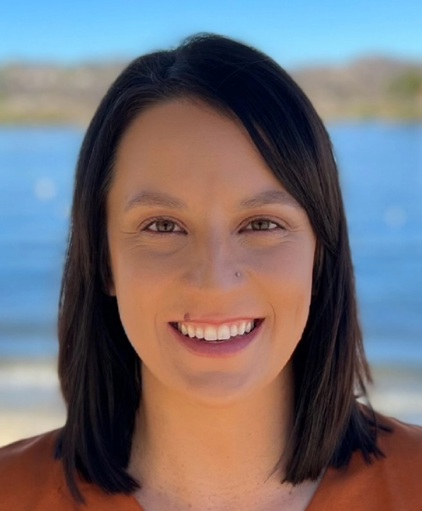
Lauren Hammond, nurse midwifery personal statement tutor
Table of Contents
- Nurse midwifery personal statement tips
- What to include - and avoid
- Nurse midwifery personal statement examples
- Learn more about Lauren, our nurse midwifery personal statement expert.
Nurse Midwifery Personal Statements
On this page you'll find six examples of effective nurse midwifery personal statements for CNM (Certified Nurse-Midwife) programs, written from the perspective of nurses in labor and delivery, postpartum, community health, NICU and OB/GYN office settings, plus a doula applying to a direct entry program.
Each example is followed by a breakdown of what makes it work. If you are also considering nurse practitioner programs, see our separate NP personal statement page. CNM and NP statements are built in a similar way, but the two are different professions, so write a separate statement for each.
Lauren Hammond is our nurse midwifery application essay expert and has been helping people write their graduate school personal statements for several years. Whether you just want some feedback on a draft, or you're staring at a blank Word doc and don't know where to begin, she is happy to help!
Contact Lauren directly at 951-395-4646 (phone or text), or send us an email. Working with Lauren is $225 per hour, or $995 for 5 hours.
Consultations are free.
3 Tips for Strong Nurse Midwifery Personal Statements
1. Articulate What Specifically Draws You to Midwifery - Not Just to Women's Health or Birth
- Many nurses love working with pregnant patients - midwifery is a specific clinical philosophy: Certified nurse-midwives provide prenatal, intrapartum, postpartum, gynecologic and primary care, within a model that emphasizes physiologic birth, informed consent and shared decision-making, and continuity of care. Applicants who show they understand this model, and not only that they love birth, make a much stronger case.
- Address the CNM model specifically: The midwifery model of care starts from a different philosophy than the obstetric model. A strong CNM application describes that difference as a different approach, without criticizing obstetrics. Show that you have thought about what midwifery offers that your current nursing role doesn't.
- Name a specific clinical or population focus within midwifery: CNMs work in hospitals, birth centers, community clinics and gynecology practices, with emphases such as physiologic birth, collaboration on higher-risk pregnancies, access for underserved communities and gynecologic care. Naming even a tentative direction shows the committee you have thought past admission.
Example:
"Birth itself is remarkable, but what draws me to midwifery is the continuity of care it makes possible. A midwife who follows a patient from prenatal care through labor to the postpartum period knows her in a way the hospital shift model can't match. I see the clinical side of that in my own unit: patients who know their provider tell her about a symptom early, while patients meeting a stranger at triage often wait."
2. Demonstrate Relevant Clinical Experience and What It Taught You
- Labor and delivery experience is the most directly relevant preparation: L&D nurses who have observed CNMs managing labor, attending births, and managing obstetric emergencies have seen what the clinical practice actually looks like. Describe specific cases or clinical moments - a normal labor that required watchful waiting, an emergency that required rapid CNM response, a patient whose birth plan was honored in circumstances that required flexibility.
- Show awareness of what CNMs do that nurses don't: Diagnosing labor and deciding when progress is abnormal, performing amniotomy, attending the birth, managing a shoulder dystocia as the birth attendant, repairing perineal lacerations, and ordering tests and medications under their own prescriptive authority. Showing that you understand the decision-making scope that separates CNMs from L&D nurses shows the committee you know what you are training for.
- Non-L&D nursing experience is valuable if connected explicitly: Postpartum, NICU, gynecologic, outpatient OB, community health - connect whatever clinical background you have to the aspects of CNM practice you want to develop.
Example:
"The labor I observed that has stayed with me most was a multiparous patient laboring without epidural analgesia. Over six hours her CNM checked in often, assessed her progress, suggested new positions as labor changed, and answered each anxious question with specific information about what was happening. The birth was uncomplicated, and I think those six hours of attention had a lot to do with that. I have been a labor nurse for four years, and the decisions she made that night were not mine to make. I want to be trained to make them."
3. Address the Transition from Expert Nurse to Novice Midwife Honestly
- Experienced L&D nurses sometimes struggle to articulate why they need more training: If you have four years of labor and delivery nursing, the CNM program admission committee knows you are skilled - they want to understand what you need that your current role doesn't provide. Be specific: prescriptive authority, independent practice, the ability to manage the full antepartum-intrapartum-postpartum arc, the diagnostic scope that extends beyond nursing assessment.
- Show that you understand the responsibility of autonomous practice: CNMs practice with a different scope of clinical responsibility than nurses. Demonstrating that you understand and are prepared for that responsibility - rather than simply excited about it - signals the maturity programs want to see.
- For direct entry applicants: If you are applying to a direct entry program as a non-nurse, be explicit about how your background prepares you for the clinical demands of the training and address the accelerated pathway thoughtfully.
Example:
"I am a competent labor nurse, and I am not yet a midwife. The difference is more than a credential. A midwife makes the diagnosis and writes the orders, and in my nursing role someone else does. I want this program to train me for those decisions, building on what four years at the bedside have already taught me."
What to Include in Your CNM Personal Statement - and What to Avoid
What to Include
- A specific explanation of why midwifery - not just why women's health, and ideally with some engagement with the midwifery model of care and what it specifically offers
- Relevant clinical experience with concrete observations - describe what CNMs did that you observed, not just that you worked in an OB setting
- Awareness of the CNM's full scope - prenatal, intrapartum, postpartum, gynecologic, and primary care; show that you understand midwifery extends beyond labor support
- Your intended practice setting or focus - hospital, birth center, community health, underserved population access, high-risk collaborative practice
- Honest acknowledgment of the nurse-to-midwife transition - what you need from the training that your nursing experience doesn't provide
- Program-specific detail - a clinical rotation site, a community birth focus, a collaborative care model, a faculty member's research
What to Avoid
- "I have always loved birth" - this describes many L&D nurses and does not distinguish a midwifery applicant; engage with the midwifery model specifically
- Personal birth experience as the primary motivation - your own childbirth can be part of the story; it should not be the only reason you cite for pursuing midwifery
- Framing midwifery as anti-obstetrics - CNMs collaborate with OB physicians; statements that frame the profession as a corrective to medical birth culture signal poor understanding of collaborative practice
- Leaving the "why CNM vs. NP or women's health NP?" question unanswered - these are distinct roles; if you considered both, explain why you chose midwifery
- Submitting the same statement to every program - hospital-based programs, birth center training, and community midwifery programs have different clinical emphases; tailor accordingly
Video: 7 Ways to Write a Crappy Graduate School Personal Statement
For more personal statement tips, check out Vince's video: 7 Ways to Write a Crappy Graduate School Personal Statement.
Check each program's prompt carefully. Where a program asks for a statement of purpose rather than a personal statement, the statement of purpose format is different enough to matter.
6 Nurse Midwifery Personal Statement Examples
Below are six example nurse midwifery personal statements. After each one, we explain what makes it work.
We wrote these six ourselves as teaching models. The applicants are invented, the programs are left generic on purpose, and nothing here is a real client's statement. Read them for structure and for how specific the detail gets, not as text to borrow.
Labor and Delivery RN to CNM
I've attended more labors than I can count. Over five years as an L&D nurse, I've prepped patients for epidurals, coached breathing for patients who hadn't planned to need coaching, titrated Pitocin by protocol, and called a provider about Category II tracings at 3 a.m. I haven't made the decisions those calls ask for. I want to be trained to manage care from the first prenatal visit to the postpartum check, including the diagnostic and prescriptive decisions along the way.
One night last winter, a patient at 38 weeks came to triage with a blood pressure of 152/98 and a headache that acetaminophen hadn't touched. I took her vitals, drew the labs and called the midwife on shift. She examined the patient, reviewed the results as they came back, evaluated her for preeclampsia, and brought the attending physician in on a plan for induction and magnesium. I could have predicted most of what she ordered. I couldn't have ordered any of it myself, and that is the gap I want this program to close.
I want to practice in a hospital-based midwifery service where CNMs manage low-risk patients and co-manage high-risk cases alongside maternal-fetal medicine. I've seen that model work at my hospital, where the midwives attend most of the low-risk births and call in the maternal-fetal medicine team early when a case changes. I want to give patients continuity through pregnancy and birth inside a system with full obstetric backup.
I'm applying to this program for its hospital-based clinical training emphasis and its collaborative care curriculum. Its clinical placements are in hospital midwifery services like the one I want to join.
Why this statement works:
- The first paragraph uses tasks an L&D nurse really does (prepping patients for epidurals, titrating Pitocin by protocol, calling a provider about Category II tracings), then says "I haven't made the decisions those calls ask for." That one line turns a list of duties into a reason for applying.
- The triage case (152/98, a headache that acetaminophen hadn't touched) shows the midwife's work in order: exam, labs, preeclampsia evaluation, bringing in the attending. Each step is something the applicant watched and couldn't do, so the scope difference is concrete instead of asserted.
- "I could have predicted most of what she ordered" admits the nurse already knows the pattern, and the next sentence admits she couldn't act on it. A weaker draft would claim she is "ready for independent practice."
- The goal (a hospital midwifery service with maternal-fetal medicine backup) matches what she has seen work at her own hospital, and the last line names placements in that same kind of service. Praising "collaboration" in general would tell the reader nothing.
Postpartum / Mother-Baby RN to CNM
I have spent four years in a postpartum unit, where my patients arrive from labor and delivery with their birth stories already written and my clinical work begins where most labor nurses' ends: the first days after delivery, the first feeds, the newborn assessments, and the patient who is not recovering the way the chart suggests she should be. Last month a patient who had been fine at her 4 a.m. check told me at six that she felt off. Her pad was saturated and her fundus was soft and boggy. I massaged the fundus, called for help and gave the oxytocin the physician ordered, and she was stable within the hour. Postpartum care gets less public attention than any other part of obstetrics, yet a large share of pregnancy-related deaths happen after delivery, and most of them are judged preventable.
I am applying to midwifery school because I want to manage the full arc, of which postpartum nursing gives me only the end. I want to know my patients before they deliver, so that the relationship built through prenatal visits makes the postpartum interaction meaningful rather than introductory; I want to manage a hypertensive disorder from its antenatal presentation instead of inheriting it after delivery. The continuity of care that the evidence shows improves postpartum outcomes requires the midwifery credential and training that my nursing role does not provide.
My postpartum background prepares me specifically for CNM training. I know what the first 72 hours after birth look like, and I can often tell a complication is coming before it shows up in the vital signs. I have also had a lot of practice talking with exhausted new parents at 2 a.m. about feeding problems and pain. What I need is the training to manage what I already know how to observe.
My goal is to practice in a CNM service that follows patients through the full postpartum period, including the weeks after discharge. Few services do that now, and I want to help build more of them. I am applying to this program for the depth of its postpartum care curriculum and its community-based postpartum care training site.
Why this statement works:
- The hemorrhage scene (a patient who "felt off," a saturated pad, a boggy fundus) shows postpartum nursing as clinical work with real stakes. That matters, because a committee may assume postpartum is the quiet end of obstetrics.
- The sentence about pregnancy-related deaths after delivery gives the applicant's interest a factual basis the reader can check, instead of an opinion about what gets overlooked.
- "the full arc, of which postpartum nursing gives me only the end" explains why she wants to become a midwife in one clause, and the hypertension example right after it makes the point concrete.
- Paragraph three treats her background as preparation and then names what is missing: "the training to manage what I already know how to observe." A weaker draft would list her skills and stop there.
- The goal (a service that follows patients through the weeks after discharge) ties back to the opening, so the reader finishes the statement knowing exactly what kind of midwife she wants to be.
Community Health RN to CNM (Access Focus)
I work as an RN at a community health center that serves mostly low-income, Spanish-speaking families. In our prenatal program I do nursing assessments, patient education and referrals under physician supervision, but the plan of care belongs to the physician, and we have very little physician time.
We have one part-time OB physician and a waitlist for new prenatal patients. Last month a patient had her first prenatal visit at 17 weeks because she had spent six weeks on that list. The CNM model fits this problem well: midwives give comprehensive prenatal, intrapartum and postpartum care to low-risk patients while collaborating with physicians on complications, and they serve a patient volume that a physician-only model can't accommodate. A neighboring birth center has shown me that model at work. I want to be part of it.
I'm bilingual in Spanish, and in our clinic that matters clinically. When a patient can describe her symptoms and ask about her birth options in the language she thinks in, I get a better history and she makes decisions with full information. Phone interpreters help, but a lot gets lost on the line, and I want to bring the language into the midwifery visit itself.
The goal is a community health or FQHC setting, with CNM services for underserved populations. That is the work I have been doing at a nursing scope, and I want to provide it at a midwifery scope. I am applying to this program for its community health CNM training emphasis and its clinical partnerships with federally qualified health centers.
Why this statement works:
- The first prenatal visit at 17 weeks, after six weeks on a waitlist, puts a number on the access problem. A weaker draft would say "our community lacks access to care" and expect the reader to fill in the rest.
- The applicant names the limit of her own role ("the plan of care belongs to the physician") before arguing for the CNM model, so the case for more training comes out of her job and not out of general enthusiasm.
- The CNM paragraph describes what midwives actually do in that model (comprehensive care for low-risk patients, physician collaboration on complications) and points to a birth center she has watched. That keeps the claim grounded.
- The Spanish paragraph explains why language matters in the exam room (a better history, informed decisions, what gets lost on a phone line) instead of listing bilingualism as a skill.
- The goal of CNM services in a community health or FQHC setting is the same work at a different scope, and the program's FQHC partnerships fit it directly.
OB/GYN Office RN to CNM (Gynecologic and Midlife Care Focus)
I have been an RN for three years in a busy OB/GYN practice with five physicians and four certified nurse-midwives. My job is intake, telephone triage, injections, lab draws and patient teaching. Before I took it, I assumed midwives spent most of their time at births. In our practice they spend most of their clinic hours on everything else: annual exams, contraception counseling, IUD and implant placement, STI testing, menopause visits and prenatal care.
One visit last spring showed me what that work involves. It was booked as a birth control refill. The patient was 46, and while I took her vitals she mentioned that on the heaviest days of her period she was soaking through a pad every hour, and that she got winded on the stairs at work. Her heart rate was 104. I wrote it down, flagged it for the midwife, and moved on to my next patient.
The midwife took a full menstrual history and ordered a pregnancy test, a CBC, thyroid labs and a pelvic ultrasound. She explained to the patient that at her age, heavy bleeding also called for an endometrial biopsy, which she did at the follow-up visit. The hemoglobin came back at 8.4. The ultrasound showed a fibroid, and the biopsy was benign. The midwife started her on iron, talked her through the treatment options, and booked a consult with one of our gynecologists about the fibroid. The patient had delivered her second child with that same midwife twelve years earlier, which is part of why she brought up the bleeding at all.
I had the first piece of information in that visit, and I knew it mattered. Everything after it, the workup, the diagnosis, the treatment plan and the decision about when to involve a physician, was outside my scope. That is the work I want to be trained for, along with the prenatal and birth care that first brought that patient to our practice.
My gap is intrapartum experience. I have never worked in labor and delivery. Over the past year I have shadowed our midwives on eight hospital call shifts, with the practice's permission, and I completed an intermediate fetal heart monitoring course. Eight shifts are not years at the bedside, and I expect the intrapartum rotations to be the hardest part of the program for me. I would rather say that now than have a preceptor discover it.
My long-term goal is full-scope practice in a collaborative OB/GYN group like mine, with a particular interest in perimenopause and midlife gynecologic care. Our practice sees more of those patients every year, and few of them expect a midwife to be the one caring for them. I am applying to this program because its clinical placements include outpatient gynecology and primary care alongside births, and because its faculty practice runs a midlife health clinic where students rotate.
Why this statement works:
- The first paragraph lists what the midwives in her practice actually do in clinic (IUD and implant placement, STI testing, menopause visits). That shows she understands CNM scope reaches well past labor, which the tips above say committees look for. A weaker draft would say "midwives care for women across the lifespan" and leave it there.
- The bleeding visit is told in clinical order: the aside during vitals, the heart rate of 104, then the midwife's history, workup, results and referral. The reader can see exactly where the nurse's role stopped.
- "Everything after it ... was outside my scope" names the gap in one sentence, so the case for more training comes from the scene instead of from a claim about wanting more autonomy.
- She raises her lack of labor and delivery experience herself, says what she has done about it (eight call shifts, a monitoring course), and admits it isn't enough. Committees trust an applicant who flags her weak spot more than one who hopes they won't notice it.
- The midlife care interest grows out of the case, and both program features in the last line match it.
Direct Entry CNM Program (Non-Nurse Applicant)
I have been a certified doula for five years and a childbirth educator for three. As a labor support professional I have supported over 150 births, at home, in birth centers, and in hospitals. I am not a nurse, and I am applying to a direct entry CNM program with a clear understanding of what that means. I will spend its nursing component developing clinical skills that my L&D nursing colleagues are already expert in. What I bring is a perspective on the birth experience that most nurses have not had the opportunity to develop in the same way.
Doula work has given me some preparation that a nursing background wouldn't. I've observed more normal labors than most new L&D nurses. I've watched clinical decisions get made from the patient's side of the room, so I understand the gap between what the clinical team intends to communicate and what the laboring patient actually hears and processes. Most of my clients planned unmedicated births, so I have spent many hours watching physiologic labor unfold without intervention, which many hospital nurses see less often. I have also been in the room for complications: shoulder dystocia and postpartum hemorrhage, and a cord prolapse that required emergency cesarean. My job was to keep the patient focused on me while the team worked, and I came away knowing how little of that response I could have done myself.
I chose the integrated approach over a nursing-to-CNM pathway because it matches how I already think about the childbearing experience. To me it is a continuum that calls for both the clinical expertise of nursing and the philosophical framework of midwifery, learned together rather than sequentially. Over the last two years I finished my anatomy, physiology, microbiology and statistics prerequisites at a community college while keeping my doula practice, so I know what a heavy course load asks of me. I am applying to this program because its direct entry track places students in midwifery clinical sites early, alongside the nursing coursework.
Why this statement works:
- The numbers come first: five years as a doula, three as a childbirth educator, more than 150 births at home, in birth centers and in hospitals. The committee knows the scale of her experience before she draws any conclusion from it.
- She says outright that she is not a nurse and will spend the nursing component catching up. Answering the direct entry question in the first paragraph keeps the reader from wondering about it for the rest of the statement.
- The line about seeing clinical decisions "from the patient's side of the room" names something a doula really does see that a nurse usually doesn't, which is a better use of the background than claiming to know more than nurses.
- The complications sentence (shoulder dystocia, postpartum hemorrhage, a cord prolapse) is followed by "how little of that response I could have done myself." She has been in emergencies and doesn't overstate her role in them.
- The prerequisite sentence gives evidence of readiness (courses finished while working) where a weaker draft would just say "I am prepared for the rigor."
NICU Nurse to CNM (Full Circle Motivation)
I have been a NICU nurse for six years, and many of my patients arrive as the result of what happened before birth: premature infants, neonates with birth asphyxia, and babies whose mothers had little or no prenatal care. Last year I cared for a baby born at 29 weeks whose mother came in only after two days of cramping she assumed was normal. She had missed most of her prenatal visits because the clinic was two bus rides from her apartment. I want to work at the point where those outcomes are most preventable: the prenatal and intrapartum period, where the quality of care and the quality of support most directly shape the newborn's outcome.
I'm drawn to midwifery rather than labor and delivery nursing because of the continuity model. The NICU cases I think about most are the ones shaped by a series of small prenatal gaps that no single provider owned. A midwife who manages a patient's prenatal care from the first visit can identify risk and modify it, then be present at the delivery to manage what emerges. That longitudinal relationship is what I want to provide.
My NICU background gives me a head start in one part of CNM training. I understand neonatal transition and resuscitation in more depth than most midwifery students will arrive with, and I know the neonatal consequences of obstetric complications from the receiving end. I've developed a respect for the antenatal-intrapartum-neonatal continuum, which most providers see only from one side. What I need is the training to work at the beginning of that continuum rather than the end.
My goal is a hospital-based CNM service. Eventually I want to focus on collaborative care of higher-risk pregnancies alongside physicians, and on perinatal outcomes research that connects midwifery care to neonatal outcomes. I'm applying to this program for its high-risk obstetric collaboration curriculum and its research faculty in perinatal outcomes.
Why this statement works:
- The baby born at 29 weeks, whose mother missed visits because the clinic was "two bus rides" away, links a NICU admission to a prenatal care gap in one case. A weaker draft would list NICU diagnoses and leave the reader to draw the connection.
- "small prenatal gaps that no single provider owned" is her reason for wanting continuity of care, and it comes from patients she has cared for, which carries more weight than a summary of the midwifery model.
- She claims one concrete advantage (neonatal transition and resuscitation) and then says what she lacks: the training to work at the start of the continuum. A committee can trust that kind of self-assessment.
- The long-term interest is written as collaborative care of higher-risk pregnancies alongside physicians, which matches CNM scope. Claiming she would manage high-risk pregnancies herself would raise a flag with faculty.
Have a draft? Try our free personal statement checker. It checks your length, opening line, stock phrases, signs of AI writing, and sentence rhythm. Your draft never leaves your browser.
Feeling stuck?
Lauren Hammond, our nurse midwifery personal statement editor, would be happy to help - whether you just need a second opinion on a draft or you're starting from scratch.
Text or call her at 951-395-4646, or send us an email.
Lauren works with you on Zoom and in Google Docs, so you get both real-time coaching and clean, trackable revisions. Most clients use 2 to 4 sessions.
Meet Lauren Hammond, nurse midwifery personal statement tutor
Lauren: I earned my Bachelor's Degree in Literature and Writing, with a concentration in Writing, at California State University San Marcos (CSUSM) and my Master's Degree in English and Comparative Literature at San Diego State University (SDSU).
I completed my PhD in English at the University of California Riverside (UCR) in September 2023 and then worked as UCR's Graduate Writing Center Specialist and graduate Fulbright Program Advisor. I now teach at Azusa Pacific University, where I'm an Assistant Professor and Lead Faculty in the Writing Program.
I have been a writing consultant for more than 10 years, and I've helped people with research writing, thesis/dissertation projects, rhetorical and literary analyses, writing in the humanities, grammar/sentence mechanics, and more. My work for VKTP includes thesis and dissertation editing and coaching, especially in the humanities and social sciences, as well as graduate school application materials such as personal statements, diversity statements and research statements, and job market materials for academic and alt-academic positions, including resumes, CVs and cover letters.
During my downtime, I love hanging out with my husband, our daughter, and our two dogs, Link and Leia! My favorite activities are going on the boat, cruising on the golf cart, and making our way through all of the local eateries. When we aren't out and about, I typically enjoy reading and watching movies.
Working with Lauren is $225 per hour or $995 for a package purchase of 5 hours. You can reach her at 951-395-4646 (phone or text), or by sending us an email.
P.S. Our partner Julie can also help you prepare for your CNM program admissions interviews! Learn more about her professional voice training for interview prep.
P.S. Some CNM programs still require or recommend the GRE - we can help with that too!
Love For Lauren
Frequently Asked Questions
How long should a nurse midwifery personal statement be?
Length requirements vary, so follow each program's instructions; many ask for roughly 500-1,000 words. Use that space to explain specifically why midwifery, say honestly what CNM training will give you that your nursing experience doesn't, and tailor the statement to each program.
What do CNM programs look for in applicants?
For nurse applicants, an active RN license and any nursing experience the program asks for (L&D experience helps but is not required at most programs), a strong academic record, GRE scores where required, and a statement that shows a real understanding of the midwifery model. Direct entry programs admit applicants who are not nurses. Competitive applicants distinguish midwifery's philosophy from adjacent nursing roles and show they've thought about the autonomous practice scope.
What is the difference between a CNM and a women's health NP?
CNMs manage the full pregnancy-to-postpartum continuum including intrapartum care within the midwifery model. Women's Health NPs focus on gynecologic, reproductive and prenatal care but don't attend births or manage labor. If intrapartum care and the full pregnancy arc are your goal, CNM is the right credential.
Do I need labor and delivery experience to apply?
L&D experience helps, but most accredited CNM programs don't require it, and many accept nurses from postpartum, NICU, gynecologic or other backgrounds. Whatever your experience, connect it clearly to midwifery in your statement. Direct entry programs admit applicants without a nursing background and combine nursing and midwifery training in an accelerated format.
Can I use AI to write my CNM personal statement?
AI cannot represent your specific L&D experiences or your own understanding of the midwifery model. Write the statement yourself or work with Lauren.
Do CNM programs require the GRE?
Some CNM programs still require or recommend the GRE, and many have dropped it, so check each program's requirements. If you need GRE prep, our tutoring team can help.
BTW, Lauren can also help with:
- Dissertation and thesis editing
- Graduate school CV and resume examples
- Teaching statement examples
- Academic cover letter examples
- Diversity statement examples
- Research statement examples
- Nurse Practitioner personal statements
- CRNA personal statements
- Nursing school personal statements
- Physician Assistant personal statements
- Dietetics personal statements
- MSW (Social Work) personal statements
- MS in Counseling personal statements
- MPH statement of purpose
- MHA (Health Administration) personal statements
- Genetic Counseling personal statements
- Physical Therapy personal statements
- Occupational Therapy personal statements
- Dental school personal statements
- PharmD personal statements
- PsyD personal statements
- Marriage and Family Therapy personal statements
- MBA personal statements
- Law School personal statements
- PhD personal statements
- Post Doc personal statements
- Fellowships and Grants personal statements