Dietetics Personal Statement Examples and Tutoring
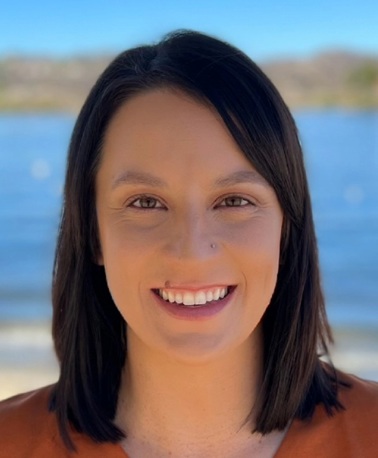
Lauren Hammond, dietetics personal statement tutor
Table of Contents
- Dietetics personal statement tips
- What to include - and avoid
- Dietetics personal statement examples
- Learn more about Lauren, our dietetics personal statement expert.
Dietetics Personal Statements
On this page you'll find six examples of effective dietetics personal statements for DICAS dietetic internship applications, MS in Nutrition programs, and combined MS/DI programs. Each example is followed by a breakdown of what makes it work.
In ACEND's recent April matches, about two-thirds of dietetic internship applicants matched in the first round (64% in 2022, 70% in 2023 and 66% in 2024), which still leaves roughly a third without a placement. The personal statement is the part of the application you have the most control over late in the process. This page covers the most common weaknesses and shows what stronger statements look like.
Lauren Hammond is our dietetics application essay expert and has been helping people write their graduate and professional school personal statements for several years. Whether you just want some feedback on a draft, or you're staring at a blank Word doc and don't know where to begin, she is happy to help!
Contact Lauren directly at 951-395-4646 (phone or text), or send us an email. Working with Lauren is $225 per hour, or $995 for 5 hours.
Consultations are free.
3 Tips for Strong Dietetics Personal Statements
1. Articulate a Specific Clinical or Practice Direction
- Registered dietitians work in many settings: Clinical nutrition (hospitals, ICUs, renal, oncology), community nutrition, public health, food service management, eating disorders, sports nutrition, pediatrics, primary care, private practice, research, and industry. Applicants who name a specific direction - even a preliminary one - give a reader more to work with than those who say "I want to help people with nutrition."
- Connect your direction to your experience: The applicant who has worked in a hospital food service department and wants to specialize in clinical nutrition therapy makes a coherent case. The applicant who has volunteered in a community garden and wants to work in food access and public health makes a coherent case. Spell out the logic that connects the experience to the goal.
- For DICAS applications, tailor to the specific internship site: Internship programs have distinct emphases - some are heavily clinical, some are community-focused, some have research tracks. Your personal statement should reflect that you have researched where you are applying and that your goals align with what that program provides.
Example:
"Medical nutrition therapy for critically ill patients is where my interest sits. Enteral and parenteral nutrition assessment is part of it, along with protein-calorie calculations for metabolically stressed patients. So is working with the medical team on nutritional support decisions that can meaningfully affect patient outcomes. This internship's ICU rotation emphasis and its track record of placing graduates in acute care dietitian positions are why I am applying."
2. Demonstrate Relevant Hands-On Experience - and What You Learned
- Supervised practice happens in the internship, so show what you did before it: DPD coursework doesn't include ACEND supervised practice hours; those come in the internship itself. What you can bring is paid work, volunteering or shadowing in clinical, food service or community settings. Describe what you actually did and saw (a dietitian's assessment you shadowed, a tray line problem you helped solve, a nutrition class you helped run) rather than just listing hours.
- Show that you understand the RD's scope beyond nutrition counseling: Diet order interpretation, nutrition support team participation, foodservice systems management, medical nutrition therapy protocol development - demonstrating awareness of the full RD scope signals preparation beyond what a basic nutrition course provides.
- Relevant non-dietetics healthcare or food experience is valuable: Nursing, medical assisting, food service management, culinary training, community health work, research - connect it explicitly to your reasons for pursuing dietetics and what it has prepared you for.
Example:
"What confirmed my direction was a semester of shadowing in an outpatient oncology clinic. I watched a registered dietitian assess a patient in active chemotherapy treatment. The dietitian calculated the patient's estimated protein needs, allowing for the metabolic effects of her regimen, and worked out what was limiting her oral intake. The dietitian then built a supplementation plan the patient could actually follow, given her taste changes and fatigue. A nutrition class hadn't led me to expect that level of clinical complexity."
3. Handle Personal Nutrition Experience or Dietary Philosophy Carefully
- Personal experience with food, eating, or health is common among applicants: A personal recovery from an eating disorder, a family member's chronic disease managed through diet, a cultural relationship with food that shaped your interest - these can anchor a strong statement. They can also raise concerns about the applicant's objectivity, professional boundaries, or whether they are pursuing dietetics for personal rather than professional reasons.
- The professional framing test: Ask yourself whether the personal experience motivated you to build professional skills and clinical knowledge - or whether it substitutes for them. Show the former. Pair personal experience with clinical preparation, supervised hours, and evidence that you have processed it appropriately.
- Avoid dietary evangelism: Applicants who strongly advocate a particular dietary approach (plant-based, low-carb, intuitive eating, etc.) should be careful not to position that advocacy as their professional identity. Registered dietitians provide evidence-based, individualized nutrition care; they don't prescribe their own dietary philosophy. Show the committee you understand that.
Example:
"I watch my personal interest in plant-based nutrition closely so that it never becomes a clinical filter. As a dietitian I will work with patients who eat meat, who cannot afford fresh vegetables, who have religious dietary restrictions, and who have relationships with food that have nothing to do with health optimization. My job will be to start from each patient's situation and goals, and my own eating habits won't be part of the plan."
What to Include in Your Dietetics Personal Statement - and What to Avoid
What to Include
- A specific clinical or practice direction - clinical nutrition, community nutrition, eating disorders, sports nutrition, pediatric dietetics, public health; even a preliminary direction is better than "I want to help people eat better"
- Meaningful work, volunteer or shadowing experience in food or healthcare - describe what you did and what you observed; name a patient interaction, a food service challenge, or a community nutrition moment that showed you what dietetics actually involves
- Understanding of the RD's full scope - medical nutrition therapy, nutrition support, foodservice management, community nutrition, research; show breadth beyond counseling
- Why dietetics specifically - if you considered nursing, medicine, or other health professions, explain what specifically drew you to nutrition and dietetics
- Internship or program-specific detail - a rotation emphasis, a placement site, a research track, the program's community or clinical orientation
- Your long-term career goal - hospital clinical dietitian, outpatient counseling, public health nutrition, research, sports dietetics; be specific
What to Avoid
- "I have always been passionate about food and nutrition" - the most common and least useful opening; start with something specific and clinical
- Describing dietetics primarily as "helping people eat healthier" - medical nutrition therapy for critically ill patients, enteral/parenteral nutrition support, eating disorder treatment, and renal diet management are far from this characterization; show that you understand the clinical complexity
- Personal dietary philosophy presented as professional orientation - your personal relationship with food is not your clinical identity as an RD; show awareness of this distinction
- Eating disorder history without careful professional framing - personal recovery can be meaningful but requires explicit reflection on professional processing and objectivity
- Submitting the same statement to every internship - DICAS programs have distinct emphases; each statement should reflect that you've researched that specific site
Video: 7 Ways to Write a Crappy Graduate School Personal Statement
For more personal statement tips, check out Vince's video: 7 Ways to Write a Crappy Graduate School Personal Statement.
Check each program's prompt carefully. Where a program asks for a statement of purpose rather than a personal statement, the statement of purpose format is different enough to matter.
6 Dietetics Personal Statement Examples
Below are six example dietetics personal statements. After each one, we explain what it does well.
We wrote these six ourselves as teaching models. The applicants are invented, the programs are left generic on purpose, and nothing here is a real client's statement. Read them for structure and for how specific the detail gets, not as text to borrow.
Home Infusion Pharmacy Technician to Combined MS/DI (Clinical Focus)
The first parenteral nutrition bag I compounded on my own took me forty minutes. I was gowned and gloved in the cleanroom of a home infusion pharmacy, checking every additive against the label twice while the pharmacist watched through the window. I have made hundreds since then, and for most of my first year I thought of them as recipes: dextrose, amino acids, lipid emulsion, electrolytes, trace elements and vitamins, in amounts someone else had decided.
One patient changed that. She had short bowel syndrome after several bowel resections and had been on home PN for two years. Over about three months her order changed almost every week. The dextrose came down, then the volume, and then she went from seven nights a week to five. I asked our pharmacist what was going on, and he showed me the notes from the home infusion dietitian. The dietitian had been tracking the patient's weight, her labs and her ostomy output, and talking with her by phone about what she was eating and drinking. She had the patient on small, frequent meals and an oral rehydration solution, and she was cutting back PN only as fast as the patient's gut could take over. Every change I had been entering into the compounder was a clinical decision she had made from information I never saw.
After that I read the dietitian's notes whenever the pharmacist allowed it. I learned how she estimated calorie and protein needs, why she watched magnesium and phosphorus so closely when a patient started PN, and how often she had to choose between what the numbers suggested and what the patient could tolerate. I also saw how much of her work happened in conversation. The same patient eventually told her she had been drinking sports drinks instead of the rehydration solution because she liked the taste, which explained a stretch of high output that no lab value had.
I finished my DPD coursework at night while working at the pharmacy, and my transcript shows the cost of learning to do both. I earned a C in organic chemistry during my first semester of full-time work. My grades in biochemistry and medical nutrition therapy, taken after I had figured out a schedule, are A's. My preparation is also narrow. I understand nutrition support from the pharmacy side, but I have never done a nutrition-focused physical exam, counseled a patient myself or worked in a foodservice operation. Those are the parts of supervised practice I expect to find hardest, and the parts I most need.
I am applying to this combined MS and dietetic internship for two reasons. The registration exam now requires a graduate degree, and this program lets me earn it alongside supervised practice instead of after. More important to me, its clinical rotations include time on an adult nutrition support service in an acute care hospital, which is the closest thing to the work I have been watching from the other side of the cleanroom window. After the internship I want to work as a clinical dietitian on a nutrition support team and, once I have the experience, earn the Certified Nutrition Support Clinician credential. I would like to be the person writing those order changes, and to understand each one as well as the dietitian I learned from.
Why this statement works:
- The opening gives a specific first task ("took me forty minutes," gowned in the cleanroom), so the reader knows where this applicant has worked before any claim about motivation. A weaker draft would open with "I have always been interested in clinical nutrition."
- The short bowel syndrome patient is the turning point: the applicant notices the order changing week after week and finds out a dietitian was behind every change. The reader learns what an RD does in nutrition support by watching the applicant figure it out.
- Details like magnesium and phosphorus monitoring and the sports drinks that explained the high output are accurate and small. They tell a program director this person paid attention on the job.
- The limitations paragraph names exactly what is missing (a nutrition-focused physical exam, counseling, foodservice) and owns the C in organic chemistry with a short explanation. That is more useful to a committee than a GPA claim with no context.
- The last paragraph gives one practical reason for the program (the graduate degree requirement) and one clinical reason (a nutrition support rotation), then ends on a credential goal, the CNSC, that follows from everything above it.
Pediatric Endocrinology Medical Assistant to Dietetic Internship
For three years I have roomed patients at a pediatric endocrinology clinic. I take heights and weights, run the fingerstick A1c, and download continuous glucose monitor data before the provider walks in. Most of what I know about type 1 diabetes I learned from those printouts and from listening at the edge of appointments.
One patient changed what I wanted to do with that knowledge. He was fourteen, had been diagnosed at nine, and his A1c had gone up at three visits in a row. His CGM graph showed the same pattern every school day: a fairly steady line through the morning, then a climb starting around 3 p.m. that didn't come down until late evening. His endocrinologist adjusted his insulin-to-carb ratio, and when that didn't help much, she referred him to the clinic's dietitian.
I sat in on that visit because the family needed help setting up the CGM app. The dietitian didn't start with the ratio. She asked him to walk her through a school day, meal by meal. He was dosing for lunch, but after school he ate at a friend's house or bought food on the walk home, and he either guessed at the carbs or skipped the dose because he didn't want to inject in front of his friends. No ratio change was going to fix that. She spent most of the hour on the food he actually ate: working out carb counts for the snacks he bought most often, writing them on a card that fit in his phone case, and agreeing on when he could dose without drawing attention. At his next visit the afternoon climb was smaller. It wasn't gone, but it was smaller, and his mother said he had started counting on his own.
I had assumed the dietitian's job in our clinic was teaching carb counting. Watching her, I saw that most of it was assessment: finding where the plan and the patient's real day didn't match, and then building something a fourteen-year-old would keep doing. That kind of assessment is what I want to be trained to do.
I completed my DPD coursework through a post-baccalaureate program while working at the clinic, and I will finish my master's in nutrition this spring. I know where my preparation is thin. I have never done a full nutrition assessment myself. Outside of diabetes, my knowledge of medical nutrition therapy comes mostly from coursework, and I have no foodservice experience at all. I expect the inpatient and foodservice rotations to be where I learn the most.
I am applying to this internship because its rotations include a children's hospital and an outpatient pediatric diabetes clinic, and because it offers a pediatric concentration. My long-term goal is to work as an outpatient pediatric dietitian in diabetes care and, once I have the required practice hours, to earn the Certified Diabetes Care and Education Specialist credential.
Why this statement works:
- The first paragraph lists the applicant's actual tasks (heights and weights, fingerstick A1c, CGM downloads). That sets an honest boundary around what this person has seen, which makes everything after it easier to trust.
- The CGM pattern ("a climb starting around 3 p.m.") is a detail a reader can picture, and it makes the dietitian's finding land. A weaker draft would say the patient "struggled with blood sugar control."
- The center of the statement is the dietitian's first question ("walk her through a school day") and what it uncovered: guessed carbs and skipped doses in front of friends. The applicant draws the lesson from that visit, that the RD's work is mostly assessment, instead of asserting it.
- The outcome is reported as partial ("It wasn't gone, but it was smaller"). Readers discount inflated results quickly, and this restraint makes the story more believable.
- The closing names real gaps (no foodservice, little MNT outside diabetes), two concrete program features, and a long-term credential, the CDCES, that grows out of the clinic work.
Food Service / Culinary Background to Dietetics
I've managed a hospital food service department for four years, and I know what it takes to produce 800 therapeutic diet meals daily: modified texture diets, renal menus, carbohydrate-controlled options, allergy accommodations. We do it on a fixed budget and schedule, with staff who turn over often. Most dietetics students haven't seen that side of the RD's scope from the inside.
From where I sit, the clinical nutrition team and the food service team often fail to communicate. Diet orders don't match patient preferences. Therapeutic diets are technically correct but nutritionally inadequate, because no one checked whether the patient was actually eating them. Discharge nutrition education assumes a home kitchen the patient doesn't have. The registered dietitians in our facility are excellent clinicians; the problem is in the handoff between their assessment and the food that reaches the patient.
I want to be an RD who bridges that gap. Production staff already trust me, and I know where the handoff between a clinical diet order and the tray line tends to break down. My DPD coursework in clinical nutrition gives me the foundation for the clinical side. The internship will build the clinical competency I need to combine both.
My goal is to work in a clinical food service leadership role. I want to be an RD who's equally effective in the patient room and the production kitchen. That's why I'm applying to this internship: its food service management rotation depth and its combined clinical and management track.
Why this statement works:
- The opening puts a number on the work ("800 therapeutic diet meals daily") and lists the diet types, so a reader knows in two sentences what this applicant has run. A weaker draft would say "I have extensive food service experience."
- The three failures in the second paragraph (orders that ignore patient preferences, therapeutic diets nobody checks are being eaten, discharge teaching that assumes a home kitchen) are things you only see from the tray line. They give this applicant a reason for dietetics that a classroom-only applicant can't claim.
- The statement credits the facility's dietitians before naming the problem, which keeps the criticism aimed at a process instead of people. Internship directors notice that kind of professional tact.
- The goal, a clinical food service leadership role, follows directly from the background, and the last sentence ties it to two program features (management rotation depth, a combined clinical and management track). Swap in the real features of each program you apply to.
Community Nutrition / Public Health Focus
I grew up in a food desert, though as a child I didn't know the term. Our neighborhood had three fast food restaurants and no grocery store. Fresh vegetables appeared in our house when my mother made a special trip to a store two bus rides away. My interest in nutrition started there, and ten years of school and work have shaped it since.
For three years I have worked as a community health educator at a federally qualified health center. I deliver nutrition education there to patients with diabetes, hypertension, and obesity, in a predominantly low-income population. The main thing that role has taught me is that education alone isn't enough. Telling a patient with type 2 diabetes what to eat and helping them eat it are different things. Helping means working within their budget, their cultural food practices and what the stores near them actually sell, and accepting that on many days blood sugar is not the most urgent problem in their lives.
I'm applying to dietetics to develop the clinical nutrition assessment skills and the medical nutrition therapy expertise that will allow me to provide more than education. My long-term goal is to practice as a community or public health dietitian, combining individual medical nutrition therapy with work on the food environment itself, such as produce prescription programs and partnerships with local food banks.
I'm applying to this internship because of its community nutrition rotation emphasis and its FQHC clinical training site, and because it has a track record of placing graduates in community health and public health dietitian positions.
Why this statement works:
- The food desert opening is two plain sentences of fact ("three fast food restaurants and no grocery store") with no commentary on how hard it was. The applicant moves straight on to ten years of school and work, so the history explains the interest without carrying the whole case.
- The FQHC paragraph does the real work. "Telling a patient with type 2 diabetes what to eat and helping them eat it are different things" is a lesson from the job, and the next sentence spells out what helping requires: budget, cultural food practices, and what the local stores sell.
- The goal sentence names concrete kinds of food environment work (produce prescriptions, food bank partnerships). That tells a community-focused program the applicant knows what public health dietitians do day to day.
- The final paragraph gives three reasons for this program that a reader can check against its website: the community rotation, the FQHC site and the placement record. Use real, checkable features of your own programs.
Eating Disorder Recovery to Dietetics (Carefully Handled)
I spent three years in recovery from an eating disorder. I am raising it here because it bears on a professional question I should answer directly: whether my personal history is an asset, a liability, or both, and what I have done to process it appropriately before applying to a profession in which eating disorders are a clinical specialty.
The honest answer is that it is an asset that has required, and still requires, active management. I understand the psychological complexity of eating disorder treatment from the patient side, including what a dietitian did well in my own care and what created friction. I also understand the relationship between food behaviors and body image, and the emotional dimensions of eating, in ways that purely didactic training cannot fully develop.
I have prepared for this deliberately. I completed a master's degree in nutrition science, and for the past two years I have worked part-time as a meal support assistant in an eating disorder outpatient program, sitting with clients during supported meals and reporting what I see to the program dietitian. My research studied the efficacy of intuitive eating interventions in eating disorder treatment. Personal experience cannot replace clinical preparation. My history tells me what recovery was like for one person, and my training is what will let me treat patients whose illness looks nothing like mine.
My goal is to practice as an eating disorder dietitian in an outpatient or residential setting, and to contribute to the evidence base for nutrition therapy in eating disorder treatment alongside my clinical work. I am applying to this internship because of its eating disorders rotation and because its faculty supervisor researches eating disorder nutrition therapy.
I know my triggers, and I know I tend to over-identify with patients whose stories sound like mine. I have learned to bring that to supervision instead of handling it alone. Throughout my graduate training I have been in my own therapy, and I intend to continue.
Why this statement works:
- The disclosure comes in the first sentence, followed right away by the professional question it raises. The reader never has to wonder why the applicant brought it up.
- "an asset that has required, and still requires, active management" admits ongoing work instead of claiming the illness is fully behind the applicant. That is the answer eating disorder programs hope to hear.
- The meal support job gives the history a professional counterpart. The applicant has already sat with clients at supported meals and reported to a dietitian, so the reader can see how this person behaves on the clinical side.
- "Personal experience cannot replace clinical preparation" puts the two in the right order. A statement that leaned on the history as a qualification would raise exactly the concern described in Tip 3 above.
- Naming triggers, the habit of over-identifying, supervision and ongoing therapy shows a plan for staying well in the work. Those are questions an internship director would otherwise raise in the interview.
Sports Nutrition / Performance Focus
The athletes I train ask me nutrition questions every day. I've worked as a strength and conditioning coach for three years, alongside completing my nutrition science degree. I answer the questions I can answer safely. Supplements and weight cut protocols go to a registered sports dietitian, and so does the perioperative nutrition for an athlete preparing for surgery. That dietitian has become my primary professional model.
Last season a cross-country runner I work with in the weight room had her second stress fracture in a year. I had noticed she ate very little around practice, but I had no training to assess it, so I referred her. The dietitian screened her for low energy availability, worked with her physician and athletic trainer, and rebuilt her fueling around her training schedule. Through referrals like that one I have seen the gap between the nutrition information athletes find on their own and the individualized assessment that actually changes their performance and health. Much of the sports nutrition advice my athletes find online is poorly supported, and some of it is harmful. Supplement protocols get designed for marketing rather than physiology, and weight management advice ignores the athlete's hormonal and bone health. Carbohydrate restriction recommendations undermine the training load the athlete is carrying. The RDN credential is the qualification that lets me address those questions with clinical authority rather than coaching intuition.
My long-term goal is to practice as a registered sports dietitian, working with competitive athletes at the collegiate or professional level. I'm applying to this combined MS/internship program because of its sports nutrition concentration and its clinical training partnerships with collegiate athletic programs, which is the setting where I want to work.
My S&C background is specific preparation for sports dietetics training. I understand training periodization and energy system demands, along with the performance context that shapes how nutrition recommendations are received and followed. What I need is training in clinical nutrition assessment and MNT, and the credential to practice.
Why this statement works:
- The first paragraph draws a clear line between what the coach answers and what goes to the dietitian (supplements, weight cuts, perioperative nutrition). That shows scope-of-practice awareness before the statement says a word about the RDN.
- The runner with a second stress fracture is the scene the statement needed. The applicant noticed a problem, knew it was outside their training, and watched a dietitian handle low energy availability alongside the physician and athletic trainer.
- The three examples of bad advice (supplement protocols built for marketing, weight advice that ignores hormonal and bone health, carbohydrate restriction under a heavy training load) are specific and accurate, and the bone health point ties back to the runner.
- The strength and conditioning paragraph says what the applicant already knows (periodization, energy system demands) and then what is missing, in one plain sentence. A weaker draft would claim to be "uniquely prepared" without saying for what.
- The program reason (a sports nutrition concentration and collegiate athletic partnerships) matches the stated goal of working with collegiate or professional athletes.
Have a draft? Try our free personal statement checker. It checks your length, opening line, stock phrases, signs of AI writing, and sentence rhythm. Your draft never leaves your browser.
Feeling stuck?
Lauren Hammond, our dietetics personal statement editor, would be happy to help - whether you just need a second opinion on a draft or you're starting from scratch.
Text or call her at 951-395-4646, or send us an email.
Lauren works with you on Zoom and in Google Docs, so you get both real-time coaching and clean, trackable revisions. Most clients use 2 to 4 sessions.
Meet Lauren Hammond, dietetics personal statement tutor
Lauren: I earned my Bachelor's Degree in Literature and Writing, with a concentration in Writing, at California State University San Marcos (CSUSM) and my Master's Degree in English and Comparative Literature at San Diego State University (SDSU).
I completed my PhD in English at the University of California Riverside (UCR) in September 2023 and then worked as UCR's Graduate Writing Center Specialist and graduate Fulbright Program Advisor. I now teach at Azusa Pacific University, where I'm an Assistant Professor and Lead Faculty in the Writing Program.
I have been a writing consultant for more than 10 years, and I've helped people with research writing, thesis/dissertation projects, rhetorical and literary analyses, writing in the humanities, grammar/sentence mechanics, and more. My work for VKTP includes thesis and dissertation editing and coaching, especially in the humanities and social sciences, as well as graduate school application materials such as personal statements, diversity statements and research statements, and job market materials for academic and alt-academic positions, including resumes, CVs and cover letters.
During my downtime, I love hanging out with my husband, our daughter, and our two dogs, Link and Leia! My favorite activities are going on the boat, cruising on the golf cart, and making our way through all of the local eateries. When we aren't out and about, I typically enjoy reading and watching movies.
Working with Lauren is $225 per hour or $995 for a package purchase of 5 hours. You can reach her at 951-395-4646 (phone or text), or by sending us an email.
P.S. Our partner Julie can also help you prepare for your dietetic internship interviews! Learn more about her professional voice training for interview prep.
P.S. Some MS in Nutrition programs still require or recommend the GRE - we can help with that too!
Love For Lauren
Frequently Asked Questions
How long should a dietetics personal statement be?
DICAS allows up to 1,000 words, and some internships set a lower limit or their own prompt, so check each program's instructions. MS in Nutrition programs often ask for 500-1,000 words. DICAS lets you attach a different personal statement for each program, so use that: keep your core story and rewrite the program-specific parts for each site's rotation emphasis.
What do dietetic internship programs look for?
Programs look at your GPA (especially in DPD coursework), your DPD verification statement or declaration of intent to complete the DPD, your work and volunteer experience, your letters of recommendation, and a personal statement that names a specific direction, shows you understand the RD's full scope and explains why you chose dietetics. They also look for fit with their own rotation emphases. With about a third of applicants going unmatched in the first round, no part of the application is safe to neglect.
What is the dietetic internship match rate?
ACEND's published April results show first-round match rates of 64% in 2022, 70% in 2023 and 66% in 2024, so about a third of applicants don't match in the first round. Some find positions in the second round, and many others reapply the next cycle. A specific personal statement, relevant work or volunteer experience and a realistic list of programs all improve your odds.
Should I mention personal experience with food or eating in my statement?
You can - carefully. Pair it with professional clinical preparation and explicit reflection. Programs are training future clinicians who work with diverse populations; show that personal experience motivated skill-building rather than substituting for it.
Can I use AI to write my dietetics personal statement?
AI doesn't know what you did in your jobs, volunteering and coursework, or why you want a particular area of dietetics, and those are what programs read the statement for. Write the statement yourself or work with Lauren.
Do MS in Nutrition programs require the GRE?
Some MS in Nutrition programs still require or recommend the GRE, and many have dropped it, so check each program's requirements. If you need GRE prep, our tutoring team can help.
BTW, Lauren can also help with:
- Dissertation and thesis editing
- Graduate school CV and resume examples
- Teaching statement examples
- Academic cover letter examples
- Diversity statement examples
- Research statement examples
- Physician Assistant personal statements
- Nurse Practitioner personal statements
- Nurse Midwifery (CNM) personal statements
- Exercise Physiology personal statements
- CRNA personal statements
- PharmD personal statements
- MPH statement of purpose
- MSW (Social Work) personal statements
- MS in Counseling personal statements
- MHA (Health Administration) personal statements
- Athletic Training personal statements
- Chiropractic (DC) personal statements
- Podiatry (DPM) personal statements
- Dental school personal statements
- Optometry (OD) personal statements
- Physical Therapy personal statements
- Occupational Therapy personal statements
- Speech-Language Pathology personal statements
- Nursing school personal statements
- PsyD personal statements
- MBA personal statements
- Law School personal statements
- PhD personal statements
- Post Doc personal statements
- Fellowships and Grants personal statements