Medical Laboratory Science Personal Statement Examples and Tutoring
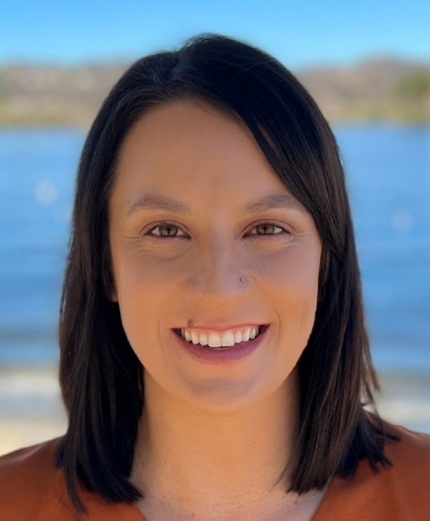
Lauren Hammond, medical laboratory science personal statement tutor
Table of Contents
- Medical laboratory science personal statement tips
- What to include - and avoid
- Medical laboratory science personal statement examples
- Learn more about Lauren, our medical laboratory science personal statement expert.
Medical Laboratory Science Personal Statements
On this page you'll find six examples of effective medical laboratory science personal statements for MLS (Medical Laboratory Scientist), CLS (Clinical Laboratory Scientist), and MLT-to-MLS bridge program applications, written from the perspective of science students, phlebotomists, laboratory assistants, healthcare workers, and career changers. Each example is followed by a breakdown of what makes it work.
Laboratory results feed into a large share of medical decisions (a figure of 70% is often quoted, though its original source is thin), and most patients never meet the people who produce them. Your personal statement has to show an admissions committee that you understand what that work involves and why it matters to patients.
Lauren Hammond is our medical laboratory science application essay expert and has been helping people write their graduate and professional school personal statements for several years. Whether you just want some feedback on a draft, or you're staring at a blank Word doc and don't know where to begin, she is happy to help!
Contact Lauren directly at 951-395-4646 (phone or text), or send us an email. Working with Lauren is $225 per hour, or $995 for 5 hours.
Consultations are free.
3 Tips for Strong Medical Laboratory Science Personal Statements
1. Show That You Understand What Medical Laboratory Scientists Actually Do
- MLS is not just "running tests in a lab": Medical laboratory scientists perform hematology, clinical chemistry, microbiology, immunology, blood banking and transfusion medicine, urinalysis, coagulation, and molecular diagnostics - with the analytical expertise to interpret results, identify instrument error, troubleshoot quality control failures, and recognize when a result pattern suggests an unexpected diagnosis. Applicants who show they know this range, and the judgment it takes, read as better prepared than those who describe the work as "working behind the scenes."
- Emphasize the clinical impact dimension: Laboratory results inform most clinical diagnoses. They guide antibiotic selection, monitor therapeutic drug levels, confirm that blood is compatible before a transfusion, and help identify cancers through molecular testing. Show that you understand what happens to a patient when a result is wrong, as well as the technical procedures.
- Demonstrate familiarity with the range of laboratory disciplines: Many applicants focus on the discipline they've been exposed to (usually chemistry or microbiology). Showing that you understand the full MLS scope - including blood banking, hematology, and molecular diagnostics - signals broader preparation.
Example:
"I watched a blood bank technologist notice a weak reaction on a routine antibody screen. If it had been missed, the patient could have received incompatible blood and had a hemolytic transfusion reaction. The specimen was one of 200 that shift. She caught it because she knew what a weak reaction in that pattern could mean, and she checked the patient's antibody history before doing anything else. She then spent the next hour identifying the antibody so the blood bank could find compatible units before the patient's surgery."
2. Address the "Behind the Scenes" Framing Directly
- Many MLS applicants describe the profession as "behind the scenes" or "the invisible backbone of healthcare": These phrases are so common as to be meaningless. More importantly, framing MLS as "behind the scenes" unintentionally diminishes the clinical expertise and direct patient impact of the work. Challenge this framing or avoid it entirely.
- The MLS is a direct participant in patient care: A septic patient's antibiotic choice depends on susceptibility testing, a cancer diagnosis can depend on molecular testing, and a safe transfusion depends on compatibility testing, all performed by laboratory scientists. Describe that work as part of patient care.
- If you are drawn to the analytical and problem-solving dimensions of lab work: Say so specifically. "I am drawn to the analytical challenge of troubleshooting a QC failure, identifying an instrument drift, and determining whether the patient result is reliable" tells a committee far more than any version of "I am a behind-the-scenes person."
Example:
"I stopped calling lab work 'behind the scenes' after I followed one blood culture from my draw to the final susceptibility report. Two days after I collected it, that report moved a septic patient from a broad-spectrum antibiotic to a narrower one. The technologist who identified the organism and released those results changed that patient's treatment, and that is the work I want to train for."
3. Articulate a Specific Laboratory Discipline or Career Direction
- Hematology, clinical chemistry, microbiology, blood banking, molecular diagnostics, immunology, coagulation - if you have a particular disciplinary interest, name it and explain why. The applicant who is drawn to blood banking because of its combination of immunology and clinical urgency makes a more specific and memorable case than one who describes general interest in laboratory science.
- For graduate programs in laboratory sciences: Management, education, research, laboratory information systems, specialty testing - name where you want to take the advanced degree and connect it to your current background.
- The MLS profession has a significant workforce shortage: If your goals include adding to the workforce through teaching, rural or underserved laboratory practice, or laboratory leadership, say so, and say what you have already done toward it.
Example:
"Molecular diagnostics is where my interest lies: PCR-based infectious disease testing, next-generation sequencing for oncology, and the pharmacogenomic panels that are starting to guide how some drugs are dosed. Many hospitals still send these tests out to reference laboratories because they can't run them in-house, and patients wait days longer for answers. I want to help bring that testing into the hospitals where those patients are treated."
What to Include in Your MLS Personal Statement - and What to Avoid
What to Include
- Demonstration that you understand the MLS scope - hematology, chemistry, microbiology, blood banking, molecular, immunology; show breadth beyond one discipline
- Clinical impact framing - connect laboratory work to the clinical decisions it drives; antibiotic selection, transfusion safety, cancer diagnosis, therapeutic monitoring
- Relevant laboratory or healthcare experience - phlebotomy, lab assistant, MLT role, research lab, healthcare work; be specific about what you did and what you learned
- Your specific disciplinary interest or career direction - molecular diagnostics, blood banking, microbiology, laboratory management, education; even a preliminary direction matters
- Why MLS specifically - if you considered clinical laboratory science, biomedical science, or other related degrees, explain why MLS is the right fit
- Program-specific detail - a clinical rotation site, a specialty discipline track, a molecular or advanced testing emphasis
What to Avoid
- "I want to work behind the scenes" - this framing undersells the clinical expertise of MLS practice; find more specific and accurate language
- Describing the lab as "quiet" or "introverted-friendly" - this suggests you chose the field to suit your personality rather than for the patient care the work supports; programs want to see that you understand the clinical side of the job
- Focusing only on one discipline - MLS training spans the full laboratory menu; show that you understand the scope even if you have a preference
- Vague descriptions of laboratory experience - "I worked in a lab" tells the committee nothing; be specific about what you did, what you observed, and what you learned
- Submitting the same statement everywhere - programs with molecular diagnostics emphases, blood banking specialty tracks, or research missions want different things; tailor accordingly
Video: 7 Ways to Write a Crappy Graduate School Personal Statement
For more personal statement tips, check out Vince's video: 7 Ways to Write a Crappy Graduate School Personal Statement.
Not every program calls this a personal statement. If yours asks for a statement of purpose, our statement of purpose examples show what that version looks like in full.
6 Medical Laboratory Science Personal Statement Examples
Below are six example MLS personal statements, each followed by notes on what it does well.
We wrote these six ourselves as teaching models. The applicants are invented, the programs are left generic on purpose, and nothing here is a real client's statement. Read them for structure and for how specific the detail gets, not as text to borrow.
Biology / Biochemistry Undergraduate to MLS Program
I have spent four years in a biochemistry curriculum studying the molecular mechanisms of human disease, and the courses kept pointing toward clinical application without ever getting there. The coursework covered the enzymology of liver disease, the coagulation cascade, the immunology of autoimmune conditions and the molecular basis of hematologic malignancies. What it did not cover was how a clinical laboratory uses that knowledge every day to generate the data that drives patient care.
I discovered medical laboratory science in my junior year, when I began working as a laboratory assistant in a hospital clinical chemistry department. In my first week I watched a technologist hold back a set of liver enzyme results because the analyzer's lipemia index on the sample was high. She spun the specimen in the ultracentrifuge to clear the fat, ran it again, and the values that went to the ordering physician were different from the first run. In hematology, I watched a technologist perform a manual differential on a peripheral blood smear and identify blast cells that the automated analyzer had classified as large lymphocytes. In both cases the technologist knew the analyzer's limits well enough to question its output, and that is the part of laboratory work my coursework never showed me.
An MLS program would connect my biochemistry coursework to the bench work I have been watching from the assistant role. My long-term goal is to practice in a clinical chemistry or molecular diagnostics department. I am applying to this program because of its molecular diagnostics specialty rotation and its connections to the affiliated health system's clinical laboratory.
Why this statement works:
- The opening names the gap the applicant wants to close: coursework that "kept pointing toward clinical application without ever getting there." A weaker draft would open with a love of science and leave the reader to guess why MLS and not research.
- The lipemia scene shows a decision made before a result is released (hold the results, clear the specimen, rerun). That tells the reader the applicant has watched quality checks applied to a single sample, not just heard the term.
- The second scene comes from hematology, where a manual differential caught blasts the analyzer had called large lymphocytes. Two sections instead of one answers the page's advice about showing range beyond a single discipline.
- Both scenes feed one sentence about technologists knowing "the analyzer's limits well enough to question its output." That is the statement's main claim, and the scenes come first so the reader believes it.
- The closing is short and ties one program feature, the molecular diagnostics rotation, to the stated goal. A sentence on why molecular work interests this applicant would strengthen it, since both scenes are from chemistry and hematology.
Phlebotomist to MLS
For two years I have worked as a hospital phlebotomist, collecting the specimens that medical laboratory scientists analyze. I drop my tubes at the laboratory window and head to the next draw, and for most of those two years I have wondered what happens to them after I walk away.
So I started asking to observe in the laboratory during my downtime, and eventually my supervisor arranged a formal observation rotation. What I found was a clinical environment I hadn't fully understood from the collection side. The chemistry analyzer processes hundreds of samples per shift, with quality control monitoring that catches drift before it affects patient results. The hematology analyzer generates a complete blood count and flags abnormal cell populations for manual review. Microbiology receives my culture specimens and, over 24 to 72 hours, identifies the organism and its antibiotic susceptibilities. The blood bank uses the type and screen specimens I collect, labeled at the bedside, to find compatible units before anything is released for transfusion. In every section, someone on a unit was waiting for the result, and a technologist had to decide whether it was right before releasing it.
I'm applying to the MLS program to develop that expertise. Phlebotomy gave me a foundation: I understand pre-analytical variables, I know how collection errors affect results, and I've got a working familiarity with the clinical laboratory workflow from the specimen collection side. What I need is the training to practice on the analytical and interpretive side.
My goal is to practice as an MLS in a hospital clinical laboratory. I'm particularly interested in blood banking and transfusion medicine, the section I kept returning to during my observation rotation, after I watched a technologist work through an antibody identification panel while a surgical patient waited for blood. I'm applying to this program for its blood banking emphasis and its AABB-accredited clinical rotation site.
Why this statement works:
- The first paragraph puts the reader at the laboratory window, the exact point where the applicant's job ends. That image explains the motive without a line about curiosity or a love of science.
- The applicant asked to observe and a supervisor set up a formal rotation. A committee can weigh that kind of initiative, with a concrete result, more than "I have always been interested in the lab."
- The tour of sections uses details a phlebotomist would actually know, like cultures taking 24 to 72 hours and type and screen specimens "labeled at the bedside." Its weakness is that it reads as a list; with more room, slowing down on one section would help.
- "I understand pre-analytical variables" is backed by two years of collecting specimens, so the claim comes across as experience rather than vocabulary.
- The blood banking interest is tied to one moment (an antibody panel worked up while a surgical patient waited) and then to the program's AABB-accredited rotation site, so the program choice follows from something the applicant saw.
Emergency Department Technician to MLS
For four years I have worked as a technician in a community hospital emergency department, and part of my job is the testing done at the bedside: fingerstick glucose, urine pregnancy tests, rapid strep swabs. I scan my badge and the patient's wristband, run the test, and the result goes straight into the chart. For most of those four years I didn't think much about where those numbers came from or what could make them wrong.
That changed with a 19-year-old whose roommate brought her in, breathing fast and too drowsy to answer questions. I ran her fingerstick, and instead of a number the meter displayed "HI." I assumed the meter had malfunctioned. The nurse sent a venous sample to the lab, and about forty minutes later the lab reported a glucose of 740 mg/dL. The team started an insulin drip for diabetic ketoacidosis.
A week later the hospital's point-of-care coordinator, a medical laboratory scientist, came down to recertify our staff on the meters, and I asked her about that night. Our meters report glucose only up to 600 mg/dL, she explained, so anything higher shows up as a flag rather than a value. The chemistry analyzer in the core lab can measure much higher, and when a result goes past its range, the analyzer dilutes the sample and runs it again. Then she answered a complaint I had been making for a month, about the night my meter locked me out at 3 a.m. Its quality control was overdue, and she would rather have someone walk a sample to the lab than put an unchecked number into a patient's chart.
After that conversation I asked to shadow in the laboratory on my days off. Over 32 hours, mostly in chemistry and hematology, I watched technologists look into delta check flags, where a result differs sharply from the patient's previous one, before releasing it. I also watched them phone critical values to the units, two of them to my own department. I had heard nurses take calls like that for years without knowing how much checking happened before anyone picked up the phone.
My preparation has gaps. My bachelor's degree is in kinesiology, and I earned a C on my first attempt at general chemistry II before retaking it for an A-minus. I am now finishing microbiology and organic chemistry at a community college, one course a term, while I keep working night shifts.
I want to start as a generalist in a hospital core laboratory and learn chemistry, hematology, microbiology and blood bank at the bench. Later, I want to work in point-of-care testing. My hospital has more than a hundred glucose meters, several hundred nurses and technicians who use them, and one coordinator responsible for their training, competency records and QC review. Most of the testing I have done happens outside the lab, and I want to help make sure those results are as reliable as the ones from the core lab. I am applying to this program because its clinical rotations include time with a hospital point-of-care team, and because its evening didactic schedule would let me keep working through the first year.
Why this statement works:
- The "HI" on the glucose meter is a scene only someone who runs bedside tests would have, and it leads straight into a real laboratory concept: the meter's reportable range versus the core analyzer's measuring range and automatic dilution.
- The applicant admits to complaining about the QC lockout for a month, then explains why the rule exists. Showing a changed mind about one specific rule says more about quality control than "I value accuracy" would.
- The shadowing paragraph names what the applicant watched (delta checks, critical value calls) and links it back to the ED with "two of them to my own department," so the hours do more than fill a line on the application.
- The gaps paragraph names the C, the retake and the courses still in progress in three sentences. The committee will see the transcript anyway; handling it briefly keeps it from taking over the statement.
- The point-of-care goal grows out of the opening scenes, and the numbers (over a hundred meters, one coordinator) show the applicant understands why the role matters. A weaker draft would name the goal with no connection to anything earlier.
Research Scientist / Lab Tech to Clinical MLS
The assays I run in a biomedical research laboratory include ELISA, Western blot, PCR and flow cytometry, and I have been running them for three years. I run controls on every ELISA plate, and I have learned to repeat a run when the standard curve is off instead of explaining it away. Over those three years I have also realized that I want my results to reach patients on a shorter timeline than a research study allows.
Clinical laboratory science works on that shorter timeline. A PCR result in my lab sits in a dataset until the longitudinal study it belongs to is analyzed. In a hospital lab, an MLS runs a molecular influenza test, and within hours the result can decide whether a patient starts an antiviral or comes off isolation. The ELISA I run measures a research biomarker in a frozen sample bank. The troponin immunoassay an MLS runs every few hours helps an emergency physician decide whether a patient with chest pain is having a heart attack. Much of the bench work would be familiar to me, but the result matters within hours and an error reaches a patient.
I am applying to the MLS program to redirect my research laboratory expertise toward clinical practice. My long-term goal is to practice in a molecular diagnostics or immunology department, where my research technical background applies most directly and the analytical complexity is highest. I chose this program for its molecular diagnostics concentration and its clinical training in a laboratory that performs advanced immunology and molecular testing.
Why this statement works:
- The opening names four assays (ELISA, Western blot, PCR, flow cytometry), which tells the reader exactly which skills transfer. "Strong lab skills" would tell them nothing.
- Quality control shows up as a habit: controls on every plate, repeating a run when the standard curve is off. That is more convincing than a sentence rating one's own attention to protocol.
- The paired comparisons (research PCR against a molecular flu test, research ELISA against serial troponins) explain the motive in terms of turnaround and consequences, using tests the applicant already runs.
- The statement doesn't criticize research to justify leaving it. It treats research as training and says plainly what it doesn't offer, which avoids sounding like an escape.
- The goal (molecular diagnostics or immunology) follows from the assays named in the first paragraph, so the program's molecular concentration reads as a fit the applicant has thought about.
MLT to MLS Bridge Program
I have been a medical laboratory technician for five years. I run most of the same tests as the medical laboratory scientists on my shift, on the same instruments, and I phone the same critical values to the floors. The difference between my credential and an MLS credential is educational depth: the theoretical grounding in laboratory science and the advanced coursework in each discipline.
Five years as an MLT has given me more bench time than most MLS students get during their clinical rotations. I have worked in hematology and chemistry, and also in urinalysis and point-of-care testing. I have responded to critical values, troubleshot instrument failures, and performed the daily quality control that keeps the laboratory's results reportable. What I lack is the theory behind each assay, the advanced microbiology and molecular diagnostics coursework the MLS curriculum covers, and any formal training in supervising a department.
I am applying to the MLT-to-MLS bridge program to build that depth, and because I want to move into laboratory supervision and then management, roles that most hospitals fill with certified medical laboratory scientists who hold a bachelor's degree.
My goal is to become a laboratory supervisor within five years of completing the MLS program. After I pass the MLS(ASCP) exam, I plan to work toward the ASCP specialist certifications in hematology and chemistry, the two sections where I have spent most of my five years. I am applying to this program because its bridge curriculum recognizes my prior MLT training, and because its coursework in laboratory management is directly relevant to my career direction.
Why this statement works:
- The first paragraph defines the MLT/MLS difference in one phrase, "educational depth," so the reader knows right away why someone with five years at the bench needs this program.
- The experience paragraph lists sections and tasks (critical values, instrument troubleshooting, daily QC) and stops short of claiming to work as an MLS already. Bridge committees read a lot of statements that overstate this.
- The gaps are named in one sentence: assay theory, advanced micro and molecular coursework, supervision. A bridge program wants to know what the applicant expects to learn, and this answers it directly.
- The goals use the right credentials in the right order: MLS(ASCP) after the program, ASCP specialist certifications later, supervisor within five years. Reviewers notice when an applicant gets credential names wrong.
- The program reason (credit for prior MLT training, management coursework) matches the supervision goal, so the last paragraph confirms the plan instead of adding a new one.
Career Changer (STEM Background) to MLS
When my mother was diagnosed with multiple myeloma, her oncologist's decisions ran on laboratory results: serum protein electrophoresis and bone marrow flow cytometry at diagnosis, then free light chain assays at nearly every follow-up visit. Over the two years of her treatment, I watched those numbers decide when her regimen changed. My pharmaceutical QC results had never connected to a person that directly. I started to see that the analytical skills I already had could lead to a clinical laboratory career I had never considered.
I have a degree in chemistry and spent three years working as a quality control chemist in a pharmaceutical manufacturing environment. The work involved method validation and reference standard preparation, along with the rigorous analytical thinking and documentation that good laboratory practice requires. I am applying to a medical laboratory science program because I want to apply that analytical framework in a clinical setting, where the analytical question has an immediate patient on the other side of it.
Over the past year I have completed the prerequisite coursework for MLS programs and shadowed in a hospital clinical laboratory for forty hours. Watching technologists fit stat requests in between routine runs confirmed that I want to work at the pace of a clinical lab. My QC background gives me a specific preparation for MLS training: I am rigorous about documentation and I understand method validation. What I don't have is training in hematology, microbiology, blood banking and molecular diagnostics, and that is what the program provides.
My long-term interest is in molecular pathology and specialty testing, the disciplines where the complexity of the analytical problem is highest and where my chemistry background applies most directly. I'm applying to this program because of its molecular and specialty testing curriculum and its clinical rotation in a reference laboratory that performs advanced testing not available in community hospital settings.
Why this statement works:
- The opening names the tests from the mother's care (serum protein electrophoresis, flow cytometry, free light chains) and places them correctly at diagnosis and follow-up. A weaker family-illness opener would describe feelings and never mention a laboratory value.
- The illness explains why the applicant changed direction, and by the second paragraph the statement is about the applicant's own work. Keeping the family story to one paragraph stops it from becoming the whole essay.
- Pharmaceutical QC terms (method validation, reference standard preparation) are specific, and the applicant spells out the overlap with clinical work: documentation habits and method validation.
- Finished prerequisites and forty shadowing hours show the applicant tested the decision before applying, which matters for a career changer whose transcript points elsewhere.
- The reference laboratory rotation ties to the goal of specialty testing, so the program reason is something only some programs offer.
Have a draft? Try our free personal statement checker. It checks your length, opening line, stock phrases, signs of AI writing, and sentence rhythm. Your draft never leaves your browser.
Feeling stuck?
Lauren Hammond, our medical laboratory science personal statement editor, would be happy to help - whether you just need a second opinion on a draft or you're starting from scratch.
Text or call her at 951-395-4646, or send us an email.
Lauren works with you on Zoom and in Google Docs, so you get both real-time coaching and clean, trackable revisions. Most clients use 2 to 4 sessions.
Meet Lauren Hammond, medical laboratory science personal statement tutor
Lauren: I earned my Bachelor's Degree in Literature and Writing, with a concentration in Writing, at California State University San Marcos (CSUSM) and my Master's Degree in English and Comparative Literature at San Diego State University (SDSU).
I completed my PhD in English at the University of California Riverside (UCR) in September 2023 and then worked as UCR's Graduate Writing Center Specialist and graduate Fulbright Program Advisor. I now teach at Azusa Pacific University, where I'm an Assistant Professor and Lead Faculty in the Writing Program.
I have been a writing consultant for more than 10 years, and I've helped people with research writing, thesis/dissertation projects, rhetorical and literary analyses, writing in the humanities, grammar/sentence mechanics, and more. My work for VKTP includes thesis and dissertation editing and coaching, especially in the humanities and social sciences, as well as graduate school application materials such as personal statements, diversity statements and research statements, and job market materials for academic and alt-academic positions, including resumes, CVs and cover letters.
During my downtime, I love hanging out with my husband, our daughter, and our two dogs, Link and Leia! My favorite activities are going on the boat, cruising on the golf cart, and making our way through all of the local eateries. When we aren't out and about, I typically enjoy reading and watching movies.
Working with Lauren is $225 per hour or $995 for a package purchase of 5 hours. You can reach her at 951-395-4646 (phone or text), or by sending us an email.
P.S. Our partner Julie can also help you prepare for your MLS program admissions interviews! Learn more about her professional voice training for interview prep.
P.S. Some MLS graduate and MS programs require the GRE - we can help with that too!
Love For Lauren
Frequently Asked Questions
How long should an MLS personal statement be?
Most programs request 500-1,000 words. Demonstrate understanding of the MLS scope, connect laboratory work to clinical impact, name a specific disciplinary interest, and explain relevant background you bring.
What do MLS programs look for in applicants?
Strong science GPA, relevant laboratory observation or work experience, and a statement demonstrating understanding of the clinical laboratory's role in patient care. Competitive applicants show awareness of the full MLS scope - not just one discipline - and demonstrate the analytical mindset laboratory quality requires.
What is the difference between MLS and MLT?
MLTs (associate's degree) perform routine testing under MLS supervision. MLS/CLS (bachelor's degree) perform complex and specialized testing, supervise MLTs, manage quality control, and assume leadership roles. Most employers expect certification at the matching level, usually through the ASCP Board of Certification (MLT(ASCP) or MLS(ASCP)), and some states also require a state license. Many MLTs pursue MLS through bridge programs.
What careers are available with an MLS degree?
Hospital/reference lab clinical laboratory scientist, laboratory department supervisor (hematology, chemistry, microbiology, blood bank, molecular), lab manager/director, molecular diagnostics specialist, LIS analyst, point-of-care coordinator, laboratory educator, public health laboratory scientist. The MLS profession has a significant workforce shortage with high job placement rates.
Can I use AI to write my MLS personal statement?
AI can't describe laboratory experiences it never had, and it can't tell a committee which discipline actually interests you. Write the statement yourself or work with Lauren.
Do MLS programs require the GRE?
Most bachelor's-level MLS programs don't require the GRE, though some graduate-level MS programs in laboratory sciences do. Check each program's requirements. If you need GRE prep, our tutoring team can help.
BTW, Lauren can also help with:
- Dissertation and thesis editing
- Graduate school CV and resume examples
- Teaching statement examples
- Academic cover letter examples
- Diversity statement examples
- Research statement examples
- Health Informatics (MSHI) personal statements
- Radiation Therapy personal statements
- Perfusion Science personal statements
- Genetic Counseling personal statements
- Physician Assistant personal statements
- Nurse Practitioner personal statements
- Respiratory Therapy personal statements
- Exercise Physiology personal statements
- Dental school personal statements
- Optometry (OD) personal statements
- PharmD personal statements
- MHA (Health Administration) personal statements
- MSW (Social Work) personal statements
- PsyD personal statements
- PhD personal statements
- MBA personal statements
- Law School personal statements
- Post Doc personal statements
- Fellowships and Grants personal statements