Orthotics and Prosthetics Personal Statement Examples and Tutoring
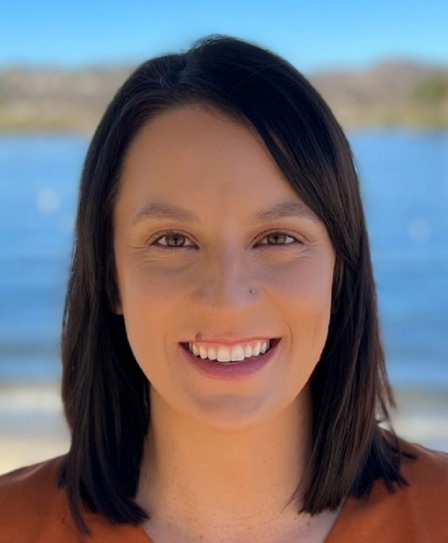
Lauren Hammond, orthotics and prosthetics personal statement tutor
Table of Contents
- O&P personal statement tips
- What to include - and avoid
- O&P personal statement examples
- Learn more about Lauren, our O&P personal statement expert.
Orthotics and Prosthetics Personal Statements
On this page you'll find six examples of effective orthotics and prosthetics personal statements for Master of Prosthetics and Orthotics (MPO) and Master of Science in Prosthetics and Orthotics (MSPO) programs, written from the perspective of a physical therapy aide, a biomedical engineer, an applicant with a congenital limb difference, a veteran, a fabrication technician and a pre-health undergraduate.
Each example is followed by a breakdown of what makes it work. O&P programs are competitive, cohorts are small (often somewhere between 15 and 30 students), and applicants come from very different backgrounds, so the statement has to explain how yours prepares you for the training and the career.
Lauren Hammond is our O&P application essay expert and has been helping people write their graduate school personal statements for several years. Whether you just want some feedback on a draft, or you're staring at a blank Word doc and don't know where to begin, she is happy to help!
Contact Lauren directly at 951-395-4646 (phone or text), or send us an email. Working with Lauren is $225 per hour, or $995 for 5 hours.
Consultations are free.
3 Tips for Strong O&P Personal Statements
1. Show That You Understand O&P as a Unique Clinical and Technical Discipline
- Orthotics and prosthetics is not physical therapy or occupational therapy: O&P practitioners design, fabricate, and fit custom devices - prosthetic limbs, spinal orthoses, ankle-foot orthoses, functional electrical stimulation systems - that require both clinical assessment and technical fabrication expertise. Applicants who show they understand both the clinical and the technical sides of the job make a better case than those who describe O&P as "helping people with disabilities."
- Show awareness of the full scope: Lower extremity prosthetics, upper extremity prosthetics, spinal orthotics, pediatric O&P, craniofacial orthotics, sports prosthetics, microprocessor-controlled limbs, myoelectric systems - the field is broad and the technology keeps changing. Naming the parts of it you have actually seen shows you've done your homework.
- The fabrication dimension is real and important: O&P practitioners cast, modify, and fabricate devices. If you have hands-on experience in fabrication, sculpting, mechanics or engineering, say so and connect it to that work.
Example:
"I am drawn to two parts of the work in O&P: there is the clinical assessment that determines what a device needs to do for this patient, and there is the fabrication expertise that determines whether the device can do it. The expertise of an O&P practitioner is in closing the gap between a device that is built correctly and one that works for the patient in front of them."
2. Demonstrate Meaningful Clinical Observation or Relevant Experience
- Observation hours with a certified orthotist/prosthetist are expected: Most programs require or strongly recommend observation with a CO, CPO, or CP. Describe specific cases - a transtibial prosthetic fitting, an AFO for a pediatric cerebral palsy patient, a myoelectric upper extremity prosthetic trial - rather than just the hours. Say what the practitioner did that you couldn't have done without the training.
- Physical therapy, OT, athletic training, or healthcare backgrounds are relevant: Connect them explicitly to O&P. The PT aide who has worked with post-amputation patients understands the rehabilitation context. The athletic trainer who has fitted functional braces understands the patient population and the biomechanical demands of device design.
- Personal limb difference or amputee experience: If you have a limb difference or have worn a prosthetic or orthotic device, it can be part of your story - handled carefully. Show professional preparation alongside the personal motivation.
Example:
"The fitting that most clarified what O&P requires was a transradial prosthetic fitting for a patient who was a carpenter. The practitioner spent the first thirty minutes of the visit understanding the patient's work environment (the grip patterns, the tool vibration, the weight requirements of a full day of use) before fitting the device. The choices that followed, from the terminal device to the suspension, came out of that conversation about his work."
3. Address Your Background's Specific Relevance to O&P Training
- O&P programs attract diverse applicants: Engineers who want clinical careers, clinicians who want technical expertise, athletes with limb differences who want to give back, veterans, sculptors, and mechanics who discovered the field by accident. Whatever your background, connect it explicitly to the clinical and fabrication demands of O&P practice.
- Engineering and STEM backgrounds: Biomechanics, materials science, manufacturing, product design - connect these to the fabrication and device design dimensions of O&P.
- Clinical backgrounds (PT, OT, nursing, AT): Connect the patient population knowledge, the functional assessment skills, and the therapeutic relationship experience to the clinical dimensions of O&P practice.
Example:
"My biomedical engineering background prepares me for the technical side of O&P training. I have taken materials science, machined parts in a student shop and run force analyses on lower-limb models. What I need from the MPO program is the clinical side: gait analysis, patient assessment, and how a device performs in a real body rather than in a finite element model."
What to Include in Your O&P Personal Statement - and What to Avoid
What to Include
- Demonstration of O&P's dual clinical-technical identity - device design and fabrication as well as patient care
- Specific clinical observation with a certified O&P practitioner - name the case types and what the practitioner's expertise looked like in practice
- How your specific background prepares you for O&P training - engineering, clinical, fabrication, military, athletics; make the connection explicit
- Your intended practice setting or specialty - pediatric O&P, lower extremity prosthetics, upper extremity, spinal orthotics, sports prosthetics
- Program-specific detail - fabrication laboratory, clinical rotation sites, faculty research in biomechanics or device technology, for supplemental essays and direct applications (an OPCAS personal statement goes to every program you apply to, so keep that one general)
- Long-term career goals - private practice, hospital-based O&P, military/veterans, research, pediatric specialty
What to Avoid
- "I want to help people with disabilities" - this describes many healthcare professions; show what specifically draws you to the O&P clinical-technical model
- Ignoring the fabrication dimension - O&P practitioners make things; a statement that focuses only on patient care misrepresents the profession
- Personal limb difference as the only motivation - pair it with clinical observation and professional preparation if you include it
- Conflating O&P with physical therapy or occupational therapy - these are distinct professions; show you understand what makes O&P's scope unique
- Mixing up the main statement and the supplements - OPCAS sends one personal statement to every program you choose, so keep it general and save program-specific detail (pediatric emphasis, upper extremity rotations, research focus) for supplemental questions or programs that take direct applications
Video: 7 Ways to Write a Crappy Graduate School Personal Statement
For more personal statement tips, check out Vince's video: 7 Ways to Write a Crappy Graduate School Personal Statement.
If you are also applying to research-track or PhD programs, several will ask for a statement of purpose instead. Our guide to how to structure a statement of purpose explains the difference.
6 O&P Personal Statement Examples
Below are six sample O&P personal statements - after each, we'll explain what makes it work.
We wrote these six ourselves as teaching models. The applicants are invented, the programs are left generic on purpose, and nothing here is a real client's statement. Read them for structure and for how specific the detail gets, not as text to borrow.
Physical Therapy Aide to O&P
For three years I have worked as a physical therapy aide in a clinic that sees a significant volume of post-amputation patients. My clinical work involves assisting with balance training and gait retraining, along with exercise therapy for patients at all stages of prosthetic rehabilitation, from the first days post-surgery through device fitting and on into the community reintegration phase. I have watched physical therapists help patients use their prostheses, and I have watched what happens when the device itself is the limiting factor. One patient with a transfemoral amputation kept swinging his prosthetic leg out to the side no matter how many cues his therapist gave him. When he saw his prosthetist two weeks later, she found the prosthesis was slightly too long, corrected it, and the circumduction mostly went away.
That observation is what brought me to O&P rather than to physical therapy. A PT can optimize how a patient uses a device, while the prosthetist determines what the device is and whether it can support the patient's goals, and the device side of that equation is where I want to be.
After two years as a PT aide I began observing in an O&P clinic, and what I found there was a practice that joined the clinical assessment I had been developing to a technical fabrication process I had never encountered: casting, modification, socket design, alignment, and the iterative troubleshooting that goes on across multiple fitting appointments until the device is right for the patient. That combination of clinical and technical work is what I want to train in.
My goal is to practice lower extremity prosthetics in a clinical setting that works closely with a rehabilitation team, one where the prosthetist and the physical therapist work through problems like that circumduction together. I am looking for programs with in-depth prosthetics coursework and clinical rotations at rehabilitation hospitals.
Why this statement works:
- The transfemoral patient who kept circumducting gives the reader one case where more therapy couldn't fix the problem and a shorter prosthesis did. Without it, the first paragraph would rest on a general claim that devices can be "the limiting factor."
- "A PT can optimize how a patient uses a device, while the prosthetist determines what the device is" draws the line between the two professions in one sentence. Readers see many PT-adjacent applicants who blur the two; this one shows which side the writer wants.
- Listing casting, modification, socket design, alignment and repeat fittings tells the reader the observation hours included the device work as well as the fitting room.
- The goal of working alongside a rehab team grows out of the job the applicant already has, and it calls back to the circumduction case, so the ending connects to the opening.
Biomedical Engineer to O&P
After my biomedical engineering degree, I spent two years in a research lab developing finite element models of transtibial prosthetic socket interfaces, studying the pressure distribution between the residual limb and the socket under dynamic loading conditions. The work also showed me a gap I couldn't close from the modeling side. I could predict where a socket would cause discomfort. I couldn't fix it.
Clinical O&P is where the fixing happens. During a check socket fitting, the prosthetist looks through the clear plastic for blanched skin, checks the limb for red marks after the patient takes the socket off, and heats and reshapes the socket wall while watching the patient walk. Problems my model could only predict often get solved in one appointment. I want to learn to do that, and my engineering background should help me understand why each change works.
I've completed 80 hours of clinical observation in an O&P practice, watching socket fitting, alignment procedures, and gait analysis. What struck me was how much of the most important information came from watching the patient walk and listening to what they reported feeling. My model had no input for a patient saying the socket pinched on the stairs, and the prosthetists I watched treated comments like that as data.
Long term, I'd like to practice in a research-affiliated O&P clinic, contributing to the evidence base for interface design while maintaining clinical practice. I'm looking for programs with active biomechanics research and a strong fabrication curriculum.
Why this statement works:
- "I could predict where a socket would cause discomfort. I couldn't fix it." gives the whole reason for the career change in two short sentences. A weaker draft would spend a paragraph on wanting to "see the human side of engineering."
- The check socket description (blanched skin through clear plastic, red marks after doffing, reshaping while the patient walks) shows the 80 observation hours were spent watching closely, and it uses the field's terms correctly.
- The stairs comment is a small, concrete example of information a model can't take in. It does the work that a sentence about "the human element" would only gesture at.
- The goal of a research-affiliated clinic uses both halves of the applicant's background, so the reader can see where the engineering fits after training.
Personal Limb Difference to O&P (Carefully Handled)
I was born with a congenital limb difference, a partial absence of my left forearm, and I have worn prosthetic devices since childhood. Twelve years of being a patient taught me what excellent prosthetic care looks like and what it requires of the practitioner, and that, more than my personal experience, is why I'm applying to O&P.
I started with a body-powered hook, moved to a myoelectric hand, and now wear a hybrid system I helped design with the prosthetist who has managed my care for the past decade. What I observed in my own care was that the most important clinical skill was the practitioner's ability to understand what I needed the device to do in contexts that had nothing to do with the clinical environment: cycling, playing the guitar, working in a kitchen, shaking hands. Every fitting I had was technically competent. The best ones started with questions about my week, like whether I would be carrying pans at my restaurant job or practicing chord changes, before anyone looked at my residual limb. I want to bring that patient-centered approach to assessment into my own practice.
I have completed 150 hours of clinical observation in O&P practices, including pediatric, upper extremity, and lower extremity settings. I've also completed a degree in kinesiology and worked as a rehabilitation aide. My own prosthetic history is part of what I bring, but the observation hours, the coursework and the aide job are what prepared me for the training.
My goal is to practice upper extremity prosthetics with a specialty in myoelectric and activity-specific systems, the area where my years as a patient and my training overlap most. I'm looking for programs that offer an upper extremity rotation and coursework in myoelectric and microprocessor-controlled devices.
Why this statement works:
- The first paragraph says outright that the applicant's own care is not the main reason for applying ("that, more than my personal experience, is why I'm applying"). That answers the reader's biggest worry about limb-difference statements before it forms.
- The device history (body-powered hook, myoelectric hand, a hybrid the writer helped design) shows a user's working knowledge of upper extremity options that most applicants only know from reading.
- The insight drawn from being a patient is about assessment: the best practitioners asked about pans and chord changes first. That turns a personal story into an observation about how the job is done.
- The third paragraph lists hours, a kinesiology degree and aide work without leaning on the personal story, which is the balance the tips section asks for.
- The upper extremity goal is where the writer's experience as a patient is most useful, so the specialty choice has a reason behind it.
Veteran to O&P (Military/Tactical Focus)
I served eight years as an Army combat engineer, and a blast injury on my last deployment led to a transtibial amputation of my right leg. For five years now, military and VA prosthetists have been fitting me with prosthetic devices. Part of my motivation is wanting to work with other veterans. The larger part is that five years of fittings showed me how much problem-solving the job involves, and I want to learn to do it.
The prosthetist who managed my care for the first three years made me two new sockets as my residual limb shrank and changed my foot when I started running again. He also asked what I wanted to get back to, which for me meant carrying a loaded pack over rough ground, and he chose my foot and suspension with that load in mind. That kind of activity-specific prosthetic care for veterans is the work I want to do.
Since my separation from active duty I have completed a kinesiology degree with a 3.8 GPA and accumulated 200 hours of clinical observation in VA and private O&P practices. Some of those hours were in the fabrication lab, where I watched technicians pour and modify plaster models, because I wanted to be sure I liked the technical half of the job as much as the clinical half. My goal is a VA O&P service or a military treatment facility, where my own experience as a patient may help me earn trust faster with the veterans I most want to serve.
I'm looking for programs with VA clinical rotations and faculty who work with military and veteran amputees.
Why this statement works:
- The injury gets one plain sentence. A weaker draft would spend the first paragraph on the blast; this one moves straight to what the applicant learned from five years of being fitted.
- Two new sockets as the limb shrank and a new foot for running show the writer paid attention to his prosthetist's decisions over time, which is the subject of the statement.
- The loaded pack over rough ground is one concrete example of an activity-specific prescription. It replaces a list of fragments ("Load carriage. Varied terrain.") with a single case the reader can picture.
- Time spent watching the fabrication lab shows the applicant checked that he wants the technical side too, which addresses a fair question about patient-applicants.
- "May help me earn trust faster" claims a modest advantage with the VA population instead of assuming his own amputation qualifies him.
Fabrication Technician to O&P
For four years I have made orthoses and prostheses for patients I never meet. I work as a technician in a central fabrication lab that serves about thirty clinics. A box arrives with a plaster cast or a scan file and a work order: a transtibial socket, a polypropylene AFO, a spinal brace for a twelve-year-old with scoliosis. I fill the cast, smooth the plaster model, add the build-ups and reductions the clinician wrote on the order, and then vacuum-form plastic over it or laminate carbon and resin around it. When a device comes back for a remake, the note is usually short, something like "too tight at fibular head." I fix it and send it out again.
Before this job I built furniture for six years after finishing a bachelor's degree in studio art. I took the lab job because I was good with my hands and wanted steadier work. The first time the same patient's name showed up on a second remake order, I started paying attention to who was on the other end of the box.
Last spring one of our client prosthetists invited me to a fitting. Her patient, a man in his sixties who had lost his leg below the knee to vascular disease, was on his third check socket, and the remake notes for the first two had come across my bench. Through the clear plastic I could see the skin over his fibular head turn white when he stood, the same spot the notes had flagged. The prosthetist marked it, warmed the socket wall with a heat gun and pushed out a small bubble of relief. Then she had him walk the length of the room and told me what she was watching for: whether his knee was being pushed outward as he passed over the foot, and whether the socket slipped when he lifted the leg. Afterward she sat him down and asked about his mornings, including how long he stood at the bathroom sink.
I had built up that fibular head on the plaster model twice so the socket would clear it. I had never known what the pressure felt like to him, or that the right amount of relief depended partly on how he walked and how many hours a day he wore the leg. She had all of that before she picked up the heat gun. I want to be the person who has that information.
I know which parts of this training I'm not ready for. I have never done a patient evaluation, and my science background was thin when I started. Over the last two years I have taken anatomy and physiology, physics, chemistry and statistics at a community college in the evenings, and I have logged 110 observation hours with certified prosthetists and orthotists in two practices, one of them pediatric. The clinical skills I saw there, from gait analysis to explaining a new brace to a nervous parent, are the ones I have the most to learn.
On the technical side I am further along. I can look at a positive model and tell whether the trim lines will work, and I know how a work order gets misread at the bench. Long term, I want to practice lower extremity prosthetics and orthotics in a clinic with its own fabrication lab, and to help train the technicians there to read a work order the way the clinician meant it.
Why this statement works:
- The first sentence names the odd fact about the applicant's job (making devices for patients he never meets), and the rest of the statement follows from it. A weaker draft would open on "I have always loved working with my hands."
- The check socket scene matters to this writer in particular: the fibular head he watched blanch is the same spot he had built up on the plaster model twice. That link is what makes the scene worth the space.
- "I have never done a patient evaluation" names the gap plainly, and the next sentences show what he did about it (evening prerequisites, 110 hours in two practices). A weaker draft would claim lab experience covers everything.
- The technical strengths are stated as things he can actually do (judging trim lines on a positive model, knowing how work orders get misread) instead of "strong technical skills."
- The goal of a clinic with an on-site lab, plus training technicians, uses both parts of his background and doesn't name a program, which suits a statement sent through OPCAS.
Pre-Health Science Student to Direct Entry MPO
A pediatric AFO fitting for a child with cerebral palsy is what confirmed my direction. The orthotist spent 45 minutes trimming and heating the plastic in small ways the child hardly noticed. Then she had him walk the hallway and pointed out what I had missed: he was landing closer to his heel than he had at the start of the visit, and his knees stayed straighter while he was standing on each leg. I wanted to be able to read what she was reading.
I discovered orthotics and prosthetics in my sophomore year, through a biomechanics course that included a guest lecture from a practicing prosthetist. The lecture described a field I had not previously known existed, one where the clinician who evaluates the patient also designs the device and is responsible for whether it works. I have spent two years since that lecture making sure I was right.
I accumulated 120 observation hours across pediatric orthotics and lower extremity prosthetics in O&P practices. Some of those hours were in spinal orthotics, mostly scoliosis bracing. Alongside my biology degree I completed a kinesiology minor, to ensure I understood the functional anatomy and movement analysis underlying device assessment. As a laboratory assistant in a gait analysis lab, I became familiar with motion capture and force plate analysis, and with the quantitative assessment of human movement that O&P assessment increasingly incorporates.
My goal is to practice pediatric O&P, where children outgrow their devices quickly and a family may work with the same practitioner for years. I am looking for programs with pediatric clinical rotations and access to a gait analysis laboratory.
Why this statement works:
- The statement opens on the AFO fitting and closes that paragraph with "I wanted to be able to read what she was reading," which states the goal as a skill to learn. A weaker draft would say the applicant "fell in love with the field."
- The hallway walk gives the reader specific changes (closer to heel contact, straighter knees in stance) instead of a general claim that the child's gait "improved."
- The discovery story is plain and dated: a guest lecture in sophomore year, then two years spent checking the choice. That reads as more honest than a lifelong calling.
- The hours, the kinesiology minor and the gait lab job each connect to assessment, the skill the opening scene set up.
- The pediatric goal comes with a concrete reason (children outgrow devices, families stay with one practitioner) instead of a list of abstract challenges.
Have a draft? Try our free personal statement checker. It checks your length, opening line, stock phrases, signs of AI writing, and sentence rhythm. Your draft never leaves your browser.
Feeling stuck?
Lauren Hammond, our orthotics and prosthetics personal statement editor, would be happy to help - whether you just need a second opinion on a draft or you're starting from scratch.
Text or call her at 951-395-4646, or send us an email.
Lauren works with you on Zoom and in Google Docs, so you get both real-time coaching and clean, trackable revisions. Most clients use 2 to 4 sessions.
Meet Lauren Hammond, orthotics and prosthetics personal statement tutor
Lauren: I earned my Bachelor's Degree in Literature and Writing, with a concentration in Writing, at California State University San Marcos (CSUSM) and my Master's Degree in English and Comparative Literature at San Diego State University (SDSU).
I completed my PhD in English at the University of California Riverside (UCR) in September 2023 and then worked as UCR's Graduate Writing Center Specialist and graduate Fulbright Program Advisor. I now teach at Azusa Pacific University, where I'm an Assistant Professor and Lead Faculty in the Writing Program.
I have been a writing consultant for more than 10 years, and I've helped people with research writing, thesis/dissertation projects, rhetorical and literary analyses, writing in the humanities, grammar/sentence mechanics, and more. My work for VKTP includes thesis and dissertation editing and coaching, especially in the humanities and social sciences, as well as graduate school application materials such as personal statements, diversity statements and research statements, and job market materials for academic and alt-academic positions, including resumes, CVs and cover letters.
During my downtime, I love hanging out with my husband, our daughter, and our two dogs, Link and Leia! My favorite activities are going on the boat, cruising on the golf cart, and making our way through all of the local eateries. When we aren't out and about, I typically enjoy reading and watching movies.
Working with Lauren is $225 per hour or $995 for a package purchase of 5 hours. You can reach her at 951-395-4646 (phone or text), or by sending us an email.
P.S. Our partner Julie can also help you prepare for your O&P program admissions interviews! Learn more about her professional voice training for interview prep.
P.S. Some O&P programs still require or recommend the GRE, and many have dropped it, so check each program's requirements - we can help with that too!
Love For Lauren
Frequently Asked Questions
How long should an O&P personal statement be?
Most O&P master's programs take applications through OPCAS, which limits the personal statement to 4,500 characters including spaces (roughly 650 to 750 words) and sends the same statement to every program you apply to. Programs that take direct applications may set their own limits, so check each one. Show O&P's dual clinical-technical identity, connect your background to the training's demands, and name your intended specialty area.
What do O&P programs look for?
Strong science GPA, GRE scores where required, observation hours with a certified O&P practitioner (the number required varies by program, and some set no minimum), letters from O&P practitioners, and a statement showing awareness of the fabrication dimension alongside patient care. Competitive applicants understand what makes O&P's scope distinct from PT or OT.
What is the difference between orthotics and prosthetics?
Orthotics covers orthoses, devices that support, protect or correct a part of the body such as a limb or the spine: knee braces, AFOs and spinal braces. Prosthetics covers prostheses, artificial limbs for people with amputations or congenital limb differences. Certified Prosthetist-Orthotists (CPO) practice both; some specialize in one.
Do O&P programs require the GRE?
Some O&P programs still require or recommend the GRE, and many have dropped it, so check each program's requirements. If you need GRE prep, our tutoring team can help.
Can I use AI to write my O&P personal statement?
AI doesn't know what you saw during your observation hours, what your background is, or why you chose O&P. Write the statement yourself or work with Lauren.
How competitive are O&P programs?
Admission is competitive, and cohorts are small: many programs admit somewhere between 15 and 30 students a year. Competitive applicants have solid observation experience, a relevant clinical or technical background, a strong science GPA, and a statement that explains how they are prepared for both the clinical and the technical sides of the work.
BTW, Lauren can also help with:
- Dissertation and thesis editing
- Graduate school CV and resume examples
- Teaching statement examples
- Academic cover letter examples
- Diversity statement examples
- Research statement examples
- Physical Therapy personal statements
- Occupational Therapy personal statements
- Athletic Training personal statements
- Chiropractic (DC) personal statements
- Physician Assistant personal statements
- Exercise Physiology personal statements
- Biomedical Sciences MS personal statements
- Epidemiology MS personal statements
- Nurse Practitioner personal statements
- CRNA personal statements
- PhD personal statements
- Post Doc personal statements
- Fellowships and Grants personal statements