Epidemiology Personal Statement Examples and Tutoring
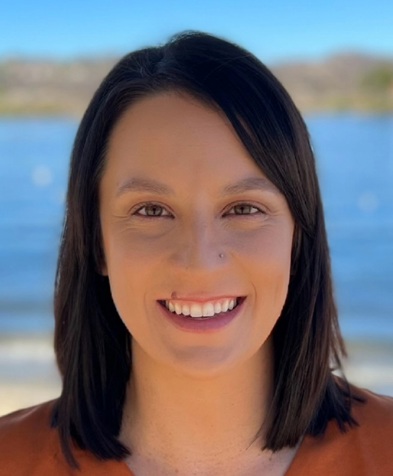
Lauren Hammond, epidemiology personal statement tutor
Table of Contents
- Epidemiology personal statement tips
- What to include - and avoid
- Epidemiology personal statement examples
- Learn more about Lauren, our epidemiology personal statement expert.
Epidemiology Personal Statements
On this page you'll find six examples of effective MS in Epidemiology personal statements, written from the perspective of a disease intervention specialist, an oncology nurse, a biology undergraduate, an environmental health inspector, a physician trained abroad, and a healthcare data analyst. Each example is followed by a breakdown of what makes it work.
Epidemiology is distinct from public health administration (MPH) in its emphasis on research methodology - study design, causal inference, biostatistics, and the systematic investigation of disease distribution and determinants. If you are deciding between an MS in Epidemiology and an MPH, see our MPH page as well - the two programs have different missions and the personal statement should reflect that distinction.
Lauren Hammond is our epidemiology application essay expert and has been helping people write their graduate school personal statements for several years. Whether you just want some feedback on a draft, or you're staring at a blank Word doc and don't know where to begin, she is happy to help!
Contact Lauren directly at 951-395-4646 (phone or text), or send us an email. Working with Lauren is $225 per hour, or $995 for 5 hours.
Consultations are free.
3 Tips for Strong Epidemiology Personal Statements
1. Lead with a Specific Research Question, Not a General Interest in Public Health
- Epidemiology is a research discipline: The MS in Epidemiology trains investigators who design and conduct studies to understand the distribution, determinants, and control of disease. Applicants who open with a specific research question - the exposure they want to study, the population they're interested in, the methodological problem they want to address - are immediately more credible than those who describe a general interest in population health or community wellness.
- Connect the question to your experience: The clinical worker who observed a disease pattern they couldn't explain, the lab scientist who saw a molecular finding with epidemiological implications, the data analyst who noticed a trend in health data that raised a question - show how your background generated a question that epidemiological methods can answer.
- Show awareness of epidemiological methods: Cohort studies, case-control designs, cross-sectional surveys, Mendelian randomization, survival analysis - showing you know these designs tells the reader you are ready for graduate-level training.
Example:
"As a nurse, I kept running into a question the clinical data couldn't answer: why do patients with similar HbA1c levels progress to diabetic nephropathy at such different rates? The clinical literature offers partial answers. Epidemiology offers ways to study the question systematically, through longitudinal cohort studies, multi-site registries and Mendelian randomization analyses of causal pathways, and those are the methods I want to learn."
2. Distinguish the MS in Epidemiology from the MPH
- If you are applying to epidemiology rather than public health: Explain why. The MPH is a professional degree preparing public health practitioners. The MS in Epidemiology is a research degree preparing epidemiologists who design and analyze studies. If you want to conduct research rather than manage programs, analyze surveillance data rather than run interventions, or pursue a PhD or academic career, say so explicitly.
- Research orientation should be evident throughout the statement: Curiosity about mechanisms, interest in study design, comfort with quantitative methods, desire to contribute to the scientific literature - these signal that you are applying to a research training program, not a professional practice degree.
- For applicants from clinical backgrounds: Many epidemiology applicants come from clinical work. Show how something you observed in patients raised a research question that clinical practice alone cannot answer. The transition from observing patterns to investigating them systematically is the core narrative of many strong epi applications.
Example:
"I am applying for the MS in Epidemiology rather than an MPH because I want to produce evidence. The MPH prepares public health professionals to put research into practice. The MS trains people to design and analyze the studies that research comes from, and that earlier stage is where I want to work."
3. Name a Substantive Research Area and Connect It to Faculty
- Infectious disease epidemiology, chronic disease, cancer epidemiology, environmental epidemiology, pharmacoepidemiology, social epidemiology, reproductive epidemiology, psychiatric epidemiology, global health epidemiology - name your area and explain why. Even a tentative direction reads better than "I am interested in all aspects of epidemiology."
- For research-intensive programs, faculty alignment matters: Like PhD applications, some MS in Epidemiology programs are PI-driven and applicants should name faculty whose work connects to their research interests. Reference a specific paper or research program.
- Methodological interests are also valid: Causal inference methods, electronic health records research, genomic epidemiology, spatial epidemiology - if a specific methodological approach draws you, name it and connect it to the research questions you want to address.
Example:
"My research interest is the epidemiology of adverse childhood experiences and their long-term cardiovascular outcomes. Specifically: does the biological pathway run through inflammatory mechanisms or allostatic load, or is it carried by behavioral mediators, and do those pathways differ by race and socioeconomic status? Dr. [Name]'s research program in social epidemiology and cardiometabolic disease addresses exactly this question with the longitudinal cohort data I would need, which is why I am applying to work with her."
What to Include in Your Epidemiology Personal Statement - and What to Avoid
What to Include
- A specific research question or area - not general interest in public health; what specific disease, population, exposure, or outcome you want to study
- Why epidemiology over MPH or other public health degrees - research orientation, study design interest, desire to generate rather than implement evidence
- Relevant research, clinical, or analytical experience - connect it to how it generated or reinforced your epidemiological research interest
- Methodological awareness - show familiarity with study designs, biostatistics, or analytic approaches relevant to your area
- For research-intensive programs, faculty alignment - name a faculty member and reference specific work
- Long-term career goals - academic research, government epidemiology (CDC, state health departments), pharmaceutical or clinical research, global health research
What to Avoid
- Describing epidemiology primarily as "studying disease patterns" - show awareness of the study design, causal inference, and methodological dimensions
- Statements that read like MPH applications - "I want to improve community health outcomes" is a public health practitioner statement; epidemiology applicants want to investigate the questions that improve community health outcomes
- COVID-19 as the primary motivation without follow-through - many applicants were motivated by the pandemic; programs see this constantly. Connect the motivation to a specific research question rather than a general inspiration.
- Vague "I love data" statements - show what specific questions you want to answer with data, not just that you find data interesting
- Submitting the same statement to every program - programs with infectious disease emphases, chronic disease focuses, environmental epidemiology specialties, or Mendelian randomization methodological strengths want tailored statements
Video: 7 Ways to Write a Crappy Graduate School Personal Statement
For more personal statement tips, check out Vince's video: 7 Ways to Write a Crappy Graduate School Personal Statement.
If you are also applying to research-track or PhD programs, several will ask for a statement of purpose instead. Our guide to how to structure a statement of purpose explains the difference.
6 Epidemiology Personal Statement Examples
Below are six example epidemiology personal statements, each followed by notes on what makes it work.
We wrote these six ourselves as teaching models. The applicants are invented, the programs are left generic on purpose, and nothing here is a real client's statement. Read them for structure and for how specific the detail gets, not as text to borrow.
Public Health Worker to Epidemiology MS
For three years I've worked as a disease intervention specialist at a county health department, doing contact tracing and partner services for sexually transmitted infections. I interview cases, notify their partners and document transmission chains, which is applied epidemiology at the level of individual cases. The work has also shown me patterns I don't have the methods to investigate.
Our STI cases cluster geographically: the same few census tracts show up year after year, even as the demographics of those tracts have shifted. I've checked it against our surveillance data each year, and it holds. The usual case-level explanations, individual behavior and network connectivity, don't fully account for it. Neither does healthcare access. Answering it takes a population-level epidemiological investigation: spatial analysis, network modeling, multilevel regression to separate individual from neighborhood-level determinants. I don't have those methods yet, and that is why I'm applying for the MS.
My goal is to work as a field epidemiologist at a state health department, starting with an applied epidemiology fellowship of the kind open to new master's graduates. I'd apply the training to the disease surveillance work I do now. I'm applying to this program because of its infectious disease epidemiology concentration and its faculty research in network epidemiology.
Why this statement works:
- The first paragraph tells the reader what a disease intervention specialist does (partner services, transmission chains), so a committee member who has never worked with a DIS knows the applicant has done case-level epidemiology before the question even appears.
- The question comes from the applicant's own data: "the same few census tracts show up year after year." A weaker draft would say "I became interested in health disparities" and leave the reader to guess what was actually observed.
- Listing the explanations the case-level view can't rule out (individual behavior, network connectivity, healthcare access) shows the applicant already thinks about competing explanations, which is the habit an epidemiology program trains.
- Each method named (spatial analysis, network modeling, multilevel regression) matches a part of the question, so the reader can see why the applicant needs this degree and not more years in the field.
- The goal is sized to the degree: a state health department and a fellowship open to new master's graduates. Naming a fellowship the applicant isn't eligible for would tell the reader they hadn't checked.
Clinical Worker (RN) to Epidemiology Research
Patients who present with the most advanced cancer at diagnosis are not randomly distributed. I noticed it over five years as a registered nurse on an inpatient oncology unit. They come disproportionately from ZIP codes with lower median incomes, lower rates of health insurance and fewer primary care providers per capita. The cancer in these patients did not start later, yet it was found later.
That makes it an epidemiological question about screening rates, insurance coverage, primary care supply and the other structural factors that decide when a cancer gets found. Better nursing care won't answer it, and I want to learn the methods that can.
So far I have taken an undergraduate biostatistics course and a research methods course. For the past year I've also worked as a research coordinator on a cancer disparities study at our affiliated research center. That role confirmed that research is the right direction, and that the MS in Epidemiology is the training I need to conduct it independently rather than support it administratively.
In the long term I want to do cancer disparities research that produces evidence policies and screening programs can use to close the access gaps I've seen on the unit. The program's cancer epidemiology track and its faculty research in health disparities and late-stage diagnosis determinants are why I'm applying.
Why this statement works:
- "Patients who present with the most advanced cancer at diagnosis are not randomly distributed" puts the observation first, so the reader meets the research question before the resume.
- "The cancer in these patients did not start later, yet it was found later" separates stage at diagnosis from disease onset. That distinction is what turns a nurse's impression into a question about detection and access.
- Naming the factors to study (screening rates, insurance coverage, primary care supply) turns a disparities interest into variables someone could measure. A weaker draft would stop at "underserved communities."
- The year as a research coordinator answers the doubt readers often have about clinical applicants: whether they know what research work looks like day to day.
- The last paragraph ties the cancer epidemiology track and faculty work on late-stage diagnosis back to the first paragraph, so the program-fit claim has something behind it.
Biology / Pre-Health Undergraduate to Epidemiology MS
I am applying to an MS in Epidemiology straight out of college because the question I want to pursue needs population-level methods that medical school will not teach me, and I want those methods before I start clinical training.
My undergraduate thesis looked at antibiotic use in the first year of life and later asthma diagnosis, a link some researchers attribute to changes in the gut microbiome. I worked with cross-sectional survey data, so I could show an association but could not establish which came first or rule out confounding. The question I want to answer is what drives the association: a causal effect of early antibiotics (possibly through the microbiome), a shared susceptibility to both infection and asthma, or reverse causation, where early wheezing that is really undiagnosed asthma gets treated with antibiotics. Separating those takes birth cohort data and causal inference methods my thesis did not have.
My long-term goal is to become a physician-scientist, and I want to start medical school already trained in study design and analysis. I am choosing the MS as preparation, and I have not yet applied to medical school, so it is not a fallback after a failed cycle.
I am applying to this program because of its methods curriculum in causal inference and its research training opportunities in respiratory and environmental epidemiology.
Why this statement works:
- The first sentence answers the question every reader will have about a pre-med applying for an MS: why this degree, and why before medical school.
- Describing the thesis's own weakness ("could not establish which came first or rule out confounding") shows the applicant understands the design problem, not just the topic. A weaker draft would list the thesis as an accomplishment and move on.
- The three competing explanations, including reverse causation from early wheezing treated with antibiotics, are the ones researchers in this area actually argue about, which tells the reader the applicant has read the literature.
- Saying once, plainly, that the MS is not a fallback after a failed medical school cycle deals with a concern the committee would otherwise raise on its own.
- The last line names causal inference coursework and respiratory and environmental epidemiology, both of which match the thesis question.
Environmental Health Inspector to Epidemiology MS
In March I closed out a complaint investigation at a restaurant that had scored 96 on its routine inspection eleven days earlier. Four people from the same birthday dinner had called the county with vomiting and diarrhea that started about a day and a half after they ate. When I went back, the kitchen looked much as it had on my routine visit. The difference was a line cook who had been sick at home over the weekend and came back to work the morning after his vomiting stopped. The state lab later confirmed norovirus in stool samples from two of the diners. Nothing on my inspection form would have predicted any of it.
I've been a registered environmental health specialist with the county for four years. Most of my week is routine inspections of restaurants, school kitchens and public pools, plus the complaint calls that come in between. After the March investigation I pulled our outbreak files from the last five years and matched each outbreak-linked restaurant to its most recent routine inspection score. In my spreadsheet, the outbreak restaurants scored almost the same as everyone else.
I don't trust that result, and I can't yet explain why in a way that would satisfy a reviewer. Outbreaks only enter our files when someone calls, and complaint rates differ a lot by neighborhood and by whether diners speak English, so the outbreaks we know about are not a random sample of the ones that happen. Scores also depend on which inspector does the visit. Finding out whether routine inspection scores predict foodborne outbreaks would take a study built around those problems: a clear case definition, a comparison group chosen with detection in mind, and some way to handle underreporting and differences between inspectors. I know those terms from reading, but I have never designed a study around them.
My training so far is a BS in environmental health, one undergraduate statistics course and a lot of practical work with messy administrative records. I'd be starting the biostatistics sequence close to the beginning, and I expect the first semester to be hard. What I bring is an inspector's sense of how this kind of data gets made. I know which violations get written up inconsistently, which complaint calls never get a follow-up visit, and why a score of 96 can mean different things depending on who wrote it.
After the MS I want to work as a foodborne and environmental disease epidemiologist at a state health department, designing the outbreak investigations that people in my current job collect samples for. Longer term, I'd like to help counties like mine find out whether our inspection systems send inspectors to the right restaurants. I'm applying to this program because its environmental epidemiology concentration includes coursework in outbreak investigation and surveillance methods, and because its practicum placements include state health department epidemiology units.
Why this statement works:
- The opening case gives the reader one hard fact (a score of 96 eleven days before a norovirus outbreak) that raises the research question without the applicant having to announce it.
- The spreadsheet paragraph shows the applicant already tried to answer the question with the data at hand. A weaker draft would jump from the anecdote to "I want to study food safety."
- "I don't trust that result" leads into a specific account of detection bias (complaint rates vary by neighborhood and language) and inspector-to-inspector variation, which tells the reader the applicant can spot problems in data before any formal training.
- The admitted gap (one statistics course, starting biostatistics near the beginning) sits next to what the applicant does bring, a working knowledge of how inspection records get made.
- The career goal and the reasons for choosing the program both point back to the outbreak in the first paragraph, so the statement reads as one argument instead of a list of interests.
International Physician (Hypertension Registry) to Epidemiology MS
For two years after medical school I ran the hypertension clinic at a district hospital in my home country. Every patient on treatment has a line in our hypertension register, and at each visit the nurse writes the blood pressure there. Each quarter I reported the share of patients whose last recorded reading was below 140/90, and in my first year that number climbed from about 40 percent to nearly 60 percent. The district office praised us for it.
Then the hospital received a set of validated automatic blood pressure monitors to replace our manual cuffs. In the first week one of my regular patients, a market trader in her sixties, had a reading of 168/102. Her last three entries in the register, all taken by hand, were 130/80, 130/80 and 138/88. She hadn't changed her medicines or stopped taking them. When I went back through the register that evening, almost two thirds of the hand-taken readings ended in zero. Our control rate fell by more than ten points in the quarter after the new monitors arrived.
I don't know how much of our earlier improvement was real. Rounding to zero, and rounding down toward a value just under the threshold, could explain some of it. Our clinic also started a standard treatment protocol that same year, and patients who missed visits simply dropped out of the count, so the patients recorded as controlled were partly the ones who kept coming back. Our district officer wanted to know whether to roll the protocol out to the other health centers. I couldn't give him a number I believed.
Answering him would take methods I don't have: how to handle measurement error in routine clinical data, how to use the device change as a natural experiment (an interrupted time series, perhaps with clinics that switched later as a comparison), and how to define control so that patients who stop attending still count. My statistics training in medical school was one course that I passed and mostly forgot, and I have never written code for an analysis. I have started an online course in R and work through it at night, but I expect to need the program's introductory biostatistics sequence in full.
My goal is to go back to my country's noncommunicable disease program as an epidemiologist who can tell whether the numbers in a register mean what they appear to mean, and who can design the evaluations the program needs before it scales up a change. I am applying to this program because of its cardiovascular epidemiology faculty, its coursework in causal inference and measurement, and its research on chronic disease care in low- and middle-income countries.
Why this statement works:
- The first paragraph explains what the register records and how the control rate is calculated (last reading below 140/90), so the reader can follow the problem when it shows up.
- One patient, whose hand-recorded 130/80 becomes 168/102 on a validated monitor, carries the motivation. A weaker draft would say "I became aware of data quality issues" and never show one.
- The applicant gives three separate reasons the clinic's success might be overstated (rounding by staff, a new protocol introduced the same year, patients dropping out of the count), which shows the reader they can find bias in their own good news.
- Each method in the fourth paragraph matches a piece of the problem: measurement error for the hand readings, an interrupted time series for the device change, a better definition of control for the patients who stopped coming.
- The weak spots are stated plainly (one forgotten statistics course, no coding, an R course in progress), and the goal names a real kind of employer, a national noncommunicable disease program, and a concrete job: deciding whether a change is ready to scale.
Data Analyst / Health Data Background to Epidemiology MS
I can show that patients discharged on Fridays have higher 30-day readmission rates. What I can't do is say why. I've worked as a healthcare data analyst for three years. I build the dashboards, queries and reports that our hospital's quality and population health teams use to monitor outcomes and spot variation. I'm good at the technical side of that work.
Over the same three years I've also recognized the methodological limitations that separate the analysis I can do from the causal research I want to do. The Friday finding shows the problem. It might be a causal effect of discharge timing, or confounding from patient severity. It might be an artifact of how discharge dates are recorded, or a selection effect in which patients get discharged on Fridays. Those are epidemiological questions, and answering them takes study design, confounding control and causal inference methods that my analyst training didn't cover.
The MS in Epidemiology is where I'll develop that thinking. I'm proficient in SQL, R and Python. I've worked with large administrative health datasets, and I understand the data quality and linkage issues that affect real-world health data research. What I need is the methodological framework to design studies with those data, rather than just describe them.
My goal is to work as a pharmacoepidemiologist or health outcomes researcher in an academic medical center or pharmaceutical research setting, where the large administrative datasets I've been working with can answer causal questions about treatment effectiveness and safety. I'm applying to this program because of its pharmacoepidemiology concentration and its real-world evidence research program.
Why this statement works:
- "I can show that patients discharged on Fridays have higher 30-day readmission rates. What I can't do is say why." The opening states the whole case for the degree with one result from the applicant's own job.
- The four explanations (discharge timing, patient severity, how dates are recorded, which patients get sent home on Fridays) are confounding, measurement error and selection in plain words. The reader sees the applicant thinks this way without being told.
- Naming SQL, R, Python and large administrative datasets settles the technical question in one sentence, so the rest of the statement can spend its space on what the applicant lacks.
- The pharmacoepidemiology goal follows from the administrative health data the applicant already handles, so the line from current job to degree to career is easy to follow. A weaker draft would name a goal unrelated to the data the applicant knows.
Have a draft? Try our free personal statement checker. It checks your length, opening line, stock phrases, signs of AI writing, and sentence rhythm. Your draft never leaves your browser.
Feeling stuck?
Lauren Hammond, our epidemiology personal statement editor, would be happy to help - whether you just need a second opinion on a draft or you're starting from scratch.
Text or call her at 951-395-4646, or send us an email.
Lauren works with you on Zoom and in Google Docs, so you get both real-time coaching and clean, trackable revisions. Most clients use 2 to 4 sessions.
Meet Lauren Hammond, epidemiology personal statement tutor
Lauren: I earned my Bachelor's Degree in Literature and Writing, with a concentration in Writing, at California State University San Marcos (CSUSM) and my Master's Degree in English and Comparative Literature at San Diego State University (SDSU).
I completed my PhD in English at the University of California Riverside (UCR) in September 2023 and then worked as UCR's Graduate Writing Center Specialist and graduate Fulbright Program Advisor. I now teach at Azusa Pacific University, where I'm an Assistant Professor and Lead Faculty in the Writing Program.
I have been a writing consultant for more than 10 years, and I've helped people with research writing, thesis/dissertation projects, rhetorical and literary analyses, writing in the humanities, grammar/sentence mechanics, and more. My work for VKTP includes thesis and dissertation editing and coaching, especially in the humanities and social sciences, as well as graduate school application materials such as personal statements, diversity statements and research statements, and job market materials for academic and alt-academic positions, including resumes, CVs and cover letters.
During my downtime, I love hanging out with my husband, our daughter, and our two dogs, Link and Leia! My favorite activities are going on the boat, cruising on the golf cart, and making our way through all of the local eateries. When we aren't out and about, I typically enjoy reading and watching movies.
Working with Lauren is $225 per hour or $995 for a package purchase of 5 hours. You can reach her at 951-395-4646 (phone or text), or by sending us an email.
P.S. Our partner Julie can also help you prepare for your epidemiology program admissions interviews! Learn more about her professional voice training for interview prep.
P.S. Some epidemiology MS programs still require or recommend the GRE, and many have dropped it, so check each program's requirements. If yours asks for the GRE - we can help with that too!
Love For Lauren
Frequently Asked Questions
How long should an epidemiology personal statement be?
Most programs ask for 500-1,000 words, and some set their own limit, so follow each program's instructions. Use the space to show a specific research question, some knowledge of study design, and why you want epidemiology rather than an MPH. Research-intensive programs may also expect you to name faculty whose work fits yours.
What is the difference between an MS in Epidemiology and an MPH?
An MS in Epidemiology trains researchers to design and analyze studies - to generate evidence. An MPH trains public health practitioners to implement programs and apply evidence to practice. If your goal is research and investigation, the MS is the right degree. If your goal is program management and practice, the MPH may fit better.
What do epidemiology programs look for?
Strong quantitative preparation (biostatistics, math, research methods), relevant experience (clinical, lab, public health, or analytical), a specific research area or question, and a statement demonstrating research orientation. Competitive applicants show awareness of study design and causal inference concepts.
Do epidemiology programs require the GRE?
Some epidemiology programs still require or recommend the GRE, and many have dropped it, so check each program's requirements. Where it is required, the Quantitative score gets the most attention, and some programs accept the MCAT instead. If you need GRE prep, our tutoring team can help.
Can I use AI to write my epidemiology personal statement?
AI doesn't know your research question, your analytical background, or your actual reasons for choosing epidemiology. Write the statement yourself or work with Lauren.
What careers are available with an MS in Epidemiology?
Government epidemiologist (CDC, state/county health departments), hospital or health system epidemiologist, pharmaceutical or clinical research epidemiologist, global health researcher, environmental epidemiologist, surveillance specialist, and PhD program preparation in epidemiology or biostatistics.
BTW, Lauren can also help with:
- Dissertation and thesis editing
- Graduate school CV and resume examples
- Teaching statement examples
- Academic cover letter examples
- Diversity statement examples
- Research statement examples
- MPH statement of purpose
- MHA (Health Administration) personal statements
- Master of Public Policy personal statements
- Biomedical Sciences MS personal statements
- Clinical Psychology PhD personal statements
- Genetic Counseling personal statements
- Health Informatics (MSHI) personal statements
- Medical Laboratory Science personal statements
- Physician Assistant personal statements
- Nurse Practitioner personal statements
- PhD personal statements
- Post Doc personal statements
- Fellowships and Grants personal statements