Biomedical Sciences Personal Statement Examples and Tutoring
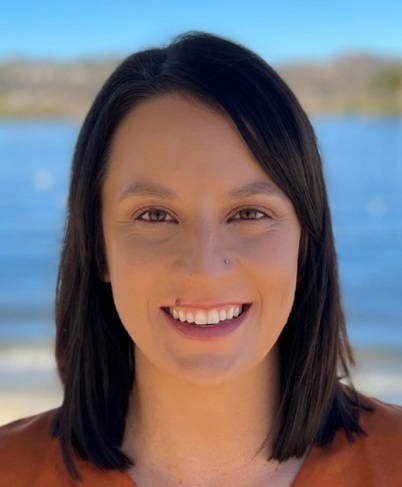
Lauren Hammond, biomedical sciences personal statement tutor
Table of Contents
- Biomedical sciences personal statement tips
- What to include - and avoid
- Biomedical sciences personal statement examples
- Learn more about Lauren, our biomedical sciences personal statement expert.
Biomedical Sciences Personal Statements
On this page you'll find six examples of effective MS in Biomedical Sciences personal statements for post-baccalaureate pre-health programs, Master of Medical Sciences (MMS) programs, and MS in Biomedical Sciences programs used as bridges to medical, PA or dental school or to research careers. Each example is followed by a breakdown of what makes it work.
These programs take a wide range of applicants: pre-med students strengthening their credentials, career changers entering the health professions, and scientists moving toward clinical work. Your statement should make clear which of these describes you and what the MS will let you do next.
Lauren Hammond is our biomedical sciences application essay expert and has been helping people write their graduate school personal statements for several years. Whether you just want some feedback on a draft, or you're staring at a blank Word doc and don't know where to begin, she is happy to help!
Contact Lauren directly at 951-395-4646 (phone or text), or send us an email. Working with Lauren is $225 per hour, or $995 for 5 hours.
Consultations are free.
3 Tips for Strong Biomedical Sciences Personal Statements
1. Be Honest About Why You Are Pursuing This Degree - and What Comes Next
- The MS in Biomedical Sciences is often a bridge degree: Many applicants are pursuing it to strengthen a medical school, PA school, dental school, or PhD application that was not successful or not yet competitive. Admissions committees know this. Applicants who say so plainly, without sounding defensive, are easier to trust than those who present the MS as the end goal.
- Name what the degree will specifically improve: Science GPA, research experience, clinical competence, academic foundational knowledge, post-baccalaureate record for reapplication - whatever the specific purpose, name it. Vague statements about "strengthening your application" tell the committee nothing.
- Show that the MS itself is meaningful, not merely instrumental: Name a course, a lab or a faculty member's work you want access to, and say why. That tells the reader you plan to use the program, and that the line on your transcript isn't the only reason you're applying.
Example:
"My undergraduate science GPA understates what I can do in the medical sciences, and I want the chance to show it directly. The transcript line matters, but it is only part of why I am applying. The biochemistry and pathophysiology courses here cover material I only half absorbed as an undergraduate. I want to learn that material properly this time, at the depth this program expects, before I apply to medical school again."
2. Show What Has Changed Since Your Unsuccessful Application (If Applicable)
- If you are reapplying after an unsuccessful medical or PA school application: Address it. Admissions committees can see your timeline and will wonder what has changed. Say why you think the prior application fell short, what you have done about it, and why you are a stronger applicant now.
- Documented growth counts for more than claimed growth: New clinical hours, research experience or an upward GPA trend will carry more weight than "I have grown as a person."
- Show that your commitment to the health profession has deepened, not just persisted: Every reapplicant has persisted, so persistence alone won't set you apart. Use specific clinical experiences from your time since the last application to show what you now understand about the profession.
Example:
"My first dental school application didn't work, and I can name the reasons. My science GPA and my DAT academic average were both below the averages at the schools I chose, and my personal statement said I liked working with my hands and not much else. In the past eighteen months I've finished upper-division biochemistry and physiology with A's, retaken the DAT, and volunteered two Saturdays a month at a community dental clinic, where most of the patients I saw had put off care for years because of cost."
3. Connect the Specific Program to Your Specific Goals
- Biomedical sciences programs vary significantly: Some are built for medical school applicants who need to raise a science GPA. Some are research programs with a thesis. Some are MMS programs run inside medical schools, where your grades in medical-school-level courses speak directly to your readiness. Read the program's curriculum and outcomes before you write.
- Name the specific curriculum elements that serve your goals: A biochemistry sequence, a clinical anatomy course, a research mentorship opportunity, an MCAT preparation component - whatever connects most directly to your reapplication strategy or career preparation.
- Be specific about your professional goal beyond the MS: Medical school, PA school, dental school, research PhD, clinical research career - name it and show how the MS bridges you to it.
Example:
"This program's Master of Medical Sciences curriculum is taught by the medical school faculty and graded to medical school standards, and that is why I am applying to it. I intend to show that I can perform at that level, something my undergraduate coursework, completed under very different conditions, cannot show for me. The MMS is the direct evidence I need, and the experience of being assessed inside a medical school curriculum is the preparation my next application requires."
What to Include in Your Biomedical Sciences Personal Statement - and What to Avoid
What to Include
- Honest framing of why you are pursuing the MS - bridge to medical/PA/dental/PhD application, credential strengthening, career pivot; be specific and direct
- What specifically the degree will improve - science GPA, research experience, clinical competence, academic foundation; name the gap you're filling
- What has changed since prior unsuccessful applications (if applicable) - documented growth, not claimed growth
- Real engagement with the program's curriculum - specific courses, research opportunities, faculty; show you're applying to learn, not just to have the credential
- Your professional goal beyond the MS - medical school, PA school, research PhD, clinical science career; be specific
- Program-specific detail - curriculum structure, clinical connections, research mentorship, MCAT preparation component
What to Avoid
- Pretending the MS is the ultimate goal when it isn't - admissions committees know these programs are often bridges, so say so
- Generic statements about strengthening your application - what specifically needs strengthening, and how does this program address it?
- Avoiding the prior unsuccessful application - if you're reapplying, address it; the committee will wonder about the gap
- "I want to help people" as the primary motivation - the statement should demonstrate clinical preparation and professional identity, not humanitarian aspiration
- Submitting the same statement to every program - GPA enhancer programs, research-heavy programs, and MMS programs embedded in medical schools have different missions; tailor accordingly
Video: 7 Ways to Write a Crappy Graduate School Personal Statement
For more personal statement tips, check out Vince's video: 7 Ways to Write a Crappy Graduate School Personal Statement.
A few biomedical sciences programs ask for a statement of purpose rather than a personal statement. The statement of purpose format puts more weight on your academic and professional preparation, so it is worth reading before you adapt anything here.
6 Biomedical Sciences Personal Statement Examples
Below are six example biomedical sciences personal statements. After each one, we explain what makes it work.
We wrote these six ourselves as teaching models. The applicants are invented, the programs are left generic on purpose, and nothing here is a real client's statement. Read them for structure and for how specific the detail gets, not as text to borrow.
Pre-Med Reapplicant to Post-Bacc / MMS Program
I have applied to medical school twice and been turned down both times. I'm applying to this MMS program because I think the next try will go differently, and I want to explain what is different now, instead of just restating my commitment.
I was the first person in my family to go to college, and I hadn't built study habits that could keep up once the material sped up. My science GPA records that. It doesn't show how I have worked in the three years since graduation. I've logged 1,200 hours as an EMT and finished my post-bacc courses with a 3.9. I've also read medical literature on my own, with no grade waiting at the end.
I am choosing an MMS over a third straight application because I want to do medical-school-level work before I say I can. Courses here are taught by the medical school's own faculty and graded to the same standard as the first-year medical students' courses, so my transcript will show how I perform at that level. My first two applications had no evidence like that.
When I apply again, I want the committee to see grades from medical school courses next to three years of patient care on an ambulance. This program is where I can earn the first of those.
Why this statement works:
- The first sentence states both rejections in plain words. A reapplicant who holds the rejection back until paragraph three makes the reader wonder what else is being held back.
- The explanation for the weak science GPA is a cause the reader can match to a transcript (first-generation student, no study habits when the courses sped up), and it is followed right away by proof that the problem is fixed: 1,200 EMT hours and a 3.9 post-bacc. A weaker draft would stop at the explanation.
- "I want to do medical-school-level work before I say I can" answers the question every MMS reader has, which is why this applicant isn't just applying a third time. The answer is about evidence, and evidence is what the committee is also looking for.
- The program detail (medical school faculty, same grading as first-year students) is used as the reason for applying. Praise for the program's reputation would have told the reader nothing about this applicant.
- One thing to add in your own version: a single ambulance call. The statement counts 1,200 hours but never shows a patient, and a short scene would let the reader see this applicant at work.
Sterile Processing Technician to Biomedical Sciences MS (Pre-Med)
I have spent five years in a hospital sterile processing department. I started in decontamination, scrubbing instruments with enzymatic detergent and running brushes through every lumen before the trays went into the washer. Now I work mostly on the clean side, checking instruments under a lighted magnifier and building surgical trays from count sheets. I'm certified (CRCST) and I train new hires. I came to the job with a communications degree and no science past one introductory biology course.
Last spring, the biological indicator from our first steam load of the day came back positive. The indicator is a vial of Geobacillus stearothermophilus spores that goes through the cycle with the load, and if those spores survive, nothing else in that load can be assumed sterile. My lead pulled the load record and we recalled eleven trays, two of which had already gone up to the OR core and came back unopened. The sterilizer stayed out of service until it passed retesting.
Everyone followed the procedure, and no patient was affected. What stayed with me was a surgical resident who came down to ask what had happened. He asked why we test with that organism, and I gave the answer from my training: its spores are among the hardest to kill with steam. Then he asked what makes a spore that hard to kill, and I didn't know. That night I read about spore coats and dehydrated cores until well after midnight, and a month later I enrolled in general chemistry at the community college.
Since then I've completed biology, general and organic chemistry, and physics in night classes while working full time, with A's in every course except organic chemistry II, where I earned a B+. I have also started volunteering in the emergency department on Saturdays. Five years near the operating room is not patient contact, and medical schools are right to ask for it.
What I still lack is upper-division science and any record of handling a graduate course load. This program would give me both: graduate biochemistry, medical physiology, and the microbiology and immunology sequence that would let me answer that resident properly. Its advising for career changers matters to me too, since I have no undergraduate pre-health office behind me.
I'm drawn to surgery, though I know that interest comes from the instruments and not yet from patients. The Saturday shifts are how I'm checking it, and I'd like to have both that answer and a graduate science record before I apply to medical school.
Why this statement works:
- The first paragraph names the steps of the job (enzymatic detergent, brushing lumens, count sheets), so the reader can tell this applicant did the work. "I worked in a hospital" would leave the committee guessing what that meant.
- The biological indicator scene runs in order: positive result, recall, sterilizer out of service. The applicant's part in it is small and described as small, which is easier to believe than a story where the technician saves the day.
- The resident's second question, "what makes a spore that hard to kill," is where the essay turns. It shows exactly where the applicant's knowledge ran out and gives the science coursework a starting point the reader can trace to one morning.
- "Five years near the operating room is not patient contact" raises the objection a committee would raise and shows the applicant is already dealing with it. A weaker draft would count sterile processing as clinical hours and hope nobody asked.
- The program paragraph ties each course to a need: biochemistry and physiology for the missing upper-division record, microbiology and immunology for the question from the scene, advising because there's no pre-health office behind this applicant. That is what tailoring to a program looks like on the page.
Pre-PA Applicant Using MS to Strengthen Application
I applied to PA school last cycle and wasn't admitted, and I think I know why. Three years as a medical assistant in a primary care clinic gave me real patient care experience, and I won't undersell it. But my science GPA sat below the median at most of the programs I applied to. And my personal statement said I wanted to practice medicine without ever saying what kind of practice or with which patients. I applied broadly because I hadn't worked out where I fit.
In the eighteen months since, I have worked 600 hours as an emergency department technician, where the acuity and the range of diagnoses told me more about who I want to be as a clinician than primary care ever did. I took biochemistry and earned an A. One course can't offset a GPA, though, which is why I'm applying to this program before I reapply to PA school.
This program's accelerated science curriculum is why I chose it: biochemistry, genetics, physiology, pharmacology, all at graduate school intensity. My last application implicitly said "my GPA doesn't reflect my potential." I want the next one to say, with graduate grades behind it, "here is what I can do when the material is appropriately challenging."
I want to practice as a PA in emergency medicine. That takes real depth in the clinical sciences, and the biomedical sciences MS is the most direct way to prove I have it.
Why this statement works:
- The first sentence names the rejection and claims to know the cause, and the next few sentences deliver two causes a reader can check: a science GPA below the median and a personal statement that never said what kind of practice the applicant wanted.
- "I won't undersell it" keeps the self-criticism in proportion. Reapplicants often run down everything about their first attempt, and that makes a reader distrust the whole record, including the parts that were fine.
- The 600 emergency department hours are given a conclusion: they are why the goal is now emergency medicine. Hours listed without a conclusion would just be a number.
- The contrast between the old implied claim ("my GPA doesn't reflect my potential") and the new one is the case for the MS. Graduate grades in biochemistry, physiology and pharmacology are evidence; an explanation of a low GPA isn't.
- To add in your own draft: one ED patient. The statement says the acuity changed the applicant's goal but never shows a case, and a short scene would make that claim something the reader can see.
Research Scientist to Clinical Career via Biomedical MS
I have a PhD in molecular biology and five years of academic research behind me. Now I want to use that science at the bedside. Before I apply to medical school I need recent coursework in the clinical sciences, which my doctorate never covered, and that is why I am applying to this MS.
My research was in cancer cell signaling, in particular how certain kinase pathways contribute to acquired resistance to treatment. I liked the work, but the questions I kept returning to sat at its edge. In my fourth year I presented our resistance data at a molecular tumor board, and an oncologist asked whether a patient whose tumor had picked up one of the mutations we studied should change therapy now or wait for the next scan. I could explain the mechanism in detail. I could not answer her question, because it was about a patient, and I had no training in how to weigh one.
The prerequisites are finished, and I have 400 hours of clinical exposure from working as a medical scribe. Most of those hours were in an outpatient oncology clinic, where I heard treatment decisions made out loud for the first time. A doctorate gives me scientific preparation at a depth most pre-medical applicants lack; the missing piece is the clinical science curriculum, meaning anatomy, physiology and pathophysiology, along with the application preparation the program offers.
I plan to practice as an oncologist. I would like to work in academic oncology, where I could see patients and also help design the trials that test the kind of resistance I used to study at the bench.
Why this statement works:
- The opening gives the degree and the years in one sentence and gets to the change of direction in the next. A PhD applying to a master's program has to explain that step quickly, and this one does it by naming what's missing: recent clinical science coursework.
- The tumor board question, "change therapy now or wait for the next scan," carries the essay. It shows a researcher who knew the mechanism cold and still couldn't answer a question about a patient, which is the exact gap clinical training fills.
- The scribe hours are placed in an oncology clinic, so they connect to the research. Listed on their own, they would read as a box the applicant checked.
- "anatomy, physiology and pathophysiology" names the gap course by course. A weaker draft would say "clinical training" and leave the reader to wonder what an MS adds for someone who already has a doctorate.
- The goal, academic oncology with patients and trials, puts the five research years to use, which answers the reader's unspoken question of why this applicant didn't just stay in the lab.
Newborn Screening Lab Technician to Biomedical Sciences MS (PhD-Bound)
For three years I've worked as a laboratory technician in a state newborn screening program. Every weekday, couriers bring in filter paper cards with blood collected by heel stick a day or two after birth. I punch small discs from the dried spots, run the extraction, and load plates for tandem mass spectrometry, which measures the amino acids and acylcarnitines we screen for. Those numbers decide which families get a phone call.
Last winter one of my plates flagged a high C8 acylcarnitine, the main marker for medium-chain acyl-CoA dehydrogenase (MCAD) deficiency. I repeated the punch in duplicate, the value held, and my supervisor released the result to our follow-up nurses that afternoon. Babies with MCAD deficiency can become dangerously hypoglycemic if they go too long without feeding, so the nurse reached the pediatrician the same day. Confirmatory testing later showed the baby had the disorder. I had run thousands of samples before that one, but it was the first time I thought hard about what rested on a number I produced.
It was also when I noticed how little of the biology I could explain. I knew our markers and cutoffs. I couldn't have told you why some babies with a positive screen turn out to carry mild variants that may never cause symptoms, or why our false-positive rate rises for NICU babies on parenteral nutrition. Our lab director answered my questions patiently, and most of her answers ended with research I wasn't trained to do.
I want a PhD in human genetics and a career studying inborn errors of metabolism. My record is thin where doctoral programs look first. I graduated with a 3.2 in biology and have no independent research experience. At work I run validated protocols; I have never designed an experiment or followed up a result that didn't fit.
The thesis track in this MS would change that. Graduate biochemistry and molecular genetics would fill in the coursework, and a year in a faculty lab would give me a research project of my own and a mentor who has watched me work through it. I'd most like to join a lab working on metabolic disease, where what I know about screening would be useful from the first week.
Why this statement works:
- The opening explains the job in steps an outsider can follow: heel-stick cards, punched discs, tandem mass spectrometry. A reader from another department can picture the work, and a faculty reader can see the applicant knows it.
- The MCAD case stays at the applicant's real level of responsibility. The technician repeats the punch, the supervisor releases the result, the nurse calls the pediatrician. Inflating the technician's role would make the scene harder to believe.
- The questions in the third paragraph (mild variants, false positives in NICU babies on parenteral nutrition) are real research questions that come straight out of the bench work. They give the PhD goal a source a lab director would recognize.
- "I have never designed an experiment or followed up a result that didn't fit" states the weakness in the terms a doctoral committee uses, so the thesis-track MS reads as the fix and not as a delay.
- The last paragraph says what the MS will produce for a PhD application (graduate coursework, a project of the applicant's own, a mentor who can write about it) instead of praising the program.
Sleep Technologist to Biomedical Sciences MS (Pre-Dental)
For four years I've worked nights as a registered polysomnographic technologist in a hospital sleep lab. A lot of the job happens before the lights go out. I measure the head and place the EEG, eye and chin electrodes, fit the nasal cannula and the chest and abdominal belts, clip on the oximeter, and explain each piece to someone who now has to try to sleep in a strange room with wires in their hair.
One of those patients was a delivery driver in his fifties. His diagnostic study showed an apnea-hypopnea index of 24, in the moderate range. On his CPAP titration night he pulled the mask off three times before 1 a.m. and told me it felt like being smothered. We tried a different mask and a lower starting pressure, and by 4 a.m. he was sitting on the edge of the bed, finished with it. His sleep physician later referred him to a dentist who makes oral appliances for sleep apnea, and I asked the dentist if I could shadow her.
Over several months I watched her take impressions and a bite registration, deliver a mandibular advancement device, and move it forward in small steps at follow-up visits while she checked his bite and asked about jaw pain. When he came back to our lab for a follow-up study with the appliance in, I happened to be on shift. His index was 7. He still had mild apnea, and he told me in the morning that he had slept better than he had in years.
I've since shadowed two general dentists as well, about 120 hours in total. I want to practice general dentistry and add training in dental sleep medicine, because patients like him often reach a dentist only after CPAP hasn't worked for them.
My record doesn't support that plan yet. I worked thirty hours a week through college, mostly overnight, and my science GPA is a 2.9, with C's in organic chemistry and biochemistry. Those are courses dental schools read closely, and retaking one of them at a community college won't change the overall picture.
This MS puts graduate biochemistry, physiology and head and neck anatomy into one year, at a pace closer to dental school than anything I took as an undergraduate. I plan to take the DAT next spring and to keep two shifts a week at the sleep lab so I stay in contact with patients. If the coursework needs those nights, the coursework will get them.
Why this statement works:
- The first paragraph shows the job through the wiring and explaining that happen before the lights go out. The reader learns this applicant is used to settling anxious patients, without the statement having to claim it.
- The CPAP night is specific (an index of 24, the mask off three times before 1 a.m.) and the applicant doesn't fix it. The referral to a dentist is the turn, so the interest in dentistry comes from a patient the reader has met, not from a childhood memory or a general love of science.
- Seeing the same patient's follow-up study, with an index of 7, closes the story with a number. A sentence about how rewarding it felt would have told the reader much less.
- The GPA paragraph gives the cause (thirty-hour weeks, overnight work), names the weak courses, and admits one retake won't solve it. That makes the MS the logical next step instead of a detour.
- The last line, "If the coursework needs those nights, the coursework will get them," shows judgment about workload, which is what a committee is trying to gauge in an applicant repairing a GPA.
Have a draft? Try our free personal statement checker. It checks your length, opening line, stock phrases, signs of AI writing, and sentence rhythm. Your draft never leaves your browser.
Feeling stuck?
Lauren Hammond, our biomedical sciences personal statement editor, would be happy to help - whether you just need a second opinion on a draft or you're starting from scratch.
Text or call her at 951-395-4646, or send us an email.
Lauren works with you on Zoom and in Google Docs, so you get both real-time coaching and clean, trackable revisions. Most clients use 2 to 4 sessions.
Meet Lauren Hammond, biomedical sciences personal statement tutor
Lauren: I earned my Bachelor's Degree in Literature and Writing, with a concentration in Writing, at California State University San Marcos (CSUSM) and my Master's Degree in English and Comparative Literature at San Diego State University (SDSU).
I completed my PhD in English at the University of California Riverside (UCR) in September 2023 and then worked as UCR's Graduate Writing Center Specialist and graduate Fulbright Program Advisor. I now teach at Azusa Pacific University, where I'm an Assistant Professor and Lead Faculty in the Writing Program.
I have been a writing consultant for more than 10 years, and I've helped people with research writing, thesis/dissertation projects, rhetorical and literary analyses, writing in the humanities, grammar/sentence mechanics, and more. My work for VKTP includes thesis and dissertation editing and coaching, especially in the humanities and social sciences, as well as graduate school application materials such as personal statements, diversity statements and research statements, and job market materials for academic and alt-academic positions, including resumes, CVs and cover letters.
During my downtime, I love hanging out with my husband, our daughter, and our two dogs, Link and Leia! My favorite activities are going on the boat, cruising on the golf cart, and making our way through all of the local eateries. When we aren't out and about, I typically enjoy reading and watching movies.
Working with Lauren is $225 per hour or $995 for a package purchase of 5 hours. You can reach her at 951-395-4646 (phone or text), or by sending us an email.
P.S. Our partner Julie can also help you prepare for your biomedical sciences program admissions interviews! Learn more about her professional voice training for interview prep.
P.S. Some biomedical sciences and post-bacc programs still require or recommend the GRE or MCAT, and many have dropped them, so check each program's requirements - we can help with GRE prep!
Love For Lauren
Frequently Asked Questions
How long should a biomedical sciences personal statement be?
Many programs ask for 500-1,000 words, but follow each program's stated limit. Be honest about why you're pursuing the degree, name what it will improve in your application, and show that you've read the curriculum.
Should I explain a prior unsuccessful application?
Yes. If you're reapplying, address it directly: say what you think fell short, document what you've done about it, and explain why you're a stronger applicant now. Committees can see your timeline, and an unexplained gap raises more questions than an honest account.
What is the difference between an MS in Biomedical Sciences and an MMS?
An MS in Biomedical Sciences is usually a science-intensive graduate degree, sometimes with a research thesis. A pre-medical Master of Medical Sciences (MMS) is often housed in a medical school and uses its courses, faculty and grading, so your grades show directly how you handle medical school work. For medical school reapplicants, that kind of program is often the most direct bridge. Many physician assistant programs also award a Master of Medical Science, so read each program's description to see which kind it is.
Do biomedical sciences programs require the GRE?
Some biomedical sciences programs still require or recommend the GRE, and many have dropped it, so check each program's requirements. Some also accept or prefer the MCAT. If you need GRE prep, our tutoring team can help.
Can I use AI to write my biomedical sciences personal statement?
AI doesn't know your application history, what you've decided needs to improve, or why you want the MS, and those are what the statement is for. Write it yourself, or work with Lauren.
What careers can an MS in Biomedical Sciences lead to?
Most often, the MS is a step toward medical school. Graduates also apply to PA, dental and other health professions programs or to PhD programs, or go into pharmaceutical or clinical research, regulatory affairs or healthcare consulting.
BTW, Lauren can also help with:
- Dissertation and thesis editing
- Graduate school CV and resume examples
- Teaching statement examples
- Academic cover letter examples
- Diversity statement examples
- Research statement examples
- Physician Assistant personal statements
- Dental school personal statements
- Optometry (OD) personal statements
- PharmD personal statements
- Podiatry (DPM) personal statements
- Nurse Practitioner personal statements
- Genetic Counseling personal statements
- Clinical Psychology PhD personal statements
- Epidemiology MS personal statements
- MPH statement of purpose
- PhD personal statements
- Master's degree personal statements
- Law School personal statements
- MBA personal statements
- Post Doc personal statements
- Fellowships and Grants personal statements