Art Therapy Personal Statement Examples and Tutoring
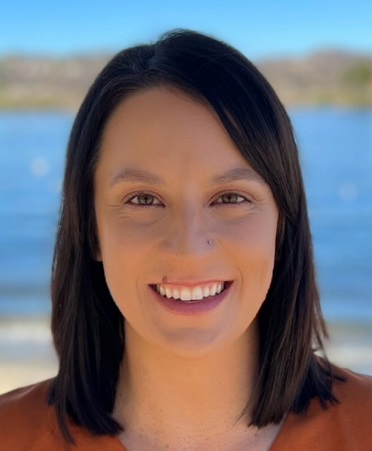
Lauren Hammond, art therapy personal statement tutor
Table of Contents
- Art therapy personal statement tips
- What to include - and avoid
- Art therapy personal statement examples
- Learn more about Lauren, our art therapy personal statement expert.
Art Therapy Personal Statements
On this page you'll find six examples of effective art therapy personal statements for CAAHEP-accredited (formerly AATA-approved) MA and MS in Art Therapy programs, written from the perspective of studio artists with mental health interests, mental health workers with art backgrounds, art educators, and career changers. Each example is followed by a breakdown of what makes it work.
Art therapy is a mental health profession that combines psychotherapeutic theory with the process of making art. It is different from art instruction or recreational art, and your personal statement should show that you understand it as a clinical field with its own theory. If you are also considering MS in Counseling or MSW programs, see our separate pages for those degrees - your statement for art therapy should be distinctly different.
Lauren Hammond is our art therapy application essay expert and has been helping people write their graduate school personal statements for several years. Whether you just want some feedback on a draft, or you're staring at a blank Word doc and don't know where to begin, she is happy to help!
Contact Lauren directly at 951-395-4646 (phone or text), or send us an email. Working with Lauren is $225 per hour, or $995 for 5 hours.
Consultations are free.
3 Tips for Strong Art Therapy Personal Statements
1. Explain How Art and Therapy Work Together
- Art therapy is a specific clinical model, not a combination of two separate interests: What separates art therapy from counseling and from art instruction is the therapeutic use of artmaking, where making something becomes a way to express, communicate and work through experience. Applicants who show they understand this come across as better prepared than those who say they love art and want to help people.
- Show awareness of art therapy theory: Name at least one framework you have read about or seen in practice, such as person-centered art therapy, psychodynamic work with symbol and image, cognitive-behavioral art therapy, trauma-informed approaches, or developmental approaches to children's art. Knowing one framework well tells the committee you have prepared for graduate-level training.
- Describe what artmaking specifically provides that verbal therapy doesn't: Be specific about what artmaking offers that talk alone doesn't: communication without words, a way around what a client would edit out in conversation, an artwork that sits outside the client and can be looked at and changed, and handling materials as a way to calm down or stay grounded. Name the ones you have actually seen at work.
Example:
"In the art therapy session I observed, a patient used charcoal to put down something she said she couldn't yet put into words. The drawing was ambiguous, and the therapist did not interpret it. She asked the patient to tell her about it, and they spent the rest of the hour talking about what was on the page. I had not seen anything like that in the counseling sessions I also observed. Using the artwork as something outside the patient that both people can look at is the skill I want to be trained in."
2. Demonstrate Both Art Competency and Mental Health Awareness
- Art competency is required: Most art therapy programs require a studio art portfolio and a minimum number of studio art credit hours. Show a sustained practice, ideally in more than one medium, rather than occasional artmaking. Say how your work has developed and what your own studio time has taught you about what making art can do for a person.
- Mental health awareness is equally required: Clinical observation in a mental health or healthcare setting, crisis line work, direct service with a clinical population, or your own therapy can all count. Show that your interest in mental health comes from contact with clients as well as from personal experience or reading.
- You need both: A strong artist with no mental health preparation is an incomplete candidate, and so is a strong mental health worker with no studio practice. Show the committee both.
Example:
"For several years my studio practice and my interest in mental health ran side by side. They came together during my internship at a community mental health center, where I helped run an open studio group. One man spent every session tearing magazine pages into strips and gluing them in neat rows, and a woman across the table painted the same window again and again in different colors. I had assumed my job was to make people comfortable. Watching them, I saw that most of what happened came from the work itself, and my part was keeping the room steady enough for it. I want to learn to do that part with clinical skill."
3. Handle Personal Therapeutic Art Experience Carefully
- Many art therapy applicants have a personal relationship with artmaking as a coping or healing practice: That history can belong in the statement, but it shouldn't be the whole statement. Programs are training therapists, so pair the personal connection with evidence of professional preparation.
- Personal therapy is a professional asset in art therapy: Some art therapy programs, like some counseling programs, encourage or require students to be in their own therapy during training. If you have been in therapy (art therapy or otherwise) and can say what it taught you about the therapeutic relationship, that is worth including.
- Distinguish between using art therapeutically and practicing art therapy: Making art to work through your own feelings is a personal practice. Art therapy is a clinical profession with supervised training and an ethics code. Show that you know the difference and are preparing for the second.
Example:
"I started drawing every night during a hard year in my early twenties, and it helped me get through it. Since then I have taken two psychology courses, observed 90 hours of art therapy groups, and spent a year co-leading an open studio under a credentialed art therapist's supervision. The personal experience pointed me toward the field, and the coursework and supervised hours are what I bring to it."
What to Include in Your Art Therapy Personal Statement - and What to Avoid
What to Include
- Articulation of the art-therapy integration - a specific account of what artmaking does therapeutically that talk alone doesn't, instead of "I love art and I love helping people"
- Your artistic practice - media, history of artmaking, what the creative process means to you, how it has informed your understanding of art therapy
- Mental health or clinical observation experience - observation in an art therapy session, mental health work, healthcare, direct service; show the clinical preparation alongside the artistic one
- Theoretical awareness - at least one art therapy or psychotherapy theoretical framework you have engaged with
- Your intended population or practice setting - children, adults with trauma histories, medical populations, geriatric, schools, community mental health
- Program-specific detail - a faculty member's research, a clinical rotation site, a theoretical orientation, the studio art portfolio requirement
What to Avoid
- "I have always loved art and I want to help people" - the most common and least distinctive opening; show the specific integration of artmaking and therapeutic process
- Personal healing through art as the primary motivation - pair it with professional preparation; programs are training therapists
- Describing art therapy as "making art to feel better" - art therapy is a clinical profession with theoretical foundations and supervised practice requirements; show you understand this
- Conflating art therapy with art instruction, recreational art programs, or general creative expression - these are distinct; show what makes art therapy's clinical model specific
- Submitting the same statement to counseling, social work, and art therapy programs - these are distinct professions with distinct identities; your art therapy statement must reflect the art-therapy integration specifically
Video: 7 Ways to Write a Crappy Graduate School Personal Statement
For more personal statement tips, check out Vince's video: 7 Ways to Write a Crappy Graduate School Personal Statement.
If you are also applying to research-track or PhD programs, several will ask for a statement of purpose instead. Our guide to how to structure a statement of purpose explains the difference.
6 Art Therapy Personal Statement Examples
Below are six example art therapy personal statements. After each one, we explain what it does well.
We wrote these six ourselves as teaching models. The applicants are invented, the programs are left generic on purpose, and nothing here is a real client's statement. Read them for structure and for how specific the detail gets, not as text to borrow.
Community Printshop Technician to Art Therapy
For six years I have run the print studio at a nonprofit community printshop. I mix ink, keep two etching presses in working order, and teach introductory relief printing on weekday evenings. Three years ago the shop started a partnership with a clubhouse for adults with serious mental illness, and I volunteered to run the Thursday morning sessions for its members. I knew presses. I knew very little about psychosis, depression, or the side effects of the medications several members were taking, and I found out quickly that I needed to learn.
One member, a man in his fifties who has lived with schizophrenia for most of his adult life, carved the same linoleum block for four weeks. It was a house, and each week he cut a little more away. On the fifth week he inked it and ran it through the press. When he lifted the paper, the image was reversed, as relief prints always are, and the front door that had been on the left was now on the right. He looked at it for a long time and said, "That's the way it actually was." Then he started talking about the house he grew up in. The clubhouse staff member who came with him told me later that he had not mentioned his childhood once in two years.
I did not know how to respond, so I listened, and after the session I told the staff member what he had said. She thanked me and said that was the right call. I went home that day knowing I had set up a room where something therapeutic could happen and had no training to understand it or respond to it well. A print studio is not a treatment setting, and I am not a clinician.
I have spent the two years since working on that. I completed abnormal psychology and developmental psychology at a community college, and I have observed 60 hours of art therapy groups at an outpatient behavioral health program. There I watched a registered art therapist treat material choice as a clinical decision. She gave watercolor to a client who was tightly controlled and needed to loosen up, and colored pencils and a small sheet of paper to a client who became overwhelmed by open space. I later found that this has a name in the literature, the Expressive Therapies Continuum, and I have been reading about it since. Printmaking has a lot of built-in structure: a fixed sequence of steps, a block that resists the tool, and a result you don't see until the end. I want to understand when that structure helps a client and when it gets in the way.
My portfolio is mostly relief and intaglio prints, with a smaller body of drawing and collage. My clinical experience is much thinner. I have never led a group as a therapist, written a progress note, or carried a caseload, and I expect supervised practicum to be where I learn to do those things responsibly.
I want to practice in community mental health with adults living with serious mental illness, the population I have spent three years of Thursday mornings with. I am applying to this program because its practicum sites include community mental health centers and its coursework gives real attention to how different art media affect a client's experience.
Why this statement works:
- The first paragraph proves the studio practice with job details ("mix ink, keep two etching presses in working order") before the portfolio arrives. A weaker draft would say "I have been an artist my whole life" and expect the committee to take it on faith.
- The reversed print is accurate to how relief printing works, and the applicant does not interpret what the man said. Listening, then passing it to clubhouse staff, shows the committee the applicant already respects the boundary of that role.
- "A print studio is not a treatment setting, and I am not a clinician" names the gap in one plain sentence. Admissions readers trust applicants who can say what they don't yet know how to do.
- The Expressive Therapies Continuum comes up only after the applicant describes watching a therapist choose watercolor for one client and colored pencils for another. The theory is tied to something the applicant saw, which is far more convincing than a list of frameworks.
- The goal (community mental health, adults with serious mental illness) is the population the applicant has already served, so the program fit sentence reads as a next step instead of an add-on.
Mental Health Worker with Art Background to Art Therapy
For three years I've been a crisis counselor, giving telephone support to people in acute mental health crisis. I'm also a practicing visual artist with a degree in studio art. For those three years the two have stayed separate: one is my job, and the other is what I do at home. I am applying for the MA in art therapy to train in the profession that uses both.
What brought the integration into focus was a volunteer experience facilitating an art group at a residential psychiatric facility. The contrast with crisis line work was significant. On the line everything happens in words. I listen, assess risk using our protocol, work out a safety plan with the caller, and connect emergency services when it's indicated. In the art group, long stretches went by without anyone talking, and that was fine. One woman who had said almost nothing all week spent an hour layering torn tissue paper over a pencil sketch until the sketch disappeared, and then asked if she could keep it. My role was to keep the room steady and let the work go where it went, which is close to the opposite of what I do on the phone.
I came away thinking the open-endedness was part of what helped, and that the facilitator's job was to tolerate it instead of steering the group toward something tidier. My crisis work hasn't taught me how to do that, and I want clinical training in it.
My goal is to practice in a psychiatric or trauma-focused setting. I want to work with populations whose verbal access to experience is limited by dissociation, trauma, or psychosis. Those are the settings where working without words may matter most. I'm applying to this program because of its trauma-informed art therapy curriculum and its clinical rotation sites in psychiatric and trauma treatment programs.
Why this statement works:
- The opening gets to the point in four sentences: two skills kept apart for three years, and a degree that would let one person use both. A weaker draft would spend a paragraph on loving art as a child.
- The crisis line description is accurate (risk assessment, safety planning, emergency services "when it's indicated"). That tells a clinical reader the applicant understands the work they already do.
- The woman covering her sketch with tissue paper gives the reader one thing to picture. Without it, the contrast between the phone line and the art group would be a claim the reader has to accept on trust.
- "My crisis work hasn't taught me how to do that" admits a specific limit. It also explains why the applicant isn't simply applying to counseling programs.
- The goal (clients whose access to words is limited by dissociation, trauma or psychosis) follows from what the applicant saw in the group, and the program reasons are curriculum and rotation sites a reader can check.
Art Teacher / Educator to Art Therapy
One student drew the same dark imagery for months. Another's self-portrait changed sharply after a family disruption, weeks before anyone at school knew about it. A third talks freely about difficult things while she paints, though she shuts down when an adult asks her directly. I have been an art teacher in a public middle school for five years, and in that time I have watched art class become a place where struggling students say things through their work that they don't say anywhere else in the school day.
I've responded to these students as a teacher should: I kept the room predictable and safe, and I reported concerning patterns to the school counselor. Over five years I also learned the limits of what a teacher can hold. I want the clinical training to work with what students bring into the art room, instead of noticing it and handing it off.
I've completed 80 hours of observation in art therapy settings: a school-based program and an outpatient child and adolescent clinic. I wanted to verify that the clinical practice of art therapy is what I want to develop, rather than staying in the educational context where my experience was formed. What I saw there confirmed my direction. The art therapists worked from theory, under supervision, and within an ethics code for vulnerable clients, and a teacher's role provides none of that.
My goal is to practice school-based or child and adolescent art therapy. My teaching background is specific preparation for that setting: I understand school systems and how to work with children developmentally, and I already know how a school works from the inside, which most art therapists first learn during a school-based practicum. I'm applying to this program because of its school art therapy concentration and its K-12 clinical placement partnerships.
Why this statement works:
- The three students in the opening are things an art teacher would actually notice, described closely enough to be believable and vaguely enough that no child could be identified. That balance matters in a statement about minors.
- "The limits of what a teacher can hold" gives the reason for leaving teaching without criticizing the school or the counselor. Committees read that as maturity.
- The 80 observation hours in a school program and an outpatient child clinic answer the question every reader has about teachers: does this person want clinical work, or a better art room?
- The last paragraph presents teaching as preparation for school-based art therapy while stopping short of claiming clinical skill. A weaker draft would say the applicant "already does art therapy" in the classroom.
- The program reasons (a school art therapy concentration and K-12 placements) match the stated goal exactly.
Hospital Artist-in-Residence to Medical Art Therapy
For two years I have worked as an artist-in-residence on the pediatric floors of a children's hospital, part of an arts-in-health program that brings working artists to the bedside. I push a cart of supplies from room to room and offer patients and their siblings a project: watercolor postcards, collage, small figures made from air-dry clay. Infection control shapes most of what I do. Supplies that go into a room stay with that patient, and I wipe down the cart between units.
The program draws a firm line between my role and the hospital art therapist's, and I didn't fully understand that line until a twelve-year-old on the oncology unit asked to draw instead of making a postcard. She drew her hospital bed from above, very small, in the middle of an almost empty page, with an IV pole beside it and nothing else. When I asked her about it, she said, "That's me when everyone leaves." My training told me what to do next. I didn't ask her to explain. I let her nurse know I had a concern and filled out the referral form for the art therapist, who saw her the next day.
I never learned what happened in those sessions, and I shouldn't have. A few weeks later, though, the art therapist held a debrief for the residency artists, and she talked about what she pays attention to in a drawing like that one and what she is careful not to assume. She described a drawing as part of a relationship that develops over sessions, not a finished product to be admired or decoded. For me, that girl's drawing was where my involvement ended. I want to be the person trained to take it from there.
Since that debrief I have completed developmental psychology and abnormal psychology, and I have observed 50 hours with the hospital's art therapist, with families' consent. I watched her let a fifteen-year-old refuse to draw for three visits without treating it as a failure, and on the fourth visit he asked for a pencil. I watched her keep a session going with a boy on isolation precautions using only a clipboard and markers that would stay in his room. I have also been reading about medical art therapy, especially how children use drawing to make sense of hospitalization.
My studio background is in illustration and watercolor; I have a BFA and ten years of work for my portfolio. What I don't have is clinical training: assessment, treatment planning, documentation, and the supervised practice that would let me respond to a drawing like that girl's instead of passing it along.
I want to practice medical art therapy in pediatric hospitals, with children facing long admissions and with their siblings, who often get less attention than they need. I am applying to this program because of its medical art therapy coursework and its practicum placements in hospital settings.
Why this statement works:
- The statement draws the line between arts-in-health work and art therapy through a single event, which is the distinction the tips on this page ask applicants to show. A weaker draft would assert "I know art therapy is different from art activities" and move on.
- Details like supplies staying in the patient's room and wiping down the cart tell a hospital-based reader that the applicant has actually worked on a unit.
- "I never learned what happened in those sessions, and I shouldn't have" shows the applicant understands confidentiality without lecturing about it.
- The observation paragraph gives two short, different moments (a teen who refuses to draw, a boy on isolation precautions), so the 50 hours read as time spent paying attention rather than a number on a form.
- The gap paragraph names the clinical skills the applicant lacks (assessment, treatment planning, documentation), and the goal adds siblings, a detail only someone who has worked on a pediatric floor would think to include.
Personal Therapeutic Art Experience to Art Therapy (Carefully Handled)
I began making art seriously during a period of significant personal difficulty. It helped, in ways I could not explain at the time. That experience alone is not why I am applying to art therapy. It left me wanting to know how artmaking helps people, and whether that help can be offered clinically, under supervision and with evidence behind it. I have spent four years working on that question.
In those four years I completed a studio art degree with a 3.8 GPA. I enrolled in an abnormal psychology course and a counseling theories course. I completed 100 hours of clinical observation in art therapy settings: an inpatient psychiatric unit, a community mental health open studio, and a hospice bereavement program. I have also been in individual therapy for three years. Being the client taught me how much depends on the therapist's steadiness, and how much of the work the client does between sessions. I have asked myself whether my history would help or hurt me as a clinician. With my therapist's input, I concluded that it is an asset, and one that requires ongoing professional management.
My goal is to practice in a grief and bereavement context. That means hospice and palliative care, or loss counseling, where grieving people often have more to express than they can put into words. I am applying to this program because of its end-of-life care art therapy training component and its clinical placements in hospice and palliative care settings.
Why this statement works:
- "That experience alone is not why I am applying to art therapy" comes in the third sentence, before the reader has time to worry that this is a healing story. The personal history takes two sentences, not two paragraphs.
- The preparation is listed with checkable specifics: a studio art degree, abnormal psychology and counseling theories, and 100 observation hours in three named settings.
- The therapy paragraph says what being a client taught the applicant (the therapist's steadiness, the client's work between sessions). That turns a disclosure into evidence of understanding the therapeutic relationship.
- "An asset, and one that requires ongoing professional management," reached with a therapist's input, answers the committee's real concern: will this applicant's own history get in the way of clients?
- The hospice goal connects to one of the three observation sites, so the career direction has a basis in experience.
Working with Special Populations to Art Therapy
The resident I think about most is a man with autism who speaks only a few words. Over eighteen months of art material access he became a prolific and distinctive visual artist. His paintings were organized and deliberate, usually grids of colored squares, and he began bringing them to staff at the end of the day and pointing to one color or another to show us how the day had gone. When an art therapist began consulting with our facility, she started weekly sessions with him. Over the next several months his support team recorded fewer episodes of distress and more attempts to communicate with staff. Watching what a trained art therapist could do with what I'd been noticing informally was the moment I decided to pursue the credential.
I've worked for four years as a direct support professional at a residential facility for adults with intellectual and developmental disabilities. My days go to daily living support, communication, and community outings. Over time I started keeping paper, paint and markers out in the common room, because I noticed that residents who had been making things were calmer afterward and more likely to reach out to staff.
My direct support professional background prepares me for art therapy training with adults with IDD. I know this population, and I have had four years of practice reading clients who communicate without speech. I've also worked in the institutional and residential environments where art therapists in this field often practice. I've also completed 80 hours of art therapy observation across IDD, pediatric, and adult psychiatric settings, to make sure my interest goes beyond a single population.
My goal is to practice art therapy with adults with intellectual and developmental disabilities, and to add to the evidence base for art therapy interventions in this population, which is underserved by the current literature. I'm applying to this program because of its disability studies and IDD clinical placement options.
Why this statement works:
- The opening story has a before and after (paintings the resident brought to staff, then weekly sessions and fewer episodes of distress) and gives the credit to the art therapist instead of the applicant.
- "Watching what a trained art therapist could do with what I'd been noticing informally" states the reason for the credential in one sentence. It also shows respect for the profession the applicant wants to join.
- The common-room detail shows the applicant tried what they could within a direct support role before deciding they needed training. A weaker draft would just say art "changed something" for clients.
- The 80 observation hours across IDD, pediatric and adult psychiatric settings answer the obvious question of whether the interest extends past one population.
- Adding to the evidence base for art therapy with adults with IDD is a specific goal, and it explains why the applicant wants a graduate program instead of a certificate.
Have a draft? Try our free personal statement checker. It checks your length, opening line, stock phrases, signs of AI writing, and sentence rhythm. Your draft never leaves your browser.
Feeling stuck?
Lauren Hammond, our art therapy personal statement editor, would be happy to help - whether you just need a second opinion on a draft or you're starting from scratch.
Text or call her at 951-395-4646, or send us an email.
Lauren works with you on Zoom and in Google Docs, so you get both real-time coaching and clean, trackable revisions. Most clients use 2 to 4 sessions.
Meet Lauren Hammond, art therapy personal statement tutor
Lauren: I earned my Bachelor's Degree in Literature and Writing, with a concentration in Writing, at California State University San Marcos (CSUSM) and my Master's Degree in English and Comparative Literature at San Diego State University (SDSU).
I completed my PhD in English at the University of California Riverside (UCR) in September 2023 and then worked as UCR's Graduate Writing Center Specialist and graduate Fulbright Program Advisor. I now teach at Azusa Pacific University, where I'm an Assistant Professor and Lead Faculty in the Writing Program.
I have been a writing consultant for more than 10 years, and I've helped people with research writing, thesis/dissertation projects, rhetorical and literary analyses, writing in the humanities, grammar/sentence mechanics, and more. My work for VKTP includes thesis and dissertation editing and coaching, especially in the humanities and social sciences, as well as graduate school application materials such as personal statements, diversity statements and research statements, and job market materials for academic and alt-academic positions, including resumes, CVs and cover letters.
During my downtime, I love hanging out with my husband, our daughter, and our two dogs, Link and Leia! My favorite activities are going on the boat, cruising on the golf cart, and making our way through all of the local eateries. When we aren't out and about, I typically enjoy reading and watching movies.
Working with Lauren is $225 per hour or $995 for a package purchase of 5 hours. You can reach her at 951-395-4646 (phone or text), or by sending us an email.
P.S. Our partner Julie can also help you prepare for your art therapy program admissions interviews! Learn more about her professional voice training for interview prep.
P.S. Some art therapy programs require the GRE - we can help with that too!
Love For Lauren
Frequently Asked Questions
How long should an art therapy personal statement be?
Many programs ask for about 500-1,000 words, but limits vary, so check each program. Use the space to show how your art practice and clinical experience connect, the studio work behind your portfolio, your observation hours, and what you understand about art therapy as a clinical field.
Do I need a studio art portfolio?
Yes - most CAAHEP-accredited programs require a studio art portfolio and minimum studio art credit hours. The portfolio demonstrates artistic competency. Your personal statement should reference your artistic background consistently with what the portfolio will show.
What is the difference between art therapy and counseling?
Art therapy integrates psychotherapeutic theory with the creative process of artmaking - the artwork is a central component of treatment. Counseling uses primarily verbal therapeutic approaches. Art therapists are trained in both studio art and clinical mental health; the creative process is the primary vehicle, not a supplementary tool. Art therapy credentials (ATR, ATR-BC) are separate from counseling licensure.
What populations do art therapists work with?
Children and adolescents in school and clinical settings, adults with trauma histories, adults with serious mental illness, people with intellectual and developmental disabilities, medical and hospice patients, veterans, geriatric patients, and incarcerated individuals. The non-verbal and sensory affordances of artmaking make art therapy particularly valuable where verbal communication is limited.
Can I use AI to write my art therapy personal statement?
AI cannot represent your specific artistic practice, understanding of art therapy mechanisms, or clinical observation experiences. Write the statement yourself or work with Lauren.
Do art therapy programs require the GRE?
Some art therapy programs still require or recommend the GRE, and many have dropped it, so check each program's requirements. If you need GRE prep, our tutoring team can help.
BTW, Lauren can also help with:
- Dissertation and thesis editing
- Graduate school CV and resume examples
- Teaching statement examples
- Academic cover letter examples
- Diversity statement examples
- Research statement examples
- MS in Counseling personal statements
- MSW (Social Work) personal statements
- Marriage and Family Therapy personal statements
- PsyD personal statements
- Clinical Psychology PhD personal statements
- ABA / BCBA personal statements
- Occupational Therapy personal statements
- Speech-Language Pathology personal statements
- Nurse Practitioner personal statements
- Physician Assistant personal statements
- PhD personal statements
- Master's degree personal statements
- Law School personal statements
- Post Doc personal statements
- Fellowships and Grants personal statements