MS in Counseling Personal Statement Examples and Tutoring
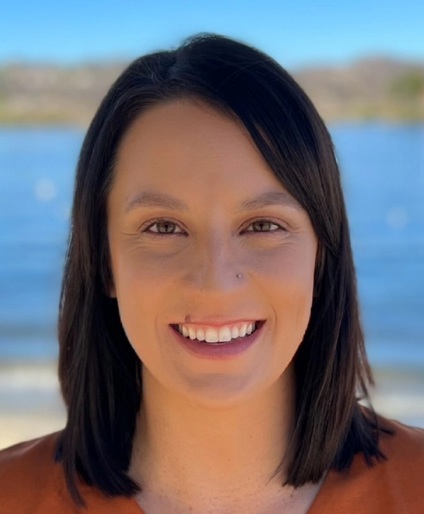
Lauren Hammond, MS in counseling personal statement tutor
Table of Contents
- Counseling personal statement tips
- What to include - and avoid
- Counseling personal statement examples
- Learn more about Lauren, our counseling personal statement expert.
MS in Counseling Personal Statements
On this page you'll find six examples of effective MS in Counseling personal statements for CACREP-accredited programs in clinical mental health counseling, school counseling, addictions counseling, and related tracks. Each example is followed by a breakdown of what makes it work.
If you are deciding between a counseling program and a Master of Social Work or PsyD program, the tips below also address how to distinguish your statement based on the specific degree you're pursuing.
Lauren Hammond is our MS in Counseling application essay expert and has been helping people write their graduate school personal statements for several years. Whether you just want some feedback on a draft, or you're staring at a blank Word doc and don't know where to begin, she is happy to help!
Contact Lauren directly at 951-395-4646 (phone or text), or send us an email. Working with Lauren is $225 per hour, or $995 for 5 hours.
Consultations are free.
3 Tips for Strong Counseling Personal Statements
1. Articulate Your Counseling Track and Population Focus
- CACREP programs offer multiple tracks: Clinical Mental Health Counseling (CMHC), School Counseling, Marriage, Couple and Family Counseling, Addiction Counseling, Clinical Rehabilitation Counseling and others, though each program offers only some of them. Name your track and explain why your experience points you toward it. Wanting to help people doesn't explain the choice.
- Be specific about the population you want to serve: Adolescents, adults with serious mental illness, college students, veterans, survivors of trauma, people in recovery from addiction, elementary school children - naming one shows you've thought about who you will actually be working with. A line about "helping people with mental health challenges" could come from any applicant.
- Distinguish counseling from social work, psychology, and marriage and family therapy: If you considered other graduate paths, explain why counseling, and this track, fit you better. Counseling has its own professional identity, built around development, wellness and prevention, and readers want to see that you know what it is.
Example:
"I am applying to the clinical mental health counseling track because I want to work in community mental health: outpatient care that is easy to reach and built around long-term relationships with adults living with anxiety and depression, or with the effects of trauma. An MSW or an MFT degree could also get me there, but counseling's emphasis on development and wellness, and on the therapeutic relationship as the main engine of change, matches how I already think about care."
2. Show Relevant Helping Experience - and Reflect on What You Learned
- Relevant experience matters: Crisis hotline work, peer counseling, case management, healthcare work, teaching, social services, youth mentorship, community organizing - programs want to see that you have been in direct service roles and that those roles have developed the interpersonal and self-awareness skills counseling requires.
- Reflection matters more than the experience itself: Strong statements say what an experience taught the applicant: how hard the work turned out to be, where their skills ran out, and what they need from training. Committees are reading for self-awareness at least as closely as for experience.
- Show that you understand the training requirements: Supervised practicum and internship hours, personal counseling (some programs require it), weekly supervision, and the post-degree supervised hours your state requires for licensure. Applicants who show they know what the training involves come across as ready for the work it takes.
Example:
"Two years on a crisis line taught me to listen without rushing to fill a silence. It also showed me where I run out. I still catch myself offering callers a solution when what they need is someone to stay on the line, and some calls, especially the ones involving psychosis, were beyond anything my volunteer training covered. I want supervised clinical training so that I can handle those calls with skill and not guesswork."
3. Handle Personal Mental Health Experience Carefully
- Many counseling applicants have personal experience with mental health challenges: It can help: it often builds empathy and curiosity about how people get better. It can also hurt if the statement suggests you haven't gained enough distance from it, or that your own healing is the main reason you want to become a counselor.
- The professional framing test: Ask yourself whether your personal experience led you to seek training or is standing in for it. Programs want to see the first. If you include it, pair it with your professional preparation and say plainly how you've worked through it.
- Personal therapy can count in your favor: Some counseling programs require personal therapy during training, and many encourage it. If you have been in therapy and can say what it taught you about the therapeutic relationship, you are showing the self-awareness programs look for.
Example:
"Three years ago I started my own therapy. A supervisor suggested it, and I also knew I had reached a point where the work asked more of me than I had to give. Sitting on the client's side of the process I hope to offer turned out to be the sharpest professional preparation I have had. I learned what it feels like when a counselor is fully paying attention, and I learned how quickly a client can tell when she isn't."
What to Include in Your Counseling Personal Statement - and What to Avoid
What to Include
- Your specific counseling track and why you chose it - clinical mental health, school, addictions, rehabilitation; don't just say "I want to be a counselor"
- Your intended population or specialty - adolescents, adults, veterans, people in recovery, school-age children; specific is better than general
- Relevant helping or direct service experience - with reflection on what it taught you about the complexity of the work and the limits of your current skills
- Evidence of self-awareness - counseling programs are explicitly assessing your capacity for self-reflection; show it through how you describe your experiences and your understanding of your own growth edges
- Your long-term career goals - private practice, community mental health, school settings, integrated healthcare, addiction treatment; be specific
- Program-specific detail - a faculty member's research focus, a practicum site, a specialty track, the program's theoretical orientation
What to Avoid
- "I have always wanted to help people" - this is the most common and least useful opening of any helping profession application; start with something specific
- Personal trauma narrative without professional context - personal experience is valid; it should not be the primary or only motivation you describe
- Statements that suggest you are applying to process your own mental health - programs are training future therapists, not providing therapy; show that you understand the distinction
- Vague descriptions of helping experiences - "I volunteered at a mental health organization" tells the committee nothing; be specific about what you did, what you observed, and what you learned
- Omitting the "why counseling vs. social work vs. psychology" question - if you're applying to more than one kind of program, write each statement for that degree and its professional identity
Video: 7 Ways to Write a Crappy Graduate School Personal Statement
For more personal statement tips, check out Vince's video: 7 Ways to Write a Crappy Graduate School Personal Statement.
Some programs ask for a statement of purpose rather than a personal statement. If one of yours does, our statement of purpose examples show three full versions with paragraph-by-paragraph analysis.
6 MS in Counseling Personal Statement Examples
Below are six example counseling personal statements. After each one, we explain what it does well.
We wrote these six ourselves as teaching models. The applicants are invented, the programs are left generic on purpose, and nothing here is a real client's statement. Read them for structure and for how specific the detail gets, not as text to borrow.
Crisis Hotline Worker to Clinical Mental Health Counseling
The call that stays with me longest began with a man saying he wasn't doing well. Then he spent five minutes telling me nothing was wrong.
I stayed on the line and I stayed quiet. Eventually he told me what was actually happening. By the end he'd agreed to call a friend, and to call us again if things got worse. The call lasted forty minutes, and I spent most of it listening. The risk assessment questions from my training took about two minutes. The rest was staying on the line while he worked up to saying it.
In two years as a crisis line counselor, at six to eight calls a shift, I have taken well over a thousand calls. They run from suicidal thoughts and relationship blowups to panic attacks and psychotic breaks. Grief, and plenty of pain that fits no category, fills in the rest. Those calls taught me more about what the therapeutic relationship demands than I expected, mostly about how much depends on what I hear before I say anything.
The work has limits, and I've hit them. A hotline is a single-session intervention. I can't follow anyone past the end of the call. I can get someone through a crisis, but I can't help them build coping skills, interpersonal skills and the self-understanding that keeps the next crisis away. That takes ongoing counseling, and I want the training to provide it.
My goal is community mental health outpatient work with adults dealing with anxiety and depression, or with what trauma leaves behind. The CMHC track fits that plan: it's person-centered and trauma-informed, and its practicum is in community mental health settings.
Why this statement works:
- The opening contradiction (he "wasn't doing well," then spent five minutes saying nothing was wrong) puts the reader inside a real call in two sentences. A weaker draft would start with "I have always been a good listener."
- "The risk assessment questions from my training took about two minutes" shows the applicant knows the protocol and also knows the protocol wasn't what kept this caller talking.
- The call volume and the range of calls (suicidal thoughts, panic attacks, psychotic breaks, grief) tell the committee the experience is broad without turning into a list of duties.
- "I can't follow anyone past the end of the call" names the exact limit of the current role, which explains why the next step is graduate training and not more volunteering.
- The last paragraph names a setting, a population and two features of the track. "I want to help people with mental illness" would give the reader nothing to check against the program.
Supported Employment Job Coach to Clinical Rehabilitation Counseling
For three years I have worked as an employment specialist at a nonprofit that contracts with our state's vocational rehabilitation agency. Most of my clients are adults with acquired brain injuries, and my job is to help them find work and keep it. Some weeks that means calling employers. Most weeks it means standing in a stockroom or a break room with someone who is learning a new job with a brain that works differently than it did two years ago.
One client, a man I'll call R., had been a union electrician until a fall from a ladder left him with a traumatic brain injury. His doctors cleared him to work but not to go back to live electrical work, and the Individualized Plan for Employment he wrote with his VR counselor called for retail. We found him a part-time stocking job at a hardware store. I made him a laminated task card for each shift, set phone alarms for his breaks, and checked in at the store twice a week. By the second month he was meeting his productivity numbers.
He quit in the third month. When I went to see him at home, he told me the work was fine. The trouble was that he had been assigned the electrical aisle, and customers kept asking him wiring questions. He knew every answer, and after each one he went out to his truck on his break and sat there. He was 41. He said it felt like visiting his own life.
I had planned for his memory and his fatigue. I had not planned for grief, and I didn't know what to do with it. I told his VR counselor, who referred him to a therapist, and we started over with a placement at a warehouse that has nothing to do with electrical work. He is still there. But I keep thinking about those three months, when nobody on his team, me included, asked him how he felt about the change in who he was.
That conversation is the main reason I'm applying to a clinical rehabilitation counseling program. My job has taught me task analysis, workplace accommodations, and how to talk to an employer about a disability without making the employer nervous. It has not taught me how to assess for depression, or how to help someone work through the loss that can come with an acquired disability. I see some version of that loss in many of my clients, and right now all I can do is notice it and pass it along.
I have taken undergraduate courses in abnormal psychology and lifespan development, and for the past year I have sat in, with clients' permission, on intake meetings at our regional VR office to learn how counselors there assess eligibility and build employment plans. Those meetings showed me how much of a rehabilitation counselor's work happens before a job search starts.
I want to work as a rehabilitation counselor with adults who have brain injuries, either at a state VR agency or in a post-acute brain injury program where counseling and job placement happen on the same team. I am applying to this program's clinical rehabilitation counseling track because it trains counselors to address adjustment to disability along with career planning, and because its practicum placements with the state VR agency lead directly to the work I want to do.
Why this statement works:
- The first paragraph shows the job (employer calls, stockrooms, clients relearning work after a brain injury) before any claim about motivation. A weaker draft would open by saying the applicant wants to "empower people with disabilities."
- The task card, phone alarms and twice-weekly check-ins show what a job coach actually does, so when R. quits anyway, the reader understands the problem was outside the reach of those tools.
- The story turns on something the applicant missed: "nobody on his team, me included, asked him how he felt about the change in who he was." Admitting a miss and naming it precisely is the self-awareness counseling programs read for.
- "It has not taught me how to assess for depression, or how to help someone work through the loss" lines the gap up with what rehabilitation counseling training covers, so the choice of track makes sense without a paragraph defending it.
- The goal names a population (adults with brain injuries) and two settings, which gives the committee something concrete to match against its placements.
Healthcare Worker to Clinical Mental Health Counseling
After four years as a medical assistant in a primary care clinic, I've learned that the reason on the appointment slip and the reason a patient came in are often different things. Last winter a man in his sixties came in for back pain for the third time in two months. While I was taking his blood pressure he mentioned that his wife had moved out in October, and then that he wasn't sleeping. I noted both in the chart, and the physician had me give him the PHQ-9 before she came in. He scored in the moderate range. She referred him to a behavioral health clinic across town, and as far as I know he never called.
Primary care treats the complaint. The mental health need underneath keeps going unaddressed, and I don't think that's because physicians fail to see it. The clinical model and the pressure of the schedule leave no room for it. I want to be the clinician who picks up what primary care can't: someone embedded in an integrated or co-located behavioral health setting, working beside primary care providers to treat the whole patient.
I've been preparing on purpose. I took coursework in psychology and psychopathology, and I spent a year volunteering with a hospice grief support program. I have also been in therapy myself, which showed me what a therapeutic relationship asks of both people in the room. My goal is to practice in integrated primary care behavioral health, a model the evidence supports more each year and one that health systems are reorganizing to make room for.
I'm applying to this program's CMHC track for its integrated care coursework and its practicum placements in primary care behavioral health settings, where I could learn this work under supervision.
Why this statement works:
- The first sentence makes an observation only someone working intake would make: the reason on the appointment slip and the reason the patient came in are often different. That establishes the applicant's vantage point at once.
- The back-pain patient turns the observation into a case. The applicant notices, documents, gives the PHQ-9 and then watches the referral go nowhere, which is the problem the rest of the statement is about.
- "I don't think that's because physicians fail to see it" keeps the statement from blaming doctors. A weaker draft would cast the applicant as the only person in the clinic who cares.
- Personal therapy gets one sentence, framed by what it taught about "both people in the room," and the statement moves on.
- The goal (integrated primary care behavioral health) grows straight out of the clinic story, so the program fit at the end doesn't read as tacked on.
Marine Veteran to Clinical Mental Health Counseling
I served eight years as a Marine infantryman, with two combat deployments. I came out with skills and a set of experiences I'm still processing, and with a clear view of where mental health care for veterans still falls short.
I've left my own trauma out of this statement on purpose, because it is about a gap in treatment. Veterans with PTSD and depression, and those carrying moral injury, need steady, evidence-based treatment from providers who understand military culture well enough to avoid feeding the stigma that keeps them out of care. As a peer support specialist I can share my own experience and help a veteran get to an appointment, but I can't treat PTSD. I want to be the counselor at that appointment: someone trained in Cognitive Processing Therapy and Prolonged Exposure who also understands what it means to have killed someone lawfully and still carry it, and who won't flinch when a veteran says so. I chose counseling over social work or psychology because I want my training centered on that therapeutic relationship.
In the three years since I left the Marine Corps, I finished the bachelor's degree in psychology I started on active duty, and for the last eighteen months I have worked as a peer support specialist at a VA medical center, where I co-lead a weekly group for combat veterans. I have also been in therapy with a provider who specializes in military populations, which taught me what it takes for a veteran to trust a civilian clinician.
My goal is to practice as a licensed counselor who specializes in trauma and military populations, in time within a VA or a community-based mental health program for veterans. I am applying to this program's clinical mental health counseling track for its trauma-focused coursework and its practicum partnerships with veterans-serving organizations.
Why this statement works:
- "I've left my own trauma out of this statement on purpose" settles the disclosure question in one line and tells the reader where the statement is going. A weaker draft would either spend half its length on combat or skip it in a way the reader notices.
- Naming Cognitive Processing Therapy and Prolonged Exposure shows the applicant knows which treatments are standard for PTSD; "evidence-based care" on its own would not.
- The peer support role sets up the limit plainly: he can get a veteran to the appointment but can't treat PTSD. That is the reason for a counseling degree, stated in one sentence.
- The preparation paragraph gives specifics a reader can weigh (the finished degree, eighteen months at a VA medical center, a weekly group) in place of a stack of one-line claims.
- Personal therapy is framed by what it taught him about veterans trusting civilian clinicians, which makes it a professional point and not a confession.
Substance Abuse Recovery Support to Addictions Counseling
I have been in recovery from alcohol use disorder for six years, and for the last three of them I have worked as a recovery coach at a community recovery center, where I support people in early recovery, facilitate peer support groups, and connect people to the clinical services they need. I am applying to an addictions counseling program because I want to become one of those clinical services.
Recovery coaching does a lot, and it has limits. I can share my own experience and offer hope. I can help someone find their way through the recovery system, and sit beside them in a meeting. What I cannot supply is clinical assessment or evidence-based treatment, or the kind of therapeutic relationship that can address what often sits underneath substance use, such as trauma, long-standing relational patterns, and co-occurring depression or anxiety. At my center, the people who stay in recovery longest usually have both a coach and a counselor. I want to be the counselor.
I have thought carefully about what my own history means in a clinical role. Six years of sustained recovery give me the distance that ethical practice requires, and I am well past the early days. I have been in therapy myself throughout my recovery, I meet weekly with a clinical supervisor in my coaching role, and I have read the research on counselors in recovery, including the boundary questions it raises about self-disclosure. My history will help me in this work only if I keep managing it, and I expect supervision in the program to be part of how I do that.
I plan to counsel adults in a community-based treatment setting for substance use, one on one and in groups, both the newly sober and people with years behind them. I am applying to this program for its addiction counseling concentration, its emphasis on co-occurring disorders, and its practicum partnerships with recovery-oriented treatment providers.
Why this statement works:
- The first sentence puts six years of recovery and three years of coaching side by side, so the reader meets the history and the professional role together. A weaker draft would open with the applicant's worst night of drinking.
- The second paragraph lists what a coach can do and then what a coach can't (clinical assessment, evidence-based treatment), which shows the applicant knows where peer work ends and clinical work begins.
- "I meet weekly with a clinical supervisor" and the mention of self-disclosure boundaries answer the question every reader of this statement will have: how will this person handle their own history with clients?
- The closing names a population (adults at every stage of recovery), a setting and two formats (individual and group), which a committee can match against its practicum sites.
Career Changer - Education to Counseling
Last March a junior stopped by my classroom to ask for an extension on her research paper. By the time the bell rang she had told me she'd been sleeping in her car two nights a week since her mom's boyfriend moved in, and I walked her down to the counseling office.
I've taught high school English for seven years, and I've come to think those conversations are the most important work I do. They happen in the five minutes before class or the five after, and I'm not trained for them.
I could earn a master's in education and stay in the classroom, but the part of my job I want to do full time is the part that happens after the bell, and that is counseling work. After seven years I can see that what students bring me goes beyond what teaching is built to handle. The counselor I walked that junior to had training I don't have: how to assess whether a student is safe, when to bring in a family or an outside agency, and how to run a group for students dealing with the same thing.
I tested the idea. I took coursework in psychology and counseling theory, spent a semester co-leading a lunch group for ninth graders with our school counselor, and talked with school and clinical counselors about what their days involve. I also asked myself whether this was burnout, and I don't think it is. I still like teaching, and my last two evaluations were the best I've had. What I want is a different set of tools for work I'm already doing with students.
I'd like to be a school counselor, working with the adolescents I already know. I'm applying to the school counseling track for its secondary school practicum and its coursework in adolescent development, which would let me keep working with the age group I know best.
Why this statement works:
- The opening moves from an extension request to a student sleeping in her car in two sentences. That shows the gap between teaching and counseling in one scene; a line like "students trust me with real things" would tell the reader nothing.
- Walking the student to the counseling office shows the teacher knows the referral path and where a teacher's role stops.
- The third paragraph says what the school counselor could do that the teacher couldn't (safety assessment, bringing in families and agencies, running groups), which answers why a counseling degree and not a master's in education.
- The burnout question is raised and answered with evidence ("my last two evaluations were the best I've had"). Committees reading a teacher's application will wonder about burnout, and a flat denial wouldn't settle it.
- Co-leading a lunch group with the school counselor is direct experience of school counseling work, which tells a reader more than coursework alone.
Have a draft? Try our free personal statement checker. It checks your length, opening line, stock phrases, signs of AI writing, and sentence rhythm. Your draft never leaves your browser.
Feeling stuck?
Lauren Hammond, our MS in counseling personal statement editor, would be happy to help - whether you just need a second opinion on a draft or you're starting from scratch.
Text or call her at 951-395-4646, or send us an email.
Lauren works with you on Zoom and in Google Docs, so you get both real-time coaching and clean, trackable revisions. Most clients use 2 to 4 sessions.
Meet Lauren Hammond, MS in counseling personal statement tutor
Lauren: I earned my Bachelor's Degree in Literature and Writing, with a concentration in Writing, at California State University San Marcos (CSUSM) and my Master's Degree in English and Comparative Literature at San Diego State University (SDSU).
I completed my PhD in English at the University of California Riverside (UCR) in September 2023 and then worked as UCR's Graduate Writing Center Specialist and graduate Fulbright Program Advisor. I now teach at Azusa Pacific University, where I'm an Assistant Professor and Lead Faculty in the Writing Program.
I have been a writing consultant for more than 10 years, and I've helped people with research writing, thesis/dissertation projects, rhetorical and literary analyses, writing in the humanities, grammar/sentence mechanics, and more. My work for VKTP includes thesis and dissertation editing and coaching, especially in the humanities and social sciences, as well as graduate school application materials such as personal statements, diversity statements and research statements, and job market materials for academic and alt-academic positions, including resumes, CVs and cover letters.
During my downtime, I love hanging out with my husband, our daughter, and our two dogs, Link and Leia! My favorite activities are going on the boat, cruising on the golf cart, and making our way through all of the local eateries. When we aren't out and about, I typically enjoy reading and watching movies.
Working with Lauren is $225 per hour or $995 for a package purchase of 5 hours. You can reach her at 951-395-4646 (phone or text), or by sending us an email.
P.S. Our partner Julie can also help you prepare for your counseling program admissions interviews! Learn more about her professional voice training for interview prep.
P.S. Some counseling programs require the GRE - we can help with that too!
Love For Lauren
Frequently Asked Questions
How long should an MS in Counseling personal statement be?
Follow each program's prompt, since lengths vary; many ask for something in the range of 500 to 1,000 words or two to three pages. Whatever the length, show self-awareness, relevant helping experience and what you learned from it, the track and population you have in mind, and why you want clinical work.
What is the difference between an MS in Counseling, an MSW, and an MFT?
An MS in Counseling prepares graduates for licensure as LPC, LMHC, or equivalent depending on state, emphasizing the therapeutic relationship and developmental wellness. An MSW prepares LCSWs with stronger emphasis on systems, policy, and community. An MFT focuses on relational and systemic approaches. All three can lead to independent clinical practice after post-degree supervised hours; they differ mainly in training focus and professional identity.
What do CACREP counseling programs look for in applicants?
Relevant direct service experience, self-awareness, a clear reason for choosing counseling and your track, and a realistic picture of the training (practicum, internship, and at some programs personal counseling). Some counseling programs still require or recommend the GRE, and many have dropped it, so check each program's requirements. The personal statement carries a lot of weight because it is where programs look for self-awareness and skill with people.
Should I mention personal mental health experience in my statement?
You can, if you handle it carefully. Pair it with your professional preparation and say what you have learned from it. Programs are training clinicians, so show that your experience led you to build professional skills and isn't standing in for them.
Can I use AI to write my counseling personal statement?
AI doesn't know your helping experiences or why you want this work, and the self-awareness programs look for has to come from you. Write the statement yourself, or work on your draft with Lauren.
Do MS in Counseling programs require the GRE?
Some counseling programs still require or recommend the GRE, and many have dropped it, so check each program's requirements. If you need GRE prep, our tutoring team can help.
BTW, Lauren can also help with:
- Dissertation and thesis editing
- Graduate school CV and resume examples
- Teaching statement examples
- Academic cover letter examples
- Diversity statement examples
- Research statement examples
- MSW (Social Work) personal statements
- Marriage and Family Therapy personal statements
- PsyD personal statements
- Clinical Psychology PhD personal statements
- ABA / BCBA personal statements
- CRNA personal statements
- Nurse Practitioner personal statements
- Physician Assistant personal statements
- Genetic Counseling personal statements
- MHA (Health Administration) personal statements
- Health Informatics (MSHI) personal statements
- Dental school personal statements
- PharmD personal statements
- Optometry (OD) personal statements
- Audiology (AuD) personal statements
- Radiation Therapy personal statements
- Respiratory Therapy personal statements
- Chiropractic (DC) personal statements
- Podiatry (DPM) personal statements
- Athletic Training personal statements
- MBA personal statements
- Law School personal statements
- MPH statement of purpose
- PhD personal statements
- Post Doc personal statements
- Fellowships and Grants personal statements