Anesthesiologist Assistant Personal Statement Examples and Tutoring
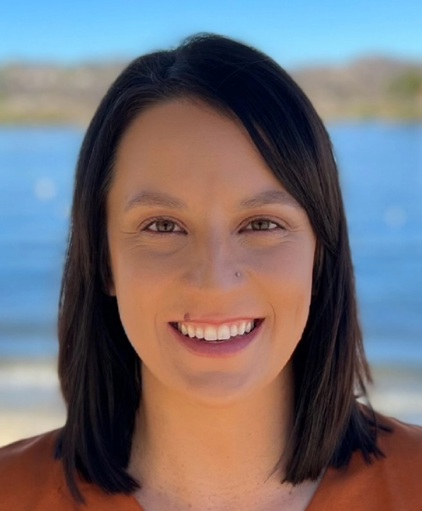
Lauren Hammond, anesthesiologist assistant personal statement tutor
Table of Contents
- AA personal statement tips
- What to include - and avoid
- AA personal statement examples
- Learn more about Lauren, our AA personal statement expert.
Anesthesiologist Assistant Personal Statements
On this page you'll find six examples of effective certified anesthesiologist assistant (CAA) personal statements for AA programs, written from the perspective of a pre-med PACU technician, a biomedical equipment technician, a surgical technologist, an anesthesia technician, a clinical research coordinator, and a cardiac rehab exercise physiologist. Each example is followed by a breakdown of what makes it work.
The anesthesiologist assistant (AA) is a master's-level anesthesia provider who practices exclusively under the supervision of a physician anesthesiologist - a model distinct from the CRNA, which requires a nursing background and may practice independently in some states. If you are also considering CRNA programs, see our separate CRNA personal statement page - the two credentials have different entry requirements, practice models, and application approaches.
Lauren Hammond is our AA application essay expert and has been helping people write their graduate school personal statements for several years. Whether you just want some feedback on a draft, or you're staring at a blank Word doc and don't know where to begin, she is happy to help!
Contact Lauren directly at 951-395-4646 (phone or text), or send us an email. Working with Lauren is $225 per hour, or $995 for 5 hours.
Consultations are free.
3 Tips for Strong AA Personal Statements
1. Explain Why AA Over MD or CRNA - This Is the Defining Question
- AA programs attract applicants who also considered medicine: Unlike CRNA applicants who come from nursing, AA applicants typically have pre-med or pre-health science backgrounds and have often considered MD programs. Admissions committees want to understand what specifically drew you to the anesthesiologist assistant role rather than pursuing anesthesiology as a physician. Your answer should name what draws you to the AA model itself, so it doesn't read as a retreat from medical school.
- Name what is specific to the AA model: The AA route offers dedicated anesthesia training at the master's level, a care team model with physician anesthesiologists, and a career in anesthesia from the first semester instead of after years of general medical training. These are real differences from the MD route. Say which one matters to you and why.
- Also distinguish from CRNA where relevant: AAs come from pre-med backgrounds instead of nursing, always practice under physician anesthesiologist supervision, and usually train in a medical school or academic anesthesiology department. If you considered both paths, explain why you chose AA.
Example:
"I want to spend my career practicing anesthesia, and I want to start learning it now, so I am applying to AA programs instead of medical school. The physician route is four years of medical school and four years of residency before I would practice anesthesia on my own. An AA program teaches anesthesia from the first semester and puts me in the OR as part of an anesthesia care team. I have thought about what I give up by not becoming the physician who directs that team, and I am comfortable with that trade."
2. Demonstrate Specific Anesthesia or Perioperative Clinical Experience
- OR observation is essential - describe specific cases: AA programs expect anesthesia shadowing, and many set a minimum number of hours. Pick one or two cases and describe what the anesthesia provider did: the induction, a drop in blood pressure they treated, a difficult airway, the emergence. That level of detail shows the committee you were paying attention to the anesthesia care and can describe it accurately.
- Any perioperative clinical experience is directly relevant: Anesthesia technician, surgical technologist, PACU nurse aide, OR circulator assistant, anesthesia research coordinator - connect it explicitly to the anesthesia practice you observed and what it prepared you for.
- High-acuity non-OR experience also matters: EMT/paramedic, emergency medical experience, ICU observation - show that you have worked in high-stakes clinical environments where time-critical decision-making is required.
Example:
"Two years as an anesthesia technician taught me what a correctly set up breathing circuit looks like and how to find a leak before the case starts. I have set up and checked the machine and suction for hundreds of inductions. Twice I was in the room for a difficult airway that needed the video laryngoscope. Both times the AA called for it early, told the team each step before she took it, and had the tube placed and confirmed with end-tidal CO2 within a couple of minutes. I want the training behind those calls."
3. Show Scientific Depth and Clinical Readiness for a Graduate Medical Program
- Many AA programs are based in medical schools and teach at that level: Show that you can handle graduate-level pharmacology, physiology and clinical science. If you can write accurately about drug mechanisms, airway anatomy, hemodynamic monitoring or neuromuscular blockade, the committee has less reason to doubt you can keep up with the coursework.
- Clinical readiness means comfort with high stakes: In anesthesia, a mistake can hurt a patient within minutes. If you have worked somewhere errors had real consequences for patients, describe one specific moment that shows how you work under pressure.
- Connect your science preparation to anesthesia specifically: A biochemistry background that gives you depth in drug metabolism, a physiology research project on hemodynamic responses, a physics or engineering background that applies to anesthesia machine function - connect whatever academic preparation you bring to the clinical science of anesthesia.
Example:
"In physiology I spent weeks on how intrathoracic pressure affects venous return, the Frank-Starling relationship, and what positive pressure ventilation does to cardiac output. Then I watched an AA manage hypotension in a patient on high PEEP. She gave a fluid bolus and a dose of phenylephrine, and I could follow the reasoning behind both. I could explain the mechanism, but I could not yet have chosen the treatment or the dose, and that is what I want from training."
What to Include in Your AA Personal Statement - and What to Avoid
What to Include
- Your answer to "why AA over MD or CRNA?" - a specific reason that shows you understand how the AA role works
- Specific OR or perioperative clinical observation - name the case types, the anesthesia events you observed, what the provider did that required training to do
- Any perioperative or high-acuity clinical experience - anesthesia tech, surgical tech, EMT/paramedic, PACU, OR observation; connect it to anesthesia preparation
- Scientific depth relevant to anesthesia - pharmacology, physiology, airway anatomy; show academic readiness for a medical school-level curriculum
- High-stakes clinical environment experience - demonstrate that you can function under pressure in real clinical settings
- Program-specific detail - medical school affiliation, simulation training, clinical rotation sites, case volume
What to Avoid
- Describing AA as "like being an anesthesiologist but faster" - the AA is a distinct credential with a specific collaborative practice model; frame it as a deliberate choice, not a shortcut
- Leaving "why not MD?" unanswered - admissions committees will wonder; address it directly
- Vague OR observation descriptions - "I observed surgeries" tells the committee nothing; describe what the anesthesia provider did specifically
- Framing the collaborative model negatively - AAs practice under physician anesthesiologist supervision; framing this as a limitation signals misunderstanding of the credential's identity
- Submitting the same statement to every program - programs vary in clinical volume, simulation emphasis, and anesthesia subspecialty exposure; tailor accordingly
Video: 7 Ways to Write a Crappy Graduate School Personal Statement
For more personal statement tips, check out Vince's video: 7 Ways to Write a Crappy Graduate School Personal Statement.
Some programs ask for a statement of purpose rather than a personal statement. If one of yours does, our statement of purpose examples show three full versions with paragraph-by-paragraph analysis.
6 Anesthesiologist Assistant Personal Statement Examples
Below are six example AA personal statements. After each one, we explain what it does well and why.
We wrote these six ourselves as teaching models. The applicants are invented, the programs are left generic on purpose, and nothing here is a real client's statement. Read them for structure and for how specific the detail gets, not as text to borrow.
Pre-Med Student and PACU Technician to AA Program
The man in bay six had his gallbladder out that morning, and his CPAP machine was at home. He came out of the OR drowsy but talking, and for the first twenty minutes his numbers looked fine. Then his oxygen saturation started sliding every time he dozed off: 91, then 89, then 87. The PACU nurse I was working with woke him, raised the head of the bed, and sent me for the unit's CPAP machine while she paged anesthesia.
The AA who had done his case came back within a few minutes. She checked his airway, asked what he had received since arrival, and went through her own record out loud: the fentanyl and hydromorphone in the OR, sugammadex at the end, dexamethasone and ondansetron for nausea. She put him on CPAP, held off on further opioids, and asked the nurse to use acetaminophen and ice for his pain. When I took his next set of vitals he was asleep and holding 95 percent. Before she left, she told the nurse she would have planned his pain control differently if she had known how severe his sleep apnea was, and she wrote that into her note.
I have worked as a PACU patient care technician for two years while finishing my pre-medical coursework. My job is vitals, warm blankets, repositioning, ice chips, and getting equipment to the nurse before she has to ask twice. It has put me at the end of hundreds of anesthetics, and the man in bay six is the case I think about most. It showed me how much of a patient's first hour after surgery is decided by choices made in the OR before he ever reaches us.
For most of college I planned on medical school, and I took the MCAT. What changed my mind was talking with the AAs and anesthesiologists who came through our unit about their work. I want to spend my career in anesthesia and nothing else. An AA program would put me in the operating room as part of an anesthesia care team after a little over two years of training. The physician route is four years of medical school and four of residency, and most of medical school happens outside anesthesia. I also know what I am choosing. The anesthesiologist directs the care team, and as an AA I will always practice under that supervision. Having watched those teams handle patients like the man in bay six, I think the model serves patients well, and I am comfortable working inside it.
My main gap is time in the OR itself. I have 40 hours of anesthesia shadowing, mostly in general and orthopedic surgery, and I saw my first rapid sequence induction there. I understand the drugs from my pharmacology course much better than I understand how a provider chooses among them for one particular patient, and that judgment is what I need the training for.
I want to work in a hospital where AAs cover a large volume of general surgery, and I want to get good at the planning that AA described: reading the chart for sleep apnea, obesity and opioid history, and building an anesthetic that keeps the patient safe after he leaves the room. I am applying to this program for its rotations at high-volume surgical hospitals and for the simulation time students get before their first cases.
Why this statement works:
- The statement opens in bay six with the saturation falling ("91, then 89, then 87") and saves the motive for later. A weaker draft would open with "I have always been drawn to anesthesia" and bury the one real case in the third paragraph.
- The applicant keeps their own role modest and accurate: fetching the CPAP machine, taking the next set of vitals. The AA does the anesthesia work. AA committees read tech applicants closely for exactly this kind of honesty about scope.
- The AA's remark that she "would have planned his pain control differently" turns one PACU shift into the argument for the whole essay: the applicant wants to be the person doing that planning.
- The "why not MD" answer uses real training lengths and says plainly that an AA "will always practice under that supervision." Applicants who skip the supervision point, or treat it as a drawback, leave the committee to raise it in the interview.
- The gap paragraph admits only 40 shadowing hours and a weak grasp of how providers choose drugs. Naming one limit like that makes the earlier claims easier to believe.
Biomedical Equipment Technician to AA Program
The call came from OR 7 at 7:10 on a Tuesday. The anesthesia machine had failed its morning leak check, and the first patient was already in pre-op. I had been a biomedical equipment technician at a 400-bed hospital for three years by then, and anesthesia workstations took up most of my week. I found the CO2 absorbent canister seated badly after a change, reseated it, and ran the leak test again. It passed. The AA assigned to the room then ran her own full checkout before she let anyone bring the patient back. At the time I took that a little personally. I understand it now.
My degree is in electrical engineering, and I took the biomed job because I liked hospitals more than labs. I did preventive maintenance on ventilators, infusion pumps, patient monitors and anesthesia machines: calibrating flow sensors, testing vaporizer output, and checking that alarms fired at the limits they were set for. I knew how every part of an anesthesia machine worked, and I had never thought much about how anyone decided what to do with it.
That changed on the morning a ventilator alarm brought me into OR 3 during a case. The machine was reporting low tidal volumes. By the time I got there, the AA had switched to a self-inflating bag connected to oxygen and was watching the capnograph as she squeezed. She told me in two sentences what she had seen, kept ventilating, and asked for the anesthesiologist to come in. I found a cracked connector in the expiratory limb of the circuit and replaced it, and the case went on. Afterward she walked me through what she had been watching on the monitor while I worked, and why she went to the bag before trying anything else. I had tested that alarm many times on the bench, and I had never once pictured the patient connected to it while it sounded.
After that I asked questions whenever I was in an AA's or anesthesiologist's room, and eventually I asked one of them whether I could shadow. I now have 60 hours of anesthesia observation in general, orthopedic and cardiac cases. In a post-baccalaureate program I have finished the biology, organic chemistry and biochemistry I skipped as an engineering student, and I am taking physiology this spring. The science is new to me in a way the equipment is not, and I expect to start pharmacology further back than classmates who were pre-med from their first year.
I looked at medical school and decided against it. I want to spend every working day at the head of the bed, and the AA model, with focused anesthesia training and an anesthesiologist directing the team, fits that better than eight more years before I could practice. I would like to end up in a hospital with a large cardiac surgery service, where the monitoring and equipment are most complex. I am applying to this program for its simulation center, where I can make my first mistakes on a mannequin, and for its clinical sites with a high volume of cardiac cases.
Why this statement works:
- The 7:10 a.m. failed leak check shows what a biomed tech does in one short scene. A job description ("I maintained anesthesia equipment") would tell the reader less in more words.
- "At the time I took that a little personally" is an honest admission that the rest of the essay pays off: by the end, the applicant understands why the AA checked his work.
- In the OR 3 scene the AA moves to a self-inflating bag and watches the capnograph before anyone troubleshoots. The applicant describes her priorities correctly and keeps himself in his real role, finding and replacing the connector.
- The fourth paragraph says the applicant will "start pharmacology further back" than pre-med classmates. Engineering applicants who claim their background covers everything make the committee more doubtful, not less.
- The MD answer is two sentences tied to wanting to be "at the head of the bed" every day. It can stay short because the scenes above have already shown that pull.
Surgical Technologist to AA Program
Most of my cases at the back table start with an induction and end with an emergence. Five years as a surgical technologist have put me in the room for those two transitions across thousands of cases in general and orthopedic surgery as well as vascular and cardiac surgery. When the anesthesia provider nods, the case is ready to begin, and the person at the back table knows it. For two years now my attention has kept drifting to the far side of the drape.
From the back table, I started to notice how much of a case's course depends on the anesthesia provider. A patient arrives hemodynamically stable and leaves the OR stable after a procedure that posed real physiologic challenges. Most of the people scrubbed in never see why. Usually the reason was a string of small anesthesia decisions, such as a vasopressor started before the pressure fell or fluids adjusted to the blood loss, and I only caught them because I had started watching that side of the drape.
So far the anesthesia-specific observation adds up to 100 hours spent with AAs and anesthesiologists from pre-op assessment through induction and into intraoperative management. That time rests on an operational familiarity most pre-med applicants can't claim: the surgical environment, the case types, the equipment and the way a clinical team works around the AA. What I still lack is the training to practice anesthesia instead of watching it.
The goal is a cardiac or vascular surgical program, where the patients are physiologically most complex and where my years in cardiac and vascular rooms would count for the most. This program appeals for its cardiac anesthesia case volume and for its medical school-affiliated anesthesia department.
Why this statement works:
- "Most of my cases at the back table start with an induction and end with an emergence" frames five years of surgical work around the two moments that belong to anesthesia. Opening with the job title would waste the first line.
- The second paragraph names anesthesia moves a surgical tech could actually see, "a vasopressor started before the pressure fell" and "fluids adjusted to the blood loss," so the claim about watching that side of the drape has evidence behind it.
- The applicant gives anesthesia credit without running down the surgeons. That matters because the committee is picturing this person on a care team in that same room.
- "What I still lack is the training to practice anesthesia instead of watching it" names the gap in one plain sentence and moves on.
- The cardiac and vascular goal follows from the case mix in the first paragraph, so the program fit line connects to what the applicant has already done.
Anesthesia Technician to AA Program
For three years I have worked as an anesthesia technician, preparing anesthesia equipment, assisting with airway management in difficult intubations, managing the anesthesia cart and supporting the provider through the entire case. During a machine check I can usually find a circuit leak before the provider arrives. When the provider asks for a video laryngoscope instead of the direct one already on the cart, I know what that request means. I have been in the room for anesthesia emergencies, including anaphylaxis, laryngospasm and one malignant hyperthermia crisis, when my job was to bring the MH cart and help mix the dantrolene while the AA and anesthesiologist ran the response.
During the MH crisis I knew where every item on the cart was and what it was for, but I could not have said why the team chose the dantrolene dose it did or when to start active cooling. Three years in this job have shown me how much I know about the equipment and how little I know about the decisions made with it. I want to learn to make those decisions myself.
My pre-medical science prerequisites are finished, with a strong GPA, and my GRE score is competitive. Beyond my technician duties I have logged 150 hours of anesthesia observation, taking in the pre-operative assessment and the induction pharmacology, then the way the team handles physiologically complex patients. My goal is an academic medical center with a strong anesthesia subspecialty program, where I would practice as a certified anesthesiologist assistant. I am applying here for the case volume and for training inside a medical school, close to the anesthesiology department I would be working with.
Why this statement works:
- The first paragraph runs through the tech's duties, then narrows to a claim a reader can picture: finding a circuit leak before the provider arrives.
- The MH detail, "bring the MH cart and help mix the dantrolene," shows what the applicant actually did during an emergency. A weaker draft would say "I have witnessed anesthesia emergencies" and stop.
- The second paragraph uses that same crisis to show the gap: knowing every item on the cart but not why the team chose the dose or when to start cooling. That is a concrete reason to want AA training, and it replaces three stacked "I want" lines.
- The last paragraph covers academics in two sentences: finished prerequisites, a GPA, a GRE score, and 150 observation hours on top of the job. Readiness gets stated and the essay moves on.
Research Background + Clinical Experience to AA Program
I hold a degree in biomedical sciences and spent two years as a clinical research coordinator on a cardiac anesthesia outcomes study. I screened patients and obtained consent. I gathered data across the operative period and worked alongside the anesthesia team before surgery and after it. In practice that meant watching every anesthesia management decision as someone trying to understand its outcome, with no training to understand its mechanism.
The research still prepared me in ways I didn't see at first. I understand the outcomes evidence behind many anesthesia protocols, and I know the structure of the perioperative assessment well enough to follow it. Along the way I built relationships with AAs and anesthesiologists, generous mentors who kept explaining their clinical reasoning to a research coordinator who kept asking questions.
I also spent 90 hours in direct OR observation while the study ran. I chose the cases carefully: the ones with the anesthesia management decisions whose outcomes I was tracking. Seeing the management before it became a number changed how I understood both, and it told me where I want to work: in the OR itself, having already spent two years with the data.
I want to practice cardiac anesthesia as a certified anesthesiologist assistant, at a center that studies its own perioperative outcomes, so that checking what happened to patients after they left the OR stays part of the job. This program fits: it has a cardiac anesthesia program and an active clinical research program in perioperative outcomes.
Why this statement works:
- "Watching every anesthesia management decision as someone trying to understand its outcome, with no training to understand its mechanism" states the applicant's gap in a single sentence in the first paragraph.
- The line about mentors who "kept explaining their clinical reasoning to a research coordinator who kept asking questions" shows initiative and hints at where the letters of recommendation will come from.
- The 90 observation hours were picked to match the cases in the study. That tells the reader the shadowing had a purpose beyond meeting a minimum.
- The closing ties the cardiac goal to a program that studies its own outcomes, so the fit line rests on two years of the applicant's actual work.
High-Acuity Clinical + Science Background to AA Program
Cardiac rehabilitation and anesthesia look like unrelated fields until you describe what each one does with a heart and a pair of lungs. My degree is in exercise physiology, and I spent two years as a cardiac rehabilitation clinical exercise physiologist, using monitored exercise to build cardiopulmonary adaptation in patients who had survived a cardiac event or surgery. Now I want to work on the other side of that surgery, where anesthesia manages the same physiology so that the operation can proceed safely. In rehab I watched heart rate and blood pressure respond to a treadmill; in the OR the stress comes from induction, positive pressure ventilation and blood loss.
That background prepares me more specifically than the path suggests. I read ECG telemetry and blood pressure responses to exertion every day, and I know cardiopulmonary exercise physiology in more detail than most pre-medical coursework requires. I've also worked with the post-cardiac surgery population, which supplies a large share of anesthesia's complex cases. Over two years in rehab I came to see that the part of my patients' story that drew me most was the intraoperative management that preceded their recovery, more than the recovery itself.
I accumulated 100 hours of OR observation, concentrating on cardiac anesthesia cases where my physiology background gave me the most context. I also finished post-baccalaureate pre-medical coursework (biochemistry and organic chemistry, the foundation the AA curriculum requires). My GRE scores are competitive.
The goal is cardiac anesthesia practice as a certified anesthesiologist assistant, where the exercise physiology and cardiopulmonary expertise I have spent four years developing turn directly into intraoperative management of a patient's physiology. What draws me to this program is the specialty training in cardiac anesthesia, and a curriculum embedded in a medical school.
Why this statement works:
- The opening line, "look like unrelated fields until you describe what each one does with a heart and a pair of lungs," deals with the unusual career path before the reader can question it.
- The rehab-to-OR comparison is concrete: a treadmill on one side; induction, positive pressure ventilation and blood loss on the other. A reader who knows anesthesia can see the applicant already thinks in the right terms.
- "I read ECG telemetry and blood pressure responses to exertion every day" swaps a vague claim about physiology knowledge for a daily task the committee can picture.
- Post-bacc biochemistry and organic chemistry plus GRE scores answer the academic question. An exercise physiology graduate who skipped this would leave a gap.
- Spending the 100 observation hours on cardiac cases ties the shadowing directly to the stated goal.
Have a draft? Try our free personal statement checker. It checks your length, opening line, stock phrases, signs of AI writing, and sentence rhythm. Your draft never leaves your browser.
Feeling stuck?
Lauren Hammond, our anesthesiologist assistant personal statement editor, would be happy to help - whether you just need a second opinion on a draft or you're starting from scratch.
Text or call her at 951-395-4646, or send us an email.
Lauren works with you on Zoom and in Google Docs, so you get both real-time coaching and clean, trackable revisions. Most clients use 2 to 4 sessions.
Meet Lauren Hammond, anesthesiologist assistant personal statement tutor
Lauren: I earned my Bachelor's Degree in Literature and Writing, with a concentration in Writing, at California State University San Marcos (CSUSM) and my Master's Degree in English and Comparative Literature at San Diego State University (SDSU).
I completed my PhD in English at the University of California Riverside (UCR) in September 2023 and then worked as UCR's Graduate Writing Center Specialist and graduate Fulbright Program Advisor. I now teach at Azusa Pacific University, where I'm an Assistant Professor and Lead Faculty in the Writing Program.
I have been a writing consultant for more than 10 years, and I've helped people with research writing, thesis/dissertation projects, rhetorical and literary analyses, writing in the humanities, grammar/sentence mechanics, and more. My work for VKTP includes thesis and dissertation editing and coaching, especially in the humanities and social sciences, as well as graduate school application materials such as personal statements, diversity statements and research statements, and job market materials for academic and alt-academic positions, including resumes, CVs and cover letters.
During my downtime, I love hanging out with my husband, our daughter, and our two dogs, Link and Leia! My favorite activities are going on the boat, cruising on the golf cart, and making our way through all of the local eateries. When we aren't out and about, I typically enjoy reading and watching movies.
Working with Lauren is $225 per hour or $995 for a package purchase of 5 hours. You can reach her at 951-395-4646 (phone or text), or by sending us an email.
P.S. Our partner Julie can also help you prepare for your AA program admissions interviews! Learn more about her professional voice training for interview prep.
P.S. AA programs accept either the GRE or the MCAT, so check each program's requirements - we can help with that too!
Love For Lauren
Frequently Asked Questions
How long should an AA personal statement be?
Most AA programs use CASAA, whose essay has a 4,500-character limit, including spaces. That works out to roughly 650 to 800 words. Many programs admit small classes, so each statement gets a close read. Use the space to show you understand the anesthesia care team model, describe specific anesthesia observation, and give a clear reason you chose AA. For every application's limit, see our guide to how long a personal statement should be. For what each application asks, see our list of personal statement prompts.
What is the difference between an AA and a CRNA?
Both are non-physician anesthesia providers. AA programs require pre-med science prerequisites rather than a nursing degree, and AAs always practice under the supervision of a physician anesthesiologist. CRNAs require a nursing background and critical care experience, and may practice independently in many states. Many AA programs are based in medical schools or academic anesthesiology departments, while CRNA programs are usually run through nursing or nurse anesthesia schools. Both require national certification exams.
What do AA programs look for?
A strong science GPA, competitive GRE or MCAT scores, healthcare clinical experience, OR or anesthesia observation (typically 60-100+ hours), letters including one from a physician anesthesiologist or AA, and a statement that shows you understand the AA scope and gives a specific reason you chose AA over medicine or other anesthesia pathways.
In which states can AAs practice?
AAs can currently practice in about 20 states and jurisdictions, including DC, and the list changes as states pass new licensing laws. Check the American Academy of Anesthesiologist Assistants (AAAA) for current state-by-state authorization before applying.
Can I use AI to write my AA personal statement?
AI has no access to the cases you observed or your actual reasons for choosing AA, and those details are what the committee reads for. Write the statement yourself or work with Lauren.
Do AA programs require the GRE?
Most AA programs require a graduate admissions test, and most accept either the GRE or the MCAT. Expected scores vary, so check each program's requirements. If you need GRE prep, our tutoring team can help.
BTW, Lauren can also help with:
- Dissertation and thesis editing
- Graduate school CV and resume examples
- Teaching statement examples
- Academic cover letter examples
- Diversity statement examples
- Research statement examples
- CRNA personal statements
- Perfusion Science personal statements
- Physician Assistant personal statements
- Nurse Practitioner personal statements
- Respiratory Therapy personal statements
- Biomedical Sciences MS personal statements
- Radiation Therapy personal statements
- Exercise Physiology personal statements
- Dental school personal statements
- Optometry (OD) personal statements
- PharmD personal statements
- Kinesiology MS personal statements
- MHA (Health Administration) personal statements
- PhD personal statements
- Post Doc personal statements
- Fellowships and Grants personal statements