Kinesiology Personal Statement Examples and Tutoring
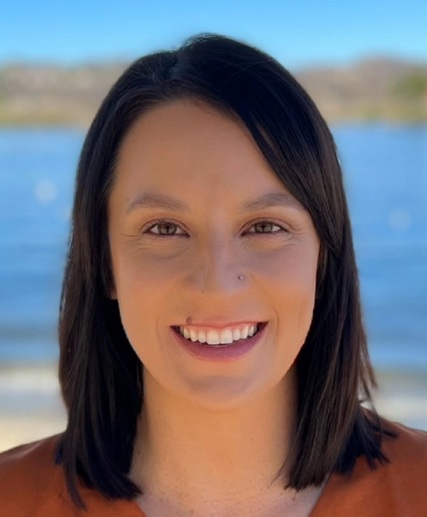
Lauren Hammond, kinesiology personal statement tutor
Table of Contents
- Kinesiology personal statement tips
- What to include - and avoid
- Kinesiology personal statement examples
- Learn more about Lauren, our kinesiology personal statement expert.
Kinesiology Personal Statements
On this page you'll find six examples of effective MS in Kinesiology and MS in Human Performance personal statements, written from the perspective of an exercise science undergraduate, a warehouse ergonomics coordinator, an athletic trainer, an Army veteran, a physical education teacher and a sport scientist. Each example is followed by a breakdown of what makes it work.
Kinesiology and human performance MS programs span a wide range of emphases - biomechanics, exercise physiology, motor learning, sport psychology, strength and conditioning, sport science, and physical education pedagogy. The personal statement should reflect where specifically you want to work within that range, and what the MS will enable that your undergraduate preparation or current career doesn't.
Lauren Hammond is our kinesiology application essay expert and has been helping people write their graduate school personal statements for several years. Whether you just want some feedback on a draft, or you're staring at a blank Word doc and don't know where to begin, she is happy to help!
Contact Lauren directly at 951-395-4646 (phone or text), or send us an email. Working with Lauren is $225 per hour, or $995 for 5 hours.
Consultations are free.
3 Tips for Strong Kinesiology Personal Statements
1. Name Your Specific Concentration and Connect It to Your Background
- Kinesiology is a broad discipline: Biomechanics, exercise physiology, motor control and learning, sport and exercise psychology, strength and conditioning science, physical education pedagogy, sport management, occupational ergonomics - the field spans basic science and applied practice across clinical, performance, and educational settings. Applicants who name a specific concentration are immediately more credible than those who describe general interest in "human movement and performance."
- Connect your concentration to your professional background: A personal trainer moving into strength and conditioning science, a PE teacher building curriculum expertise through a motor learning and pedagogy concentration, and an athletic trainer seeking research training in injury biomechanics can each draw a straight line from past work to the degree. Draw yours explicitly.
- Distinguish thesis vs. non-thesis tracks where relevant: If you are applying to a research-focused thesis program, show research interest and preparation. If you are applying to an applied professional track, show how the degree advances your specific professional practice. Know which you're applying for and reflect it in the statement.
Example:
"My concentration interest is biomechanics, meaning the analysis of movement patterns in athletic populations to identify injury risk factors before injury occurs. Undergraduate coursework in motion capture and force plate analysis gave me a foundation in the methodology. The research I want to pursue uses biomechanical screening to predict ACL injury risk in female collegiate athletes, and I can't do it without a motion analysis lab, training in prospective study design and a faculty mentor who runs this kind of study."
2. Show What the MS Will Enable That Your Current Preparation Doesn't
- Name the specific gap the degree fills: Research methodology for someone who wants to conduct or evaluate studies. Advanced programming and periodization expertise for a strength and conditioning professional. Pedagogy and curriculum development skills for a PE teacher pursuing leadership. Show what this degree lets you do that you can't do now. Admissions readers already assume graduate education has value.
- For applied track applicants - show that the MS advances your practice beyond your current credential: An athletic trainer who pursues a kinesiology MS with a biomechanics concentration becomes a more effective clinician and a more competitive candidate for advanced positions. Make the career advancement logic explicit.
- For thesis track applicants - show a research question: Like PhD applications, thesis MS programs value applicants who arrive with a research direction. Even a rough research question does more for you than "I want to learn about human performance research."
Example:
"Four years as an athletic trainer have made me a competent clinician, but I can't yet design a study that tests whether the movement screening protocol I use predicts injury at a level better than chance. I want the MS in Kinesiology to teach me how to design and analyze that study, so I can answer the question instead of assuming the answer."
3. Connect Your Goals to the Program's Specific Strengths
- Kinesiology programs differ significantly: Some are research-intensive with active laboratories; some are applied professional programs with practitioner faculty; some have particular disciplinary emphases (biomechanics vs. exercise physiology vs. motor learning). Research the program before you write and reflect those differences in the statement.
- Name faculty for research-focused programs: If you are applying to a thesis track, name the faculty member whose research aligns with your interests and reference specific work. In research-focused MS programs, fit with a faculty mentor often weighs heavily in admission decisions.
- For professional track programs, name specific curriculum elements: Advanced biomechanics laboratory, strength and conditioning certification preparation, sport analytics coursework, an industry practicum - whatever connects most directly to your professional development goals.
Example:
"Dr. [Name]'s research program in lower extremity injury biomechanics is the reason I am applying to this program. Her work on hip and knee kinematics during deceleration tasks in female athletes connects directly to the injury pattern I see most frequently in my clinical practice, and to the research question I want to investigate in my MS thesis. Her lab also tests athletes from the university's own teams, which would let me collect thesis data on the population I already work with."
What to Include in Your Kinesiology Personal Statement - and What to Avoid
What to Include
- Your specific concentration or area of focus - biomechanics, exercise physiology, strength and conditioning, motor learning, sport psychology, PE pedagogy; not just "human movement"
- What the MS specifically enables - research methodology, advanced clinical expertise, credential advancement, academic career preparation; name the gap it fills
- Relevant professional or research experience - connect it to why the MS is the next step
- For research tracks: a specific research question or area and faculty alignment
- Your long-term career goal - research faculty, applied sport scientist, advanced clinical practice, PhD preparation, industry roles
- Program-specific detail - faculty research, laboratory infrastructure, applied practicum, certification preparation
What to Avoid
- "I am passionate about human movement and performance" - describe the specific question or professional challenge that motivates the degree
- Leaving your concentration direction vague - biomechanics, exercise physiology and sport psychology train you for different work; name yours
- Conflating the MS in Kinesiology with an MBA, MPH, or other professional degree - show that you understand what kinesiology specifically trains
- For research tracks - not naming faculty - research MS programs often select applicants based on faculty interest; a statement without faculty alignment is a significant competitive disadvantage
- Submitting the same statement to every program - research-focused programs and professional track programs have different expectations; tailor accordingly
Video: 7 Ways to Write a Crappy Graduate School Personal Statement
For more personal statement tips, check out Vince's video: 7 Ways to Write a Crappy Graduate School Personal Statement.
If a program on your list asks for a statement of purpose instead, it is a different document with different expectations. Our guide to how to structure a statement of purpose covers what changes.
6 Kinesiology MS / Human Performance Personal Statement Examples
Below are six example kinesiology and human performance personal statements. After each one, we explain what it does well.
We wrote these six ourselves as teaching models. The applicants are invented, the programs are left generic on purpose, and nothing here is a real client's statement. Read them for structure and for how specific the detail gets, not as text to borrow. Where you see a bracketed placeholder, that is where your own program research has to go.
Exercise Science Undergraduate to MS Kinesiology (Biomechanics Research Track)
Whether valgus collapse in a controlled landing task predicts ACL injury in a game setting is the question my undergraduate research raised and could not answer. That research was in lower extremity biomechanics, on the relationship between hip abductor strength and knee valgus collapse during single-leg landing tasks. The 40 female athletes I recruited gave me force plate and motion capture data, and hip abductor weakness predicted the magnitude of valgus collapse with a moderate effect size that was consistent with the existing literature. Answering the larger question takes prospective, longitudinal data, which I do not have, and a study design I have not yet been trained to run.
A biomechanics concentration in the MS in Kinesiology would give me research design training, advanced statistics and the longitudinal study infrastructure to pursue the question my undergraduate thesis left open. Dr. [Name]'s lab does prospective injury prediction research in collegiate female athletes, which is the study design I want to learn, and her lab is the main reason I am applying.
A faculty position at a research university with an active sport biomechanics laboratory is where I want to end up, contributing to the evidence base for injury screening and prevention programs that coaches and athletic trainers can actually use. I plan to continue into a PhD, and I want my MS thesis to serve as pilot work for a larger prospective study.
Why this statement works:
- The first sentence states the question the applicant wants to study (whether valgus collapse in a lab landing task predicts ACL injury in games), so the reader knows the research direction within one line. A weaker draft would open with when the applicant first got interested in sports injuries.
- The undergraduate project comes with real tools and numbers: 40 athletes, force plate and motion capture, hip abductor strength measured against valgus magnitude. Reporting "a moderate effect size that was consistent with the existing literature" instead of a breakthrough shows the applicant reads their own results honestly.
- The limitation is about study design: a controlled landing task can't show who gets hurt in a game, and only prospective, longitudinal data can. That makes the MS the obvious next step.
- The faculty sentence ties Dr. [Name]'s prospective injury prediction work to the exact gap the applicant named, which is what thesis-track readers look for. "I would love to work with Dr. X" with no reason attached does far less.
- The ending names a career (faculty in a sport biomechanics lab) and a plan (PhD after the MS), so the reader can see where this degree fits.
Warehouse Ergonomics Coordinator to MS Kinesiology (Occupational Biomechanics)
The lift that sent the most people in our building to the onsite clinic was a 14-pound tote. Pickers pulled it from the bottom shelf of a flow rack, usually with one hand, while turning toward a cart.
I have been the ergonomics coordinator at a regional distribution center for three years. Before that I spent two years as a picker on the same floor, so I know the job from both sides. My exercise science degree included one biomechanics course and one ergonomics elective, and when our safety manager asked who could run job assessments, I volunteered. I learned the Revised NIOSH Lifting Equation from the NIOSH applications manual and a short certificate course, and I now run it on every new workstation layout.
The bottom-shelf tote showed me where that tool stops. The equation scored the lift as low risk, because the load is light and our horizontal reach distances are short. But the equation assumes a two-handed lift, and our pickers almost never use two hands for small totes. Our injury log told a different story from the score: over 18 months, nine of the 23 recordable back strains in the picking area involved bottom-shelf picks. I could see the pattern, but I could not measure what caused it. I had no reliable way to quantify trunk flexion and twisting during a one-handed reach, and I didn't know whether the numbers I could get from phone video and a goniometer meant anything.
We raised the bottom shelf by 16 inches on two racks as a trial. Strains in that zone dropped over the next two quarters, but our order volume also fell, and two newer pickers were moved out of the zone during the same period. I couldn't separate the shelf change from everything else that changed. When I presented the results to our regional safety director, she asked how I knew it was the shelf. I didn't have an answer.
I want to learn to answer that kind of question properly. I want training in occupational biomechanics: motion capture and wearable inertial sensors for measuring posture on a real work floor, surface EMG for estimating muscle demand, and the study design and statistics to evaluate a workplace change when workers can't be randomized. I also want to understand the research behind the lifting equation well enough to know when a different assessment method fits a task better.
This program's occupational biomechanics lab does field measurement with wearable sensors in industrial settings, and its work on asymmetric lifting is the closest match I have found to the problem my building keeps raising. I would like to build a thesis around one-handed lifting from low storage heights, measured in a working warehouse if the lab's industry partnerships allow it.
After the MS I want to work as a corporate ergonomist for a logistics company, setting workstation standards across many sites instead of one. I want to be the person who can show a regional director why a rack change worked, with data that holds up, and who can tell her when a popular fix probably won't.
Why this statement works:
- The opening lands on a specific puzzle: the lift sending the most workers to the clinic is a 14-pound tote. The reader has a reason to keep going before any background appears.
- The applicant shows they know the standard tool and its limits. The Revised NIOSH Lifting Equation assumes a two-handed lift, and the injury log ("nine of the 23 recordable back strains") disagrees with its low-risk score. Knowing where a tool fails shows more field knowledge than naming it.
- The shelf trial is reported with its confounds (order volume fell and pickers were moved at the same time), and the safety director's question about how they knew it was the shelf becomes the reason for the degree. A weaker draft would claim the trial as a success.
- The training list (motion capture and inertial sensors, surface EMG, study design without randomization) maps directly onto the problem in the story. Compare that with "I want to deepen my knowledge of biomechanics," which tells the reader nothing.
- The goal of corporate ergonomist across many sites gives the MS a clear payoff and shows the applicant intends to stay in occupational work.
Athletic Trainer to MS Kinesiology (Advancing Clinical Practice)
Does the functional movement screening protocol in our injury prevention program predict injury at a rate better than a simple history and physical examination would? I can't answer that from my current position. I have been a certified athletic trainer for four years in a Division I collegiate athletics setting, and that question is why I am applying to graduate school.
Every incoming athlete gets the Functional Movement Screen (FMS) from me, along with a battery of strength and movement quality assessments. I use these protocols because they are standard in our department, some published studies support them, and they seem to line up with the injuries I see. What I haven't been able to do is test whether that correlation is real and clinically meaningful. It could be that I've been investing time and resources in a protocol whose predictive validity in my specific population is unestablished. Settling that takes research methodology, and I don't have it.
The MS in Kinesiology with a biomechanics and motor control concentration would give me the research methods to design a study that answers my clinical question. It would also give me the analytical training to evaluate the existing literature more rigorously than my clinical background allows. I'm applying to this program for its sport injury biomechanics research group and its resources for conducting prospective clinical research in an athletic training context.
In the long run I want to stay in clinical practice while contributing to the injury prevention research that informs it. I want to work as a practitioner-researcher, running prospective screening studies inside the athletics department where I treat athletes.
Why this statement works:
- Opening with the clinical question itself (does the FMS predict injury better than a history and physical?) shows the applicant already thinks like a researcher. The research on that question is mixed, so it is a fair thing to want to study.
- "It could be that I've been investing time and resources in a protocol whose predictive validity in my specific population is unestablished" admits a possible flaw in the applicant's own practice. Readers trust that more than a claim that the screening program already works.
- The applicant separates two needs: designing a study, and reading existing studies more critically. Each one maps to a part of the MS.
- The closing goal, staying in clinical work while running research, explains why this applicant wants an MS and not a career change. A weaker draft would leave the reader guessing whether they plan to leave athletic training.
- The program reasons (a sport injury biomechanics research group, support for prospective clinical research) match the study described earlier. In your own statement, name the faculty member here too.
Military / Tactical Background to MS Human Performance
I served six years as an Army Ranger, and a good part of that time went to managing my own physical preparation and supporting the physical readiness of my unit. The preparation was practical and evidence-informed where possible, and always constrained by operational realities. Training load had to be managed alongside deployment demands and sleep deprivation. We also made long foot movements under heavy rucksack loads, and most of the load carriage research I could find used short laboratory protocols that looked nothing like a multi-day mission.
I left the military with a clear professional direction: human performance for military and tactical populations. The exercise science literature I've read covers athletes and clinical populations far more thoroughly than it covers tactical athletes (soldiers, police officers, firefighters), and that gap affects how these people are trained. Tactical athletes carry external load, train around shift work and sleep loss, and get hurt in different patterns than sport athletes. The research addresses those differences only in part.
After my separation I completed an exercise science degree. I kept a 3.9 GPA while working as a strength and conditioning coach for a law enforcement agency's physical fitness program. Now I want an MS in Human Performance with a concentration in tactical fitness and occupational performance. I want to add to the research base for this underserved population and keep an applied practice role while I do it. This program has a tactical performance research program and an applied practicum with military and law enforcement agencies, which is why I'm applying.
Why this statement works:
- The first paragraph treats six years as a Ranger as a source of practical problems (training load during deployments, sleep deprivation, rucksack loads) instead of a service story. That keeps the focus on human performance, which is what the program teaches.
- The applicant names what is different about tactical athletes (external load, shift work and sleep loss, different injury patterns) instead of only calling the population "underserved." Those specifics show they have read the literature and know where it thins out.
- The law enforcement strength and conditioning job shows the interest carried into civilian work, and the 3.9 GPA earned while working that job settles any question about academic readiness.
- The last paragraph ties the program's tactical performance research and its military and law enforcement practicum to the two things the applicant wants: research and applied work. A weaker draft would cite the program's ranking.
Physical Education Teacher to MS Kinesiology (Pedagogy / Curriculum Focus)
Physical education has changed a great deal for me over six years of teaching it in a public high school. I began with the traditional model: warm-up laps, then a unit of whatever sport was in season, graded mostly on participation and skill tests that rewarded students who already played on teams. My teaching has since evolved toward a contemporary approach built around motor skill development and physical literacy, with an eye to the health behavior patterns that will persist beyond the school setting. My formal training hasn't kept up with that change, and I want the MS in Kinesiology to give my teaching a research base.
What movement assessment approaches are most sensitive to the motor skill development of adolescents who are not athletically tracked? How do we design PE curricula that build physical literacy for the majority of students, and not just the athletic minority? What role does autonomy-supportive teaching play in the intrinsic motivation that determines whether students exercise as adults? Those questions sit in motor learning, sport psychology and pedagogy, and the kinesiology research on them has moved well past what my credential program taught.
I intend to remain in K-12 physical education while I develop the curriculum expertise and research foundation to contribute to PE program evaluation and policy at the district level. I'm applying here because of the physical education pedagogy concentration and the faculty's involvement in revising the state physical education curriculum framework.
Why this statement works:
- The opening shows a change in the applicant's own teaching, from sport units graded on skill tests to physical literacy and lifelong activity, so the MS reads as the next step in work already under way.
- The three questions are ones a PE teacher actually faces: assessing students who aren't on teams, building curriculum for the non-athletic majority, and whether autonomy-supportive teaching affects adult exercise. Each one points to a subfield the program covers.
- "My formal training hasn't kept up with that change" names the gap in one line without apologizing for it.
- Staying in K-12 while moving toward district-level program evaluation is a goal a reader can picture. A weaker draft would say the applicant wants to "make a difference in students' lives."
- The program reasons (a pedagogy concentration, faculty work on the state curriculum framework) connect directly to the district policy goal.
Sport Science / Analytics Background to MS Human Performance
For two years I have worked as a sport science coordinator for a professional soccer team, where my work involves GPS load monitoring, heart rate variability tracking, force plate jump assessment, and the statistical modeling that converts player monitoring data into training load recommendations that the coaching staff actually uses. Over those two years I have learned that I don't have the training to do that part of the job reliably.
The gap that motivates my application is methodological. I work with observational data from players in a team setting where randomized controlled trials are rarely possible and the sample sizes are small. The outcomes are multifactorial, and the confounders are numerous. I use the methods from my undergraduate sport science coursework, mostly t-tests and simple correlations, and they can't support the causal claims my coaching staff wants from me. My data calls for mixed-effects (multilevel) models for repeated measures nested within players, and for Bayesian approaches that handle small samples more honestly. I have read about both and can't yet use either.
I want to lead the sport science department at a professional club and build a monitoring system whose recommendations the coaching staff can trust because the analysis behind them holds up. An MS in Human Performance with a sport science and analytics concentration would give me the training that role requires. I am applying to this program because of its sport analytics methodology curriculum and its industry partnerships with professional sport organizations.
Why this statement works:
- The first paragraph lists the actual monitoring tools (GPS load, heart rate variability, force plate jump testing) and what they feed into: training load recommendations the coaches use. A sport science reader can tell right away this is a working practitioner.
- The problem is described the way a statistician would describe it: observational data, small samples, many confounders, no randomization. That shows the applicant understands why their current methods fall short, which is more useful than saying they want more skills.
- Naming the methods they want (mixed-effects models, Bayesian approaches for small samples) and admitting "I have read about both and can't yet use either" turns a vague wish for training into a specific request.
- The goal, leading a club's sport science department, follows from the job in the first paragraph, so the degree reads as a step up within the same career.
- The program reasons (analytics methods coursework, partnerships with professional clubs) match both the training gap and the goal.
Have a draft? Try our free personal statement checker. It checks your length, opening line, stock phrases, signs of AI writing, and sentence rhythm. Your draft never leaves your browser.
Feeling stuck?
Lauren Hammond, our kinesiology personal statement editor, would be happy to help - whether you just need a second opinion on a draft or you're starting from scratch.
Text or call her at 951-395-4646, or send us an email.
Lauren works with you on Zoom and in Google Docs, so you get both real-time coaching and clean, trackable revisions. Most clients use 2 to 4 sessions.
Meet Lauren Hammond, kinesiology personal statement tutor
Lauren: I earned my Bachelor's Degree in Literature and Writing, with a concentration in Writing, at California State University San Marcos (CSUSM) and my Master's Degree in English and Comparative Literature at San Diego State University (SDSU).
I completed my PhD in English at the University of California Riverside (UCR) in September 2023 and then worked as UCR's Graduate Writing Center Specialist and graduate Fulbright Program Advisor. I now teach at Azusa Pacific University, where I'm an Assistant Professor and Lead Faculty in the Writing Program.
I have been a writing consultant for more than 10 years, and I've helped people with research writing, thesis/dissertation projects, rhetorical and literary analyses, writing in the humanities, grammar/sentence mechanics, and more. My work for VKTP includes thesis and dissertation editing and coaching, especially in the humanities and social sciences, as well as graduate school application materials such as personal statements, diversity statements and research statements, and job market materials for academic and alt-academic positions, including resumes, CVs and cover letters.
During my downtime, I love hanging out with my husband, our daughter, and our two dogs, Link and Leia! My favorite activities are going on the boat, cruising on the golf cart, and making our way through all of the local eateries. When we aren't out and about, I typically enjoy reading and watching movies.
Working with Lauren is $225 per hour or $995 for a package purchase of 5 hours. You can reach her at 951-395-4646 (phone or text), or by sending us an email.
P.S. Our partner Julie can also help you prepare for your kinesiology program admissions interviews! Learn more about her professional voice training for interview prep.
P.S. Some kinesiology MS programs still require or recommend the GRE, and many have dropped it, so check each program's requirements - we can help with that too!
Love For Lauren
Frequently Asked Questions
How long should a kinesiology personal statement be?
Follow each program's stated limit. Many ask for one to two pages, or roughly 500 to 1,000 words. In that space, name your concentration, say what the degree will let you do that you can't do now, and connect your background to your career goal. Research-focused thesis programs expect more development of specific research questions and faculty alignment.
What is the difference between kinesiology and exercise science?
Kinesiology and exercise science are closely related and often used interchangeably. Kinesiology broadly encompasses the scientific study of human movement including biomechanics, exercise physiology, motor learning, sport psychology, and PE. Exercise science tends to emphasize physiological responses to exercise. The key distinction for applications is the specific concentration you are pursuing within the program.
What careers are available with an MS in Kinesiology?
Applied sport scientist or performance director at collegiate or professional programs, strength and conditioning director, biomechanics researcher, PE curriculum specialist, ergonomics consultant, clinical exercise physiologist (with additional credentials), university lecturer or instructor positions, and a path into doctoral programs.
Should I pursue a thesis or non-thesis MS?
Choose the thesis track if your goal is a research career, PhD, or academic position. Choose the non-thesis or applied track if your goal is advanced professional practice. Your statement should reflect which track you're pursuing and why it serves your specific goals.
Can I use AI to write my kinesiology personal statement?
AI doesn't know your research interests, your work history or why you chose kinesiology, and a statement without those details reads as generic. Write it yourself, or work with Lauren on your draft.
Do kinesiology MS programs require the GRE?
Some kinesiology MS programs still require or recommend the GRE, and many have dropped it, so check each program's requirements. If you need GRE prep, our tutoring team can help.
BTW, Lauren can also help with:
- Dissertation and thesis editing
- Graduate school CV and resume examples
- Teaching statement examples
- Academic cover letter examples
- Diversity statement examples
- Research statement examples
- Exercise Physiology personal statements
- Athletic Training personal statements
- Physical Therapy personal statements
- Occupational Therapy personal statements
- Chiropractic (DC) personal statements
- Orthotics and Prosthetics personal statements
- Physician Assistant personal statements
- Anesthesiologist Assistant personal statements
- Epidemiology MS personal statements
- Biomedical Sciences MS personal statements
- MHA (Health Administration) personal statements
- PhD personal statements
- Post Doc personal statements
- Fellowships and Grants personal statements