Podiatry School Personal Statement Examples and Tutoring
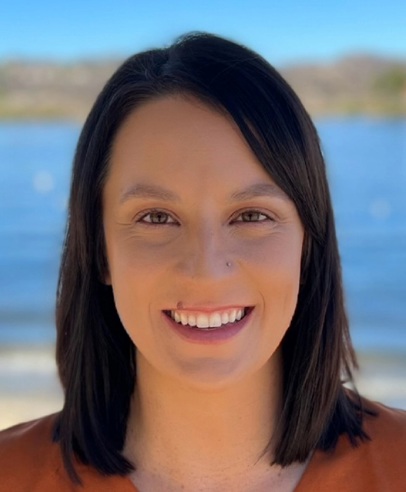
Lauren Hammond, podiatry school personal statement tutor
Table of Contents
- Podiatry personal statement tips
- What to include - and avoid
- Podiatry personal statement examples
- Learn more about Lauren, our podiatry personal statement expert.
Podiatry School Personal Statements
On this page you'll find six examples of effective podiatric medical school personal statements, written from the perspective of pre-health science students, athletic trainers, healthcare workers, career changers, and applicants with research or biomechanics backgrounds.
After each example we explain what it does well. There is far less personal statement advice online for podiatric medical school (DPM) than for MD or PA programs, which is why we put these examples together.
Lauren Hammond is our podiatry school application essay expert and has been helping people write their graduate and professional school personal statements for several years. Whether you just want some feedback on a draft, or you're staring at a blank Word doc and don't know where to begin, she is happy to help!
Contact Lauren directly at 951-395-4646 (phone or text), or send us an email. Working with Lauren is $225 per hour, or $995 for 5 hours.
Consultations are free.
3 Tips for Strong Podiatry School Personal Statements
1. Explain Why Podiatry - Not Just Why Medicine
- The most important question your statement must answer: Why did you choose podiatry over medicine, PA, PT, or another health profession? Admissions committees have read every version of "I want to help people." They want to know what draws you to the foot and ankle in particular, and to treating lower extremity problems both medically and surgically.
- Connect your interest to a specific clinical experience: Whether it was shadowing a podiatrist, working as an athletic trainer and observing what lower extremity injuries do to athletes' lives, or a personal experience with a foot condition, name the specific moment that made podiatry the answer rather than a general interest in healthcare.
- Show awareness of podiatry's full scope: DPM training includes surgery, internal medicine, wound care, sports medicine, biomechanics, and pediatric care. Showing that you know the field goes well beyond nail care tells programs you have looked closely at what podiatrists actually do.
Example:
"One summer I shadowed a podiatric surgeon who did reconstructive foot and ankle work. I had not expected the range. The morning began with a Charcot reconstruction on a diabetic patient who had been told he would lose his foot. It ended with a flatfoot correction on a fourteen-year-old who had already quit soccer because of the pain. Seeing both cases in one day, and how much each patient's ability to walk depended on the result, is what convinced me to apply to podiatric medicine."
2. Demonstrate Clinical Depth and Relevant Experience
- Shadowing hours are necessary but not sufficient: AACPMAS (the podiatric medical school application system) will show your hours. In the personal statement, describe what you observed - a specific surgical case, a wound care patient whose progress you followed, a biomechanical assessment that revealed an unexpected finding.
- Highlight any lower extremity or musculoskeletal experience: Athletic training, physical therapy aide, sports medicine, orthopedic medical assisting, or any experience with lower extremity conditions is directly relevant and worth noting explicitly.
- Show research or analytical preparation if you have it: Applicants who have worked in biomechanics research, gait analysis, orthotics, or clinical outcomes research in podiatry or orthopedics have a differentiating background worth developing in the statement.
Example:
"As an athletic trainer I saw more foot and ankle injuries than anything else. Most ankle sprains healed with conservative care, and a few stress fractures ended seasons. The case I still think about is a Lisfranc injury that was missed at first and ended up needing surgery an earlier diagnosis might have avoided. After that I wanted to be the one making the diagnosis."
3. Address the "Why Not MD?" Question Proactively
- This is the elephant in the room for most DPM applicants: Many podiatric medical school applicants also considered or applied to allopathic or osteopathic medical school. Some admissions readers will wonder why you chose podiatry. Address it directly rather than leaving the question unanswered.
- Frame it as a choice, not a fallback: The strongest answers name something specific about podiatry that draws you more than the broad scope of general medicine, such as the surgical focus or the chance to build deep expertise in one region of the body.
- Intellectual specificity is more convincing than mission statements: "I want to specialize in diabetic limb salvage" or "I am drawn to the biomechanical complexity of the foot and ankle" tells a reader more than "I chose podiatry because I can make just as much of a difference as an MD."
Example:
"Before settling on podiatry I looked at medicine as a whole. What held my attention was depth: one mechanically complicated region rather than the whole range of organ systems. The foot has 26 bones, 33 joints and over 100 muscles, tendons and ligaments, and its problems involve diabetes, vascular disease, neurology and orthopedics. Knowing one region that thoroughly is the kind of medicine I want to practice."
What to Include in Your Podiatry School Personal Statement - and What to Avoid
What to Include
- A specific answer to "why podiatry" - not generic healthcare interest, but something particular to lower extremity medicine and surgery
- Meaningful shadowing or clinical experience - describe what you observed, not just your hours; name a case, a procedure, or a patient interaction that stayed with you
- Any lower extremity or musculoskeletal clinical background - athletic training, PT aide, sports medicine, orthopedics, wound care
- Your intended area of focus within podiatry - surgery, sports medicine, diabetic wound care, pediatric podiatry, biomechanics; even a preliminary direction shows purposeful thinking
- An explanation of why you chose DPM over other health professions - this doesn't need to be lengthy, but it should be present and honest
- The kind of training you want - the surgical exposure, clinical settings or research you are looking for, described in general terms, since every program you apply to reads the same essay
What to Avoid
- Describing podiatry as "just like being a doctor but for feet" - DPM is a complete medical degree with its own training, scope, and identity; frame it accordingly
- Leaving the "why not MD?" question unanswered - admissions readers will wonder; address it proactively even if briefly
- Focusing only on nail care and bunions - podiatry's scope includes complex surgery, systemic disease management, and sports medicine; a narrow description of the field signals limited preparation
- Generic statements about helping people - every healthcare applicant wants to help people; show what specifically about podiatric medicine draws you
- Naming a specific school in your AACPMAS essay - AACPMAS sends the same essay to every program you apply to, so save school-specific detail for supplemental essays and interviews
Video: 7 Ways to Write a Crappy Graduate School Personal Statement
For more personal statement tips, check out Vince's video: 7 Ways to Write a Crappy Graduate School Personal Statement.
Some programs ask for a statement of purpose rather than a personal statement. If one of yours does, our statement of purpose examples show three full versions with paragraph-by-paragraph analysis.
6 Podiatry School Personal Statement Examples
Below are six example podiatry school personal statements. After each one, we explain what makes it work.
We wrote these six ourselves as teaching models. The applicants are invented, the programs are left generic on purpose, and nothing here is a real client's statement. Read them for structure and for how specific the detail gets, not as text to borrow.
Pre-Health Science Student to DPM
An interviewer will probably ask why I chose podiatric medicine over allopathic medicine, so I would rather answer that here first.
The answer starts with one summer of shadowing. I spent part of it with a family medicine physician and part with a podiatric surgeon. The family physician confirmed that I wanted a career in medicine. The surgeon is the reason I narrowed it to the foot and ankle. In the operating room she talked through each case in terms of alignment and load: where the arch was collapsing, which tendon was being overpowered, and what a fusion would cost the joints next to it. I had not heard anyone in the general clinic reason that closely about one part of the body, and I wanted to learn to do it.
I paid close attention to the patients as well. A diabetic patient with a Charcot foot came in for a reconstruction. A runner had lived with chronic Achilles tendinopathy for two years because primary care kept mismanaging it, and only then reached a specialist. A child with clubfoot deformity had a correction planned across several staged procedures. None of these were minor complaints. For each patient, the real question was whether they would keep walking and working on their own, and each was being treated by a doctor trained specifically for that region of the body.
On paper, I have a 3.7 GPA from my pre-medical coursework and 150 hours of shadowing in surgical and clinical podiatric settings. I also worked as a scribe in an orthopedic urgent care clinic, where lower extremity injuries made up about 40% of the volume. After the DPM I want to complete a podiatric medicine and surgery residency with the added reconstructive rearfoot and ankle credential, and then practice in a hospital-affiliated podiatric surgery group. I am looking for a school with heavy surgical exposure in the clinical years and a strong residency placement record.
Why this statement works:
- The first sentence takes on the question every DPM reader has in mind ("why I chose podiatric medicine over allopathic medicine") instead of saving it for the interview. A weaker draft would bury that answer in the last paragraph or skip it.
- Shadowing two doctors in the same summer gives the reader a direct comparison. The family physician confirms medicine, and the surgeon narrows it, so the choice reads as something the applicant tested, not a hunch.
- The surgeon's thinking is shown in concrete terms ("which tendon was being overpowered, and what a fusion would cost the joints next to it"). That tells the reader the applicant followed what was happening in the OR rather than just standing in it.
- Three patients (a Charcot reconstruction, two years of mismanaged Achilles tendinopathy, a staged clubfoot correction) cover adult, athletic and pediatric cases in three sentences.
- The last paragraph gives numbers, a second lower extremity setting ("about 40% of the volume" at the ortho urgent care) and a residency goal named correctly, without naming a single school, which matters because AACPMAS sends the same essay to every program.
Athletic Trainer to DPM
A collegiate sprinter with a Jones fracture is the case that clarified my direction. I suspected the fracture on the sideline, immobilized the foot and sent her to the team physician, who referred her to a podiatric surgeon. The surgeon fixed it with an intramedullary screw, and I ran her rehab until she was cleared to compete about eight weeks later.
Her recovery depended on the one step I wasn't trained to do.
I've been a certified athletic trainer for four years. I've handled more ankle sprains, stress fractures, plantar fasciitis cases and Achilles injuries than I can count. For the athletes whose injuries needed more than rehab, my part ended at the referral.
Athletic training gave me real tools for this field. I understand lower extremity biomechanics at a functional level. I can read a gait. I know what chronic overuse looks like in an athlete, and how training load pushes against what tissue can tolerate. What I'm missing is the medical and surgical training to act on what I can already see.
Before committing, I shadowed a podiatric surgeon for three months to make sure the operating room suited me, and it did. I like the precision of foot and ankle reconstruction and the biomechanical logic of a surgical correction. I also like the long arc of a patient relationship that starts with diagnosis and runs through post-surgical rehab. I know that stretch from the rehab end. I want to learn to manage it from the beginning.
My goal is sports podiatry, with a surgical focus on athletes and active patients, and I am looking for DPM training with strong sports medicine exposure in the clinical years.
Why this statement works:
- The opening case shows the applicant's exact role: spotting the fracture, immobilizing the foot, making the referral, running the rehab. A reader knows what an athletic trainer does and where that role stops within two sentences.
- "My part ended at the referral" names the limit of the job plainly. A weaker draft would say "I wanted to do more for my athletes" and leave the reader to guess what "more" means.
- The skills paragraph is backed by daily work ("I can read a gait," training load against what tissue can tolerate), so it reads as experience rather than a list of adjectives about themselves.
- The three months of shadowing come with a reason (testing whether the OR suited them), which answers the question a reader would have about someone leaving an established career.
- The sports podiatry goal loops back to the sprinter in the first line, so the statement ends where it started without needing a summary sentence.
Medical Assistant to DPM
For three years I have worked as a medical assistant in a podiatric medicine and surgery practice, where I help with nail avulsions, cortisone injections, debridements and casting, and where I get patients ready for the days they go to surgery. Working next to the podiatrists in that practice is how I decided to become one.
A large share of the patients we see are diabetic, and many of them reach us only after primary care has run out of things to try. I have seen one of our podiatrists perform a transmetatarsal amputation that kept a patient walking after another surgeon had recommended a below-knee amputation. I have watched wound care unfold over months: the slow debridement and offloading that lets tissue rebuild when the underlying disease is managed alongside the wound. I have also watched patients arrive too late, people whose limbs could not be saved because the referral to podiatry came after years of wound care that never got anywhere.
Those cases, the limbs we saved and the ones we lost, are why I want to specialize in diabetic limb salvage. The work combines surgery with months of wound care, and it depends on checking blood flow and working with the physicians who manage the patient's diabetes. I want to be trained to handle all of it.
I finished my pre-medical prerequisites while working full time, with a 3.6 GPA, and I take the MCAT this summer. In my DPM training I want as much clinical time in wound care as I can get, along with a chance to rotate through vascular surgery.
Why this statement works:
- The first sentence lists procedures the applicant actually helps with (nail avulsions, cortisone injections, debridements, casting). The reader sees real clinical exposure without being told the applicant is "experienced."
- The transmetatarsal versus below-knee amputation contrast shows the applicant understands what limb salvage means in practice. "A partial amputation" or "saved a patient's foot" would have said far less.
- The paragraph includes the failures ("patients arrive too late"). Admitting that some limbs were lost makes the motivation believable and shows the applicant has looked at the hard end of the work.
- The specialty choice is explained by what the work involves (surgery, months of wound care, blood flow, diabetes management), not by how meaningful it feels.
- "While working full time, with a 3.6 GPA" is stated once and left alone. No excuse, no boast, which is the right tone for an academic record.
Personal Experience with Foot Condition to DPM
I have had bilateral flatfoot deformity since childhood. At twelve it was corrected surgically, through a procedure I did not fully understand at the time. I have spent the years since finding out what was done and why. The surgery itself is not my reason for applying. My reasons come from what I learned when I went looking, and from the research it led me to.
My outcome was good, and I wanted to know why. I started with anatomy textbooks and moved on to the biomechanics literature. In college I landed a research position in a gait analysis lab. One summer I shadowed a pediatric podiatrist who specializes in the kind of flatfoot reconstruction I had as a kid. Each step came back to the same question: how the lower extremity works, and what treatment can change about it.
In the gait lab, the research I liked best looked at rearfoot alignment and how it loads the joints above it. How does a flatfoot change what happens at the knee and hip over the years, and what does surgical correction do to those upstream effects? I want to keep asking that while I train: the wider biomechanical consequences of foot and ankle problems.
I'd like to practice pediatric podiatry and study long-term outcomes for children with flatfoot, so surgeons have better evidence when they decide whether and how to operate on a child. I am looking for training that includes pediatric clinical exposure and room to keep doing research.
Why this statement works:
- The applicant's own surgery is mentioned in the first two lines and then set aside ("The surgery itself is not my reason for applying"). That heads off the "my surgery inspired me" reading and moves the reader to what the applicant did next.
- Each step after that is a choice the applicant made: textbooks, the biomechanics literature, a gait lab job, a summer with a pediatric podiatrist. A weaker draft would say "my curiosity grew" and skip the steps.
- The research paragraph states an actual question (how a flatfoot changes loading at the knee and hip, and whether correction changes that). Reviewers can see the applicant thinks like someone who will read and produce studies.
- The goal (pediatric practice plus outcomes research) ties back to the twelve-year-old in the first paragraph, so the personal story ends up supporting a professional plan.
Career Changer - Biomechanics/Engineering to DPM
My first job, after a mechanical engineering degree, was designing orthotics for a medical device company. For three years I translated what a podiatrist needed a device to do into mechanical specifications, then engineered a solution within the limits of materials and manufacturing and of what a patient would really wear. The work gave me a solid grasp of foot and ankle mechanics, and over time I wanted to be on the clinical side of those conversations.
The move into medicine was deliberate. A post-baccalaureate pre-medical program let me finish the biology, chemistry and biochemistry I had missed, and a podiatric surgeon I had known as a clinical contact at the orthotics company let me start shadowing. In clinic I found that much of the surgical reasoning was familiar. Deciding where to cut and shift bone in a flatfoot reconstruction is a question about alignment and load, and so is positioning an ankle fusion so the patient can walk on it for decades. I knew the mechanics. I did not have the medical training to apply them to a patient.
I bring a working knowledge of the materials and mechanics behind lower extremity devices, and three years of conversations with podiatric surgeons and orthotists about what their patients needed. My post-baccalaureate record shows I can handle medical school coursework despite a non-traditional undergraduate degree.
I want to practice surgical podiatry, with a particular interest in implants and custom devices, where my engineering background will keep being useful. I am looking for strong surgical training and a way to stay involved in device design.
Why this statement works:
- The first two sentences give the job and the daily task (turning what a podiatrist needed into mechanical specifications). The reader understands the background before any claim about it is made.
- Flatfoot reconstruction and ankle fusion are described as alignment and load problems. That shows how engineering applies to surgery instead of asserting "my skills transfer," which is what most career changers write.
- "I knew the mechanics. I did not have the medical training to apply them to a patient." names the gap in plain terms and gives the reason for medical school in one breath.
- The post-baccalaureate record is mentioned to answer the obvious concern about a non-science-major transcript, and it is handled in one sentence.
- The goal (implants and custom devices) is one where the old career keeps paying off, so the change of field reads as a continuation rather than a restart.
Nail Salon Technician to DPM
One of my regular clients was a retired bus driver with type 2 diabetes. He had been coming to my station every four weeks for two years, mostly because he could no longer reach his own feet. One afternoon, while I was working on a thick callus under the ball of his left foot, I found a small open sore underneath it. It was clean and about the size of a pencil eraser, and he had no idea it was there. He said he hadn't felt a thing.
Nail technicians are not allowed to work on broken skin, and I would not have anyway. I stopped the pedicure, showed him the spot with a hand mirror, and asked him to call a podiatrist before the end of the week. He did. When he came back to thank me, he was wearing a walking boot. The podiatrist had debrided the wound, explained that the callus had been pressing on that spot with every step, and told him he was lucky it had been caught early.
I worked as a licensed nail technician for six years, and that was not the first time I had to stop at the edge of what I was allowed to do. Every week I saw thick, discolored toenails I could only file down, ingrown nails I had to turn away, and older clients with numb feet who counted on me to tell them if something looked wrong. I could send them to a podiatrist. I could not diagnose or treat anything, and over those years I came to want that responsibility for myself.
The sciences came late for me. I started prerequisites at a community college while still working weekends at the salon, and my first semester of general chemistry ended with a C. I retook it and earned an A, then finished biology, organic chemistry, physics and biochemistry with a 3.5 science GPA. The retake will show on my transcript. It is also why I now work problems every day instead of cramming before exams.
Last year I shadowed a podiatrist at a community health center for about ninety hours. Much of what I saw was routine: diabetic foot exams with a monofilament, nail debridement, and teaching patients to check their feet daily and choose better shoes. I also watched her perform partial nail avulsions with a phenol matrixectomy, under a digital block, for patients whose ingrown nails kept coming back. Several of them told her they had lived with the pain for years. I recognized those patients. Some version of them had sat in my pedicure chair every week.
The clinic showed me how much of podiatry is finding problems before they become hospital admissions. For a patient with neuropathy, a five-minute foot exam can find an ulcer weeks before it becomes infected, and the podiatrist I shadowed treated that exam as seriously as any procedure on her schedule.
I want to practice in a community setting where many patients are older or uninsured, and I hope to build a practice that does both the preventive work and the in-office procedures. I know where I am behind. I have no research experience, and I have only watched surgery, never assisted. I expect DPM training and residency to close those gaps, and I am most looking forward to the surgical training I have not had yet. After six years of sending people with foot problems somewhere else, I want to be the clinician who sees them, and to see them early.
Why this statement works:
- The opening is one pedicure: a diabetic client, a callus, an ulcer he "hadn't felt." The reader learns what neuropathy does to a patient through a scene, without the applicant explaining it.
- "Nail technicians are not allowed to work on broken skin" shows the applicant knows the limits of her old job. A weaker draft would blur that line and imply she treated the problem herself, which a podiatry reader would catch right away.
- The C in general chemistry gets two sentences: what happened, the retake, and what changed in how she studies. Addressing it directly keeps the reader from wondering about it.
- The shadowing paragraph uses accurate, specific detail (monofilament exams, phenol matrixectomy under a digital block) and connects it back to the salon ("Some version of them had sat in my pedicure chair every week"), so the two halves of her background read as one story.
- The final paragraph names real gaps (no research, no surgical assisting) before stating the goal, which makes the goal of community-based podiatry with both prevention and procedures easier to believe.
Have a draft? Try our free personal statement checker. It checks your length against the AACPMAS limit, your opening line, stock phrases, signs of AI writing, and sentence rhythm. Your draft never leaves your browser.
Feeling stuck?
Lauren Hammond, our podiatry school personal statement editor, would be happy to help - whether you just need a second opinion on a draft or you're starting from scratch.
Text or call her at 951-395-4646, or send us an email.
Lauren works with you on Zoom and in Google Docs, so you get both real-time coaching and clean, trackable revisions. Most clients use 2 to 4 sessions.
Meet Lauren Hammond, podiatry school personal statement tutor
Lauren: I earned my Bachelor's Degree in Literature and Writing, with a concentration in Writing, at California State University San Marcos (CSUSM) and my Master's Degree in English and Comparative Literature at San Diego State University (SDSU).
I completed my PhD in English at the University of California Riverside (UCR) in September 2023 and then worked as UCR's Graduate Writing Center Specialist and graduate Fulbright Program Advisor. I now teach at Azusa Pacific University, where I'm an Assistant Professor and Lead Faculty in the Writing Program.
I have been a writing consultant for more than 10 years, and I've helped people with research writing, thesis/dissertation projects, rhetorical and literary analyses, writing in the humanities, grammar/sentence mechanics, and more. My work for VKTP includes thesis and dissertation editing and coaching, especially in the humanities and social sciences, as well as graduate school application materials such as personal statements, diversity statements and research statements, and job market materials for academic and alt-academic positions, including resumes, CVs and cover letters.
During my downtime, I love hanging out with my husband, our daughter, and our two dogs, Link and Leia! My favorite activities are going on the boat, cruising on the golf cart, and making our way through all of the local eateries. When we aren't out and about, I typically enjoy reading and watching movies.
Working with Lauren is $225 per hour or $995 for a package purchase of 5 hours. You can reach her at 951-395-4646 (phone or text), or by sending us an email.
P.S. Our partner Julie can also help you prepare for your podiatry school admissions interviews! Learn more about her professional voice training for interview prep.
P.S. Most podiatric medical schools require the MCAT, but a few accept the GRE or DAT instead, so check your target programs, and we can help with GRE prep if needed!
Love For Lauren
Frequently Asked Questions
How long should a podiatry school personal statement be?
AACPMAS allows up to 4,500 characters - approximately one single-spaced page. With that limit, one well-developed answer to why podiatry, backed by two or three concrete clinical experiences, will do more for you than a broad summary of your background. For every application's limit, see our guide to how long a personal statement should be. For what each application asks, see our list of personal statement prompts.
What do podiatry schools look for in applicants?
Most schools want a strong science GPA, a competitive MCAT score (a few programs accept the GRE or DAT instead), shadowing with a licensed podiatrist, letters of recommendation (many schools ask for one from a DPM), and a clear, honest answer to why you chose podiatric medicine. Strong applicants also show they understand the field's full scope, including surgery, wound care, sports medicine and pediatric care, rather than a narrow interest in foot conditions.
How do I explain why I chose podiatry over medicine?
Answer it directly. The best answers name something about podiatric medicine that draws you more than general medicine does, such as the surgical focus, deep expertise in the lower extremity, diabetic limb salvage, or sports medicine and biomechanics. Present it as a choice you made on purpose. The examples above show several ways to do this.
Should I write a different personal statement for each podiatry school?
No. AACPMAS sends one essay to every program you apply to, and you can't edit it after you submit. Write about why you chose podiatry and the kind of training you want in terms that fit all of your schools, and save school-specific reasons for any supplemental essays and your interviews.
Can I use AI to write my podiatry school personal statement?
AI cannot accurately represent your specific clinical experiences or your honest answer to why you chose podiatry over other health professions. Use AI to organize your thoughts; write the statement yourself or work with Lauren.
How many podiatric medical schools are there in the US?
There are 11 colleges of podiatric medicine in the United States, all granting the DPM degree. The applicant pool is much smaller than for MD or DO programs, so each application gets a close read, and the personal statement is a real part of it.
BTW, Lauren can also help with:
- Dissertation and thesis editing
- Graduate school CV and resume examples
- Teaching statement examples
- Academic cover letter examples
- Diversity statement examples
- Research statement examples
- Physician Assistant personal statements
- Physical Therapy personal statements
- CRNA personal statements
- Nurse Practitioner personal statements
- Dental school personal statements
- Optometry (OD) personal statements
- PharmD personal statements
- Audiology (AuD) personal statements
- Health Informatics (MSHI) personal statements
- Radiation Therapy personal statements
- MSW (Social Work) personal statements
- Genetic Counseling personal statements
- Clinical Psychology PhD personal statements
- MHA (Health Administration) personal statements
- PsyD personal statements
- Marriage and Family Therapy personal statements
- Occupational Therapy personal statements
- Speech-Language Pathology personal statements
- Nursing school personal statements
- MPH statement of purpose
- MBA personal statements
- Law School personal statements
- MS in Business Analytics personal statements
- Master's degree personal statements
- Master of Public Policy personal statements
- Medical Residency personal statements
- Veterinary School personal statements
- PhD personal statements
- Post Doc personal statements
- Fellowships and Grants personal statements