Audiology School Personal Statement Examples and Tutoring
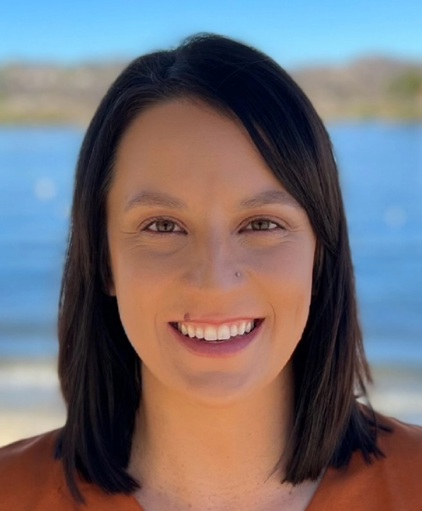
Lauren Hammond, audiology personal statement tutor
Table of Contents
- Audiology personal statement tips
- What to include - and avoid
- Audiology personal statement examples
- Learn more about Lauren, our audiology personal statement expert.
Audiology School Personal Statements
On this page you'll find six example audiology school personal statements, written from the perspective of an SLP assistant, a hearing instrument specialist, an applicant with hearing loss who now works in a research lab, a musician, an ENT medical assistant, and a former teacher. Each example is followed by a breakdown of what makes it work.
If you're applying to both audiology and speech-language pathology programs, the two fields draw many of the same applicants, but your statements should be distinct, because the clinical scope and training are different.
Lauren Hammond is our audiology school application essay expert and has been helping people write their AuD personal statements for several years. Whether you just want some feedback on a draft, or you're staring at a blank Word doc and don't know where to begin, she is happy to help!
Contact Lauren directly at 951-395-4646 (phone or text), or send us an email. Working with Lauren is $225 per hour, or $995 for 5 hours.
Consultations are free.
3 Tips for Strong Audiology Personal Statements
1. Articulate What Draws You Specifically to Audiology
- Audiology is distinct from speech-language pathology: If you considered both, explain why you chose audiology - the diagnostic scope, the technology (hearing aids, cochlear implants, ABR testing, vestibular assessment), the neuroscience of hearing, the surgical coordination with ENTs, or the population you most want to serve. Generic statements that could describe either profession signal that you haven't thought carefully about the distinction.
- Connect your interest to a specific experience: An observation of a cochlear implant mapping session, a patient whose quality of life changed after amplification, a vestibular assessment that identified a missed diagnosis, or a personal experience with hearing loss - a real, named experience tells the reader far more than a general interest in communication disorders.
- Show awareness of audiology's full scope: Pediatric audiology, cochlear implants, hearing aid dispensing, intraoperative monitoring, tinnitus management, vestibular rehabilitation, industrial audiology - the field is broader than hearing testing and hearing aids. Showing that you know its full scope tells the committee you've done your homework.
Example:
"What settled my direction was sitting in on a cochlear implant programming appointment. The child had been implanted eight months before. Over ninety minutes the audiologist adjusted the map, and I watched a five-year-old's reaction to sound change as it happened: she flinched at levels that had been inaudible to her, and she turned when someone called her name from across the room. The device impressed me, but what I wanted to learn was what the audiologist knew about auditory development, signal processing and that child's history, because all of it shaped every adjustment."
2. Demonstrate Relevant Clinical or Research Experience
- Observation hours - describe what you actually observed: If you apply through CSDCAS, the application service many audiology programs use, your hours will show there. In the personal statement, describe specific clinical experiences - the type of patients, the procedures you observed, the clinical reasoning you witnessed - not just the total hours.
- Highlight relevant technical or clinical roles: Hearing instrument specialist, audiology assistant, ENT medical assistant, audiology research assistant, SLP assistant with hearing-related caseload - these roles are directly relevant and should be described specifically rather than listed.
- Research experience in hearing science, neuroscience, or acoustics is valuable: Applicants who have worked in auditory neuroscience labs, psychoacoustics research, or clinical outcomes research in audiology bring a perspective that strengthens both the application and the argument for the doctoral degree.
Example:
"As an audiology assistant I learned what a routine hearing evaluation looks like in practice, with a real person in the chair. I've prepped patients for ABR testing, run daily equipment checks, cleaned and checked hearing aids, and done hearing screenings under supervision. I've also sat with families while they waited for the audiologist to go over results, answering the questions I was allowed to answer. Those conversations take more care, and more clinical knowledge, than I had at first."
3. Name a Population or Specialty Area and Connect It to Your Background
- Pediatric audiology, adult rehabilitation, cochlear implants, vestibular, tinnitus, intraoperative monitoring, industrial audiology - name where you want to focus and why. Even a preliminary direction reads better than "I want to help people with hearing problems."
- Connect your background to your intended specialty: A musician focused on tinnitus and noise-induced hearing loss, a NICU nurse drawn to pediatric audiology, or a neuroscience researcher drawn to cochlear implants each has an obvious through-line. Spell yours out.
- Engage with technology where relevant: Audiology is a technology-intensive profession. Applicants who show interest in the engineering and signal processing side of hearing aids, cochlear implants, or diagnostic equipment, along with patient care, look ready for the doctoral curriculum.
Example:
"I want to work in a cochlear implant program, on an interdisciplinary team with surgeons, speech-language pathologists and educators of the deaf, following implant candidates from pre-surgical evaluation through activation and ongoing mapping. My neuroscience background draws me to the auditory cortex reorganization that follows implantation, and I plan to research it alongside my clinical work."
What to Include in Your Audiology Personal Statement - and What to Avoid
What to Include
- A specific experience that crystallized your interest in audiology - not a general love of helping people with communication, but a real clinical or personal moment
- Evidence of real observation - describe what you saw during shadowing; name a procedure, a patient interaction, or a clinical finding that stayed with you
- Your intended specialty or population focus - pediatric audiology, cochlear implants, vestibular, tinnitus, industrial; even a preliminary direction shows purposeful thinking
- Any relevant technical or clinical experience - hearing instrument specialist, audiology assistant, ENT tech, research in hearing science
- Why audiology specifically - if you considered SLP or other communication disorders programs, explain what drew you to audiology rather than or in addition to those fields
- Program-specific detail - a specialty rotation, a faculty member's research, a cochlear implant program, a vestibular rehabilitation center
What to Avoid
- A statement that could have been written for an SLP program - audiology and SLP are different professions; if your statement doesn't reflect that distinction, you signal insufficient preparation
- Describing audiology only as "hearing tests and hearing aids" - vestibular assessment, cochlear implants, intraoperative monitoring, tinnitus management, and auditory processing are all part of the scope; show that you know this
- Personal hearing loss as the only motivation - if you have hearing loss, it can be part of your story; it should not be the whole story; demonstrate professional preparation alongside the personal connection
- Generic statements about helping people communicate - show specifically what draws you to audiology's clinical work, technology, or science
- Submitting the same statement to every program - programs with cochlear implant programs, vestibular specialty clinics, or strong research emphasis want different things; tailor accordingly
Video: 7 Ways to Write a Crappy Graduate School Personal Statement
For more personal statement tips, check out Vince's video: 7 Ways to Write a Crappy Graduate School Personal Statement.
If a program on your list asks for a statement of purpose instead, it is a different document with different expectations. Our guide to how to structure a statement of purpose covers what changes.
6 Audiology School Personal Statement Examples
Below are six example audiology school personal statements. After each one, we explain what it does well.
We wrote these six ourselves as teaching models. The applicants are invented, the programs are left generic on purpose, and nothing here is a real client's statement. Read them for structure and for how specific the detail gets, not as text to borrow.
SLP Assistant with Hearing Focus to AuD
I watched the school audiologist evaluate a seven-year-old I'd worked with for two years. Her IEP attributed her difficulties primarily to language delay. The results showed a mild bilateral sensorineural hearing loss that no one had ever caught.
Mild sounds harmless, and it slipped past every screening she'd had. In a classroom with background noise, though, she was missing quiet consonants and word endings all day. Two months after she was fitted with hearing aids, her classroom teacher sent me a note. She couldn't believe the difference.
I've been a speech-language pathology assistant in a school setting for three years, and hearing loss is a big piece of my caseload. Some of my students wear hearing aids or cochlear implants. The ones who worry me are the others, the kids whose hearing has never been fully evaluated. They ask for repetition frequently and are hard to hear in noisy classrooms. Somebody has already labeled them inattentive or behaviorally difficult before anyone thought to check their ears. Those children are the reason I'm applying to audiology programs rather than SLP programs.
The work I want is pediatric audiology in schools and clinics, with the kind of kids I already know, children whose hearing is being missed or underestimated. My SLP training helps here. I understand what hearing loss does to a child's speech and language from the output end, not just the audiological end, and I'm used to sitting in IEP meetings with teachers, parents and the school psychologist.
I chose this program for its pediatric audiology concentration and educational audiology rotation track. Long term, I'm interested in improving how schools identify mild and unilateral hearing loss.
Why this statement works:
- The first paragraph puts the evidence on the table right away: an IEP that blamed language delay, and an audiogram showing a mild bilateral sensorineural loss. A weaker draft would open with "I have always been interested in hearing" and reach the case two paragraphs later.
- "Mild sounds harmless" states the reader's own assumption, and the next lines show what a mild loss costs a child in a noisy classroom.
- The third paragraph answers the question every SLP-to-audiology applicant gets (why not stay in SLP?) with a specific group of students: the ones nobody has tested.
- The SLP background is presented as something the applicant brings, knowing what hearing loss does to speech and language and how IEP meetings work, rather than something to explain away.
- The long-term goal, better school identification of mild and unilateral loss, is narrow enough to sound like a real plan, and it grows straight out of the opening case.
Hearing Instrument Specialist to AuD
I have been fitting hearing aids for five years. I take the impressions and program the devices. I sit with patients and tell them what amplification will and will not do for them. When someone comes back with feedback or a plugged-up feeling (the occlusion effect), I fix it. Some come back because they still can't follow a conversation in a noisy room, and I work on that too. I am good at this job. I have also hit the ceiling of what I can do without a doctorate.
The ceiling is diagnostic. I can fit a hearing aid, but I can't do the full evaluation that tells you whether a hearing aid is the right answer. A patient may do worse in noise than the audiogram predicts. I can't run the tests that show whether the problem is peripheral or central. I can refer that patient to an audiologist, and right now that is where my part ends.
Five years of fittings have also taught me a few things the coursework won't. Many people who could benefit from hearing aids never get them, and some who do stop wearing them. Counseling moves outcomes about as much as the technology does. The patients who struggle most are often the ones with mild-to-moderate losses, told their audiogram is too good to bother with. Then they spend every dinner out and every staff meeting guessing at half of what is said. In my doctoral training I want to concentrate on counseling and rehabilitation, alongside the diagnostic work I am missing.
My goal is a comprehensive audiology practice: evaluations, dispensing, and aural rehabilitation in one place. Later I would like to contribute to outcomes research on why people adopt hearing aids and what patient-centered care looks like. Aural rehabilitation is this program's emphasis, and hearing aid outcomes are what its faculty study.
Why this statement works:
- "I have also hit the ceiling of what I can do without a doctorate" gives the reason for the career move early and in one sentence, which is what a reader wants from an applicant who already works in the field.
- The second paragraph names the gap exactly: fitting versus diagnosis, peripheral versus central. A weaker draft would say "I want to deepen my knowledge" and leave the reader to guess what's missing.
- The point that counseling moves outcomes about as much as the technology comes from five years of fittings, and it shows the applicant has thought past the device.
- The patients with mild-to-moderate losses who are told their audiogram is "too good to bother with" give the statement a concrete group of people to care about.
- The last paragraph ties the aural rehabilitation goal to what the program emphasizes and what its faculty study, so the fit reads as researched rather than assumed.
Personal Hearing Loss Experience to AuD
Why do two people with nearly identical audiograms have such different afternoons in a noisy room? I have been asking that question since I started looking beneath my own audiogram, and for the past two years I have been asking it in a lab. I have worn hearing aids since I was nine years old, for a moderate bilateral sensorineural hearing loss whose cause no one has ever identified, and over those years I have gone from analog instruments that whistled at the worst possible moments in middle school to Bluetooth-connected devices that nobody can see and that actually help.
My own hearing loss is part of my story, but the reason I am applying is what I found when I started reading around my own audiogram: how much of hearing happens beyond the ear, and how widely outcomes vary among people whose thresholds look alike. Some people with moderate losses do very well in complicated listening environments while others with the same numbers struggle a great deal, and I wanted to know why. That question took me to an auditory neuroscience lab, where I study spectrotemporal processing in listeners with and without hearing loss.
The lab work gave me something that being a patient could not, a scientific framework for the variation I had experienced. It also gave me questions I expect to follow for a long time, mainly what predicts individual differences in aided speech perception and how central auditory processing interacts with peripheral loss when the listening situation is real and messy. I also want to know which counseling and rehabilitation approaches can narrow the distance between a person's thresholds and how well that person actually functions.
I want to spend my career in a university-based audiology clinic, seeing patients and running a research program at the same time. I am drawn to this program's scientist-practitioner model, and to faculty whose work spans auditory neuroscience and hearing aid outcomes.
Why this statement works:
- The opening question is one the applicant studies in a lab, so it works as a real research question and not as a hook.
- The hearing loss gets one sentence of plain facts (hearing aids since age nine, moderate bilateral sensorineural, cause unknown), and then the statement moves on. That keeps it "part of my story" without making it the whole case.
- The analog aids that "whistled at the worst possible moments in middle school" are the one personal touch, and they earn their place because the detail is specific.
- The research questions are concrete enough that a faculty member could tell from them whether their lab is a match.
- The goal, a university clinic where the applicant both sees patients and runs research, follows from both halves of the background, so the closing reference to the program's scientist-practitioner model doesn't feel tacked on.
Musician / Music Background to AuD (Tinnitus/NIHL Focus)
Among musicians there's real pressure to treat earplugs as a sign you're not committed enough to the work. I've been a performing musician for twelve years: loud rooms and louder stages, with inconsistent hearing protection. Four years ago a high-pitched ringing started in both ears, and it hasn't stopped. Given how I'd treated my ears, I wasn't surprised.
I want to be an audiologist who works with musicians, because general practice doesn't serve us well. We need custom musician's earplugs that lower sound evenly across frequencies, so a cymbal still sounds like a cymbal, instead of foam plugs that muffle the high end. A practice room or a stage needs someone who can talk sensibly about its acoustics. Tinnitus care has to come from a clinician who understands that our income depends on our ears. And then there's the hard case for counseling, the patient who knows exactly what is happening to their hearing and can't stop doing it.
I've been working toward this for two years. I took undergraduate courses in acoustics and psychoacoustics, and I shadowed at a university audiology clinic with a musician hearing program. I also do research with a faculty member on how common tinnitus is among performing artists and how it gets managed. My communication sciences prerequisites are finished too.
I want to practice in a performing arts audiology specialty: tinnitus management, hearing conservation for performers and custom-fit plugs, and eventually I'd like to add to the evidence behind protocols built for them. The program runs a tinnitus management clinic and has ties to the performing arts medicine community, which is the setting I want to train in.
Why this statement works:
- The first line names a habit inside the musician world, the pressure to skip earplugs, which tells the reader the applicant knows this patient group from the inside.
- The tinnitus is described in one plain sentence, and the applicant owns the part their habits played. A weaker draft would linger on the diagnosis and ask for sympathy.
- The second paragraph lists what musicians need from an audiologist (custom plugs that keep music sounding natural, acoustics advice, tinnitus care, counseling for people who keep exposing themselves). Each item is a service, which makes the specialty sound real.
- The preparation paragraph covers acoustics coursework, shadowing at a clinic with a musician hearing program and tinnitus research, so the reader sees two years of steps and not just an interest.
- The goal and the program detail (a tinnitus clinic, ties to performing arts medicine) match the background closely, so the "why this program" line has something to stand on.
ENT Medical Assistant to AuD (Vestibular Focus)
The patient was seventy-eight and had been dizzy for six weeks. She had stopped driving, and she was sleeping in a recliner because rolling onto her right side in bed set the room spinning. I roomed her, took her history and went through the Dizziness Handicap Inventory with her, which took a while because she kept apologizing for taking up our time.
The audiologist fitted her with video goggles and ran a Dix-Hallpike. When her head went back and to the right, the monitor showed her eyes beating upward and twisting, and she grabbed my arm. The audiologist told me afterward that it was the classic pattern for right posterior canal BPPV, and she treated it right there on the table with a canalith repositioning maneuver. At her follow-up two weeks later, the patient told me she was back in her own bed and had driven herself to the appointment.
I have worked as a medical assistant in an otolaryngology practice for four years. The practice has two audiologists and a small balance lab, and I spend part of most weeks there. I get patients ready for videonystagmography and caloric testing, go over which medications they need to stop beforehand, and stay in the room in case someone gets sick during the calorics. Over the past two years I have also taken the communication sciences prerequisites I was missing, at night and online.
Dizzy patients are some of the most frustrated people I see. Many have been to urgent care and their primary care doctor before they reach us, and a few have been told it is probably anxiety. Much of what our audiologists do is work out where the problem is: the inner ear, the vestibular nerve, or somewhere central that needs a physician that day. I can follow a tracing well enough now to notice when something looks off. I can't tell you what it means, and I don't yet understand the vestibulo-ocular reflex well enough to explain why a weak caloric response on one side matters. I want to be the person who can read those results and decide what happens next.
I looked at physical therapy as well, since vestibular rehabilitation is often a physical therapist's work. What kept pulling me toward audiology was the diagnostic side, the test battery that tells the team which ear and which part of the system is involved. In our practice the audiologists and the vestibular physical therapist down the hall send patients back and forth every week, and I want to be on the testing end of that handoff.
I plan to work in a balance center, with a focus on older adults, for whom an unrecognized vestibular problem can turn into a fall and a broken hip. This program's vestibular clinic rotation and its faculty research on fall risk in older adults are the reasons it is at the top of my list. I would like to spend my clinical years learning the full vestibular test battery, and eventually help build better screening for dizziness in primary care, so that patients like the woman in the recliner reach the right clinic in weeks instead of months.
Why this statement works:
- The statement opens on one patient and one test. By the end of the second paragraph the reader has seen a Dix-Hallpike, the nystagmus it produced and the treatment, and the applicant never claims any of that clinical work as their own.
- The applicant stays inside a medical assistant's scope (rooming, history, the Dizziness Handicap Inventory, test prep). Overclaiming is the most common mistake in statements from clinic support staff, and this one avoids it.
- "I can't tell you what it means" names a real gap, and the next sentence says what the applicant wants to be able to do instead. A weaker draft would say "I want to expand my knowledge of vestibular disorders."
- The paragraph on physical therapy answers the question a reader will have about vestibular work and gives a clear reason for audiology: the diagnostic end of the handoff.
- Fall risk in older adults gives the vestibular interest a population and a reason, and the last line ties it back to the patient from the opening.
Career Changer - Education to AuD (Pediatric Focus)
Twenty-five kids in a room will show you who is struggling to hear, if you know what to look for. Some watch your mouth more than your eyes. Some answer the question you asked a minute ago, because they're still working out what they heard. By the end of the day some of them are exhausted in a way that looks like behavioral difficulty but is really auditory fatigue. I taught elementary school for six years, and that's why audiology makes more sense as my next step than it probably looks on paper.
The turning point was a student in my class who was diagnosed with auditory processing disorder. I had never heard of it. Suddenly three years of observations I'd filed under "learning differences" had an explanation. I spent the rest of that year reading the literature and shadowing a pediatric audiologist at a children's hospital, and by the end I was sure that a good share of what I'd watched for six years came from hearing and auditory processing problems nobody had properly assessed.
Over two years I finished my post-baccalaureate prerequisites in communication sciences while still teaching, and I kept a 3.9 GPA. I also shadowed across pediatric audiology, educational audiology and cochlear implant settings, because I wanted to be sure my interest reached beyond the APD case that got me started.
I want to practice educational audiology, working with school-age children and the teams around them so that hearing and auditory processing don't stand between a kid and learning. My years of teaching showed me how audiology findings turn into daily lessons, and how often a recommendation like preferential seating or a remote microphone system gets written into a plan and then never used.
Why this statement works:
- The opening uses what a teacher actually notices (watching mouths, late answers, end-of-day fatigue), so the career change makes sense before the applicant explains it.
- "than it probably looks on paper" admits the background is unusual and moves on, which works better than a paragraph defending it.
- The APD diagnosis is the turning point, and the applicant follows it with action: reading the literature, then shadowing a pediatric audiologist.
- The third paragraph gives numbers and settings (two years, a 3.9 GPA, three kinds of shadowing) and says why the applicant shadowed widely: to test whether the interest went past one student.
- The ending names something only a former teacher would know, that recommendations written into a plan often go unused, which makes the educational audiology goal specific.
Have a draft? Try our free personal statement checker. It checks your length, opening line, stock phrases, signs of AI writing, and sentence rhythm. Your draft never leaves your browser.
Feeling stuck?
Lauren Hammond, our audiology school personal statement editor, would be happy to help - whether you just need a second opinion on a draft or you're starting from scratch.
Text or call her at 951-395-4646, or send us an email.
Lauren works with you on Zoom and in Google Docs, so you get both real-time coaching and clean, trackable revisions. Most clients use 2 to 4 sessions.
Meet Lauren Hammond, audiology personal statement tutor
Lauren: I earned my Bachelor's Degree in Literature and Writing, with a concentration in Writing, at California State University San Marcos (CSUSM) and my Master's Degree in English and Comparative Literature at San Diego State University (SDSU).
I completed my PhD in English at the University of California Riverside (UCR) in September 2023 and then worked as UCR's Graduate Writing Center Specialist and graduate Fulbright Program Advisor. I now teach at Azusa Pacific University, where I'm an Assistant Professor and Lead Faculty in the Writing Program.
I have been a writing consultant for more than 10 years, and I've helped people with research writing, thesis/dissertation projects, rhetorical and literary analyses, writing in the humanities, grammar/sentence mechanics, and more. My work for VKTP includes thesis and dissertation editing and coaching, especially in the humanities and social sciences, as well as graduate school application materials such as personal statements, diversity statements and research statements, and job market materials for academic and alt-academic positions, including resumes, CVs and cover letters.
During my downtime, I love hanging out with my husband, our daughter, and our two dogs, Link and Leia! My favorite activities are going on the boat, cruising on the golf cart, and making our way through all of the local eateries. When we aren't out and about, I typically enjoy reading and watching movies.
Working with Lauren is $225 per hour or $995 for a package purchase of 5 hours. You can reach her at 951-395-4646 (phone or text), or by sending us an email.
P.S. Our partner Julie can also help you prepare for your audiology school admissions interviews! Learn more about her professional voice training for interview prep.
P.S. Some AuD programs still require or recommend the GRE - many have dropped it, so check each program's requirements. We can help with that too!
Love For Lauren
Frequently Asked Questions
How long should an audiology personal statement be?
Each AuD program sets its own prompt and length limit, either in CSDCAS or in its own application, so check every program's requirements before you draft. Cohorts are small, so the statement gets read closely. Specific clinical detail matters more than length.
What do audiology programs look for in applicants?
A strong undergraduate GPA, observation or shadowing with a licensed audiologist (some programs require it and others recommend it), letters of recommendation from audiologists or relevant faculty, and a clear explanation of why you chose audiology specifically. Some AuD programs still require or recommend the GRE, and many have dropped it, so check each program's requirements. Research experience in hearing science helps. The personal statement is where you show you understand the field's scope.
What is the difference between audiology and speech-language pathology?
Audiologists (AuD) diagnose and treat hearing, balance, and auditory processing disorders - hearing aids, cochlear implants, vestibular assessment, tinnitus management, intraoperative monitoring. Speech-language pathologists diagnose and treat speech, language, voice, fluency, and swallowing disorders. The fields overlap in pediatric communication and cochlear implant work, but training and clinical scope are distinct. If applying to both, make sure both statements reflect that you understand the difference.
Should I write a different statement for each AuD program?
Yes. AuD programs vary - cochlear implant programs, vestibular rehabilitation clinics, pediatric emphases, research focus. At minimum, tailor the section about why you're applying to reference something real: a faculty member's research, a specialty clinic, an externship placement.
Can I use AI to write my audiology personal statement?
AI doesn't know your clinical experiences or your actual reasons for choosing audiology over SLP or other fields. Use it to organize your thinking if that helps, then write the statement yourself or work with Lauren.
Do AuD programs still require the GRE?
Some AuD programs still require or recommend the GRE, and many have dropped it, so check each program's requirements. If you need GRE prep, our tutoring team can help.
BTW, Lauren can also help with:
- Dissertation and thesis editing
- Graduate school CV and resume examples
- Teaching statement examples
- Academic cover letter examples
- Diversity statement examples
- Research statement examples
- Speech-Language Pathology personal statements
- CRNA personal statements
- Nurse Practitioner personal statements
- Physician Assistant personal statements
- Physical Therapy personal statements
- Occupational Therapy personal statements
- Dental school personal statements
- Optometry (OD) personal statements
- PharmD personal statements
- Podiatry (DPM) personal statements
- Health Informatics (MSHI) personal statements
- Radiation Therapy personal statements
- MSW (Social Work) personal statements
- Genetic Counseling personal statements
- Clinical Psychology PhD personal statements
- MHA (Health Administration) personal statements
- PsyD personal statements
- Marriage and Family Therapy personal statements
- Nursing school personal statements
- MBA personal statements
- MS in Business Analytics personal statements
- Law School personal statements
- MPH statement of purpose
- Master's degree personal statements
- Master of Public Policy personal statements
- Medical Residency personal statements
- Veterinary School personal statements
- PhD personal statements
- Post Doc personal statements
- Fellowships and Grants personal statements