ABA and BCBA Personal Statement Examples and Tutoring
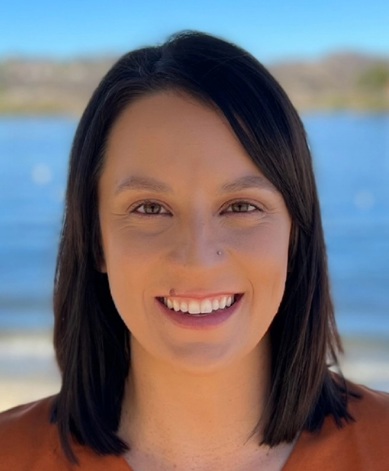
Lauren Hammond ABA + BCBA personal statement tutor
Table of Contents
- ABA / BCBA personal statement tips
- What to include - and avoid
- ABA / BCBA personal statement examples
- Learn more about Lauren, our ABA personal statement expert.
ABA and BCBA Personal Statements
On this page you'll find six examples of effective personal statements for MS in Applied Behavior Analysis programs and BCBA certification track programs, written from the perspective of registered behavior technicians (RBTs), special education teachers, psychology students, SLP assistants, and other allied health professionals.
Each example is followed by a breakdown of what makes it work. Demand for behavior analysts has grown quickly over the past decade, mostly because autism services have expanded, and more people are applying to ABA programs as a result.
Lauren Hammond is our ABA application essay expert and has been helping people write their graduate school personal statements for several years. Whether you just want some feedback on a draft, or you're staring at a blank Word doc and don't know where to begin, she is happy to help!
Contact Lauren directly at 951-395-4646 (phone or text), or send us an email. Working with Lauren is $225 per hour, or $995 for 5 hours.
Consultations are free.
3 Tips for Strong ABA / BCBA Personal Statements
1. Show You Understand Behavior Analysis as a Science
- ABA is broader than autism intervention: Applied behavior analysis is a science with its own methods: single-case experimental designs, functional behavior assessment, data-based decision making, and the principles of reinforcement, extinction, stimulus control and verbal behavior. An applicant who writes about ABA as a science reads as better prepared than one who describes it mainly as "working with kids with autism."
- Show familiarity with core ABA concepts: Reinforcement schedules, functional communication training, discrete trial training, naturalistic teaching approaches, preference assessments, behavior intervention planning - engaging with even a few specific ABA concepts signals that you've done more than observe a few sessions.
- Demonstrate data orientation: Behavior analysts make treatment decisions from data. Show that you understand why data collection and graphing sit at the center of the practice: the graph is how a BCBA decides whether to keep a program, change it or drop it. Applicants who treat data as paperwork come across as less ready for graduate training.
Example:
"What set apart the BCBAs I most respected in the clinics where I worked was how they used data. One of them looked at a client's flat graph for receptive labeling, noticed that most of the errors came on the same two pictures, changed the target set, and could see on the graph within a week whether the change worked. I want to be trained to read data that way and act on it."
2. Be Specific About Your Population Interest and Practice Setting
- ABA is applied across many populations and settings: Children with autism, adults with intellectual disabilities, individuals with traumatic brain injury, organizational behavior management, school-based behavior support, parent training, gerontological applications - ABA reaches well beyond pediatric autism, and an applicant who knows the field's range reads as better informed than one who treats ABA and autism services as the same thing.
- Name where you want to practice: In-home ABA therapy, clinic-based services, public schools, residential programs, organizational settings, research - a specific setting and population show that you've thought beyond the credential to the actual career.
- If autism services is your focus, be specific within that: Early intensive behavioral intervention, verbal behavior programs, social skills groups, functional behavior assessment for problem behavior, transition-age youth services - autism services vary a lot from one setting and program type to the next, and naming the part you want to work in shows you have looked closely.
Example:
"My specific interest is functional behavior assessment and behavior intervention planning: working out what a problem behavior gets the person before choosing an intervention. I have seen this done well. I have also seen a time-out plan written for a girl whose tantrums were maintained by escape from reading group, and the tantrums increased, because time-out gave her exactly what she was after. I want to be the person who does the assessment first."
3. Demonstrate Direct Experience with Behavior Analysis - and Reflect on What It Taught You
- RBT experience is the most valuable preparation: Registered behavior technicians who have implemented behavior plans under BCBA supervision have firsthand experience with the clinical practice they're applying to lead. Describe the specific client population you worked with, the specific techniques you implemented, and - most importantly - what you observed BCBAs doing that you want to be trained to do.
- If your background is in education or another allied health field: Connect your existing skills to the behavior analytic framework. A special education teacher knows the school environment and the IEP process; an SLP assistant knows communication development and AAC; an OT practitioner knows sensory processing and adaptive behavior. Say how that knowledge will make you a better behavior analyst instead of leaving the reader to guess.
- Show awareness of the ethical dimensions of the practice: Behavior analysis has a complex history, and the field has worked hard to distance itself from its aversive-intervention past. Applicants who demonstrate awareness of current ethical standards - assent, the least restrictive intervention hierarchy, the priority of socially significant behavior goals - signal professional maturity.
Example:
"As an RBT I have become more attentive to assent. Most of my clients can't say yes or no to a session, but they tell me plenty: one boy walks to the table on his own when he's ready and slides off his chair when he's done. The BCBAs I most respect write that into the program, with choices built into each session and a clear rule for what staff do when a client withdraws assent. I want to be trained to design programs that respect those signals and still produce clean data."
What to Include in Your ABA / BCBA Personal Statement - and What to Avoid
What to Include
- Evidence of direct experience with ABA practice - RBT work, paraprofessional experience, school-based behavior support, observation hours; be specific about what you did and what you observed BCBAs doing
- Demonstration of understanding of ABA as a science - data-based decision making, functional behavior assessment, specific behavioral principles; show you understand the scientific foundation, not just the clinical application
- Your intended population and practice setting - pediatric autism, adults with IDD, school-based, clinic-based, research; be specific
- What you want to learn that your current role doesn't allow - supervision, FBA, program design, research; name the gap between what you can do now and what BCBA training will enable
- Awareness of ethical standards in behavior analysis - the Ethics Code, least restrictive intervention, assent, socially significant goals
- Program-specific detail - a faculty member's research, a supervised fieldwork placement, a specialty track
What to Avoid
- Treating ABA and autism intervention as synonymous - ABA is a broader scientific discipline; even if autism is your focus, show awareness of the field's range
- "I love working with children with autism" - this is the most common and least distinctive opening; show what specifically about the science and practice of behavior analysis draws you
- Family member with autism as the only motivation - if a family member's autism is part of your story, pair it with professional experience and clinical understanding; it should not substitute for them
- Ignoring the supervision component of BCBA practice - BCBAs supervise RBTs and paraprofessionals; showing awareness of this responsibility signals that you understand the full scope of the credential
- Submitting the same statement everywhere - programs with research emphases, school-based tracks, or adult services focuses want different things; tailor accordingly
Video: 7 Ways to Write a Crappy Graduate School Personal Statement
For more personal statement tips, check out Vince's video: 7 Ways to Write a Crappy Graduate School Personal Statement.
A few ABA/BCBA programs ask for a statement of purpose rather than a personal statement. The statement of purpose format puts more weight on your academic and professional preparation, so it is worth reading before you adapt anything here.
6 ABA / BCBA Personal Statement Examples
Below are six example ABA / BCBA personal statements, each followed by notes on what it does well.
We wrote these six ourselves as teaching models. The applicants are invented, the programs are left generic on purpose, and nothing here is a real client's statement. Read them for structure and for how specific the detail gets, not as text to borrow.
Group Home Direct Support Professional to BCBA
For four years I have worked as a direct support professional in a six-bed group home for adults with intellectual and developmental disabilities. I mostly work evenings, which means dinner, showers, evening meds, and the stretch between the day program van and bedtime that every staff member in the house dreads.
One resident, a man in his forties I'll call D., had a behavior support plan for property destruction. A consulting BCBA wrote it and visited once a month. The plan told us to block, redirect him to a preferred activity, and fill out an ABC sheet for each incident. For months the count held at about three a week. Most of us filled out the sheets at the end of the shift, from memory, and wrote "unknown" in the antecedent column.
I started filling mine out right after each incident and adding the time. After six weeks nearly every entry fell between 4:30 and 5:15, after he got home from his day program and before dinner. That is when staff are busiest: we are handing off between shifts and starting the meal, and nobody is talking to him. When the consultant came that month, I showed her my sheets. She read through them and asked what staff did in the first minute after he broke something. The consequence column on every sheet said "redirected." In practice it meant two or three of us rushed over, which was the most attention he got all evening.
She revised the plan. Now someone sits with him for five minutes when he comes in, before dinner prep starts, and he has a picture card he can hand any of us to ask for company. Over the next three months the incidents dropped, unevenly, to about one every two weeks.
That month showed me what I can and can't do from my position. I can collect better data than most of my coworkers, and I can spot a pattern in it. I could not have told you that the destruction was probably maintained by attention, or designed a plan that gave him attention on a schedule and taught him a way to ask for it. I also could not have trained eleven staff across three shifts to carry it out the same way, and that turned out to be the harder part. For the first month the evening shift followed the plan and the weekend shift mostly didn't, and the data showed it.
Most of the BCBAs I meet work with young children with autism, and that work matters. I want to work with adults. Some of the residents in my house have had behavior plans for twenty years or more, and a few of those plans have barely changed in that time. I want to be trained to conduct functional assessments, to write plans that direct support staff can follow on a busy shift, and to supervise and train the people who carry them out.
I am applying to this program for its adult services fieldwork placements and for its coursework in staff training and performance management, which is the part of the job I watched decide whether D.'s plan worked.
Why this statement works:
- It opens on the setting and the shift. "The stretch between the day program van and bedtime" tells a reader this applicant knows when trouble happens in a group home; a weaker draft would open with "I have always wanted to help adults with disabilities."
- The ABC-sheet story shows the applicant doing one small piece of behavior analytic work (timing the incidents) and then hitting its limit when the consultant asks about consequences. Committees want to see both the skill and the gap.
- "I could not have told you that the destruction was probably maintained by attention" names exactly what graduate training would add. "I want to learn more" would tell the reader nothing.
- The weekend-shift detail brings in staff training and treatment integrity, which most applicants skip even though supervision takes up much of a BCBA's week.
- Choosing adults over early intervention, and saying why, shows the applicant knows the field is wider than pediatric autism.
Special Education Teacher to BCBA
Behavior analytic principles have been part of my work since my first year of teaching, in a self-contained special education classroom where I have taught for five years. The students there have intellectual disabilities, autism spectrum disorder, and complex behavioral needs, and the procedures I use include token economies, differential reinforcement and function-based intervention. I have been using them without the training to do so rigorously and without the credential that would allow me to lead the process for other educators.
The gap became clearest to me during a behavioral crisis with a nine-year-old whose head-hitting had been escalating for months. The school psychologist conducted what was called a functional behavior assessment, but it consisted primarily of a records review and a brief observation, and the behavior intervention plan that followed was generic, written without any hypothesis about what the behavior was doing for him, and it did not work. I watched a student suffer through an intervention that was not designed to address the actual problem, because no one in the building had the training to conduct a thorough functional behavior assessment.
I want the training to conduct functional behavior assessments built on direct observation and data and to design individualized behavior intervention plans based on them. I also want to provide clinical supervision to the teachers and paraprofessionals who are implementing those plans. The BCBA is the credential that makes that possible, and the MS program is how I would build the scientific foundation I do not currently have.
My goal is to practice as a behavior analyst in a school or educational setting, working at the intersection of special education and behavior analysis. This program draws me for its school-based behavior analysis focus and for its practicum placement in the special education settings where I intend to work.
Why this statement works:
- The opening names the classroom and the procedures already in use (token economies, differential reinforcement), so by the end of the first paragraph the reader knows this teacher already applies behavior principles and is asking for the training to do it rigorously.
- The head-hitting case carries the statement. Describing the school's FBA as "a records review and a brief observation" shows the applicant knows what a thorough assessment requires, without attacking the school psychologist.
- "I watched a student suffer through an intervention that was not designed to address the actual problem" is the one emotional line, and it is tied to a clinical point instead of standing on its own.
- The supervision goal (training teachers and paraprofessionals to carry out plans) matches what school-based BCBAs actually spend their time on; a weaker draft would stop at "I want to help my students."
- The program reasons (school-based focus, special education practicum) follow directly from the career goal, so the last paragraph reads as a plan.
Psychology Undergraduate with Research Interest to ABA MS
My undergraduate research was in experimental analysis of behavior. It was a replication study, looking at how schedules of reinforcement affect response rate and pattern in human participants. Our results matched the basic literature closely. They also pointed me straight to a question I couldn't answer from basic research alone: how do these principles translate into effective intervention for individuals with clinically significant behavior?
I came to applied behavior analysis through the research rather than through clinical observation first. Studying behavioral science gave me a theoretical orientation (operant conditioning, stimulus control, verbal behavior as behavior) that frames clinical application in a way pure clinical observation can't. The piece I still needed was direct clinical experience. I got it as an RBT, a position I have held for eighteen months alongside my undergraduate coursework.
Doing both at once means I see the principles from the lab play out in sessions. I can spot ratio strain when a skill acquisition program thins reinforcement too fast, because responding slows and breaks down the way it did in the lab. I can also recognize a problem behavior maintained by escape from demands, and I understand why planned ignoring does nothing for it (the client still gets out of the task), and why escape extinction, when it is the right call, usually brings a burst of the behavior that the team has to plan for before it starts.
My goal is to finish the MS in ABA and build a career that combines clinical practice with applied research, contributing to the translational research that connects basic behavior analysis to effective intervention design. I'm applying to this program for its research faculty in translational ABA and for the way its curriculum emphasizes designing experiments.
Why this statement works:
- The first paragraph names a specific study (reinforcement schedules, human participants, a replication) and ends on the question it left open, which gives the rest of the statement a reason to exist.
- The applicant explains why research came first, names what was missing (clinical experience), and says how they got it. That kind of plain self-assessment is what committees look for.
- The ratio strain and escape-extinction examples connect lab findings to decisions made in sessions. A weaker draft would say "my research gave me a strong foundation" and leave the reader to guess what that means.
- The goal (translational research alongside practice) uses both halves of the background, and the program reasons name the two things that serve it: translational faculty and training in experimental design.
Family Member with Autism to ABA (Carefully Handled)
When I was fifteen, my younger brother was diagnosed with autism and began early intensive behavioral intervention. I watched his ABA therapy for years, first as a curious observer, then as a trained one.
My brother's autism alone is not why I am applying to a BCBA program. The nine years since his diagnosis, four of them spent working in the field, are. Over those years I learned to read the graphs his BCBA showed my parents, and I saw how much a well-designed program could change an ordinary day in our house.
I became an RBT at twenty. It was the same kind of work my brother had received, this time with other families' children and a professional stake in the outcome. I have now been an RBT for four years, working across home, clinic, and school settings with children and adolescents with autism and related developmental disabilities.
What my personal history gave me is an understanding of what families experience that most clinicians never fully develop: the hope and the exhaustion, along with complicated feelings about a child's progress and plateaus. It also taught me how much it matters when a BCBA explains the data to parents in plain terms and plans around the family's actual routines. That understanding informs how I want to practice.
I have four years of RBT experience and a strong undergraduate GPA in psychology. I have also completed upper-division coursework in learning and behavior. I am applying to this program because of its parent training curriculum and its emphasis on family-centered care.
Why this statement works:
- The second paragraph meets the obvious concern head-on with "My brother's autism alone is not why I am applying to a BCBA program" and points to years of work, so the family story never has to carry the application by itself.
- Learning to read the graphs his BCBA showed the parents is a small, concrete detail that links the personal history to the science of the field.
- The parent paragraph turns family experience into something a clinician can use: explain data in plain terms and plan around a family's real routines. That gives a reader more than "I know how hard it is for families."
- The final paragraph lists qualifications (four years as an RBT, GPA, coursework) right before the program reason, so the statement closes on the professional record instead of the family story.
- The program reasons (parent training, family-centered care) follow from the insight in the paragraph before them.
SLP Assistant to ABA MS
In my school, the students with the most severe behavior are usually the students with the least functional communication. I have worked for three years as a speech-language pathology assistant in a school-based setting, supporting SLPs as they deliver services to students with autism and intellectual disabilities as well as communication disorders, and that work has given me a specific lens on the overlap between communication and behavior: a student without a reliable way to ask for things often uses behavior to get them, and that behavior fills a large share of our incident reports.
A student who can't request a break, refuse an activity, or get attention through communication will find ways to accomplish those functions through behavior, and I have seen what functional communication training does about it. One second grader on our caseload hit staff several times a day when handed worksheets; once the team taught him to hand over a break card and honored it every time at first, the hitting dropped to a few times a week within two months. Consequence-based plans had not moved it, because they targeted the form of the behavior and FCT targeted its function.
That observation led me to behavior analysis, where the relationship between communication and behavior is theoretically central rather than clinically supplementary, and my SLP assistant background gives me a useful head start on ABA training. I understand augmentative and alternative communication systems and the developmental sequence of language acquisition, and I know the communication profiles of the population I most want to work with. What I need from the BCBA program is the behavior analytic framework that organizes that knowledge into a clinical methodology.
My goal is to practice as a BCBA in a school or clinic setting, with a specialty focus on functional communication training and verbal behavior. I am applying to this program for its verbal behavior curriculum and for practicum placements in settings that serve students with complex communication needs.
Why this statement works:
- The opening states the pattern the applicant noticed in plain terms and grounds it in three years of school-based work. A rhetorical question would only have delayed the point.
- The second grader with the break card is the evidence. It shows FCT for an escape function, with a realistic timeline and an honest note that reinforcement was dense at first, and it explains why consequence-based plans failed.
- The applicant lists what an SLPA already brings (AAC, language development, the communication profiles of the target population) and then names the missing piece: a behavior analytic framework.
- The specialty goal (FCT and verbal behavior) and the program reasons (verbal behavior curriculum, placements serving complex communication needs) line up with the background.
OT Practitioner to ABA MS
I work every day on the parts of daily function that OT addresses directly: sensory processing, motor planning, and adaptive skills like dressing and handwriting. I have been a certified occupational therapy assistant for four years, working primarily with school-age children with autism and developmental disabilities. The work has also given me a front-row view of the behavioral challenges that remain after OT intervention. Those require a different kind of clinical framework.
The most common pattern on my caseload is a student whose sensory regulation has improved through OT. Their behavioral challenges persist anyway, because the function has not been assessed or addressed: escape from demands, access to preferred items, or automatic reinforcement. OT addresses what the student's nervous system is doing. Behavior analysis looks at what the student's behavior is doing and why it is doing it. It also sets out how to change that behavior systematically. The students I have seen make the most progress got both, from an OT and a BCBA who read each other's reports and planned together.
I am applying to an ABA MS program to develop the behavior analytic expertise that complements my OT background. I intend to keep practicing OT. I want to contribute a behavioral perspective to interdisciplinary treatment teams and to conduct FBAs for students on my caseload whose behavior is limiting their engagement in OT services. Eventually I want to supervise behavior programs in the school settings where I work.
I have completed undergraduate coursework in psychology and learning. In my school settings I have also been observing and working with BCBAs, to understand the assessment and program design side of the practice. I am applying to this program for its emphasis on interdisciplinary collaboration and its school-based supervised fieldwork options.
Why this statement works:
- The opening names the OT skills the applicant uses every day, then names their limit: behavior that persists after sensory regulation improves.
- The pattern paragraph names the actual functions (escape, access, automatic reinforcement), which shows the applicant already uses the field's vocabulary correctly.
- "OT addresses what the student's nervous system is doing. Behavior analysis looks at what the student's behavior is doing" draws the line between the two fields in two sentences; a weaker draft would call them "similar approaches" and move on.
- "I intend to keep practicing OT" answers the question a committee would otherwise ask, which is why an OT practitioner wants a behavior analysis degree, and it keeps the goal believable.
- The program reasons (interdisciplinary collaboration, school-based fieldwork) match the plan to work across disciplines in schools.
Have a draft? Try our free personal statement checker. It checks your length, opening line, stock phrases, signs of AI writing, and sentence rhythm. Your draft never leaves your browser.
Feeling stuck?
Lauren Hammond, our ABA and BCBA personal statement editor, would be happy to help - whether you just need a second opinion on a draft or you're starting from scratch.
Text or call her at 951-395-4646, or send us an email.
Lauren works with you on Zoom and in Google Docs, so you get both real-time coaching and clean, trackable revisions. Most clients use 2 to 4 sessions.
Meet Lauren Hammond, ABA & BCBA personal statement tutor
Lauren: I earned my Bachelor's Degree in Literature and Writing, with a concentration in Writing, at California State University San Marcos (CSUSM) and my Master's Degree in English and Comparative Literature at San Diego State University (SDSU).
I completed my PhD in English at the University of California Riverside (UCR) in September 2023 and then worked as UCR's Graduate Writing Center Specialist and graduate Fulbright Program Advisor. I now teach at Azusa Pacific University, where I'm an Assistant Professor and Lead Faculty in the Writing Program.
I have been a writing consultant for more than 10 years, and I've helped people with research writing, thesis/dissertation projects, rhetorical and literary analyses, writing in the humanities, grammar/sentence mechanics, and more. My work for VKTP includes thesis and dissertation editing and coaching, especially in the humanities and social sciences, as well as graduate school application materials such as personal statements, diversity statements and research statements, and job market materials for academic and alt-academic positions, including resumes, CVs and cover letters.
During my downtime, I love hanging out with my husband, our daughter, and our two dogs, Link and Leia! My favorite activities are going on the boat, cruising on the golf cart, and making our way through all of the local eateries. When we aren't out and about, I typically enjoy reading and watching movies.
Working with Lauren is $225 per hour or $995 for a package purchase of 5 hours. You can reach her at 951-395-4646 (phone or text), or by sending us an email.
P.S. Our partner Julie can also help you prepare for your ABA program admissions interviews! Learn more about her professional voice training for interview prep.
P.S. Some ABA graduate programs require the GRE - we can help with that too!
Love For Lauren
Frequently Asked Questions
How long should an ABA or BCBA personal statement be?
Many programs ask for 500-1,000 words, but limits vary, so follow each program's instructions. Use the space to show direct ABA experience and an understanding of behavior analysis as a science, beyond enthusiasm for working with kids with autism.
What do ABA graduate programs look for in applicants?
Direct experience with ABA practice (RBT work is especially valuable), strong GPA in psychology or a related field, GRE scores where required, understanding of core behavioral principles and methodology, and a specific population and practice setting interest. Show that you understand ABA as a science, not just a therapeutic approach.
Do I need to be an RBT to apply to BCBA programs?
RBT experience is highly valued but not universally required. Programs also accept related experience - special education, SLP or OT practice, psychology research, paraprofessional work. Be specific about whatever direct experience you have and connect it to your reasons for pursuing certification.
How should I handle having a family member with autism in my statement?
Include it if it matters to you, but don't let it carry the statement alone. Pair it with professional experience, and show how your family history led you to build clinical skills and an understanding of the science. The fourth example above shows one way to do this.
Can I use AI to write my ABA or BCBA personal statement?
AI doesn't know your RBT or clinical experience or what you actually understand about behavioral principles, and those details are what make an ABA statement work. Write the statement yourself or work with Lauren.
Do ABA graduate programs require the GRE?
Some ABA programs still require or recommend the GRE, and many have dropped it, so check each program's requirements. If you need GRE prep, our tutoring team can help.
BTW, Lauren can also help with:
- Dissertation and thesis editing
- Graduate school CV and resume examples
- Teaching statement examples
- Academic cover letter examples
- Diversity statement examples
- Research statement examples
- Speech-Language Pathology personal statements
- Occupational Therapy personal statements
- PsyD personal statements
- MS in Counseling personal statements
- Marriage and Family Therapy personal statements
- Clinical Psychology PhD personal statements
- MSW (Social Work) personal statements
- Physician Assistant personal statements
- Nurse Practitioner personal statements
- CRNA personal statements
- Physical Therapy personal statements
- Athletic Training personal statements
- Dental school personal statements
- PharmD personal statements
- Genetic Counseling personal statements
- MHA (Health Administration) personal statements
- Health Informatics (MSHI) personal statements
- MBA personal statements
- Law School personal statements
- PhD personal statements
- Post Doc personal statements
- Fellowships and Grants personal statements