Graduate School Personal Statement Help - Expert Editing and Tutoring
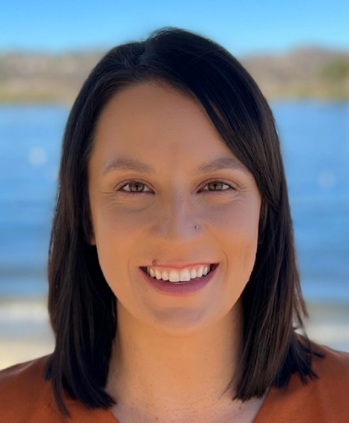
Lauren Hammond, graduate school personal statement tutor
Table of Contents
- Personal statement tutoring with Lauren
- What a strong personal statement does
- 3 tips for a strong graduate school personal statement
- Video: 7 ways to write a crappy personal statement
- 6 graduate school personal statement examples
- How the process works
- Meet Lauren Hammond
- Reviews
- Personal statement help by program
- Frequently asked questions
Graduate School Personal Statement Tutoring
Lauren Hammond is our grad school admissions essay expert and has been helping people write their graduate school personal statements for several years. Whether you just want feedback on a draft, or you're staring at a blank Word doc and don't know where to begin, she can help you write a statement that gives your application a better chance.
She works with people online via Zoom and via email / Google Docs.
Contact Lauren directly at 951-395-4646 (phone or text), or send us an email. Working with Lauren is $225 per hour, or $995 for 5 hours.
Consultations are free.
P.S. We also do GRE prep!
What a Strong Graduate School Personal Statement Does
The graduate school personal statement can seem like the most daunting part of your application. But a well-written essay can:
- Wake up a bored admissions committee (most essays they'll read are extremely similar)
- Convey your real personality and make you come alive to your readers
- Depict your experiences in movie-like clarity and detail
- Show your best qualities and values
- Help the reader see why you and their program are such a great fit
So don't treat the essay as a box to check. Written well, it can help you get accepted.
A lot of applicants treat the personal statement like a résumé in paragraph form. That's usually a mistake. A strong graduate school personal statement does three things at once:
- It shows who you are
- It shows what you want
- It shows fit
It shouldn't be a chronological list of everything you've ever done, a "hero story" where you learned 12 life lessons, or a generic essay that could be sent to any program with only the name swapped out. If your statement can be pasted into 10 different applications with only minor edits, it's probably not doing its job.
3 Tips For Strong Graduate School Personal Statements
1. Lead with the question you want to work on, not the moment you fell in love with the field.
Most graduate school personal statements open with an origin story: a childhood microscope, a book at fifteen, a professor who changed everything.
Admissions committees have read hundreds of these. What gets their attention is a specific, answerable question you want to spend years on. Open with the problem, and bring in the origin story later and briefly, only if it explains why you are equipped to work on it.
2. Show the work, not the enthusiasm.
"I am deeply passionate about sustainable agriculture" is a claim anyone can type. "I spent eleven weeks hand-counting pollinator visits across four field margins and found our sampling protocol was systematically missing dawn activity" is evidence.
Graduate admissions is a prediction about whether you can do independent scholarly work, and the only evidence for that is work you have already done. Describe a method, a dataset, a failure, a revision.
3. Name faculty and explain the fit in one sentence each.
Generic closings kill otherwise strong statements. Committees want to see that you understand what the department actually does, and the fastest proof is two or three faculty whose work connects to your question, with one concrete sentence each about the connection.
Skip "Professor X's impressive research" and say what of theirs you have read and what it would let you do. If you cannot write that sentence, you have not researched the program enough to apply to it yet.
Video: 7 Ways to Write a Crappy Graduate School Personal Statement
For more personal statement tips, check out Vince's video: 7 Ways to Write a Crappy Graduate School Personal Statement.
6 Graduate School Personal Statement Examples
We wrote these six ourselves as teaching models. The applicants are invented, the programs are left generic on purpose, and nothing here is a real client's statement. Read them for structure and for how specific the detail gets, not as text to borrow. Where you see a bracketed placeholder, that is where your own program research has to go.
Example 1 (History, PhD)
The pre-1940 deed books of the county recorder's office in [Region] are kept in a basement room that has a working dehumidifier and no catalog. I spent two summers there photographing pages, since the digitized record for that county begins in 1952 and every question I care about concerns what happened before it.
What turned up was a pattern I had not gone looking for. Between 1921 and 1934, the same four attorneys notarized a disproportionate share of the transfers out of Black ownership in three townships, and in a meaningful fraction of them the seller's signature is a mark instead of a name. I have been building a relational database of those transfers, and the question I am putting to it is whether the attorney network, rather than any single buyer, is the unit that explains the dispossession.
I do not yet know whether it holds. My sample is one county, and I understand the selection problem: deed books record completed transfers and never attempted ones, so the coercion itself is something I cannot see directly. That limitation is most of why I want to do this work in a doctoral program rather than alone. I have no training in quantitative methods, and I need to learn the comparative literature on rural credit and land tenure well enough to tell whether this pattern is local or general.
My undergraduate training gave me archival skills and little else. The thesis I wrote on New Deal agricultural policy was wrong, I now think, in an instructive way: I read federal program records as a description of what happened on the ground, when they describe better what administrators believed. Rereading my own sources two years later taught me more about historical method than any seminar had.
I am applying to [Program] because [Faculty Name]'s work on [specific topic] takes the legal-records approach I am trying to learn, and because [Second Faculty Name] works on [related area], which is the comparative frame I need. The department's [specific resource, center, or collection] would put me within reach of the regional archives this project depends on. I would like to find out whether what I found in that basement holds beyond one county.
Why this statement works: The first sentence puts the reader in a basement with "a working dehumidifier and no catalog" and explains why the applicant had to go there: the digitized record starts in 1952. A weaker draft would open with "I have always loved history" and get to the archive two paragraphs later. The research question names its unit of analysis ("the attorney network, rather than any single buyer"), which tells a history committee what kind of argument the dissertation would make. The third paragraph spells out the selection problem: deed books record completed transfers and never attempted ones. Faculty want to see an applicant find the weak spot in their own evidence before an advisor has to point it out. The paragraph on the New Deal thesis names a specific misreading (treating federal program records as a description of events on the ground) and what it taught. That shows growth in method without turning into an apology. Each faculty placeholder is tied to something the project needs, the legal-records approach in one case and the comparative frame in the other, which tells the committee more than praise of their work would.
Example 2 (Computer Science, MS)
Our fraud model looked fine on every metric we tracked. It was also quietly failing for customers who had changed their legal name in the past year. I found out because a support ticket queue I had no business reading kept showing the same complaint. The aggregate false-positive rate never showed a thing, since the affected population was under two percent of accounts.
Building the analysis that proved it took me three weeks, and the fix took an afternoon. Those three weeks are why I'm applying to graduate school. I spent them reconstructing the statistics from blog posts and half-remembered coursework, and that analysis is the part of the job I want to get good at.
I've worked as a production engineer for four years, and I'm good at the parts of machine learning that are software. I've shipped models and owned on-call for them, and I learned the unglamorous truth that most model failures are data pipeline failures. What I don't have is the theoretical foundation to know in advance which subgroup failures a given architecture is prone to. I'd rather not discover them by accident through a support queue. I want coursework in statistical learning theory and fairness, and I want to do research on this problem instead of reading about it.
Concretely, I want to work on evaluation. Most subgroup fairness auditing assumes you know the subgroups in advance. The failure I found was in a group nobody had thought to define. What interests me is whether you can discover the partition from the model's own error structure, without a protected-attribute label. I've read [specific area of literature], and I know pieces of this exist. I don't know whether the version I want is tractable, and a master's thesis is a good place to find out.
I'm applying to [Program] because [Faculty Name]'s group works on [specific area] and because the program allows a thesis track rather than only coursework. After four years of shipping systems, I want to spend two years on one problem with people who can tell me when my statistics are wrong.
Why this statement works: It opens on a failure the writer caught, with the detail that hid it: the affected customers were under two percent of accounts, so the aggregate false-positive rate never moved. A weaker draft would open with a list of models shipped. The three-weeks-versus-an-afternoon comparison turns a work story into the case for the degree. The slow statistical part is the work the applicant wants training in, and the statement says so directly. "I'm good at the parts of machine learning that are software" marks exactly where four years of industry experience stops. That answers the doubt a committee has about any working engineer: what do they actually lack? The research interest (finding the subgroups from the model's own error structure, without a protected-attribute label) grows out of the opening story, and the writer admits it may not be tractable. The fit paragraph gives a practical reason, the thesis track, alongside the faculty match, which shows the applicant read the program's structure and not only its faculty list.
Example 3 (Environmental Science, MS)
I've collected water samples from the same eleven storm drain outfalls every other week for two years and two months. The county pays me eighteen dollars an hour, and the data goes into a compliance report that, as far as I can tell, nobody reads for anything but the pass-fail line at the bottom.
There is a finding in that report. Outfall six spikes for fecal coliform after rain, but only when the dry spell before the storm has lasted more than nine days, and the pattern has held across two summers. It could be ordinary first-flush wash-off, or it could be a leaking sewer line or an illicit connection that only shows up under certain flow conditions. Grab samples taken every other week can't tell those apart. I wrote it up and sent it to the stormwater coordinator and never heard back. Nothing in the regulatory framework asks that question, and no one on staff has time to ask questions that are not asked of them.
I would like a job where asking that kind of question is part of the work. A master's in environmental science is the credential that moves me from collecting to designing. I want training in hydrological modeling, so I can predict where else this pattern should appear instead of finding it once by hand.
The fieldwork has also shown me what I'm not good at. My statistics are practical and shallow: I can run the tests my supervisor asks for, but I couldn't defend the assumptions behind them under questioning. That became embarrassingly clear when a consultant challenged our sampling design and I could not answer. Since then I've worked through [specific coursework or self-study]. It's the gap I most want the program to close.
I'm applying to [Program] because of [specific lab, field station, or research group] and because [Faculty Name]'s work on [specific topic] is the modeling approach I've been trying to teach myself. I'd like to bring twenty-six months of biweekly data with me and find out what it actually says.
Why this statement works: The first paragraph uses numbers instead of adjectives: eleven outfalls, every other week, eighteen dollars an hour. The committee learns about the applicant's persistence and circumstances without a word of self-pity. The outfall six pattern is something the writer noticed in routine compliance data. The statement offers two possible explanations and says biweekly grab samples can't separate them. Claiming to know the cause from that data would worry an environmental science reader. The weakness paragraph names a moment, a consultant challenging the sampling design, and then what the writer has done since. "I want to strengthen my quantitative skills" would say far less. Hydrological modeling is tied to a concrete use: predicting where else the pattern should appear. That makes the coursework request read as a plan. The close offers the program twenty-six months of data, which gives the committee a reason to want this applicant and not only the reverse.
Example 4 (Education, MEd)
Twenty-two of my twenty-eight ninth graders could decode the words in our biology textbook and still could not tell me what a paragraph had claimed. It was not a reading problem in the way I had been trained to think about reading problems. Nothing in my credential program had prepared me for it.
I taught for five years. What I eventually built was a routine in which students annotated claim sentences before they read for detail, and I built it badly and by trial. Over two years my end-of-unit comprehension scores moved in a way I believe was real, though I want to be careful here. I had no control group. My assessment was one I wrote myself, and I changed three other things at the same time. Something helped, and I can't say which change it was.
I'm applying because I want to be able to find out. I need training in research design, the kind that turns a teacher's hunch into a question someone can answer. I also want to spend time in the disciplinary literacy literature instead of reinventing it in a classroom at ten at night.
I am also clear that I am not leaving the classroom permanently. The roles I want are in coaching and curriculum design, the ones that sit between research and practice. What worries me about graduate school is producing work that teachers can't use. The interventions I found most useful as a teacher were the ones that fit inside a fifty-minute period with thirty kids and no aide. That constraint is the one I'd want to design around.
I'm applying to [Program] because [Faculty Name] works on [specific area] and because the program's [specific practicum, partnership, or school placement] would keep me in classrooms while I study them. I would like to go back to students like those twenty-two with a better answer than the one I improvised.
Why this statement works: The opening number (twenty-two of twenty-eight students could decode the words but couldn't say what a paragraph claimed) defines a disciplinary literacy problem before the term appears anywhere in the essay. The second paragraph reports a result and then lists why it might not hold: no control group, an assessment the teacher wrote, three other changes made at once. That is the research-design thinking an MEd program teaches, shown before admission. The applicant says they plan to stay in schools, in coaching or curriculum work. That tells the committee what the degree is for and answers the question of whether this is an exit from teaching. "A fifty-minute period with thirty kids and no aide" gives the research interest a practical test. Saying "I care about practice" would not carry the same weight. The fit paragraph asks for a placement that keeps the applicant in classrooms, which matches everything said above it.
Example 5 (Economics, PhD)
In January the minimum wage in our county rose. By March my father had cut his two part-time employees to one, and he was working Sundays himself. I grew up assuming this was what happened, until I read the empirical literature and found that it mostly is not, and that the interesting question is why the effect is so heterogeneous across firms and places.
That heterogeneity is what I want to study. The aggregate employment elasticity averages over firms with very different substitution possibilities, and the more useful object, I think, is the distribution rather than its mean. My senior thesis was a first attempt, in which I used [data source type] to ask whether establishment-level responses correlate with pre-period labor share; the relationship I found survived the specifications I knew how to run, yet I do not trust it very far, because my identification came from a policy change that was plausibly anticipated.
I have prepared for this deliberately. Beyond the standard sequence I took real analysis and measure-theoretic probability, and last year I worked as a research assistant to [Faculty Name], doing the work that does not appear in papers: cleaning administrative panels and reconciling establishment identifiers across vintages. A result we liked turned out to be an artifact of a merge. Watching that result die taught me more about empirical economics than my thesis did.
My first attempt at the field, I should say plainly, was a failure. I took intermediate micro as a sophomore and got a C, and I concluded that I was not a quantitative person. Two years later I came back to it, because the minimum wage question would not leave me alone, and the second pass was different, since now I had a reason to want the tools. My later grades reflect that, and I would rather explain the C than have the committee wonder.
I am applying to [Program] because of [Faculty Name]'s work on [specific topic] and [Second Faculty Name]'s on [related topic], and because the department's [specific data access, center, or workshop] is where the firm-level work I want to do is possible.
Why this statement works: The story about the father's employees takes two sentences, and the writer sets it against the empirical literature right away. The family experience motivates the question; the literature supplies the evidence. "The distribution rather than its mean" states the research agenda in the terms an economics PhD committee uses, so the reader can judge the idea instead of the enthusiasm. The writer says why they don't fully trust their own thesis result: the policy change was plausibly anticipated. Naming your own identification problem is exactly what faculty look for. The research assistant paragraph describes the unglamorous work (cleaning administrative panels, reconciling establishment identifiers) and a result that died as a merge artifact. That shows the writer knows what empirical work involves day to day. The C in intermediate micro gets its own short paragraph with a reason and a later record. Leaving it unexplained would let the committee guess.
Example 6 (Mechanical Engineering, MS, career changer)
For six years I have been the person a hospital calls when an infusion pump fails calibration. I've repaired several thousand of them. I have come to believe that a specific failure mode in the peristaltic drive is a design problem and not a maintenance problem, because I see it cluster by model and not by facility or by technician.
I can't prove that. Proving it would take instrumented testing, a fatigue analysis I don't have the background to run, and access to a lab. Getting those three things is why I'm applying.
My path here isn't typical. I finished an associate degree in biomedical equipment technology and went to work. Then I completed a bachelor's in mechanical engineering at night over four years, still working full time. It took longer than usual, and my transcript shows it. My grades in the first two semesters, when I was learning how to study again at twenty-nine, are the worst on it. The place I would ask the committee to look is the upper-division mechanics and materials sequence.
The field years gave me a sense for failure that coursework doesn't teach. From a wear pattern I can tell whether a bearing failed from misalignment or from contamination. I've also developed a habit of photographing every failed component I pull, and that has left me a personal archive of several hundred images of the same failure across different units. I'd like to turn that archive into a real dataset.
I'm applying to [Program] because [Faculty Name]'s work on [specific area] is the closest fit to the reliability question I want to answer, and because [specific lab or facility] has the testing capability this needs. I'd like to spend the two years of the degree testing whether the failure I've been photographing is a design flaw.
Why this statement works: The opening establishes expertise with volume and a pattern: several thousand repairs, and a failure that clusters by pump model and not by facility or technician. That clustering is the research hypothesis, stated in the first paragraph. The second paragraph lists what the applicant lacks (instrumented testing, a fatigue analysis, a lab) and ties those gaps to the reason for applying, so the committee knows what the degree would add. The transcript paragraph points the reader to the upper-division mechanics and materials sequence. A weaker draft would apologize for the early semesters or say nothing and hope. The detail about telling misalignment from contamination by wear pattern shows field knowledge a classroom engineer may not have, and the photo archive turns that habit into a possible dataset. The last sentence names the specific thing the applicant would test during the degree, which ends on the research plan instead of a slogan.
Applying to a program with its own dedicated page? We have specific examples and advice for 48 of them, from nursing to law to veterinary medicine, linked below.
How the Process Works
Lauren works with you on Zoom and in Google Docs, so you get both real-time coaching and clean, trackable revisions. Most people fall into one of two categories:
1) You already have a draft. Lauren will tighten the structure, cut things you don't need, make the voice sound like you, and improve clarity, flow, and use of standard written English.
2) You have nothing yet. Lauren will help you identify the experiences that actually belong in the essay, build a simple outline, get a first draft written quickly, and revise until it feels sharp.
Sessions can be used for brainstorming, restructuring, trimming, editing, or all of the above - depending on where you are in the process.
Have a draft? Try our free personal statement checker. It checks your length, opening line, stock phrases, signs of AI writing, and sentence rhythm. Your draft never leaves your browser.
Feeling stuck?
Lauren Hammond, our graduate school personal statement editor, would be happy to help - whether you just need a second opinion on a draft or you're starting from scratch.
Text or call her at 951-395-4646, or send us an email.
Need your CV or resume checked too? See our graduate school CV and resume examples.
Meet Lauren Hammond
Lauren: I earned my Bachelor's Degree in Literature and Writing, with a concentration in Writing, at California State University San Marcos (CSUSM) and my Master's Degree in English and Comparative Literature at San Diego State University (SDSU).
I completed my PhD in English at the University of California Riverside (UCR) in September 2023 and then worked as UCR's Graduate Writing Center Specialist and graduate Fulbright Program Advisor. I now teach at Azusa Pacific University, where I'm an Assistant Professor and Lead Faculty in the Writing Program.
I have been a writing consultant for more than 10 years, and I've helped people with research writing, thesis/dissertation projects, rhetorical and literary analyses, writing in the humanities, grammar/sentence mechanics, and more. My work for VKTP includes thesis and dissertation editing and coaching, especially in the humanities and social sciences, as well as graduate school application materials such as personal statements, diversity statements and research statements, and job market materials for academic and alt-academic positions, including resumes, CVs and cover letters.
During my downtime, I love hanging out with my husband, our daughter, and our two dogs, Link and Leia! My favorite activities are going on the boat, cruising on the golf cart, and making our way through all of the local eateries. When we aren't out and about, I typically enjoy reading and watching movies.
Working with Lauren is $225 per hour or $995 for a package purchase of 5 hours. You can reach her at 951-395-4646 (phone or text), or by sending us an email.
P.S. Our partner Julie can also help you prepare for your grad school admissions interviews! Learn more about her professional voice training for interview prep.
What People Say About Working with Lauren
Fiona Wang: "I had about 6 sessions with Lauren Hammond to go over my personal statements for PhD/PsyD Clinical Psychology applications. I had different goals for each of my statements (e.g., trim, content development, brainstorm ideas), and she tailored each session to meet my needs. An hour might seem short, but she was very productive and sometimes went over two short statements in one session. I thought my writing skills were already good, but the final product, including her revisions, turned out even better than I expected." - See our Google reviews
Lily Annino: "Lauren helped me out SO much with my MFT graduate school essays. I've already gotten an interview from two schools, and I was incredibly happy with the essay results. 110% would recommend her!" - See our Google reviews
Nicolina Patin: "I had the pleasure of working with Lauren Hammond on my Master of Public Health statement of purpose essays, and I'm thrilled to share that I was accepted into all my MPH programs! Her guidance on restructuring my writing was incredibly valuable and her in-line edits helped refine my language, ensuring clarity and conciseness. I highly recommend working with Lauren!" - See our Google reviews
Mira Park: "Lauren Hammond was so incredibly helpful with my personal statements for grad school. I really needed help with organization, staying focused on a coherent narrative, and content-building — which she was phenomenal with. She's also a really sweet person and a pleasure to work with! Can't recommend her enough." - See our Google reviews
Renee Begin: "Lauren Hammond was amazing. She provided me with thoughtful feedback that structured and strengthened my graduate school application essays. You can tell she genuinely cares about her students and wants to see you succeed. I was accepted into my top school choice and appreciate Lauren for her help in the process." - See our Google reviews
If a program on your list asks for a statement of purpose instead, it is a different document with different expectations. Our guide to how to structure a statement of purpose covers what changes.
Personal Statement Help by Program - 51 Program-Specific Pages
Lauren helps applicants across a wide range of graduate and professional programs. Click any program below for examples, tips, and a breakdown of what makes a strong statement in that field.
Healthcare - Clinical and Allied Health
- Physician Assistant (PA) personal statements
- Physical Therapy (DPT) personal statements
- Occupational Therapy (OT) personal statements
- Speech-Language Pathology (SLP) personal statements
- Nursing school personal statements
- Nurse Practitioner (NP) personal statements
- CRNA personal statements
- Nurse Midwifery (CNM) personal statements
- Anesthesiologist Assistant (AA) personal statements
- Dental school personal statements
- Optometry (OD) personal statements
- PharmD personal statements
- Podiatry (DPM) personal statements
- Chiropractic (DC) personal statements
- Audiology (AuD) personal statements
- Genetic Counseling personal statements
- Dietetics / Registered Dietitian personal statements
- Medical Residency personal statements
- Medical School personal statements
- Veterinary School personal statements
Healthcare - Imaging, Technology, and Lab
- Radiation Therapy personal statements
- Diagnostic Medical Sonography personal statements
- Medical Laboratory Science (MLS) personal statements
- Perfusion Science personal statements
- Respiratory Therapy personal statements
- Orthotics and Prosthetics (MPO) personal statements
Healthcare - Movement, Performance, and Rehabilitation
- Athletic Training (MS/DAT) personal statements
- Exercise Physiology (MS/Clinical EP) personal statements
- Kinesiology / Human Performance (MS) personal statements
Mental Health and Behavioral Health
- PsyD personal statements
- Clinical Psychology PhD personal statements
- Marriage and Family Therapy (MFT) personal statements
- MS in Counseling (CACREP) personal statements
- Social Work (MSW) personal statements
- Applied Behavior Analysis / BCBA personal statements
- Art Therapy personal statements
Public Health, Administration, and Policy
- MPH (Public Health) statement of purpose
- MHA (Health Administration) personal statements
- Health Informatics (MSHI) personal statements
- Epidemiology (MS) personal statements
- Master of Public Policy (MPP) personal statements
Business, Law, and Graduate Research
- MBA personal statements
- MS in Business Analytics personal statements
- Law school personal statements
- PhD personal statements
- Master's degree (general) personal statements
- Graduate school (general) statements of purpose
- Biomedical Sciences (MS / post-bacc) personal statements
- Post-doctoral personal statements
- Fellowships and Grants personal statements
Frequently Asked Questions
How much does personal statement tutoring cost?
Working with Lauren is $225 per hour or $995 for a package purchase of 5 hours. Most clients use 2-4 sessions total, depending on how developed their draft is when they start and how many programs they're applying to. Text or call Lauren at 951-395-4646 to get started.
When should I start working on my personal statement?
We recommend starting 6-8 weeks before your first application deadline. That gives you time to draft, revise, and tailor statements for different programs without rushing. Starting early also means Lauren is more likely to have availability when you need her.
Can Lauren help with diversity statements, research statements, and letters of intent?
Yes. In addition to personal statements, Lauren helps with diversity statements, research statements, statements of purpose, and other graduate application materials. If you're applying to a program with multiple essay requirements, she can help with all of them.
What programs does Lauren have experience with?
Lauren has helped applicants across healthcare, mental health, law, business, public health, research, and many other fields. See the full list of 51 program-specific pages above. If your program isn't listed, contact us anyway - Lauren very likely can help.
Can I use AI to write my personal statement?
AI tools can help you brainstorm or get past writer's block. But they don't know your experiences or your reasons for applying, and they don't write in your voice, so what they produce tends to come out polished and generic. Admissions readers see a lot of that. A specific statement in your own words does more for you. Lauren helps you develop your own voice rather than replace it.
Does Lauren work with international applicants?
Yes. Lauren works with applicants anywhere in the world via Zoom and Google Docs. She has worked with many applicants for whom English is a second language, and she focuses on keeping your voice while improving clarity and standard written English.