By Vince Kotchian. Full-time GRE tutor since 2007, author of Barron's 6 GRE Practice Tests, three perfect 170 verbal scores on the real GRE, and moderator of r/GRE.
A lot of GRE advice survives because it gets repeated with total confidence and nobody checks whether it works. Below are 17 pieces of conventional wisdom I've watched trip up students for years, and what I'd do instead.
Jump to any of the 17:
- Agreeing with an answer you just read is not learning
- Rushing through the official questions
- Memorizing math formulas
- Third-party verbal practice
- Price and quality in GRE prep
- How people choose GRE prep
- Why tutors dislike the big companies' prep books
- A "complete solution" is a red flag
- What a practice score tells you
- When the real test feels harder than practice
- Do not wrestle with every question
- A study plan is a recipe, and recipes do not teach you to bake
- What a tutor is really for
- "How do I improve quant?" is a weak question
- Complaining about the test
- The second resource may not deserve all the credit
- Generic Reading Comprehension tips stop helping
Agreeing with an answer you just read is not learning
When you miss a question, reading the explanation and nodding along feels productive. It is not. Tracing someone else's logic is infinitely easier than generating your own, so people keep marching into the next question instead of sitting with the discomfort.
A better habit is to redo the question with the answer hidden, pinpoint exactly where your thinking broke down, and return to it later once the solution has faded from memory.
Rushing through the official questions
ETS releases so few official questions that each one is precious, yet plenty of people burn through them like flashcards. Newcomers often blast through the whole set, do zero analysis, and ask where to find more, even though their foundation and strategies are still shaky.
Before you touch the official questions, get your foundation and strategies solid. Then for each one, identify its type, what skill it tests, why the wrong choices look tempting, and the fastest path to the answer.
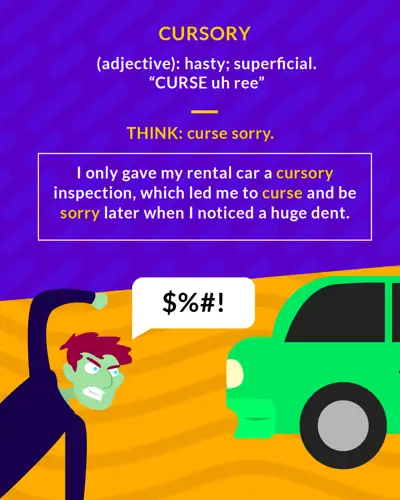
Cursory: hasty; superficial.
Memorizing math formulas
GRE math questions are wordy, they disguise which concept is being tested, and they reward noticing a shortcut. What you actually need is comfort with the concepts plus a large bank of experience with official-style questions.
Memorizing formulas, rereading notes, collecting cheat sheets, and dutifully following video lessons all matter much less than solving many official math questions on your own.
The best use of your time is to solve a lot of them starting from a blank page, then keep a detailed journal of your mistakes.
Third-party verbal practice
Skip third-party verbal. Free third-party material gets no exemption, since a lot of it is poor. Third-party verbal can actually lower your score by teaching rules and patterns the real test does not follow.
Third-party quant is a different story: it can build concept strength, but skip anything labeled advanced or hardest, and drop unrealistic questions instead of wrestling with them. If you want to get better at verbal, practice with official ETS questions.
Price and quality in GRE prep
With something like a manicure, you can see the result immediately and tell whether it was good. Test prep is not like that. Students often cannot judge how good a course or tutor was, and if their score disappoints them they tend to blame themselves rather than leave a bad review, so mediocre providers can accumulate glowing ratings.
Price says little about quality, so do not assume expensive is required, and do not assume free material will work easily. Investigate, and look for strong evidence that the instructor has spent much of a professional career on the GRE specifically.
How people choose GRE prep
People choose GRE prep the same way they look for their keys under the streetlight: they search where it is easiest to search. Page one of Google and Amazon for GRE prep is dominated by Kaplan, Manhattan Prep, Magoosh, and the Princeton Review, largely because marketing money buys search optimization and advertising.
In my opinion, the companies most prominent online are not very good, and many course review sites are built around affiliate links and tend to praise nearly every course. Keep searching.
Favor people who put official ETS material first, and favor people willing to say that many products are bad.
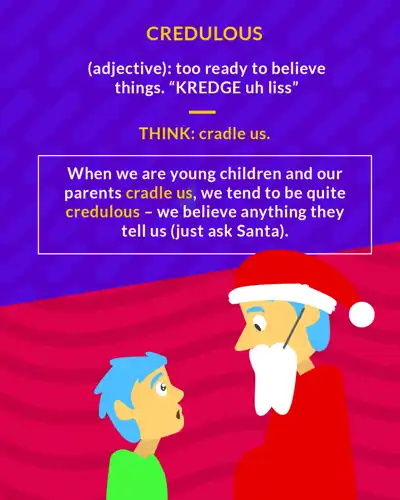
Credulous: too ready to believe things.
Why tutors dislike the big companies' prep books
I've worked with big publishing companies, and their authors often aren't tutors. A PhD doesn't make someone good at explaining a test if they've never helped a real student through a question.
In my experience, big publishers mostly offer authors either a share between 6 and 10% of a book's profits or a one-time fee reaching around $10,000, and a seasoned tutor typically passes. I once saw a single reviewer get $200 to check about 250 verbal questions I had written. There are exceptions, and some of these books are fine.
When you search Amazon, remember that the big companies' books are easy to find because they can outspend smaller publishers on marketing by roughly 100 times. In my experience, the best people in this field don't work for the big companies. Check my list of books worth buying.
A "complete solution" is a red flag
Someone has a problem, buys a book, course, class or tutor, and hopes it will fix everything. When it only partly works, that person tends to blame themselves, since others seemed to get results. In my experience, a product that markets itself as a complete solution is itself a sign that it is not one.
Treat prep as an experiment instead. Pick a method, work hard on it for a few weeks, check progress with a practice test, then adjust.
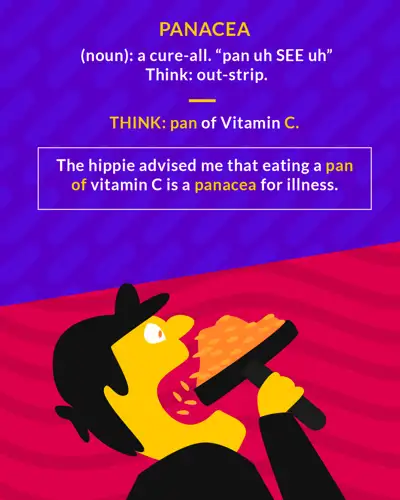
Panacea: a cure-all.
What a practice score tells you
People are always asking whether their practice score or vocabulary list will predict their real score. No one can answer that in any meaningful way. The real test can word, rearrange and package each concept in a huge number of ways, and a single practice test only shows a slice of that.
More practice tests make your average more informative. Third-party tests count for much less than official ones, and if you have not finished the official material, you might shave a little off your estimate. Think of any prediction as having a margin of a few points in either direction.
Prepare until your practice averages sit a few points above your goal.
When the real test feels harder than practice
My rule of thumb: the weaker your preparation, the tougher the actual exam tends to feel compared to your practice tests. ETS is skilled at dressing new questions up so they look unlike old ones, so if you have practiced and analyzed fewer of them, they will seem stranger.
I have noticed that top scorers tend to say the test is not harder. Work through and analyze all the official questions, practice under test-like conditions, and keep an error journal. Be wary of any company claiming that the test got harder and that you therefore need their material instead of ETS material.
Do not wrestle with every question
If your goal is under 160, giving every question your full effort tends to cause mistakes on questions that were within reach.
When you are stuck, guess, mark the question, and move to the next one. Accept that you might not complete everything, and leave time to guess on whatever is left. For a question worth abandoning, see the hardest GRE math question I've ever seen.
A study plan is a recipe, and recipes do not teach you to bake
I once followed a sourdough recipe closely, and the bread disappointed. I had no idea what went wrong until I read the underlying principles. Study plans are recipes too.
They usually work if you follow them, but learners move at different speeds, and without the principles behind the plan, a person who misses the target will not know what to change. Many people would rather do tasks than understand why those tasks matter.
Learn the reasoning behind each task so you can adjust the plan. Finishing a plan may not reach your quant potential, so if time allows, do more official quant questions than the plan lists. If you want to see a plan in action, here is my free 2 month GRE study plan.
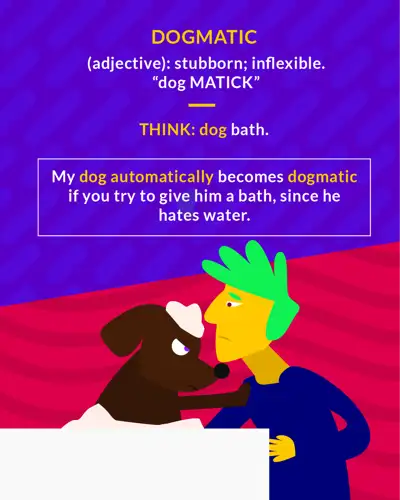
Dogmatic: stubborn; inflexible.
What a tutor is really for
The main thing a good tutor does is tune your study plan. Videos and practice material are everywhere. What is hard to find is a plan fitted to your goal, personality and timeframe that gets updated along the way.
Going over every quant concept in sessions would take far too long, so quant foundation is best built alone, following a personalized plan. If money is tight, pay a tutor for planning only. That can take a single session.
"How do I improve quant?" is a weak question
Asking an AI chatbot something vague returns vague advice, and GRE prep help works the same way. A complaint like "I understand the concepts but can't apply them on harder questions" usually contains several separate problems, and a reply of just practicing more does not target those particular weaknesses.
Split the problem instead. Ask how quickly you recognized the concepts and whether you noticed which strategy applied, then pose a question about one specific skill.
I think the standout success stories on r/GRE tend to come from people who take responsibility for their prep, while low-effort posters rarely report success.
Complaining about the test
Posts calling the GRE dumb or ETS greedy rarely end with a plan of action. Calling the test stupid and casting yourself as a victim adds emotional weight and limits what you do, because neither the exam nor the company is going to change. I suspect few people who complain also score well.
Prepare for the exam as it really is. When you feel like complaining, talk honestly with a good listener, ideally in person, instead of venting to strangers online. A professional therapist is not required.
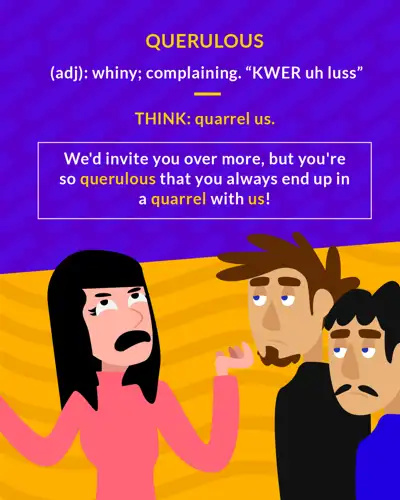
Querulous: whiny; complaining.
The second resource may not deserve all the credit
Someone gets frustrated with one source, switches to another, their score jumps, and suddenly they're preaching about the second one. The second source may be better, but the first did real work: it warmed up the thinking the test demands, laid math groundwork, and taught strategies that gave later strategies context.
Outsiders tend to see only the most recent thing a person did. Give credit to earlier work before you throw a resource away.
Generic Reading Comprehension tips stop helping
Someone is weak at RC, watches videos, practices, improves, plateaus, then asks for tips. Once the basics of Reading Comprehension are in place, there are no easy gains left. Serious effort is needed, and a generic tip will not do much.
Write out your thinking in detail. Say why a choice looked right and which wording in the text sent you toward it, why another looked wrong, and what you took the point of the passage, paragraph or sentence to be. A tutor can only repair thinking they can actually see.
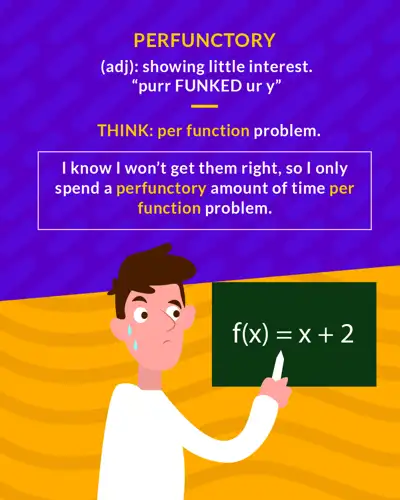
Perfunctory: showing little interest.
Want help doing GRE prep this way?
Most of this page comes down to one idea: study fewer things, more carefully, and fix your thinking instead of collecting more material. That is easier to say than to do on your own, which is where I come in. There are two ways to work with me.
A personalized study plan ($495). We start with a 45-minute Zoom session, I build your schedule, and then I update it every week from your check-ins until you're done, retakes included. It's for people who can do the work on their own once they know exactly what to do each day.
Private tutoring by Zoom. One-on-one sessions with me ($295 an hour, or $2,700 for 10 hours, which includes the study plan) or with Blake Jensen ($275 an hour). It's for people who want someone watching how they think and correcting it as it happens.
Not sure which fits? Fill out the GRE info form and I'll set up a free 15-minute consultation.